Table of Contents >> Show >> Hide
- What Makes a Great Travel Router in 2025?
- The Best Travel Routers of 2025: Quick Picks
- Best Overall Travel Router: GL.iNet Beryl AX
- Best for Easy Setup and Everyday Travel: ASUS RT-AX57 Go
- Best Value Travel Router: TP-Link TL-WR3002X
- Best for VPN-Heavy Users: GL.iNet Slate AX
- Best Built-In VPN Option: ExpressVPN Aircove Go
- Best Hotspot-Router Hybrid: Netgear Nighthawk M6 Pro
- Best Premium Wi-Fi 7 Travel Router: GL.iNet Slate 7
- How to Choose the Right Travel Router
- Common Travel Router Mistakes
- Final Verdict
- Real-World Experiences With the Best Travel Routers of 2025
If you have ever tried to connect a laptop, phone, tablet, smartwatch, and streaming stick to hotel Wi-Fi one awkward device at a time, you already understand why travel routers have become the unsung heroes of modern travel. They are tiny, clever, and slightly smug little boxes that let you log in once, create your own private network, and keep your gear together instead of turning your trip into a networking-themed escape room.
In 2025, the best travel routers are not just about speed. They are about flexibility, security, VPN support, tethering, hotel captive portal handling, and not forcing you to perform IT support while wearing flip-flops in a lobby. Some models are designed for power users who want OpenWrt and advanced VPN controls. Others are made for travelers who just want stable Wi-Fi in a hotel room without reading a forum thread that starts with, “Well, first you flash custom firmware…”
This guide breaks down the best travel routers of 2025 by real-world use case, not marketing poetry. Because “AX3000 dual-band adaptive intelligent seamless mobility solution” sounds impressive, but it does not tell you whether your work call will survive an airport layover.
What Makes a Great Travel Router in 2025?
A good travel router should do four things well. First, it needs to connect easily to hotel Ethernet, public Wi-Fi, or phone tethering. Second, it should create a private network for all your devices so you do not have to sign in repeatedly. Third, it should offer enough speed and stability for video calls, streaming, cloud work, and the occasional late-night doomscroll. Fourth, it should not weigh as much as a brick or require a power setup that belongs in a server closet.
Wi-Fi 6 is still the sweet spot for most travelers in 2025. Wi-Fi 7 travel routers are starting to appear, and yes, they look shiny and futuristic, like they should come with a tiny launch sequence. But most hotel and airport networks will not let you fully enjoy that extra horsepower. In plain English, a strong Wi-Fi 6 travel router is still the smartest buy for most people, while Wi-Fi 7 is the premium choice for enthusiasts who want more headroom and newer hardware.
The Best Travel Routers of 2025: Quick Picks
- Best overall: GL.iNet Beryl AX (GL-MT3000)
- Best for easy setup and everyday travel: ASUS RT-AX57 Go
- Best value: TP-Link TL-WR3002X
- Best for VPN-heavy users: GL.iNet Slate AX (GL-AXT1800)
- Best built-in VPN option: ExpressVPN Aircove Go
- Best hotspot-router hybrid: Netgear Nighthawk M6 Pro
- Best premium Wi-Fi 7 travel router: GL.iNet Slate 7
Best Overall Travel Router: GL.iNet Beryl AX
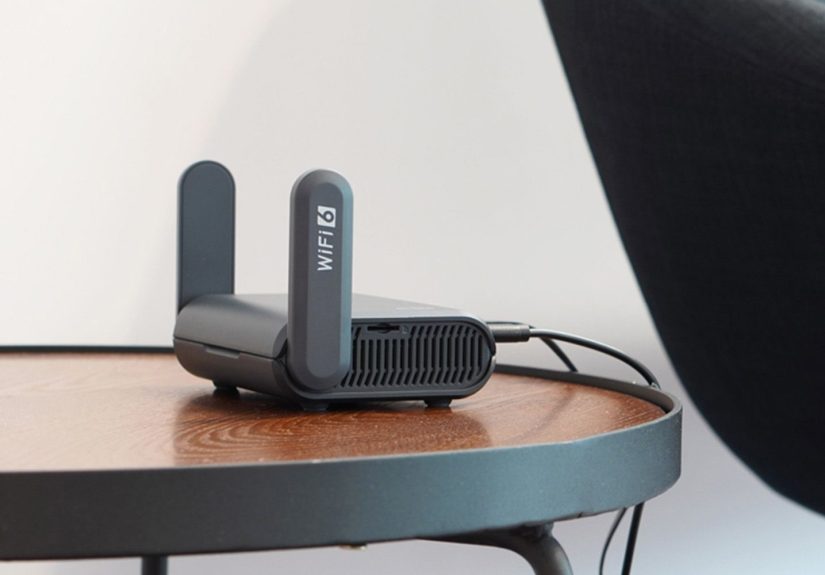
The GL.iNet Beryl AX earns the top spot because it hits the best balance of performance, portability, flexibility, and nerdy usefulness. It is compact enough for a backpack, fast enough for serious work, and configurable enough to make advanced users grin like they just found an extra fries at the bottom of the bag.
Beryl AX is a Wi-Fi 6 travel router with strong dual-band performance, a 2.5GbE WAN port, a gigabit LAN port, USB 3.0, and GL.iNet’s highly tweakable software environment based on OpenWrt. That last part matters. If you want better control over VPNs, routing, tethering, ad blocking, remote access, or custom networking tricks, Beryl AX gives you room to grow without becoming absurdly complicated on day one.
Why it wins in 2025 is simple: it is powerful enough for power users, but still practical for normal travelers. It handles hotel rooms, Airbnb setups, mobile tethering, and remote work sessions very well. If you travel with a small stack of devices and care about both speed and control, this is the travel router most people should buy first.
Why buy it
- Excellent performance for its size
- Strong VPN and customization options
- 2.5GbE WAN adds welcome future-proofing
- Great fit for remote work, families, and frequent travelers
Who should skip it
If you want the simplest possible setup with the least tinkering, another model may feel more beginner-friendly.
Best for Easy Setup and Everyday Travel: ASUS RT-AX57 Go
The ASUS RT-AX57 Go is the answer for travelers who want less fuss and more function. It supports router mode, public Wi-Fi mode, and mobile tethering, which means it is happy in hotels, trains, vacation rentals, and the general chaos of life outside your house. It also brings the kind of polished interface that makes setup feel far less intimidating.
This is the travel router I would point to for business travelers, families, and anyone who wants a device that feels more mainstream than experimental. ASUS does a good job balancing features with usability. You still get Wi-Fi 6 performance, useful security tools, VPN support, and a compact design, but the learning curve is gentler than with more enthusiast-focused options.
Another reason it stands out is versatility. The RT-AX57 Go works well as a travel companion, but it can also serve in a small apartment, backup internet setup, or temporary work station. That makes it easier to justify buying one even if you do not travel every other week like a loyalty-program gladiator.
Why buy it
- Very flexible connection modes
- Easy setup and polished app experience
- Good security features for public Wi-Fi use
- Strong all-around choice for non-experts
Who should skip it
If you want maximum customization or the best value-to-performance ratio, the GL.iNet and TP-Link options may look more tempting.
Best Value Travel Router: TP-Link TL-WR3002X
TP-Link has become very aggressive in the travel router space, and the TL-WR3002X is the kind of product that makes the market more fun for buyers. It delivers Wi-Fi 6, AX3000-class performance, tethering support, and a portable design at a price that usually lands in the sweet spot between “reasonably affordable” and “suspiciously cheap in a way that makes me nervous.”
This is the value pick because it gives you a lot of modern hardware without demanding flagship money. For many travelers, it is the smarter buy than an older ultra-budget router because it feels current. You are not buying a tiny compromise box. You are buying a genuinely capable travel router that happens to be priced sensibly.
The TL-WR3002X is especially appealing if you want modern features without diving deep into custom networking menus. It is an excellent fit for digital nomads, occasional travelers, and anyone upgrading from an older AC750-class travel router that now feels like it should be displayed in a museum next to early smartphone chargers.
Why buy it
- Excellent price-to-performance ratio
- Wi-Fi 6 and fast dual-band throughput
- Good portable design for frequent trips
- Strong option for most travelers on a budget
Who should skip it
If you want deeper VPN customization or advanced OpenWrt-style control, GL.iNet still has the edge.
Best for VPN-Heavy Users: GL.iNet Slate AX
The GL.iNet Slate AX remains one of the most appealing travel routers for VPN-first travelers. It has enough speed, enough ports, and enough flexibility to make security-conscious users feel at home. This is the router for people who say things like, “I just want to tunnel specific traffic while leaving streaming apps outside the VPN,” and somehow still get invited to parties.
Slate AX shines when your travel routine involves remote work, public Wi-Fi, multiple devices, and a strong preference for controlling your network instead of trusting whatever your hotel calls “premium internet.” It is not as broadly balanced as Beryl AX, but it is still an excellent choice if VPN performance and advanced routing behavior sit at the top of your checklist.
The design is also practical for road use. You get a compact travel-friendly form factor, Wi-Fi 6, and the sort of connectivity options that make it easier to build a stable temporary network almost anywhere.
Best Built-In VPN Option: ExpressVPN Aircove Go
The Aircove Go is not for everyone, but it is absolutely for the traveler who wants one thing above all else: easy VPN protection without having to configure every device one by one. It is basically the “I would like security with fewer tabs open” option.
Unlike many travel routers that support VPNs as a feature, the Aircove Go is built around the VPN experience. That makes it especially attractive for travelers who care about privacy, geo-flexible streaming, or securing a pile of gadgets on public or shared networks. The setup is more approachable than many advanced travel routers, which is the whole point.
The trade-off is that you are buying into a more opinionated ecosystem. If you want deep router tinkering, it is not the best choice. If you want convenience, clean VPN integration, and less setup drama, it is a very strong one.
Best Hotspot-Router Hybrid: Netgear Nighthawk M6 Pro
The Netgear Nighthawk M6 Pro lives in a slightly different lane, but it deserves a place on this list because some travelers do not want to depend on hotel Wi-Fi at all. They want their own internet connection. That is where a premium mobile hotspot-router becomes a serious travel tool.
The M6 Pro is ideal for remote workers, RV travelers, international travelers using local SIMs, event crews, and anyone whose job becomes expensive or embarrassing when the internet collapses. It offers fast cellular connectivity, supports a lot of devices, and gives you much better performance and flexibility than simply draining your phone battery with hotspot duty.
It is also expensive, which means it is not the best fit for a couple of weekend getaways per year. But if you need dependable internet on the road and cannot afford to play roulette with public Wi-Fi, this is the premium answer.
Best Premium Wi-Fi 7 Travel Router: GL.iNet Slate 7
Wi-Fi 7 travel routers are still a niche category in 2025, but the GL.iNet Slate 7 is the model that makes the category feel real. It is fast, ambitious, and designed for travelers who want premium hardware in a portable footprint. It also feels like the sort of device you buy when you know exactly why you want it.
The practical caveat is important: most travelers do not need Wi-Fi 7 yet. Hotel internet is often the bottleneck, not your router. So while the Slate 7 is an impressive premium pick, it is best treated as a luxury power-user choice rather than the default recommendation for everyone with a suitcase and a laptop.
How to Choose the Right Travel Router
Choose based on your internet source
If you mostly use hotel Wi-Fi, prioritize public Wi-Fi mode, captive portal support, and easy setup. If you rely on Ethernet in hotels or rentals, make sure the router has solid WAN and LAN ports. If you use phone tethering or mobile broadband, check USB tethering and modem compatibility.
Do not overspend for bragging rights alone
A Wi-Fi 7 travel router sounds glamorous, but a good Wi-Fi 6 model is usually more than enough. Most real travel bottlenecks come from bad upstream connections, crowded hotel networks, or weak room placement, not from your router lacking one more futuristic number on the box.
Think about security realistically
A travel router is useful for privacy and control, but it is not a magic invisibility cloak. It helps by putting your devices behind your own network, simplifying VPN use, and reducing repeated connections to public access points. That said, you still need good habits: use trusted sites, keep devices updated, and avoid treating random public Wi-Fi like it is your living room.
Common Travel Router Mistakes
- Buying too old: Super-cheap legacy travel routers can work, but many feel outdated in 2025.
- Ignoring power needs: A tiny router is less charming when you packed the wrong charger.
- Skipping setup at home: Always configure the router before your trip unless you enjoy debugging in a hotel hallway.
- Expecting miracles: A travel router can improve convenience and network control, but it cannot turn bad hotel internet into fiber.
Final Verdict
If you want the best travel router of 2025 for most people, buy the GL.iNet Beryl AX. It offers the best mix of speed, flexibility, VPN friendliness, and future-proof hardware in a genuinely portable package. If you want a more beginner-friendly option, the ASUS RT-AX57 Go is a terrific choice. If price matters most, the TP-Link TL-WR3002X gives you a lot of value without feeling stripped down.
Meanwhile, the GL.iNet Slate AX is still a favorite for VPN-focused travelers, the ExpressVPN Aircove Go is excellent for simple built-in privacy, the Netgear Nighthawk M6 Pro is the premium option when you want your own mobile internet, and the GL.iNet Slate 7 is the shiny premium toy for people who want Wi-Fi 7 on the road.
In other words, the best travel router is the one that fits your trip style. For some people, that means a compact hotel Wi-Fi fixer. For others, it means a pocket-sized command center. Either way, once you travel with a good one, it becomes one of those gadgets you stop thinking about until the day you forget to pack it and suddenly feel like civilization has collapsed.
Real-World Experiences With the Best Travel Routers of 2025
Using a travel router in the real world feels less like buying a networking accessory and more like quietly removing friction from travel. The first difference most people notice is not speed. It is relief. Instead of connecting every device separately at a hotel, you connect one router, log in once, and everything else simply joins your private network. That may sound small on paper, but after a long flight, it feels like luxury. Tiny, nerdy luxury, but luxury all the same.
For remote workers, the experience gets even better. A good travel router creates routine in places that have none. One day you are in a business hotel with a reliable Ethernet jack. The next day you are in a rental apartment where the Wi-Fi password is written on the back of a decorative pineapple. A day later, you are tethering from your phone in a train station café because the building’s Wi-Fi appears to be powered by optimism. A travel router smooths those changes out. Your laptop, phone, tablet, and other gear keep talking to the same familiar network name, and that consistency matters more than people expect.
Families also get a surprising amount of value from travel routers. Parents do not want to reconnect every tablet and streaming device every time they change rooms, properties, or destinations. They want things to work with minimal drama, ideally before anyone says, “The show won’t load,” in the tone usually reserved for natural disasters. A travel router lets families connect once and move through the trip with less digital chaos.
There is also a psychological benefit. Public Wi-Fi often feels messy because it is messy. Random network names, repeated sign-ins, weak signals in one corner of the room, and uncertainty about whether your devices are behaving the way they should. A travel router gives you a sense of order. It does not make bad internet good, but it makes bad internet more manageable. That is a meaningful distinction. Travelers who spend lots of time in hotels, airports, conference centers, cruise cabins, RV parks, or short-term rentals often say the same thing: the router did not perform miracles, but it made everything less annoying.
Then there is the security angle. In practice, the experience is not about feeling like a secret agent. It is about having fewer loose ends. One router, one controlled network, optional VPN support, and fewer direct connections to whatever public network happens to be nearby. For business travelers, journalists, digital nomads, and privacy-conscious users, that peace of mind is part of the value. Not flashy peace of mind. More like “I am no longer side-eyeing the airport Wi-Fi name” peace of mind.
Another common experience is discovering that your travel router becomes useful at home too. It might serve as a backup internet option, a temporary office router, a secure guest network, or a handy tool during outages and moves. Many people buy one for travel and then realize it earns its keep between trips. That is one reason the best travel routers of 2025 feel like smart purchases rather than niche gadgets.
The funny part is that travel routers rarely look exciting. They are not glamorous like cameras, headphones, or a shiny new laptop. They usually sit there quietly, doing their job like the most competent person in a group project. But once you get used to having one, you notice immediately when it is missing. And that, more than any spec sheet, is what makes the best travel routers of 2025 worth recommending.