Table of Contents >> Show >> Hide
- What Happened on ‘The View’?
- Why Cheryl Hines Still Seems Bothered
- The Real Reason the Interview Went Sideways
- The Impossible Job of Being a Celebrity Spouse
- Was ‘The View’ Wrong to Push So Hard?
- Why Audiences Couldn’t Stop Talking About It
- What Cheryl Hines’s Reaction Really Reveals
- Related Experiences: Why Tough Promotional Interviews Leave a Mark
- Conclusion
Book tours are supposed to be tidy little parades. An actor shows up smiling, the host asks about the new project, a funny behind-the-scenes anecdote gets tossed like confetti, and everybody goes home feeling professionally moisturized. But Cheryl Hines didn’t get that kind of visit on The View. She arrived to promote her memoir, Unscripted, and instead found herself in the middle of a full-contact conversation about her husband, Robert F. Kennedy Jr., his politics, his public-health controversies, and the increasingly impossible task of being a celebrity spouse in America’s favorite pressure cooker.
Months later, Hines made it clear she hadn’t exactly filed the moment away under “fun memories.” Her complaint was blunt and memorable: the hosts, in her view, “just wanted to grill” her. That line traveled fast because it summed up the interview in one neat, smoky sentence. Hines believed she was there to talk about her life and her book. The panel believed that if you are married to a deeply polarizing public figure, you do not get to glide past the hard stuff with a charming smile and a hardcover in your hand.
And that is why the segment keeps echoing. It was not just awkward television. It was a collision between entertainment PR, political accountability, daytime TV instincts, and the strange modern rule that fame no longer stays in its lane. If your personal life intersects with power, controversy, or national headlines, the couch is never just a couch. Sometimes it is a witness stand with better lighting.
What Happened on ‘The View’?
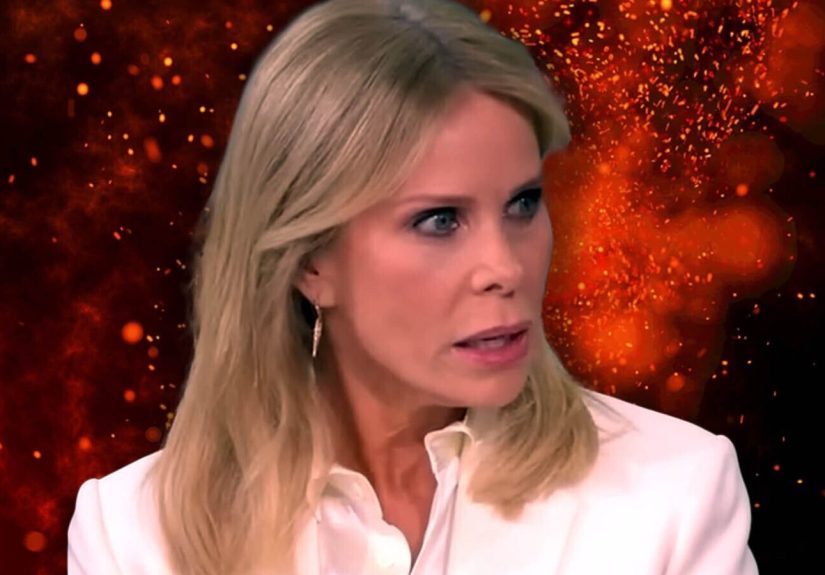
Hines appeared on The View in October 2025 while promoting Unscripted, the memoir she brought out during one of the most publicly complicated stretches of her life. Rather than spending the segment mostly on the book, the conversation quickly turned toward her husband and the storm that seems to follow him into every room, every headline, and apparently every studio chair. The cohosts pressed Hines about RFK Jr.’s public statements, his alliance with Donald Trump, concerns about misinformation, and the contradictions between his image and his role in national health debates.
That created the kind of television that producers probably frame on the wall and publicists probably need a nap after. There were interruptions, sharp exchanges, visible frustration, and that unmistakable talk-show energy that says, “We have left the promotional portion of the program and entered the danger zone.” Hines tried to defend her husband, challenge the framing, and push back on criticism she felt was unfair or rehearsed. The hosts, meanwhile, treated the moment less like a celebrity pit stop and more like a civic obligation.
That basic mismatch is the whole story. Hines came to discuss a memoir. The View wanted answers. Neither side misread the room by accident. They were simply reading different rooms.
Why Cheryl Hines Still Seems Bothered
To be fair, “mad” may be tabloid shorthand. “Still irritated,” “still stung,” and “still wondering why nobody asked about the actual book” might be more precise. But the emotional point remains: Hines did not leave that appearance thinking, “Well, what a delightful literary salon.” Her later comments suggested she felt sidelined inside her own promotional moment. From her perspective, the interview was supposed to be about her memoir, her experiences, and her voice. Instead, she became a stand-in for her husband’s controversies.
That frustration is easy to understand, even if viewers also understand why the hosts went there. Authors usually want questions about what they wrote, why they wrote it, and which life chapters mattered most. Hines later suggested the panel did not even meaningfully engage with the material she brought to discuss. For an actor and first-time memoirist trying to shape her own narrative, that has to feel maddening. Imagine baking a whole cake and arriving at a party where everyone only wants to debate the oven.
But there is a second layer here. Hines is not merely adjacent to the controversy. She has publicly defended her husband, addressed his critics, and appeared beside him during politically charged moments. Once she steps into that arena, even while promoting something else, she becomes part of the larger conversation. That may feel unfair on a human level, but it is also the price of celebrity proximity in a culture where public image, politics, and entertainment are braided together like an overcaffeinated rope.
The Real Reason the Interview Went Sideways
1. A memoir stop turned into a political cross-examination
Memoir interviews usually thrive on vulnerability, nostalgia, self-deprecation, and polished storytelling. Political interviews thrive on contradiction, accountability, and follow-up questions that do not care how nice your jacket is. Hines landed in the second format while expecting more of the first.
2. ‘The View’ was doing exactly what its audience expects
Love the show or roll your eyes at it from three zip codes away, The View has built its identity on heated, agenda-setting conversation. The hosts are not there just to hand out compliments and discuss chapter titles. When a guest has a direct connection to a major public figure, the panel tends to treat that connection as fair game. In other words, Hines may have felt ambushed, but the show probably felt consistent.
3. Cheryl Hines was trying to be loyal and independent at the same time
This is one of the hardest performance tricks in public life. Hines clearly wanted to support her husband while also maintaining space for herself as an actress, writer, and person with her own identity. That is not impossible, but it is brutally difficult when the bigger story in the room has your spouse’s name on it in flashing lights.
The Impossible Job of Being a Celebrity Spouse
There is a uniquely exhausting role in American media: famous person married to even more controversial famous person. The job description is terrible. You are expected to be loyal but not blindly loyal, honest but not too honest, protective but not evasive, and independent while somehow remaining answerable for somebody else’s decisions. It is like being told to juggle flaming bowling pins while also explaining federal policy in under 90 seconds.
Hines has spent years known primarily for comedy, especially her beloved work on Curb Your Enthusiasm. That public identity matters because audiences still tend to see her through the lens of warmth, wit, and approachable intelligence. When she appears in a tense political conversation, the contrast is jarring. Viewers are watching someone they associate with comic timing and sitcom chaos suddenly navigate a barrage of questions about ideology, science, and power. It changes the temperature instantly.
That contrast also explains why the interview became such a talking point. People were not just reacting to what was said. They were reacting to the spectacle of Cheryl Hines, of all people, sitting in a daytime debate chair trying to absorb criticism aimed at her husband while promoting a memoir. The whole thing had the energy of a celebrity book club meeting that accidentally wandered into congressional testimony.
Was ‘The View’ Wrong to Push So Hard?
The cleanest answer is also the least satisfying: not exactly, but not entirely gracefully either. The hosts had every reason to ask hard questions. RFK Jr. was not some unrelated side note; he was the obvious headline attached to Hines’s appearance, and his public profile made those questions unavoidable. Pretending otherwise would have felt artificial. A show known for political candor was never going to ignore the elephant in the studio, especially when the elephant had already been booked by multiple cable networks.
At the same time, Hines’s complaint about the lack of book-focused discussion lands because audiences understand the basic bargain of a promotional interview. A guest is invited in part to discuss a project. If that project gets reduced to a prop while the conversation becomes almost entirely about someone else, frustration is a natural response. The issue is not that the hard questions existed. The issue is that they swallowed nearly everything else.
That imbalance is what made Hines’s later remarks resonate. She was not saying the hosts had no right to mention her husband. She was saying the appearance felt consumed by that subject. There is a meaningful difference between a difficult interview and an interview where the stated purpose barely gets a seat at the table.
Why Audiences Couldn’t Stop Talking About It
This story lingered because it delivered three things the internet loves: celebrity tension, political discomfort, and a sharply quotable aftershock. “They just wanted to grill me” is one of those lines that instantly becomes a headline because it carries irritation, humor, and accusation in a single bite. It also invites people to take sides. Some heard wounded fairness. Others heard complaint about being asked obvious questions.
The segment also tapped into a bigger cultural argument: what do public figures owe audiences when their personal lives intersect with public controversy? Many viewers believe spouses should not have to answer for one another. Many others believe that once you publicly defend or campaign alongside someone, you are no longer merely adjacent. Hines became the face of that debate for a news cycle because she embodied both positions at once.
And then there is the simple, merciless truth of modern media: discomfort trends. Calm, balanced, perfectly pleasant interviews rarely spark days of discussion. But a segment with friction, interruptions, and a later complaint from the guest? That is the good stuff for entertainment news, social media clips, and opinion columns. America may say it wants civility, but it sure can identify a tense panel from fifty paces.
What Cheryl Hines’s Reaction Really Reveals
Hines’s lingering annoyance reveals something larger than celebrity thin skin. It shows how hard it is to control your own story once the public decides your biography is inseparable from somebody else’s controversy. Unscripted may have been her book, but the segment demonstrated that authorship alone does not guarantee narrative ownership. If the public is more interested in the person beside you than the pages in front of you, your media appearance can turn into a hostage situation for your own talking points.
Her reaction also feels human because it was not polished into oblivion. She did not respond like a robot trained by sixteen publicists and a meditation app. She sounded like someone who showed up to discuss her work and left feeling reduced to a political extension cord. That may not make her entirely right, but it does make her relatable.
In the end, Cheryl Hines is still mad, or at least still plenty bothered, because the interview exposed a reality she probably already knew but had to feel in real time: there is no clean separation anymore between celebrity, marriage, politics, and public accountability. Once those worlds merge, even a book tour stop can become a battlefield with coffee mugs.
Related Experiences: Why Tough Promotional Interviews Leave a Mark
What happened to Hines is not a one-off oddity. It belongs to a broader category of public experiences where someone arrives to talk about one thing and gets pulled into a much bigger argument. Actors promoting films get asked about off-screen scandals. athletes launching documentaries get pressed about personal lives. authors trying to discuss craft suddenly find themselves defending a spouse, a political statement, or a headline that has nothing to do with chapter six. The official reason for the interview may be the project, but the real reason everyone is watching is usually the controversy hanging over it.
That kind of appearance tends to linger because it is emotionally uneven. The guest is prepared for one lane and forced into another. You can see the gears turning. Should they stay cheerful? Push back? Redirect? Make a joke? Shut down? Every answer carries risk. If they dodge, they look slippery. If they answer, they can end up deep in a conversation they never wanted to have. If they get annoyed, viewers call them defensive. Public life is generous that way.
There is also a special sting when the guest has put real work into something personal, like a memoir. Writing a book is not a quick red-carpet errand. It takes time, memory, editing, vulnerability, and the willingness to hand your inner life to strangers. So when the book becomes background scenery while the interview turns into a referendum on your spouse, the frustration can feel sharper than a normal promotional disappointment. It is not just, “They asked the wrong questions.” It is, “The thing I worked hardest on became the least important thing in the room.”
Viewers often forget how much emotional whiplash is built into those moments. One minute a guest is talking about childhood, career pivots, or lessons learned; the next minute they are expected to become a rapid-response spokesperson for a person with an entirely different public role. That transition is rough on anyone, even experienced performers. A sitcom veteran can still get cornered by the tonal shift between “Tell us about your memoir” and “Please explain your husband’s most controversial public positions before the commercial break.”
The Hines episode also reflects a larger truth about media literacy for audiences. Interviews are not neutral spaces. Shows have brands. Hosts have ideological instincts. Producers know where tension lives. Guests know, or should know, what a particular platform is likely to ask. When either side pretends that a charged subject will remain politely untouched, disappointment is almost guaranteed. The lesson is not that tough interviews are unfair. It is that everyone walks in carrying different expectations, and the collision between those expectations is often the most revealing part.
That is probably why Hines’s reaction feels so understandable even to people who think The View was justified. She was not only reacting to difficult questions. She was reacting to a familiar public experience: working hard to tell your own story and realizing the room has already chosen a different one. That feeling is not limited to celebrities. It happens in offices, classrooms, family dinners, and job interviews. You prepare your honest little speech, and somehow the conversation still ends up about the thing you were hoping would stay in the parking lot.
So yes, Cheryl Hines may still be mad about getting grilled on The View. But the reason that frustration landed is bigger than one tense daytime segment. It speaks to a universal experience of being seen through the loudest context around you rather than the message you came to deliver. In celebrity culture, that tension becomes content. In ordinary life, it just becomes a long drive home and a story you retell with increasingly dramatic hand gestures.
Conclusion
Cheryl Hines’s The View appearance became memorable not because it was scandalous in the old-school Hollywood sense, but because it perfectly captured the modern media mess. A memoir stop turned into a political sparring match. A sitcom star tried to hold onto her own narrative while answering for someone else’s. A talk show did what talk shows do: it followed the hottest tension in the room. Months later, Hines’s irritation still makes sense because the imbalance was obvious. She showed up to discuss Unscripted and got a live demonstration of just how unscripted public life can be.