Table of Contents >> Show >> Hide
- What Makes This Quirky Complicated Clock So Interesting?
- The Inspiration: Public Art Meets Maker Instinct
- How an Electromechanical Chain Clock Works
- Why Visible Mechanics Still Fascinate Us
- The Beauty of Overengineering a Simple Problem
- Design Lessons From the Chain Clock Concept
- Why Makers Love Clocks
- The Role of NTP in a Handmade Mechanical Clock
- Challenges Behind the Fun
- Examples of Related Clockmaking Ideas
- Experience Section: What Building a Quirky Complicated Clock Teaches You
- Conclusion
Note: This publish-ready article is synthesized from real maker, horology, and timekeeping information and contains no source-link artifacts.
Some clocks whisper the time. Some beep. Some glow politely on a nightstand like tiny rectangular moons. And then there are clocks that clank, crawl, spin, shove numbers around, and make you wonder whether the inventor had a normal afternoon or accidentally drank espresso through a soldering iron. The project behind “Quirky Complicated Clock Piques Constructor’s Curiosity” belongs proudly in that last category.
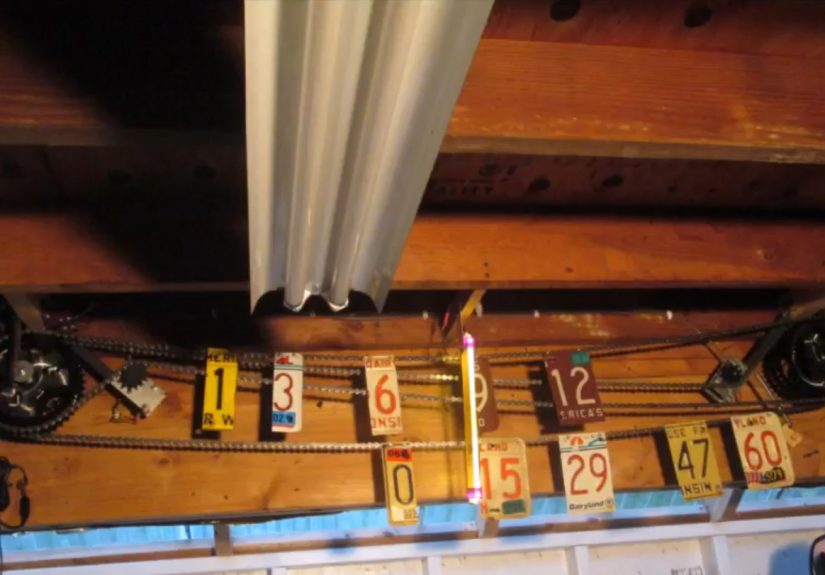
At its heart, the idea is beautifully simple: build a clock that tells time with moving chains, visible mechanics, microcontrollers, motors, limit switches, and a healthy disrespect for boring plastic wall clocks. Inspired by a public art-style clock seen at the Chicago Avenue Fire Arts Center in Minneapolis, maker garberPark created a horizontal electromechanical chain clock that turns timekeeping into a little performance. It is not merely a device that says “3:42.” It is a machine that announces, “Behold, 3:42 has arrived by chain drive.”
This kind of DIY clock sits at the intersection of mechanical engineering, electronics, software, kinetic sculpture, and the maker movement. It borrows the accuracy of internet time, the charm of salvaged parts, and the visual drama of exposed motion. The result is a clock that does more than measure time; it makes time visible, tactile, and oddly delightful.
What Makes This Quirky Complicated Clock So Interesting?
The appeal of a complicated clock is not that it solves a modern problem efficiently. A smartphone already keeps time with frightening accuracy. A five-dollar quartz movement can run quietly for months. A smart speaker can tell you the time without making you look up from your soup. So why build a clock with chains, motors, license plate digits, sensors, and code?
Because efficiency is not always the point. Sometimes the point is curiosity.
A quirky mechanical clock invites the viewer to ask questions. What drives the chain? How does the clock know where each number is? What happens if the mechanism slips? Why does it only move when someone is nearby? Why does it look like a bicycle, a shop sign, and a robot had a surprisingly productive weekend together?
Those questions are exactly what make the project powerful. A conventional digital display hides nearly everything. The number appears, and the magic is buried under glass. A mechanical or electromechanical clock exposes the process. The chain moves. The motor steps. The digits shift. The limit switch clicks. The machine’s logic is not invisible; it is choreography.
The Inspiration: Public Art Meets Maker Instinct
The original spark came from seeing a clock where two motors drove chains carrying numbers. The digit at the top of each chain indicated the current time. It was a clever public-facing object: part clock, part sign, part mechanical sculpture. For many people, that would have been a fun thing to glance at while walking by. For a constructor, hacker, or maker, however, the reaction is different. It is less “That’s neat” and more “I need one, and unfortunately my weekend has just been booked.”
That maker instinct is important. The best DIY projects often begin not with a formal need but with a visual itch. Someone sees an object that should not be possible, or at least should not be necessary, and immediately begins mentally reverse-engineering it. They imagine the parts list. They picture the failure points. They wonder whether the original used encoders, homing switches, stepper motors, DC gear motors, or a tiny wizard inside the housing. Then the design starts living rent-free in their head.
In garberPark’s version, the clock became a horizontal interpretation of the original concept. Instead of simply copying the public clock, the maker adapted the idea to available materials and personal style. That is classic maker culture: inspiration is not a photocopier; it is a launchpad.
How an Electromechanical Chain Clock Works
A chain clock like this has two main jobs. First, it needs to know the correct time. Second, it must move physical number markers into the right positions. That sounds easy until you remember that physical objects have weight, friction, slop, inertia, and a talent for being dramatic at the worst possible moment.
1. The Time Source
Modern clocks typically begin with an oscillator or a trusted reference. In a quartz clock, a crystal vibrates at a stable frequency, and electronics count those vibrations. In an internet-connected clock, a microcontroller can request the current time from a Network Time Protocol server. NTP is widely used to synchronize computers and devices to Coordinated Universal Time, which means a small Wi-Fi-enabled board can keep a homemade mechanical display aligned with the same timekeeping infrastructure that helps computers, servers, and networks stay coordinated.
In this project category, the ESP8266 is a natural choice. It is inexpensive, Wi-Fi capable, small, and popular in home automation and maker projects. The ESP8266 can fetch network time, while an Arduino or compatible microcontroller logic can handle motor control, input signals, and the movement sequence. In plain English: one part of the brain asks the internet what time it is; another part tells the machine how far to move without embarrassing itself.
2. The Display Mechanism
Instead of an LCD screen or LED digits, this clock uses physical numbers attached to moving chains. Think of it as a mechanical version of a digital display, except the pixels have gone to the gym. The chain carries number plates, and the motor advances the chain until the correct digit reaches the display position.
Chains are excellent for this type of project because they are strong, easy to source, visually interesting, and forgiving enough for experimental builds. Bicycle parts are especially attractive for makers because they are standardized, durable, inexpensive, and wonderfully overqualified for moving a few number plates around a clock face.
3. The Motors
Stepper motors are common in DIY clocks because they move in controlled increments. Unlike a simple DC motor, which spins when powered and needs feedback to know position, a stepper motor can be commanded to move a specific number of steps. That makes it useful for positioning clock hands, rotating drums, sliding signs, or advancing a chain display.
Salvaged scanner stepper motors are a particularly maker-friendly touch. Old scanners, printers, and office equipment often contain useful motors, rails, belts, gears, and sensors. Repurposing them gives the project both budget appeal and personality. A clock made partly from rescued machine organs has a certain garage-lab poetry to it.
4. Limit Switches and Homing
A physical clock needs to know where “home” is. If the chain slips, the motor misses steps, or the power goes out halfway through a move, the controller cannot simply assume the display is still correct. Limit switches solve this by giving the mechanism a known reference point. When a moving part reaches the switch, the controller knows it has arrived at a defined position.
This is one reason electromechanical clocks are so satisfying. They force software to negotiate with reality. Code may believe it moved 400 steps, but a limit switch politely says, “Actually, champ, we are here.” That conversation between software and hardware is where many maker projects become genuinely educational.
Why Visible Mechanics Still Fascinate Us
There is a reason people stare at old tower clocks, flip clocks, marble clocks, automata, and kinetic sculptures. Humans like seeing cause and effect. A gear turns another gear. A cam lifts a lever. A chain advances a digit. A pendulum swings. Motion explains itself in a way that software rarely does.
Digital devices are often more capable, but they can feel opaque. A phone can track time, location, calendar events, alarms, sleep patterns, and probably your suspiciously frequent trips to the refrigerator. Yet its operation is sealed behind circuits and software layers. A mechanical display, even one driven by a microcontroller, gives the viewer a window into the process. It makes time feel built rather than merely calculated.
That is why the quirky complicated clock lands so well. It is not trying to beat an atomic clock. It is trying to make time interesting again. It reminds us that a clock can be furniture, sculpture, conversation piece, teaching tool, and engineering puzzle all at once.
The Beauty of Overengineering a Simple Problem
Overengineering gets a bad reputation, and sometimes deservedly so. Nobody needs a Wi-Fi-connected butter knife that sends push notifications when toast is emotionally ready. But creative overengineering is different. It is a way to learn by stretching a simple concept until it reveals hidden complexity.
A clock is the perfect playground for this. Everyone understands the goal. The stakes are low. The constraints are clear. Yet the implementation can range from a two-dollar quartz movement to a 10,000-year mechanical monument designed to synchronize with the sun. Between those extremes lies a universe of maker-friendly challenges: motors, gears, sensors, displays, power management, calibration, enclosure design, and user interaction.
The chain clock embraces that universe. It uses a simple outputnumbers showing timebut achieves it with a pleasingly complex path. That path is where learning lives. A builder must consider mechanical alignment, tension, backlash, motor torque, electrical noise, firmware logic, time synchronization, and the delightful question of whether old license plates make good digits. Spoiler: yes, apparently they do.
Design Lessons From the Chain Clock Concept
Beyond its visual charm, the project offers practical lessons for anyone interested in DIY electronics, kinetic displays, or unusual clocks.
Use Materials With Character
Cutoff license plates, bicycle cranks, chains, and salvaged motors give the clock a distinct identity. Store-bought parts can be convenient, but found materials often create the memorable soul of a project. A clock made from polished acrylic may look clean. A clock made from license plates looks like it has stories and possibly a minor traffic citation.
Let the Mechanism Be Seen
If a project has interesting motion, hiding it is a tragedy. Exposed chains, sprockets, and moving digits make the clock understandable and entertaining. Viewers do not need to be engineers to appreciate the action. The mechanism becomes the interface.
Plan for Recalibration
Any mechanical clock that depends on position needs a way to recover. Limit switches, optical sensors, Hall effect sensors, or encoders can help a machine confirm its location. Without feedback, a missed step can become a long-term error. With feedback, the clock can regain its dignity after a glitch.
Separate Timekeeping From Display
A reliable design treats the time source and the display mechanism as related but separate systems. The clock can know the correct time through NTP or a real-time clock module, then decide how to move the display to match. This separation makes troubleshooting easier. If the displayed time is wrong, the builder can ask: is the time source wrong, or did the mechanism fail to position correctly?
Why Makers Love Clocks
Clocks are a rite of passage in the maker world because they combine familiar purpose with endless creative freedom. A beginner might build an LED clock with a real-time clock module. An intermediate builder might design a word clock, binary clock, or stepper-driven analog clock. An advanced tinkerer might build a mechanical seven-segment display, a rolling ball clock, or a chain-driven kinetic clock that looks like it escaped from an industrial art gallery.
The common thread is satisfaction. When a clock works, it proves several systems are cooperating over time. That is a deeper achievement than making an LED blink once. A clock must run, repeat, recover, and remain understandable. It becomes a living test bench for patience.
There is also emotional appeal. Time is abstract, but clocks make it physical. A complicated clock turns minutes into movement and hours into mechanical events. It gives the passing day a sound, a shape, and sometimes a faint smell of warm electronics.
The Role of NTP in a Handmade Mechanical Clock
One of the funniest contrasts in this project style is the marriage of old-school motion with modern network time. A chain, sprocket, and stepper motor assembly feels wonderfully analog. Then, quietly behind the scenes, a Wi-Fi module checks the internet for the official time like a tiny office manager with impeccable punctuality.
This hybrid approach is practical. Mechanical displays can drift or lose position, but network time gives the controller a reliable reference. The clock does not have to be perfectly accurate mechanically every second of the day. It can periodically correct itself, re-home if needed, and keep the display aligned with real time. That combination of visible imperfection and digital correction is part of the charm.
Challenges Behind the Fun
Projects like this may look whimsical, but they are not trivial. A chain-driven clock can struggle with uneven tension, motor load, number spacing, vibration, missed steps, and power interruptions. The builder must think like a machinist, electrician, programmer, and mildly suspicious detective.
Motor torque matters because chains and digits add weight. Alignment matters because a small angle error can become a visible display problem. Sensor placement matters because the controller depends on clean position signals. Code timing matters because motors need smooth movement, not sudden panic. Even aesthetics matter because the whole point is to enjoy watching the thing work.
That is what makes the project compelling. It is not complicated for the sake of being mysterious. It is complicated because moving real objects precisely is always more interesting than it looks.
Examples of Related Clockmaking Ideas
The maker community is full of unusual clock builds that share the same spirit. Mechanical-digital clocks use steel balls or physical segments to form numbers. Stepper motor clocks position hands independently. Word clocks spell out time in phrases. Flip clocks use falling panels. Marble clocks roll balls through tracks. The Clock of the Long Now expands the concept to a philosophical extreme, using robust mechanical design and solar synchronization to encourage long-term thinking.
Each example proves that timekeeping can be more than utility. It can be a design language. The chain clock fits comfortably among these projects because it treats time as something worth watching, not just reading.
Experience Section: What Building a Quirky Complicated Clock Teaches You
Spending time with a project like “Quirky Complicated Clock Piques Constructor’s Curiosity” teaches lessons that do not show up neatly on a parts list. The first lesson is humility. On paper, moving a chain one position sounds simple. In the workshop, the chain sags, the sprocket wobbles, the motor complains, and the number plate hangs at a jaunty angle like it has strong opinions about gravity. Suddenly, “just make it rotate” becomes a full engineering meeting with yourself.
The second lesson is that prototypes are not failures; they are arguments with reality. A cardboard mockup can reveal spacing problems before metal is cut. A temporary wooden frame can show whether the chain path makes sense. A manually turned sprocket can expose friction before code gets involved. The best builders learn to test ugly and early. Beauty can come later, after the mechanism stops trying to eat its own wiring.
The third experience is the joy of scavenging. Pulling a stepper motor from an old scanner or printer changes the mood of the build. Instead of ordering every part, the constructor becomes a mechanical archaeologist. Springs, shafts, belts, sensors, screws, and brackets suddenly look useful. A discarded office machine becomes a donor animal for a clock with more personality than anything in the clearance aisle.
Another valuable lesson is patience with calibration. A quirky clock does not simply become accurate because the code says so. Physical numbers must line up. Switches must trigger at the right point. Motors must move with enough torque but not so violently that the display jumps. Chain tension must be firm without becoming a miniature medieval torture device. Every adjustment teaches the builder how software assumptions meet mechanical truth.
There is also a surprisingly human reward in showing the finished clock to other people. Viewers rarely ask about processor speed first. They ask, “How does it know where to stop?” or “Did you make those numbers?” or “Is that a license plate?” A good kinetic clock creates conversation because its operation is visible. It invites curiosity instead of hiding the interesting parts in a black plastic box.
Finally, building this kind of clock changes how you see everyday machines. Bicycle chains become display systems. Old license plates become numerals. A microcontroller becomes a conductor. A limit switch becomes a punctuation mark. Even time itself feels less like a number and more like an event. That is the real experience: the project does not merely produce a clock; it trains the constructor to notice mechanisms everywhere. After that, ordinary wall clocks may still be useful, but they look a little underdressed.
Conclusion
A quirky complicated clock is not the fastest, cheapest, or quietest way to know the time. That is precisely why it matters. The chain-driven electromechanical clock shows how a simple daily function can become a maker adventure filled with motion, problem-solving, recycled parts, and mechanical humor. It blends NTP accuracy with garage-built charm, giving time a physical presence that screens rarely provide.
For constructors, the project is a reminder that curiosity is a design tool. Seeing an unusual clock and deciding to build a personal version is the essence of creative engineering. It starts with fascination, passes through confusion, survives calibration, and ends with a machine that tells time while quietly bragging about every part that moves.
In a world full of silent digital displays, this clock clanks its way into memory. And honestly, time could use the personality.