Table of Contents >> Show >> Hide
- Why Cute Mythical Creatures Still Capture Our Imagination
- 40 Cute Mythical Creatures From Around the World
- 1. Unicorn – Europe, India, and Beyond
- 2. Pegasus – Ancient Greece
- 3. Phoenix – Egypt, Greece, and Rome
- 4. Griffin – Ancient Near East and Greece
- 5. Hippogriff – European Legend
- 6. Dragon – Global Mythology
- 7. Qilin – China
- 8. Fenghuang – China
- 9. Kitsune – Japan
- 10. Tanuki – Japan
- 11. Kappa – Japan
- 12. Kodama – Japan
- 13. Tengu – Japan
- 14. Dokkaebi – Korea
- 15. Sarimanok – Philippines
- 16. Garuda – South and Southeast Asia
- 17. Makara – South and Southeast Asia
- 18. Simurgh – Persia
- 19. Peri – Persian and Middle Eastern Folklore
- 20. Roc – Middle Eastern and Indian Ocean Tales
- 21. Fairy – Celtic and European Folklore
- 22. Pixie – England
- 23. Brownie – Scotland and England
- 24. Leprechaun – Ireland
- 25. Selkie – Scotland, Ireland, and the North Atlantic
- 26. Kelpie – Scotland
- 27. Nisse or Tomte – Scandinavia
- 28. Troll – Scandinavia
- 29. Elf – Norse and Germanic Traditions
- 30. Dwarf – Norse Mythology
- 31. Domovoy – Slavic Folklore
- 32. Kikimora – Slavic Folklore
- 33. Firebird – Slavic Folklore
- 34. Mermaid – Global Folklore
- 35. Hippocampus – Ancient Greece and Rome
- 36. Nymph – Ancient Greece
- 37. Dryad – Ancient Greece
- 38. Faun – Roman Mythology
- 39. Thunderbird – Indigenous North American Traditions
- 40. Jackalope – North American Folklore
- What These Mythical Creatures Reveal About Culture
- Experiences Inspired by 40 Cute Mythical Creatures From Around the World
- Conclusion
Mythical creatures are proof that humans have always looked at the world and thought, “Yes, nature is impressive, but what if that horse had wings, that fox had nine tails, and that tiny house spirit judged my cleaning habits?” Across cultures, cute mythical creatures appear in bedtime stories, temple art, oral traditions, medieval bestiaries, festival masks, and modern fantasy. Some are gentle guardians. Some are mischievous snack thieves. A few are technically terrifying, but in the way a grumpy cat is terrifying: mostly because they know exactly how powerful they are.
This guide gathers 40 adorable, fascinating, and culturally meaningful legendary creatures from around the world. The goal is not to flatten them into cartoon mascots, but to celebrate how different cultures imagined wonder. From Japanese yokai and Irish fairies to Persian birds, Slavic house spirits, and ancient Greek hybrids, these mythical beings show how people used folklore to explain luck, danger, nature, weather, home life, and the irresistible mystery of “something moved in the forest, and it was probably magical.”
Why Cute Mythical Creatures Still Capture Our Imagination
Cute mythical creatures work because they mix the familiar with the impossible. A fox becomes a wise shapeshifter. A bird becomes a symbol of rebirth. A tiny shoemaker guards gold. A household spirit turns domestic chores into a supernatural performance review. These beings are easy to love because they make the world feel layered, as if every river, tree, mountain, and kitchen corner might have a secret personality.
They also travel well through art, books, games, animation, fashion, and home decor. A unicorn can decorate a child’s backpack, a phoenix can represent personal growth, and a dragon can go from terrifying treasure-hoarder to round little plushie without losing its mythic glow. That flexibility is why mythical creatures remain powerful SEO topics, beloved pop culture icons, and endless inspiration for artists and storytellers.
40 Cute Mythical Creatures From Around the World
1. Unicorn – Europe, India, and Beyond
The unicorn is usually imagined as a graceful horse-like creature with one horn. In medieval Europe, it became a symbol of purity and wonder, while unicorn-like beings also appear in older traditions from India and China. Cute factor: extremely high. It is basically a horse with a built-in crown.
2. Pegasus – Ancient Greece
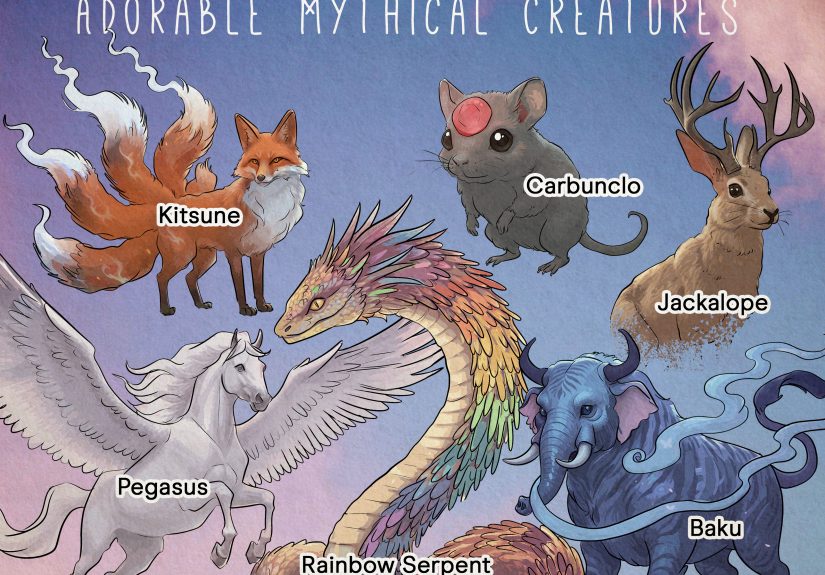
Pegasus, the winged horse of Greek mythology, is one of the most elegant legendary animals ever imagined. Associated with heroic tales and poetic inspiration, Pegasus remains a favorite because it turns the simple dream of flying into a creature you could theoretically feed apples.
3. Phoenix – Egypt, Greece, and Rome
The phoenix is a radiant bird connected with renewal and rebirth. In many retellings, it lives for centuries before rising again in a new form. Despite the dramatic symbolism, the phoenix has a surprisingly adorable side: imagine a glowing firebird with the emotional energy of a motivational poster.
4. Griffin – Ancient Near East and Greece
With the body of a lion and the head and wings of an eagle, the griffin is a majestic guardian creature. It often represents courage, watchfulness, and treasure protection. Cute version? A baby griffin would be all paws, feathers, and “I am guarding this shiny spoon now.”
5. Hippogriff – European Legend
The hippogriff blends horse and griffin features, often shown with wings, an eagle-like front, and a horse-like body. It became especially famous in medieval and Renaissance storytelling. It feels slightly less intense than a griffin and more like the fantasy world’s most dramatic riding companion.
6. Dragon – Global Mythology
Dragons appear in cultures around the world, from powerful East Asian rain-bringers to fire-breathing European beasts. Not all dragons are cute, of course, but small dragons? Irresistible. Give one a teacup-sized hoard and suddenly the ancient symbol of chaos becomes a tiny accountant of treasure.
7. Qilin – China
The qilin is a gentle, auspicious creature in Chinese tradition, often associated with wisdom, prosperity, and good fortune. It may combine features of deer, dragon, ox, and horse. Its calm, noble personality makes it one of the most beautiful mythical creatures in world folklore.
8. Fenghuang – China
The fenghuang is often called the Chinese phoenix, though it has its own rich identity. It represents harmony, virtue, and imperial grace. With bright plumage and a peaceful presence, the fenghuang is less “flaming drama bird” and more “royal garden bird with excellent posture.”
9. Kitsune – Japan
Kitsune are magical foxes in Japanese folklore, known for intelligence, shapeshifting, and spiritual power. Some are wise messengers; others are playful tricksters. Their cute appeal is obvious: fox face, fluffy tail, mysterious powers, and the confidence of someone who definitely knows your secret.
10. Tanuki – Japan
The tanuki, inspired by the real Japanese raccoon dog, is a beloved shapeshifting trickster. In folklore and popular art, tanuki are often cheerful, round-bellied, and mischievous. They feel like the mythical creature most likely to start a prank and then invite everyone to dinner.
11. Kappa – Japan
Kappa are water-dwelling yokai, often described with turtle-like shells, webbed limbs, and a dish-like hollow on their heads. Traditional stories can be cautionary, especially around rivers, but modern depictions often make kappa goofy, cucumber-loving little weirdos. Respect the water, and respect the cucumber budget.
12. Kodama – Japan
Kodama are tree spirits connected to ancient forests. They are usually quiet, mysterious, and deeply tied to nature. Their cuteness comes from the idea that old trees are not just wood and leaves, but tiny spiritual neighbors who would prefer you not be rude to the forest.
13. Tengu – Japan
Tengu are mountain spirits often depicted with birdlike traits or long noses. Some stories portray them as fierce, but they can also be wise, disciplined, and strangely charming. A tiny tengu practicing martial arts on a mountaintop would be both intimidating and adorable.
14. Dokkaebi – Korea
Dokkaebi are Korean goblin-like beings with magical powers. They can be playful, strange, helpful, or troublesome depending on the story. Unlike purely evil monsters, dokkaebi often feel like supernatural pranksters who might challenge you, reward you, or simply make your evening much weirder.
15. Sarimanok – Philippines
The sarimanok is a colorful legendary bird associated with the Maranao people of Mindanao. Often shown with bright wings and a fish held in its beak or talons, it is a dazzling symbol in Filipino art. Cute? Absolutely. It is basically folklore wearing festival colors.
16. Garuda – South and Southeast Asia
Garuda is a powerful bird-like being known in Hindu, Buddhist, and Southeast Asian traditions. Often noble and heroic, Garuda represents strength, speed, and protection. While grand in religious art, a young Garuda would make a very impressive, very feathery guardian buddy.
17. Makara – South and Southeast Asia
The makara is a mythic aquatic creature found in Indian and Southeast Asian art, often blending features of crocodiles, fish, elephants, and other animals. It decorates temples and gateways. Its design is wonderfully imaginative, like a committee of animals agreed to become one fancy water dragon.
18. Simurgh – Persia
The simurgh is a great bird from Persian mythology, often wise, protective, and connected with healing or guidance. It appears in famous literary traditions and art. Though majestic, its nurturing qualities give it a soft side: the mythical equivalent of a giant wise aunt with wings.
19. Peri – Persian and Middle Eastern Folklore
Peris are graceful fairy-like beings from Persian tradition, often associated with beauty and the spirit world. They appear in poetry and folklore as delicate, luminous figures. If mythical creatures had a “sparkly but emotionally complicated” category, peris would sit near the top.
20. Roc – Middle Eastern and Indian Ocean Tales
The roc is a gigantic legendary bird famous in travel tales and folklore. It is usually portrayed as enormous rather than tiny, but size does not cancel charm. Imagine a roc chick: still huge, still fluffy, and already capable of making your roof nervous.
21. Fairy – Celtic and European Folklore
Fairies are among the most famous magical beings in European folklore. They range from tiny winged sprites to powerful otherworldly people. Cute fairies dominate modern imagination, but older tales remind us that fairies should be treated politely. Never underestimate someone just because they glow.
22. Pixie – England
Pixies are small, playful fairy-like creatures often linked with southwestern England, especially Cornwall and Devon. They are mischievous, lively, and perfect for stories about getting lost, finding magic, or discovering that someone has braided your hair while you were not paying attention.
23. Brownie – Scotland and England
Brownies are household spirits known for helping with chores, often at night. They appreciate respect and small offerings, but they dislike being insulted or overpaid. In the world of cute mythical creatures, brownies are the tiny roommates who clean your kitchen and judge your manners.
24. Leprechaun – Ireland
Leprechauns are small Irish fairy-folk often connected with shoemaking, hidden gold, tricks, and luck. Modern images lean heavily on green outfits and pots of gold, but the older figure is more complicated. Still, a tiny cobbler guarding treasure is undeniably charming.
25. Selkie – Scotland, Ireland, and the North Atlantic
Selkies are seal-folk who can shed their sealskins and appear human on land. Their stories are often bittersweet, tied to longing, freedom, and the sea. As mythical creatures, they are gentle and beautiful, with the soulful cuteness of seals plus a whole ocean of mystery.
26. Kelpie – Scotland
The kelpie is a water horse from Scottish folklore. Traditional stories can be dark cautionary tales about dangerous waters, but visually the kelpie is unforgettable: a sleek, magical horse connected to rivers and lochs. Cute? Maybe from a safe distance and with excellent judgment.
27. Nisse or Tomte – Scandinavia
The nisse, also called tomte in Sweden, is a small household or farm spirit. Often pictured with a little cap and a serious expression, this creature protects the home when treated well. It has major “tiny grandpa who knows where every tool is” energy.
28. Troll – Scandinavia
Trolls vary widely in Nordic and Scandinavian folklore. Some are huge and fearsome, while others are smaller, stranger, and almost comically grumpy. Cute trolls usually appear as mossy forest beings with big noses, wild hair, and the social skills of a sleepy boulder.
29. Elf – Norse and Germanic Traditions
Elves appear in Norse and Germanic lore as mysterious beings connected with beauty, magic, illness, nature, and hidden worlds. Modern fantasy often makes them elegant and noble. Their cute version is simple: pointy ears, moonlit forests, and the ability to make silence seem fashionable.
30. Dwarf – Norse Mythology
Dwarfs in Norse mythology are skilled makers associated with craft, hidden places, and powerful objects. They are not merely short humans; they belong to a deep mythic tradition of craftsmanship and magic. Cute angle: tiny forge goggles would sell the whole look.
31. Domovoy – Slavic Folklore
The domovoy is a Slavic household spirit believed to protect the family and home. Often connected with the hearth or domestic spaces, it can be helpful when respected. It is one of the coziest mythical creatures: part guardian, part ancestor, part invisible home inspector.
32. Kikimora – Slavic Folklore
Kikimora is a female house spirit in Slavic tradition. Some versions portray her as troublesome, especially when a household is disorderly. In a cute reinterpretation, she becomes the spooky little reminder to fold laundry before it becomes a mountain with its own weather system.
33. Firebird – Slavic Folklore
The firebird is a glowing magical bird from Slavic tales, often connected with quests, wonder, and impossible beauty. Its feathers shine like captured flame. It is the kind of creature that makes heroes run across kingdoms, which is impressive considering most of us avoid errands after 6 p.m.
34. Mermaid – Global Folklore
Mermaids appear in many cultures as human-fish beings linked to the sea, beauty, mystery, and danger. Some are gentle, some are ominous, and some are simply fabulous. Cute mermaids remain popular because they combine ocean magic with the universal desire for excellent hair underwater.
35. Hippocampus – Ancient Greece and Rome
The hippocampus is a sea-horse creature with the front of a horse and the tail of a fish. Often associated with sea gods and ocean imagery, it is one of mythology’s most naturally cute hybrids. It looks ready to pull a seashell carriage with dignity.
36. Nymph – Ancient Greece
Nymphs are nature spirits connected with forests, rivers, mountains, trees, and springs. They are not “creatures” in the animal sense, but they are essential beings in mythic landscapes. Their charm comes from making every beautiful natural place feel watched over by a graceful personality.
37. Dryad – Ancient Greece
Dryads are tree nymphs, especially linked with oaks in Greek tradition. They represent the life of trees and forests. As cute mythical beings, dryads are perfect for eco-friendly storytelling: hug a tree, and maybe do not offend the elegant spirit living inside it.
38. Faun – Roman Mythology
Fauns are woodland beings with human and goat-like features, associated with forests, music, and rustic nature. They are often playful and lively. Their cute appeal is easy: little horns, dancing hooves, and the vibe of someone who owns three flutes and no calendar.
39. Thunderbird – Indigenous North American Traditions
The thunderbird is a powerful bird-like being in many Indigenous North American traditions, especially associated with sky, storms, power, and protection. It should be approached with cultural respect, not reduced to decoration. Still, its grandeur makes it one of the most awe-inspiring legendary creatures in the world.
40. Jackalope – North American Folklore
The jackalope, often described as a jackrabbit with antelope-like horns, is a playful creature of North American tall tales. It is less ancient than many creatures on this list, but it is charming, funny, and delightfully weird. Basically: a bunny that chose drama.
What These Mythical Creatures Reveal About Culture
One reason mythical creatures are so enduring is that they reflect local landscapes. Island cultures often imagine seal-folk, mermaids, sea horses, and giant birds. Forested regions create tree spirits, elves, trolls, and household guardians. Mountain traditions produce sky beings, dragons, and watchful spirits. Folklore is rarely random; it grows from weather, animals, geography, fear, humor, and the daily problems people needed stories to solve.
Many cute legendary creatures also teach manners. Brownies and domovoy reward respectful households. Kappa stories remind children to be careful near water. Fairies warn against arrogance. Dragons and griffins guard treasure, suggesting that greed has consequences. Even tricksters like tanuki, kitsune, leprechauns, and dokkaebi show that cleverness can be both funny and dangerous.
That balance is what makes them special. A creature can be adorable and meaningful at the same time. The best mythical beings are not just “cute designs.” They carry memory, values, jokes, warnings, dreams, and the creative fingerprints of generations.
Experiences Inspired by 40 Cute Mythical Creatures From Around the World
Exploring cute mythical creatures can become more than reading a list online; it can turn into a creative, educational, and genuinely memorable experience. One of the easiest ways to enjoy this topic is to build a “mythical creature map.” Print or draw a world map, then place each creature near the culture or region most strongly associated with it. Put the kitsune and tanuki in Japan, the domovoy in Eastern Europe, the selkie near the cold North Atlantic, the qilin and fenghuang in China, and the sarimanok in the Philippines. Suddenly, mythology stops feeling like random fantasy trivia and starts looking like a colorful passport through human imagination.
Another fun experience is creating a creature journal. Choose five creatures that match different moods: a phoenix for resilience, a brownie for helpfulness, a unicorn for wonder, a dragon for courage, and a pixie for mischief. Then write a short scene for each one. What would a domovoy do if the family robot vacuum kept bumping into the furniture? Would a jackalope win a school talent show? Could a tiny griffin guard a lunchbox? These playful exercises help writers, students, bloggers, and artists understand how folklore can be respectfully adapted into fresh storytelling.
Families and classrooms can turn the list into a themed activity night. One table could feature “forest spirits” like dryads, kodama, elves, and trolls. Another could focus on “sky and fire creatures” such as the phoenix, firebird, thunderbird, and roc. A third could celebrate “water legends” like selkies, mermaids, hippocampi, kappa, and makara. Add simple crafts, short readings, and creature cards, and you have a mythology night that feels more exciting than a plain lecture and less chaotic than giving glitter to thirty children without supervision.
Artists can use these creatures as inspiration for character design. The trick is to keep cultural context in mind. A creature like the thunderbird, for example, deserves respectful treatment because it belongs to living Indigenous traditions, not just fantasy aesthetics. Similarly, the sarimanok is tied to Maranao art, and the qilin carries deep symbolic meaning in Chinese culture. Good design begins with curiosity, not copying. Look at the creature’s role, personality, symbolism, and environment before turning it into an illustration, logo, plush toy, or game character.
Travel lovers can also use mythical creatures as a unique theme for museum visits. Instead of only looking for famous paintings, search for dragons in ceramics, griffins in medieval carvings, sphinxes in ancient collections, or phoenix-like birds in textiles. Museums become treasure hunts when you realize that mythical beings are hiding in architecture, jewelry, manuscripts, sculpture, and decorative objects. You may go in expecting “old stuff” and come out realizing that humans have always been delightfully extra.
For bloggers and web publishers, the topic offers strong SEO potential because it blends evergreen search interest with visual appeal. Readers search for mythical creatures, cute fantasy animals, legendary creatures from around the world, folklore creatures, and names of mythical beings for writing projects, tattoos, art prompts, games, and school assignments. A well-structured article can serve all those needs while staying informative and fun. Add clear headings, short creature descriptions, cultural notes, and practical inspiration, and the article becomes useful rather than just decorative.
Most importantly, these creatures encourage wonder. In a practical world full of schedules, passwords, and low-battery warnings, folklore gives people permission to imagine the unseen. Maybe the forest has a spirit. Maybe the sea remembers stories. Maybe the house feels warmer when a tiny guardian approves of your soup. Whether you are writing, drawing, teaching, decorating, or simply daydreaming, cute mythical creatures remind us that imagination is one of humanity’s oldest and most joyful tools.
Conclusion
Cute mythical creatures from around the world are more than fantasy decorations. They are cultural storytellers, moral teachers, nature symbols, and imagination engines. From the gentle qilin to the mischievous tanuki, from the cozy domovoy to the shining firebird, each creature reveals how people across history transformed mystery into meaning. Some legends helped explain storms, forests, rivers, and household luck. Others made room for humor, hope, bravery, and a little harmless weirdness.
The next time you see a unicorn sticker, a dragon plush, a fairy illustration, or a phoenix tattoo, remember that behind the cuteness is a long human tradition of wonder. Mythical creatures survive because they help us see ordinary places differently. A tree becomes a home for a spirit. A seal becomes a secret person. A bird becomes rebirth. A rabbit grows antlers because, apparently, folklore also enjoys a good joke.
Note: This article is an original, publication-ready synthesis based on real folklore, mythology, museum, encyclopedia, and cultural reference material. It is written in standard American English for web publishing and does not include unnecessary citation placeholders or source-code artifacts.