Table of Contents >> Show >> Hide
- The Quick Backstory: Who Is Baylee Littrell (Besides “Brian’s Son”)?
- The Audition Moment That Flipped the Switch
- Reason #1: Fans Love a Contestant Who’s Honest About the Advantageand Still Works for It
- Reason #2: Original Songs Make Viewers Feel Like They’re Discovering a Real Artist
- Reason #3: His Voice Sits in a “Goldilocks Zone” for Modern Idol Voting
- Reason #4: The “Nepo Baby” Debate Accidentally Turned Him Into an Underdog
- Reason #5: He Triggered a Massive, Multi-Genre Fan Coalition
- Reason #6: The “Work Ethic” Story Didn’t Feel Like PR
- So Why Did Fans Want Him to WinSpecifically?
- Experiences: What It Felt Like to Watch the “Baylee for the Win” Wave Up Close
- SEO Tags
Every American Idol season has a few contestants who walk in with a storyline so obvious you can practically see the
producers high-fiving in the hallway. Season 23 had one of those on day one: Baylee Littrellyes, that Littrell.
The “my dad is in a famous band” thing is usually a reality-TV shortcut to instant opinions, instant discourse, and instant
comment-section chaos. (It’s also a shortcut to you texting your friend, “TURN IT ON. NOW.”)
And yet, as the season rolled on, something interesting happened: a loud chunk of viewers didn’t just tolerate Baylee being on
the showthey started rooting for him. Not in a “celebrity cameo, cute” way. In a “give this kid the crown” way.
So what’s behind the fan push? It’s not just nostalgia, not just the last name, and definitely not just the dad-and-son duet
that made half the internet reach for tissues and the other half reach for the replay button.
The Quick Backstory: Who Is Baylee Littrell (Besides “Brian’s Son”)?
Baylee Littrell entered Season 23 with a public identity already attached: he’s the son of Backstreet Boys singer Brian Littrell.
But he didn’t show up as a random tourist in the music world. He grew up around touring life, performing young, and later
stepping onto big stages in his own rightfamously opening for the Backstreet Boys during part of their tour run years back.
Translation: he’s not “new to music,” he’s “new to you on this particular stage.”
The bigger point is that Baylee has been chasing a lane that isn’t a carbon copy of his dad’s. His vibe leans
country-pop: emotional storytelling, guitar-forward moments, and that modern “radio clean but still personal”
polish. And if you’ve watched Idol long enough, you know the show loves a contestant who feels both current and
sincerelike someone who could drop a streaming-friendly single tomorrow but also survive a live band on a Sunday night.
The Audition Moment That Flipped the Switch
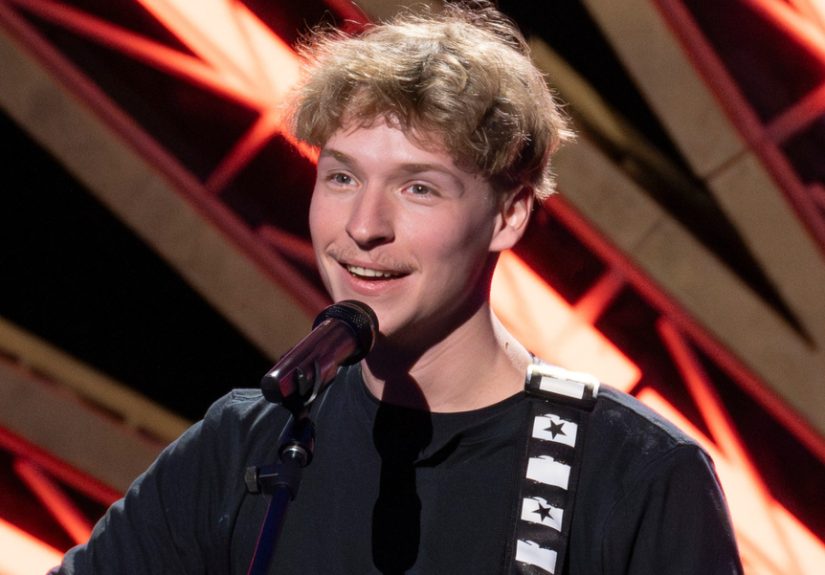
Baylee’s audition became the kind of segment that reality TV dreams are made of: he performed an original song, the judges
clocked that something about him felt familiar, and the famous-family reveal became part of the story. Then came the moment
everyone talked aboutBaylee and Brian singing together at the judges’ request.
It wasn’t just “celebrity dad shows up.” It played like a handoff: a father who knows the industry inside-out watching his kid
step into the spotlight anyway. That’s the emotional recipe Idol has always been best at: big stage, big nerves,
big feelings, and someone taking a risk in public.
Reason #1: Fans Love a Contestant Who’s Honest About the Advantageand Still Works for It
Viewers can smell a “manufactured humble” speech from three states away. The reason Baylee gained supporters is that he didn’t
pretend the last name meant nothing. The show, the judges, and the audience all knew he had a head start in one way:
he’d been around the industry. But the other truth is just as obvious: the industry doesn’t hand you votes.
Fans who backed him weren’t saying, “Give him the trophy because of his dad.” They were saying, “Okay, yeshe has access.
Now watch him try to prove he deserves the room anyway.” That’s a different kind of rooting interest: not denial of privilege,
but a test of what you do with it when everyone’s watching and judging.
Reason #2: Original Songs Make Viewers Feel Like They’re Discovering a Real Artist
Idol is a covers machine, but it’s also an “artist-factory” when a contestant shows they can write.
Baylee didn’t just show up with a Greatest Hits playlist and a dreamhe brought original music into the story early.
That matters to fans because songwriting signals identity.
Later in the season, Baylee performed another original song connected to personal loss and faith, explaining that it came from
a tough period in his life after losing someone close to him. Regardless of where a viewer lands culturally, emotionally honest
songwriting tends to cut through the noise. In a season full of big voices and big personalities, that kind of vulnerability
can feel like a direct line to the audience.
Why that lands with fans
- It’s memorable: People remember lyrics and stories, not just high notes.
- It’s risky: An original song can flopso when it works, it feels earned.
- It’s brand-building: Fans can imagine the EP, the tour, the next single.
Reason #3: His Voice Sits in a “Goldilocks Zone” for Modern Idol Voting
Season 23’s judging panel included Lionel Richie, Luke Bryan, and Carrie Underwoodthree people who know exactly what plays on
big stages and what plays on radio. Baylee’s tone and style fit a lane that’s historically friendly to Idol success:
melodic, emotional, and accessible, without being so niche that casual viewers don’t know what to do with it.
He also has something Idol rewards over time: camera comfort. That doesn’t mean he’s “fake.”
It means he can perform while the entire production machine whirls around himlights, cuts, crowd, judges, pressure, the whole thing.
Fans tend to rally behind contestants who look like they belong on the stage, even when they’re still growing into it.
Reason #4: The “Nepo Baby” Debate Accidentally Turned Him Into an Underdog
Here’s the weird paradox: having a famous parent can make you a target, and targets create storylines, and storylines create
fan armies. Baylee faced loud nepotism criticism onlineand just as loudly, other viewers defended him.
Supporters pointed out something simple: Idol judges can be tougher on contestants who already have perceived advantages,
because the “prove it” bar is higher. In Baylee’s case, even his advancement came with warnings that he needed to step it up.
That kind of on-air accountability changes the viewer’s perception from “handed a spot” to “kept a spot.”
Reason #5: He Triggered a Massive, Multi-Genre Fan Coalition
Baylee’s supporters weren’t one type of viewer. It was a mash-up:
- Backstreet Boys nostalgia fans who showed up for the family moment and stayed for the kid’s growth.
- Country and country-pop listeners who like storytelling and clean melodic delivery.
- Reality-competition regulars who love a pressure-cooker arc and a contestant who improves week to week.
- Songwriting-first fans who want contestants to feel like “artists,” not just “singers.”
In modern Idol, that coalition matters. Voting is emotional, social, and often group-based. The bigger and broader
your “I want this person to win” crowd is, the more you survive the weekly cuts.
Reason #6: The “Work Ethic” Story Didn’t Feel Like PR
One of the reasons viewers stuck with Baylee is that multiple interviews around the season described him putting in serious
worklong days, pressure, and the reality of competition TV being harder than it looks from the couch. Fans love a contestant
who doesn’t act entitled to the outcome.
Baylee’s story played less like “I deserve this because I grew up backstage” and more like “I’m learning this in public and it’s
humbling.” That’s relatable, even if your dad isn’t famous. Especially if you’ve ever tried something hard and realized,
halfway through, that confidence doesn’t cancel effort.
So Why Did Fans Want Him to WinSpecifically?
Plenty of contestants are talented. Plenty have sob stories. Plenty have famous connections. Baylee’s “fans want him to win”
energy came from the combination:
- A memorable entry point: the audition and family moment that felt genuine.
- Artist signals: original songs and a clear lane (country-pop with heart).
- Pressure-tested likability: handling criticism without melting down on camera.
- A growth narrative: not perfect, not invincible, but steadily building.
Even after his run ended, the support made sense in hindsight: fans weren’t voting only for who was “best on paper.”
They were voting for who they believed could turn the show into a real career chaptermusic, touring, releases, the full arc.
Experiences: What It Felt Like to Watch the “Baylee for the Win” Wave Up Close
If you watched Season 23 in real time, you probably lived through the same three-stage emotional cycle that hits every year:
(1) first impressions, (2) group chat debates, and (3) “okay fine, I’m invested now.”
Baylee’s storyline was basically engineered to speed-run that cycle.
Stage one was the instant recognition moment. Someone in the room says, “Wait… Littrell?” and suddenly everybody is googling,
half the couch is going, “No way,” and the other half is going, “Of course.” That’s the first truth of watching competitive TV:
we love feeling like we’re in on the secret, even when the secret is extremely public.
Stage two was the debatebecause Idol fandom loves two things almost as much as singing:
fairness and opinions. You’d see posts like, “He shouldn’t be allowed,” right next to,
“He can’t control his parents,” right next to, “Okay but he actually sounds good.” And that’s where the experience got
interesting, because Baylee became a kind of Rorschach test for what different viewers want the show to be.
Some people watch Idol like it’s the Olympics: the best performance wins, no context needed. Others watch it like it’s
a long-form documentary: the story matters, the growth matters, and the “who are you as an artist” question matters just as much.
Baylee’s presence forced those two viewing styles to bump into each other every weeksometimes politely, sometimes like two carts
colliding in the Target parking lot.
Stage three was the sneaky part: the moment you realize you’re rooting for him even if you swore you wouldn’t.
It usually happens when a contestant does one specific thing that feels human: a lyric that hits, a shaky breath before a note,
a little grin when the band kicks in, or a glance toward family in the audience that says, “Please let me pull this off.”
With Baylee, that “human” moment often came through in the way he framed his songsas something lived, not just performed.
And then there’s the social experience: watching people form tiny fandoms in real time. You’d see the “Baylee train” jokes,
the protective comments, the “let the kid sing” posts, and the edits that turn a 30-second clip into a miniature campaign ad.
It’s easy to roll your eyes at stan cultureuntil you remember it’s basically just modern cheering from the bleachers.
People like picking a person and saying, “I believe in you,” even if the only direct influence they have is tapping a vote button
and posting a dramatic emoji.
By the time the season narrowed, the “Baylee for the win” feeling wasn’t just about one performance. It was about the bigger
experience of watching someone try to separate identity from expectation. Whether you were fully on his side, fully skeptical,
or somewhere in the “I’m conflicted but entertained” middle, Baylee’s run gave fans something Idol always aims for:
a contestant you talk about after the episode ends.