Table of Contents >> Show >> Hide
- What Does “Didn’t Make The Cut” Mean?
- 20 Natural Wonders That Still Deserve the Spotlight
- 1. Angel Falls, Venezuela
- 2. Bay of Fundy, Canada
- 3. Black Forest, Germany
- 4. Cliffs of Moher, Ireland
- 5. The Dead Sea, Jordan and Israel
- 6. El Yunque National Forest, Puerto Rico
- 7. Galápagos Islands, Ecuador
- 8. Grand Canyon, United States
- 9. Great Barrier Reef, Australia
- 10. Jeita Grotto, Lebanon
- 11. Mount Kilimanjaro, Tanzania
- 12. Maldives Atolls
- 13. Masurian Lake District, Poland
- 14. Matterhorn/Cervino, Switzerland and Italy
- 15. Milford Sound, New Zealand
- 16. Mud Volcanoes of Azerbaijan
- 17. Sundarbans, Bangladesh and India
- 18. Uluru-Kata Tjuta, Australia
- 19. Mount Vesuvius, Italy
- 20. Yushan, Taiwan
- Why These Natural Wonders Matter
- How to Visit Overlooked Natural Wonders Responsibly
- Experiences Related to “20 Natural Wonders That Didn’t Make The Cut”
- Conclusion
Some natural wonders win global fame. Others stand in line politely, adjust their backpack straps, and somehow miss the final spotlight. That is the funny thing about “official” lists: nature never asked to be ranked. A waterfall does not wake up worried about votes. A mountain does not refresh a results page. A coral reef does not practice an acceptance speech in front of a mirror.
Still, lists are useful because they make us look closer. The New7Wonders of Nature campaign, global travel polls, UNESCO recognition, and national park designations have all helped bring attention to extraordinary landscapes. But many places that did not land in the most famous winner circles are still spectacular, scientifically important, culturally meaningful, and absolutely capable of making your camera roll beg for mercy.
This guide explores 20 natural wonders that didn’t make the cut but deserve serious respect. Some were finalists in global campaigns. Some are UNESCO-recognized landscapes. Some are icons hiding in plain sight. All of them prove one thing: when nature gets dramatic, it does not need a trophy.
What Does “Didn’t Make The Cut” Mean?
In this article, “didn’t make the cut” refers to places that are often overlooked beside the world’s most promoted natural landmarks, including famous “seven wonders” style lists. These destinations are not lesser. They are simply less crowned. Think of them as the brilliant supporting cast members who steal the movie every time they appear.
They include canyons, caves, forests, volcanoes, reefs, islands, waterfalls, deserts, mountains, and mangrove ecosystems. Many are protected because of rare wildlife, unusual geology, or cultural significance. Others are fragile reminders that travel must be done with care, humility, and a healthy respect for warning signs.
20 Natural Wonders That Still Deserve the Spotlight
1. Angel Falls, Venezuela
Angel Falls is the kind of waterfall that makes other waterfalls look like they are still in training. Dropping from Auyán-tepui in Canaima National Park, it is widely recognized as the tallest uninterrupted waterfall in the world. The water falls from such a height that mist often drifts before it reaches the base, giving the scene an almost dreamlike effect.
Its remote location adds to the magic. Reaching it usually requires flights, river travel, and patience, which is probably nature’s way of saying, “You may admire me, but please make an effort.” The surrounding tepui formations are ancient table mountains, creating one of South America’s most surreal landscapes.
2. Bay of Fundy, Canada
The Bay of Fundy is famous for having the highest tides on Earth, with tidal differences that can reach around 16 meters in some areas. That is not a tide; that is the ocean changing its mind in a very dramatic way.
At low tide, visitors can walk on exposed seafloor near sculpted cliffs and sea stacks. Hours later, that same place may be covered by rushing water. The bay is also important for fossils, coastal geology, whale watching, and migratory birds. It is a reminder that the ocean is not a backdrop. It is a moving, breathing force.
3. Black Forest, Germany
The Black Forest sounds like the setting of a fairy tale because, frankly, it behaves like one. Located in southwest Germany, this mountain region is filled with dense woodland, rolling pastures, traditional villages, lakes, waterfalls, and enough atmosphere to make every hiking trail feel like the first page of an old storybook.
Beyond its beauty, the region is an important biosphere landscape where forests, grazing areas, and human communities have shaped one another for centuries. It is not just dark trees and cuckoo clocks. It is a living cultural and ecological system.
4. Cliffs of Moher, Ireland
The Cliffs of Moher rise sharply above the Atlantic on Ireland’s west coast, reaching about 214 meters at their highest point. Wind, waves, and time have carved a coastline that looks both elegant and slightly intimidating, like nature dressed for a formal event but still ready to throw a chair.
On clear days, visitors can see the Aran Islands, Galway Bay, and distant mountain ranges. The cliffs are also home to seabirds and layered rock formations that reveal deep geological history. Their popularity is well earned, but the best experience comes from staying on official paths and respecting the edge. The view is better when you are not trying to become part of it.
5. The Dead Sea, Jordan and Israel
The Dead Sea is a landlocked salt lake famous for its extreme salinity and its location at the lowest exposed point on Earth’s land surface. Floating there feels less like swimming and more like being politely rejected by gravity.
Its mineral-rich waters and surrounding desert landscapes have attracted visitors for thousands of years. Yet the Dead Sea is also shrinking, making it one of the planet’s most recognizable environmental warning signs. It is beautiful, strange, historic, and fragile all at once.
6. El Yunque National Forest, Puerto Rico
El Yunque is the only tropical rainforest in the U.S. National Forest System, and it packs impressive biodiversity into a relatively small area. Located in northeastern Puerto Rico, it features waterfalls, mountain rivers, lush vegetation, cloud-wrapped peaks, and the soundtrack of coquí frogs.
Its trails can feel like stepping into a green cathedral where the roof occasionally leaks because, well, rainforest. El Yunque is also a powerful example of ecological recovery and resilience after hurricanes. It rewards travelers who slow down, listen, and accept that humidity is part of the admission fee.
7. Galápagos Islands, Ecuador
The Galápagos Islands are often described as a living museum of evolution. Located about 1,000 kilometers off the coast of Ecuador, the archipelago is shaped by volcanic activity, ocean currents, and species found nowhere else.
Giant tortoises, marine iguanas, blue-footed boobies, sea lions, and finches all play roles in one of the world’s most famous natural laboratories. The islands did not need a beauty contest to become legendary. They helped change how humans understand life itself.
8. Grand Canyon, United States
The Grand Canyon is so famous that calling it “overlooked” seems almost illegal. Yet in some global wonder rankings, even this mile-deep masterpiece has not always taken the top prize. The canyon stretches across northern Arizona and reveals rock layers that tell a story nearly two billion years in the making.
What makes the Grand Canyon unforgettable is not only its size but its changing light. Morning turns the walls soft gold. Afternoon sharpens the shadows. Sunset makes everyone suddenly poetic, even the guy who has been complaining about parking for 20 minutes.
9. Great Barrier Reef, Australia
The Great Barrier Reef is the world’s largest coral reef system, home to thousands of marine species, including corals, fish, mollusks, turtles, rays, and countless smaller organisms doing big ecological work.
Its colors can seem unreal: electric blues, glowing greens, sandy shallows, and coral gardens that look like underwater cities. But the reef is also under serious stress from warming oceans, bleaching, storms, and pollution. Visiting or writing about it responsibly means celebrating its wonder while recognizing its vulnerability.
10. Jeita Grotto, Lebanon
Jeita Grotto is a limestone cave system north of Beirut, known for its upper galleries, underground river, stalactites, stalagmites, and cathedral-like chambers. If caves had luxury architecture magazines, Jeita would be on the cover.
The grotto is both beautiful and hydrologically important, connected to water systems that support surrounding communities. Its delicate formations took immense time to develop, proving once again that nature is the most patient artist in the room.
11. Mount Kilimanjaro, Tanzania
Mount Kilimanjaro rises to 5,895 meters, making it the highest point in Africa. Its snow-capped summit above the savanna has become one of the world’s most recognizable mountain images.
Kilimanjaro is a volcanic massif with ecological zones that shift as climbers ascend: cultivated foothills, montane forest, heath, alpine desert, and finally the icy summit zone. It is not just a climb; it is a vertical journey through climate, biology, and endurance.
12. Maldives Atolls
The Maldives is made up of low-lying coral islands and atolls scattered across the Indian Ocean. Its turquoise lagoons and white-sand beaches are famous, but the real wonder lies beneath the surface: coral reefs, seagrass beds, manta rays, turtles, reef fish, and marine ecosystems that support both biodiversity and local livelihoods.
The Maldives also represents one of the clearest examples of climate vulnerability. Rising seas and coral stress are not abstract future problems here. They are part of the national conversation, making the islands both a paradise and a powerful environmental symbol.
13. Masurian Lake District, Poland
The Masurian Lake District in northeastern Poland contains more than 2,000 lakes connected by rivers and canals. It is a dreamscape for boating, kayaking, cycling, birdwatching, and pretending you are the main character in a peaceful European travel documentary.
Glacial history shaped much of the region, leaving behind rolling hills, forests, wetlands, and waterways. Unlike some natural wonders that shout, Masuria whispers. Its beauty is slower, quieter, and perfect for travelers who like their scenery with a side of calm.
14. Matterhorn/Cervino, Switzerland and Italy
The Matterhorn, known as Cervino in Italian, is one of the most iconic peaks in the Alps. Its sharp pyramid shape makes it instantly recognizable, as if a mountain designer got really serious about symmetry.
Straddling the Swiss-Italian border, the Matterhorn has long attracted climbers, photographers, skiers, and travelers who enjoy looking at mountains while drinking something warm. Its beauty is dramatic, but it is also a serious alpine environment where weather and terrain demand respect.
15. Milford Sound, New Zealand
Milford Sound sits within Fiordland National Park on New Zealand’s South Island. Despite its name, it is technically a fiord, carved by glaciers and later flooded by the sea. The result is a landscape of steep cliffs, waterfalls, dark water, rainforest, and peaks that look like they were sketched by someone with a flair for the dramatic.
Rain is common here, and that is good news. After heavy rainfall, temporary waterfalls pour down the cliffs in silver ribbons. In Milford Sound, bad weather often improves the show.
16. Mud Volcanoes of Azerbaijan
Azerbaijan is known for having one of the world’s greatest concentrations of mud volcanoes. These are not lava-spewing volcanoes in the classic sense. Instead, they bubble, burp, ooze, and occasionally erupt mud, gas, and water from deep underground.
The result is a strange lunar landscape that feels part geology lesson, part science fiction set. NASA has even studied mud volcano landscapes as analogs for understanding features on other planets. That is a strong résumé for a pile of bubbling mud.
17. Sundarbans, Bangladesh and India
The Sundarbans form one of the largest mangrove forest systems on Earth, spread across the delta of the Ganges, Brahmaputra, and Meghna rivers. This watery maze of tidal channels, mudflats, islands, and salt-tolerant trees supports wildlife such as Bengal tigers, crocodiles, dolphins, birds, and fish.
Mangroves are natural storm buffers, carbon stores, nurseries for marine life, and lifelines for local communities. The Sundarbans are not just scenic. They are protective infrastructure built by roots, tides, and time.
18. Uluru-Kata Tjuta, Australia
Uluru-Kata Tjuta National Park is one of Australia’s most significant natural and cultural landscapes. Uluru, the massive sandstone monolith, changes color with the light, glowing red, orange, purple, and brown depending on the hour and weather.
The park is also deeply connected to Aṉangu culture, law, and knowledge. Its wonder cannot be separated from the people who have cared for it for tens of thousands of years. To visit respectfully is to understand that some landscapes are not only seen; they are listened to.
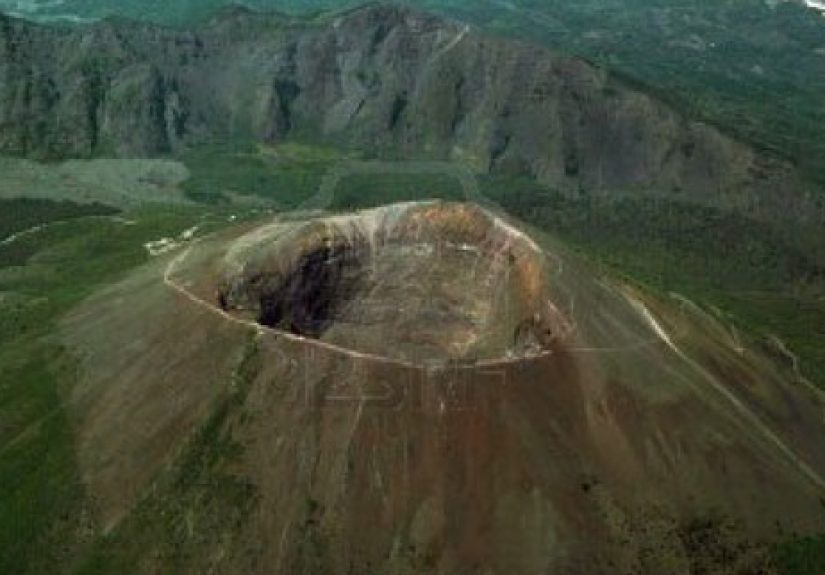
19. Mount Vesuvius, Italy
Mount Vesuvius rises near the Bay of Naples and remains one of the world’s most famous volcanoes because of its eruption in AD 79, which buried Pompeii and Herculaneum. It is beautiful, historic, and unsettling in the way only an active volcano near a major population center can be.
Today, Vesuvius National Park protects geological features, plant life, and cultural history around the volcano. Standing near the crater is a reminder that Earth’s surface is not fixed. It is restless, creative, and occasionally very dramatic.
20. Yushan, Taiwan
Yushan, also known as Jade Mountain, is Taiwan’s highest peak, rising above 3,900 meters. It sits within Yushan National Park, a rugged alpine region known for high mountains, deep valleys, forests, wildlife, and challenging hiking routes.
Yushan is a powerful example of vertical biodiversity. Subtropical lowlands give way to alpine environments, creating habitats for many species and offering hikers a journey through changing ecosystems. It may not dominate every global list, but for Taiwan, it is a national treasure.
Why These Natural Wonders Matter
The phrase “natural wonder” can sound like marketing language, but it points to something real. These places matter because they preserve geological history, protect rare species, support local communities, and remind humans that the planet is older, stranger, and more imaginative than our schedules suggest.
They also expose the limits of ranking nature. How do you compare a coral reef to a volcano? A rainforest to a salt lake? A mangrove delta to a glacial fiord? It is like judging a cooking contest where one contestant brings soup, another brings cake, and a third arrives with a thunderstorm.
The better question is not “Which wonder is best?” It is “What does each place teach us?” The Grand Canyon teaches deep time. The Galápagos teach adaptation. The Great Barrier Reef teaches interdependence. The Dead Sea teaches fragility. The Sundarbans teach resilience. El Yunque teaches recovery. The Bay of Fundy teaches that the ocean has excellent stage presence.
How to Visit Overlooked Natural Wonders Responsibly
Many of these destinations are fragile. Some face climate change, overtourism, pollution, erosion, habitat loss, or cultural disrespect. A natural wonder does not stay wonderful by accident. It survives because people protect it, manage it, study it, and visit it carefully.
Responsible travel begins before arrival. Learn the local rules. Book licensed guides where required. Stay on marked trails. Avoid touching rock art, coral, cave formations, or wildlife. Do not remove stones, shells, plants, or “just one tiny souvenir.” Nature is not a gift shop with poor security.
Travelers should also support local communities. Eat locally, hire local guides, respect Indigenous and traditional knowledge, and choose operators that follow conservation standards. A beautiful photo is nice. A destination that remains healthy after you leave is better.
Experiences Related to “20 Natural Wonders That Didn’t Make The Cut”
The best way to experience overlooked natural wonders is to stop treating them like checklist items. A checklist can help you plan, but it can also make travel feel like a grocery run with better scenery. These places deserve more than a quick selfie and a caption that says “bucket list.” They deserve time.
One of the most rewarding experiences is arriving early or staying late. At famous viewpoints, midday can feel like a meeting of every camera on Earth. But sunrise at a canyon rim, mist over a rainforest trail, or golden light on sea cliffs can feel completely different. The landscape becomes quieter. Details appear. Birds become louder than tour buses. Even your own thoughts begin to act more politely.
Another valuable experience is learning one specific story before visiting. At Uluru, that might mean understanding why the site is sacred to Aṉangu people. In the Galápagos, it might mean learning how ocean currents shape wildlife patterns. At the Bay of Fundy, it might mean checking tide tables and realizing that the “floor” you are walking on will soon belong to the sea again. A little knowledge turns scenery into meaning.
For travelers who love photography, overlooked natural wonders offer a special advantage: variety. The Mud Volcanoes of Azerbaijan are not pretty in the postcard sense, but they are visually unforgettable. The Masurian Lakes may not shout with vertical cliffs, but they reward patience with reflections, mist, reeds, boats, and quiet shorelines. The Black Forest is moody. The Maldives is luminous. Vesuvius is tense and historic. Each place asks for a different eye.
Food and local culture also shape the experience. Natural wonders are rarely isolated from human life. A hike in the Black Forest feels richer when paired with village traditions. A visit to the Cliffs of Moher connects naturally with Irish coastal culture. Exploring Puerto Rico’s El Yunque can be part of a broader journey through music, food, history, and Caribbean identity. The landscape may be the headline, but the people nearby give the story its voice.
There is also an emotional side to visiting places that “didn’t make the cut.” They remind us that recognition is not the same as value. A quiet lake district can be as restorative as a famous mountain. A mangrove forest can be as important as a grand canyon. A cave can hold as much wonder as a waterfall. The world is full of runners-up that are not really runners-up at all.
Finally, the most meaningful experience is leaving with a sense of responsibility. If a reef is bleaching, a salt lake is shrinking, or a forest is recovering from storms, the visit should not end with admiration alone. It should create awareness. Wonder is not just something we consume. It is something we inherit, protect, and pass on.
Conclusion
The world’s most famous natural wonders deserve their applause, but the planet has never limited itself to a top-seven format. From Angel Falls to Yushan, these 20 natural wonders that didn’t make the cut prove that beauty, science, culture, and adventure often live beyond the obvious lists.
Some are enormous. Some are delicate. Some are remote. Some are surprisingly accessible. Together, they show that nature’s “almost famous” places are often unforgettable once you meet them. Awards are temporary. Rock, water, forest, reef, ice, tide, and time are playing a much longer game.
So the next time a travel list tells you what the world’s greatest wonders are, read it, enjoy it, and then look just outside the frame. That is where many of the best stories begin.