Table of Contents >> Show >> Hide
- Why burning bush is a problem (and why it’s not just “someone else’s issue”)
- What to look for in a burning bush replacement
- 12 excellent alternatives to invasive burning bush
- 1) Black chokeberry (Aronia melanocarpa)
- 2) Red chokeberry (Aronia arbutifolia)
- 3) Virginia sweetspire (Itea virginica)
- 4) Fothergilla (dwarf or large, Fothergilla gardenii / Fothergilla major)
- 5) Ninebark (Physocarpus opulifolius)
- 6) Arrowwood viburnum (Viburnum dentatum)
- 7) Blackhaw viburnum (Viburnum prunifolium)
- 8) Highbush blueberry (Vaccinium corymbosum)
- 9) Redtwig dogwood (Cornus sericea)
- 10) Spicebush (Lindera benzoin)
- 11) Witch hazel (Hamamelis virginiana)
- 12) Fragrant sumac (Rhus aromatica)
- Quick picks based on what you loved about burning bush
- If you already have burning bush: how to phase it out without creating a bigger mess
- FAQ: the questions people Google at 11:47 p.m.
- Conclusion: trade the drama shrub for a better-looking, better-behaved landscape
- Field notes and “been-there” experiences (to make the switch easier)
Burning bush (Euonymus alatus) is the landscaping equivalent of a glitter bomb: it looks amazing at first,
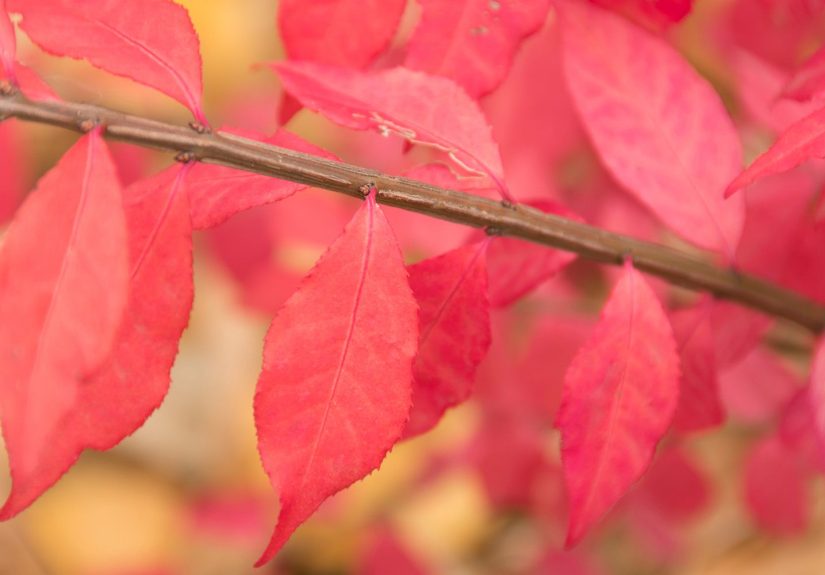
then shows up everywhere you didn’t invite it. That neon-red fall color is legendaryso it’s no surprise it became
a suburban favorite. The problem is, in many parts of the U.S., burning bush doesn’t politely stay in your yard.
Birds eat the fruit, spread the seeds, seedlings pop up in woodlands, and the plant can form dense thickets that
crowd out native vegetation.
The good news: you can get the same “wow” factor (fall color, berries, structure, hedge potential) with shrubs that
behave themselvesand often help birds, pollinators, and the rest of your local ecosystem. Below you’ll find
practical, region-friendly alternatives, how to choose the right one, and what to do if you’re ready to retire an
existing burning bush without starting a backyard sequel to Jurassic Park.
Why burning bush is a problem (and why it’s not just “someone else’s issue”)
Burning bush was introduced as an ornamental plant and earned its reputation for toughness: it tolerates a wide
range of soils, handles sun and shade, and produces lots of fruit. Those same qualities help it escape cultivation.
Birds disperse seeds into natural areas, and the shrub can establish under forest canopies and along edges where it
competes with native shrubs and tree seedlings.
In other words, even if your plant looks perfectly “well-mannered,” it can still be contributing to new colonies
down the roadliterally. That’s why many universities, conservation groups, and state programs encourage homeowners
to choose non-invasive substitutes, especially in the Northeast, Mid-Atlantic, and parts of the Midwest where
burning bush invasions are well documented.
What to look for in a burning bush replacement
Don’t shop for a substitute by vibes alone (tempting, though). Instead, match the plant to your site and your goal.
Ask yourself:
- What job is it doing? Hedge, foundation planting, specimen shrub, privacy screen, slope control?
- How much sun? Full sun, part shade, bright shade, deep shade?
- How wet is the soil? Dry and sandy, average, periodically soggy, rain-garden wet?
- How big can it get? Burning bush often matures much larger than people expectavoid repeating that surprise.
- What “wow” do you want? Fall color, spring flowers, winter stems, berries, or all of the above?
Once you know the assignment, the right alternative becomes obviousand your future self won’t be out there
wrestling an overgrown shrub with hedge shears and regret.
12 excellent alternatives to invasive burning bush
The plants below are widely recommended by U.S. extension services and native plant references as non-invasive
options that can deliver color, structure, and wildlife value. Availability varies by region, but most nurseries
can source at least a few of these.
1) Black chokeberry (Aronia melanocarpa)
If you’re chasing that dramatic fall foliage, black chokeberry is one of the best “same energy” replacements.
It’s a native shrub with white spring flowers, glossy summer leaves, and reliable red-to-burgundy fall color.
The dark berries are attractive to birds and can be used in jams or baking (they’re tartthink “pucker with purpose”).
- Best for: Fall color, mixed borders, wildlife gardens, hedges (especially in informal landscapes)
- Site notes: Tolerates a range of soils; often performs beautifully in average to moist sites
- Pro tip: If you want a shorter, tidier look, ask for compact cultivars rather than the straight species.
2) Red chokeberry (Aronia arbutifolia)
Prefer brighter berries and a more upright habit? Red chokeberry brings clusters of red fruit that persist into
cooler seasons and can look fantastic against fall foliage. It’s another native option that fits the “ornamental
shrub” role without the ecological side effects.
- Best for: Seasonal interest, wetter areas, naturalized edges
- Site notes: Often a strong pick where soils stay on the moist side
3) Virginia sweetspire (Itea virginica)
Sweetspire is what you plant when you want a shrub that looks good in three seasons and doesn’t panic when the soil
is damp. It has fragrant, tassel-like white flowers in late spring/early summer and excellent red-purple fall color
that can linger. Many gardeners use it as a foundation plant, mass planting, or a “soft edge” between lawn and
woodland.
- Best for: Fall color + flowers, rain gardens, part shade, erosion control on moist slopes
- Site notes: Flexiblesun or part shade; appreciates consistent moisture, especially while establishing
- Heads-up: It can spread slowly by suckers (usually a benefit in mass plantings; easy to manage if not).
4) Fothergilla (dwarf or large, Fothergilla gardenii / Fothergilla major)
Fothergilla is basically a “boutique burning bush alternative” for people who like refined plants and dramatic
fall color. In spring, it produces creamy white, bottlebrush flowers with a honeyed scent. In fall, foliage can
shift through yellow, orange, and redoften on the same plant like it’s showing off.
- Best for: Specimen shrubs, foundation beds, high-impact fall color
- Site notes: Prefers well-drained soil; often happiest with some sun and slightly acidic conditions
5) Ninebark (Physocarpus opulifolius)
Ninebark is a native workhorse with exfoliating bark (winter interest!), spring flowers, and tough-as-nails
performance once established. It comes in many cultivarssome with deep purple foliageso you can get a bold
landscape look even without burning bush’s red fall flash.
- Best for: Hedges, screens, low-maintenance foundation plantings, winter texture
- Site notes: Adaptable; handles sun well, tolerates many soil types
- Design idea: Pair purple-leaved ninebark with a golden native (like sweetfern in some regions) for contrast.
6) Arrowwood viburnum (Viburnum dentatum)
If you loved burning bush for its rounded shape and “shrub presence,” arrowwood viburnum is a smart swap.
It offers spring flowers, berries that birds appreciate, and dependable structureoften with handsome fall color,
depending on cultivar and conditions.
- Best for: Informal hedges, privacy screens, wildlife plantings
- Site notes: Generally adaptable; check local native range and select region-appropriate viburnums
7) Blackhaw viburnum (Viburnum prunifolium)
Blackhaw viburnum can read as a large shrub or small tree, making it a great option if your burning bush has
quietly grown into a “what even is that?” size. It provides spring bloom, fruit, and a classic woodland look that
fits naturally in many eastern landscapes.
- Best for: Larger spaces, naturalistic borders, understory planting
8) Highbush blueberry (Vaccinium corymbosum)
Want fall color and snacks? Highbush blueberry delivers white spring flowers, edible berries, and vibrant
red-orange fall foliage. It’s a strong replacement where soils are acidic (or can be made acidic) and drainage is
reasonable.
- Best for: Edible landscapes, hedges with benefits, pollinator-friendly yards
- Site notes: Needs acidic soil; often performs best with consistent moisture and organic matter
9) Redtwig dogwood (Cornus sericea)
Burning bush gets all the fall glory, but redtwig dogwood wins winter. Its stems glow red against snow (or gray
January lawns), and it tolerates moist soils like a champ. In growing seasons, it’s a leafy, reliable shrub that
supports wildlife and works well in mass plantings.
- Best for: Winter color, wetter soils, rain gardens, naturalized edges
- Maintenance note: For the brightest stems, many gardeners prune older stems periodically to encourage fresh growth.
10) Spicebush (Lindera benzoin)
Spicebush is a fantastic native shrub for part shadeespecially if you’re replacing burning bush at a woodland edge.
It has aromatic leaves (crush one and you’ll understand the name), subtle spring flowers, and bright red berries on
female plants. It’s also known as a host plant for the spicebush swallowtail butterfly, which is a pretty solid
résumé line for a shrub.
- Best for: Part shade, native habitat gardens, understory plantings
- Site notes: Likes richer, moister soils but can adapt in many landscapes once established
11) Witch hazel (Hamamelis virginiana)
Witch hazel is the “plot twist” alternative: instead of screaming in fall with leaf color alone, it blooms in fall
with ribbon-like yellow flowers when many other plants are shutting down for the season. It can be a large shrub
or small tree, ideal if you want a specimen plant with real character.
- Best for: Fall flowers, woodland gardens, specimen planting
- Site notes: Often happiest in part shade with decent moisture
12) Fragrant sumac (Rhus aromatica)
Need a tough, lower-growing shrub with fall color that can handle heat, drought, and slopes? Fragrant sumac is a
native option often used for erosion control and mass plantings. Fall color can be excellent, and the plant has a
rugged, no-drama personality that makes it great for problem spots.
- Best for: Slopes, dry areas, groundcover-like shrub masses
- Site notes: Sun-friendly and durable; often used where “fussy” shrubs fail
Quick picks based on what you loved about burning bush
- You want that fiery fall color: Black chokeberry, Virginia sweetspire, fothergilla, highbush blueberry
- You need a hedge or screen: Ninebark, arrowwood viburnum (and in some regions, native hollies for year-round structure)
- Your soil stays wet: Virginia sweetspire, redtwig dogwood, chokeberries
- You’ve got part shade: Spicebush, witch hazel, Virginia sweetspire
- You want winter interest: Redtwig dogwood (stems), ninebark (bark texture), some viburnums (structure)
- You want “pretty + useful”: Highbush blueberry (berries) or chokeberry (ornamental + fruit)
If you’re planting for wildlife, lean toward natives that match your region’s natural plant communities.
Your local ecosystem recognizes those plants like old friendsand tends to reward you with more birds,
more pollinators, and fewer landscape headaches.
If you already have burning bush: how to phase it out without creating a bigger mess
Removing an established burning bush can feel like breaking up with a plant that “didn’t technically do anything
wrong” in your yard. But if you’re ready to replace it, a little strategy helps:
-
Plan the replacement first. If the burning bush is providing privacy or foundation structure,
install the new shrub(s) nearby (or in phases) so you’re not left staring at a bald spot for two seasons. -
Remove fruiting branches carefully. If the shrub is loaded with berries, prune and bag them so
seeds don’t scatter while you work. -
Expect seedlings. Monitor the surrounding area for a couple of yearsespecially under nearby
trees or fence lines where birds perch. Pull seedlings when soil is moist for easiest removal. -
Don’t compost berries or seed-bearing debris. Treat them like you’d treat weeds with mature seed
heads: contain and dispose of them properly.
For large shrubs with vigorous regrowth, some homeowners consult local extension guidance or a qualified landscape
professional for best removal timing and methods appropriate to their state and site. The goal is simple: remove
the plant and prevent it from re-establishing.
FAQ: the questions people Google at 11:47 p.m.
Is burning bush illegal where I live?
It depends. Several states and local jurisdictions restrict the sale or planting of burning bush, and rules can
change over time. If you’re unsure, check your state’s invasive plant list or a local extension resource. Even
where it’s still sold, many experts recommend choosing alternatives because of documented spread into natural areas.
What about “sterile” burning bush varieties?
Plant breeders and horticultural programs have worked on seedless or sterile forms, and some are marketed as
non-invasive. Availability and acceptance vary, and regulations often target the species itself. If you’re tempted,
treat it like you’d treat “sugar-free candy”: read the label, understand the fine print, and double-check local
rules. If your goal is eco-friendly landscaping with zero second-guessing, native alternatives are the cleanest win.
Will I lose that bright red fall color if I switch?
You might lose the exact neon shade, but you can absolutely keep dramatic fall color. Chokeberries, sweetspire,
fothergilla, and blueberries can be stunningoften with the added bonus of flowers, fruit, or winter interest.
Conclusion: trade the drama shrub for a better-looking, better-behaved landscape
Burning bush earned its popularity honestly: it’s tough and gorgeous in autumn. But the ecological costespecially
in regions where it spreads aggressivelymakes it a poor long-term choice. Replacing it isn’t about sacrificing
beauty; it’s about upgrading your yard so it works with your local environment rather than against it.
Start by matching your site conditions (sun, moisture, size) with the right alternative. Then choose the kind of
seasonal interest you wantfall color, berries, flowers, winter stems, or a mix. In many cases, you’ll end up with
a shrub that’s just as attractive, more interesting across seasons, and far more beneficial to birds and pollinators.
Field notes and “been-there” experiences (to make the switch easier)
Homeowners usually don’t remove burning bush because they suddenly hate red fall color (that would be weird).
They remove it because it’s either spreading, banned, or they’ve had the “oh no” momentspotting baby burning bushes
sprouting like tiny red-flag warnings along a fence, under a maple, or in the woods behind the property.
The most successful transitions tend to follow a simple pattern: replace the function first, then remove the original.
One common scenario is the foundation planting trap. Burning bush was often installed under windows
because it was “low maintenance” (famous last words) and looked tidy when small. Ten years later, it’s blocking light,
swallowing the front walkway, and producing berries like it’s trying to start a franchise. In these cases, compact
replacements such as Virginia sweetspire cultivars or a smaller chokeberry selection
are an easy win: you keep a clean, mounded look, you get seasonal color, and the plant stays in the size neighborhood
you actually wanted.
Another frequent story involves HOA hedges. People like burning bush as a hedge because it shears
welluntil it doesn’t, because it’s always trying to become a much larger shrub. When a neighborhood wants a uniform
hedge that’s not a maintenance nightmare, ninebark often shines. It’s hardy, it fills in well, and
it doesn’t need weekly emotional support with pruning. Some gardeners even mix ninebark with viburnum for a hedge
that looks intentional rather than “one shrub cloned 18 times.”
Then there’s the wet corner problem. Burning bush tolerates moisture, but if you have a spot that
stays damp after rain, switching to plants that truly enjoy it can transform that area from “muddy regret” to a
feature. Sweetspire and redtwig dogwood are two stars here. The first gives you flowers and fall color; the second
gives you winter stems that look like your landscape has a warm gloweven when your toes are freezing.
A lot of gardeners who make this swap say the same thing: once the plants establish, that damp area becomes one of
the prettiest parts of the yard.
The final experience worth sharing is the timing lesson. People who remove burning bush and then
go shopping afterward often end up frustratedeither because the nursery doesn’t have what they want, or because the
replacement doesn’t fit the site. The smoother approach is to pick and source your replacement first (even pre-order
it), plant it, and then remove the burning bush in a controlled way. That approach also helps psychologically:
you’re not “losing a favorite shrub,” you’re upgrading to something better. And once you see a chokeberry
turn burgundy in fall or a sweetspire hold its color late into the season, you’ll wonder why burning bush got all
the attention for so long.