Table of Contents >> Show >> Hide
- 1. The Giant Pits Near Stonehenge That May Have Marked a Sacred Boundary
- 2. Peru’s “Band of Holes” Still Looks Like a Puzzle Built by a Very Organized Ghost
- 3. A 7,000-Year-Old Stone Wall Beneath the Sea Off France
- 4. The Viking Woman Buried With Scallop Shells Covering Her Mouth
- 5. The Tomb of an Unknown Egyptian Pharaoh at Abydos
- 6. A Maya Royal Tomb in Belize That May Belong to a Dynasty Founder
- 7. Medieval Men Buried in a Prehistoric Dolmen in Spain
- 8. A Vanished Human Lineage in Colombia
- 9. The 430,000-Year-Old Wooden Tools From Greece
- 10. A 4,000-Year-Old Sudanese Burial With an Unknown Funeral Ritual
- Why These Recent Archaeological Mysteries Matter
- What It Feels Like to Stand at the Edge of an Archaeological Mystery
- Conclusion
- SEO Tags
Archaeology has a delightful habit of acting like the world’s oldest scavenger hunt. Just when researchers think they’ve found a neat answer, the ground coughs up something that says, “Actually, no. Try again.” Over the past couple of years, archaeologists have uncovered a fresh batch of discoveries that feel less like tidy historical footnotes and more like ancient cliffhangers. From giant engineered pits near Stonehenge to a ruler’s tomb in Belize that may or may not belong to a dynasty founder, these recent archaeological mysteries remind us that the past is still very much in the business of keeping secrets.
This list rounds up 10 of the most fascinating recent archaeological discoveries that still raise big questions. Some mysteries involve identity. Some involve ritual. Some involve purpose. And a few are basically the ancient world’s version of finding a locked room, a missing label, and a note that says, “Good luck.” If you love recent archaeological discoveries, ancient civilizations, and unsolved historical puzzles, this one is for you.
1. The Giant Pits Near Stonehenge That May Have Marked a Sacred Boundary
One of the strangest recent archaeological mysteries comes from the landscape around Stonehenge. Researchers have continued studying a series of enormous pits near Durrington Walls, and the latest work strongly suggests they were intentionally dug by humans around 4,000 years ago. These are not tiny dents in the dirt. Each pit is massive, and together they form a broad ring in the landscape, which immediately raises the kind of question archaeologists both love and dread: why would anyone build this?
The newest analyses have helped rule out natural explanations, which is progress. But that only sharpens the bigger mystery. Scholars suspect the pits may have formed a sacred boundary around Durrington Walls, a nearby ceremonial and settlement site linked to Stonehenge. Others think the shafts may have had cosmological meaning, possibly tied to beliefs about the underworld or movement through ritual space.
The truly impressive part is the planning. These pits are spaced with remarkable precision, which suggests a society capable of measuring, coordinating labor, and embedding symbolic meaning into an enormous landscape. In plain English: this was not a weekend hobby project. Yet the exact function remains unknown, which keeps this discovery firmly on the list of the most compelling recent archaeology mysteries.
2. Peru’s “Band of Holes” Still Looks Like a Puzzle Built by a Very Organized Ghost
For decades, archaeologists have stared at Monte Sierpe in Peru, also called the “Band of Holes,” and asked the same basic question: what on earth is this for? The site consists of thousands of neatly arranged holes climbing along a ridge, and fresh research has finally nudged the conversation forward. Recent fieldwork, drone mapping, and botanical evidence suggest the feature may have begun as a pre-Inca marketplace and was later reused by the Inca as part of a tribute or accounting system.
That sounds promising, and it is. But it is not a full solution. Archaeologists still do not know exactly who first built the feature, how each section functioned in practice, or whether the site served one purpose, several purposes, or changed roles over time. Evidence of maize and basket-related plant traces hints that goods were placed in the holes. Numerical patterns in the layout also suggest accounting logic. Still, some uncertainty lingers, especially when it comes to how trade, ritual, taxation, and public display may have overlapped.
That overlap is what makes Monte Sierpe so fascinating. Ancient societies rarely separated economics, politics, and ceremony the way modern bureaucracies do. So yes, this may have been a market. But it may also have been a performance of power, memory, and obligation. Which is a fancy way of saying the holes may have been doing more than one job at once.
3. A 7,000-Year-Old Stone Wall Beneath the Sea Off France
Off the coast of Brittany, archaeologists investigated a long linear structure underwater and concluded it was likely built by hunter-gatherers more than 7,000 years ago. Today the wall lies beneath the sea, but when it was constructed, sea levels were lower and the surrounding landscape looked very different. The structure is sturdy, deliberate, and decorated with upright stones that make it look too organized to dismiss as geology playing tricks.
So what was it for? That is where the mystery begins flexing. Researchers suspect it may have functioned as a fish trap at low tide, which would make it an ingenious example of coastal engineering. Another possibility is that it helped protect part of the shoreline from flooding or wave action as sea levels changed. Both ideas are plausible. Neither is proven.
The real intrigue lies in what this discovery says about Mesolithic people. It suggests coastal hunter-gatherers were not just improvising their way through daily life. They were shaping environments, reading tides, and building durable infrastructure in ways that feel surprisingly sophisticated. The wall is ancient, elegant, and stubbornly vague. In archaeology, that is basically catnip.
4. The Viking Woman Buried With Scallop Shells Covering Her Mouth
A recent excavation in Norway revealed a Viking Age woman buried with two scallop shells positioned near her mouth, plus small bird bones and jewelry that likely belonged to her clothing. Archaeologists believe the burial dates to the ninth century. The problem is that nothing quite like this has been documented before in pre-Christian graves in Norway.
That uniqueness is the whole mystery. Were the shells a symbol of status? A ritual marker? A protective gesture? A sign of spiritual travel, rebirth, or mourning? Archaeologists do not yet know. The bird bones only add to the confusion in the best possible way. When one unusual burial custom appears, researchers can sometimes compare it to parallel examples. In this case, the comparison shelf is mostly empty.
And that is what makes this such a strong example of a recently uncovered archaeological mystery. It is not merely that the burial is rare. It is that it may reflect a ritual vocabulary that has barely survived in the material record. One grave, one woman, two shells, and a giant unanswered question.
5. The Tomb of an Unknown Egyptian Pharaoh at Abydos
Egypt has a reputation for dramatic discoveries, and Abydos delivered another one with the excavation of a royal tomb belonging to a king whose identity is still unknown. The burial dates to around 3,600 years ago, during the politically fragmented Second Intermediate Period, when power in Egypt was split among multiple rulers and rival dynasties.
The tomb itself is impressive, with a limestone burial chamber and mudbrick vaulting. But the most important detail is also the most frustrating: the king’s name was once written on decorated surfaces, yet ancient tomb robbers damaged the inscriptions so badly that not enough survives to read it clearly. That leaves archaeologists with a royal tomb, an era, a region, and no confirmed owner.
This matters because identifying the ruler could clarify the history of little-known kings who governed southern Egypt during a chaotic stretch of time. It might even help scholars better understand the political map of Abydos and nearby centers of power. Right now, though, the tomb is like a historical business card with the name rubbed off. Useful, but maddening.
6. A Maya Royal Tomb in Belize That May Belong to a Dynasty Founder
At Caracol in Belize, archaeologists uncovered a richly furnished tomb that appears to belong to an early Maya ruler. The chamber contained elite grave goods, including a rare jade mask, ornaments, and finely made pottery. The dating suggests it may be the earliest royal burial yet found at the site, and researchers think it could belong to Te K’ab Chaak, the founder of Caracol’s royal dynasty.
Could is doing a lot of work in that sentence.
The tomb contains no inscription that names the deceased outright, and DNA confirmation has not yet settled the matter. That means the identification remains plausible but not definitive. If the tomb truly belongs to Te K’ab Chaak, it would be one of the most significant Maya finds in recent years. If it does not, it is still the burial of someone extremely important, which opens a different set of historical questions.
There is also a second layer to the mystery. Researchers believe the tomb may reveal earlier-than-expected connections between the Maya world and Teotihuacan, the powerful central Mexican metropolis. So this discovery is not just about one man in one chamber. It may reshape how scholars understand regional power, diplomacy, and influence in the early Classic Maya period.
7. Medieval Men Buried in a Prehistoric Dolmen in Spain
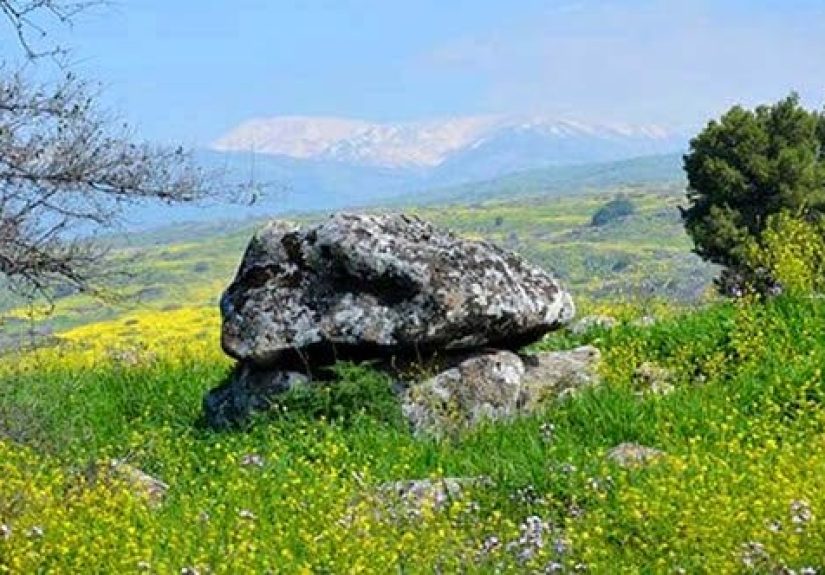
In southern Spain, archaeologists studying Dolmen de Menga found medieval burials inside a monument that was already ancient when those men were laid to rest. DNA analysis showed one of the men had ancestry connected to Europe, North Africa, and the Middle East. Interesting enough. But the real mystery is religious rather than genetic.
The men were buried in ways that partly echo Islamic orientation, yet their bodies also appear aligned to the monument itself in a way that does not fit standard nearby Islamic burial customs. Researchers have suggested they may have practiced a blended worldview, combining Islamic traditions with older local or pagan reverence for the dolmen.
That possibility is fascinating because it captures history where it is usually most truthful: messy. Real communities often mix traditions, adapt symbols, and treat old places as sacred in new ways. Still, archaeologists cannot say with certainty what these men believed or why this prehistoric structure mattered so much to them. The result is a discovery that says a great deal and still withholds the final answer.
8. A Vanished Human Lineage in Colombia
Sometimes the biggest archaeological mysteries do not come from gold or temples. Sometimes they come from DNA quietly refusing to match the expected family tree. In Colombia, researchers analyzed ancient genomes from individuals found on the high plains around Bogotá and identified a previously unknown lineage of hunter-gatherers. Even stranger, this group appears to have left no known modern descendants.
The finding suggests that an early population once lived in the region and later disappeared, replaced or absorbed so completely that its genetic signature no longer appears in living people. That is a major surprise for archaeologists and geneticists studying the peopling of South America. Up to now, many researchers assumed the broader population story was better understood than this discovery suggests.
The mystery is not just who these people were. It is what happened to them. Did they migrate? Were they absorbed by other groups? Did environmental shifts, disease, conflict, or changing lifeways erase their distinct line? Ancient DNA opens the door, but it does not hand us a complete script. In many ways, it only makes the silence louder.
9. The 430,000-Year-Old Wooden Tools From Greece
Stone tools are common enough in archaeology that they barely raise an eyebrow anymore. Wooden tools, however, are different. Wood usually decays, which is why a recent discovery from Greece is such a big deal. Researchers identified two intentionally shaped wooden artifacts dating back around 430,000 years, making them among the oldest known handheld wooden tools ever found.
One larger tool may have been used to dig through mud while gathering plant foods. Or maybe it helped process an elephant carcass found nearby. The smaller object is even more mysterious. Archaeologists can tell it was shaped deliberately, but they still do not know what it was for. Retouching stone tools is one possibility. Another is that it was part of a larger object or activity that no longer survives in the record.
This discovery matters because it widens our understanding of early human technology. It hints at a world of organic tools that normally disappears before archaeologists ever see it. But it also leaves researchers with a deliciously inconvenient truth: we may be glimpsing a much richer technological past through a tiny keyhole.
10. A 4,000-Year-Old Sudanese Burial With an Unknown Funeral Ritual
In Sudan’s Bayuda Desert, archaeologists studying a burial linked to the Kingdom of Kerma uncovered something genuinely odd: a ceramic vessel filled with charred plant remains, wood, animal bones, and insect fragments. The team thinks these may be the remains of a funeral feast or ritual act carried out nearly 4,000 years ago.
The striking part is that researchers do not know of a similar case. That does not mean the ritual was unique in the ancient world, only that it has not been clearly documented before in this cultural context. Another vessel from the grave was found upside down and empty, which only adds to the puzzle.
This is exactly the kind of discovery that makes archaeology thrilling. A modest burial can suddenly become historically important because of one strange detail that refuses to fit the template. The find may eventually tell us more about Nubian ritual life, regional exchange, or mortuary symbolism. For now, it remains one of the most intriguing recent archaeological discoveries still wrapped in mystery.
Why These Recent Archaeological Mysteries Matter
It is tempting to think archaeology is about solving the past, neatly and permanently, like a detective wrapping up a procedural before the last commercial break. Real archaeology is not like that. It is more like assembling a thousand-piece puzzle after someone spilled coffee on the box and hid a few edge pieces in another century.
These recently uncovered archaeological mysteries matter because they reveal how much human life slips past simple explanation. A pit can be both engineering and theology. A tomb can be a personal burial and a political statement. A vanished lineage can force scholars to redraw migration models. The best recent archaeological discoveries do not just add facts. They change the questions.
They also remind us that new technology is not replacing archaeology’s human element. Drone mapping, radiocarbon dating, sediment studies, and ancient DNA are powerful tools, but they still rely on interpretation. Evidence can narrow the possibilities. It rarely eliminates mystery altogether. And honestly, that lingering uncertainty is part of the fun.
What It Feels Like to Stand at the Edge of an Archaeological Mystery
There is a reason archaeological mysteries grip people so hard. They do not just tell us that something happened. They make us feel how close we are to understanding and how far away we still remain. Imagine standing at a windy excavation trench at dawn, coffee in one hand, notebook in the other, while someone brushes dirt from an object nobody expected to find. It is not just discovery. It is atmosphere. It is suspense with mud on its boots.
The experience of following a recently uncovered archaeological mystery is strangely physical, even if you are only reading about it from your couch. You can almost hear the scrape of the trowel, the clipped excitement in a field director’s voice, the long pause before someone says, “That should not be there.” Archaeology works on the imagination because it begins with fragments. A shell near a mouth. A line of holes in a mountain. A wall under the sea. A name that used to exist on plaster but is now lost. Each fragment pulls you in because your brain immediately tries to finish the story.
And then archaeology, being archaeology, refuses to hand over the ending.
That is part of the emotional thrill. These discoveries do not feel manufactured. They feel earned. They come from years of survey work, failed hypotheses, lab analysis, funding battles, weather delays, damaged contexts, and the occasional crushing realization that the one inscription you desperately needed was destroyed 3,000 years ago by looters with truly awful timing. When a mystery survives all of that and still stands, it becomes more than a puzzle. It becomes a conversation across time.
There is also something deeply human about the questions these discoveries raise. Was this grave an act of love, fear, status, or belief? Did this monument control trade, display power, or host ritual? Who was this ruler? Why did this population disappear? Even when archaeologists cannot answer those questions fully, they recover the outline of real lives. You begin to sense ancient people not as textbook labels but as decision-makers, mourners, engineers, traders, rulers, and believers.
That is why the best archaeological mysteries do not feel cold or dusty. They feel intimate. A burial arrangement becomes a clue to grief. A missing inscription becomes a lost identity. A wooden tool becomes evidence that ancient humans were clever in ways that rarely survive in the ground. The mystery is not empty space; it is the shape of a person or community we have not fully met yet.
Maybe that is the biggest experience this topic offers. It reminds us that history is not finished. Not really. Beneath fields, seabeds, deserts, jungles, and construction sites, there are still stories waiting to interrupt what we think we know. And every time archaeologists uncover one more strange clue, we get the same irresistible feeling: the past is still alive enough to surprise us.
Which is wonderful news for science, excellent news for curious readers, and mildly bad news for anyone who hoped ancient history had already settled down and explained itself.
Conclusion
The top recently uncovered archaeological mysteries are not just exciting because they are new. They are exciting because they prove discovery is still happening at full speed, and certainty is not keeping up. Whether it is a royal tomb without a name, a Viking burial without a clear ritual explanation, or an engineered landscape that still resists easy interpretation, each find expands the map of what we know while enlarging the borders of what we do not.
That is the real magic of archaeology. Every answer uncovers another question. And sometimes the most revealing thing a discovery can say is this: humans have always been more complex, more inventive, and far stranger than we assumed.