Table of Contents >> Show >> Hide
- What Is Qualified?
- Why SaaStr Picked Qualified as an AI App of the Week
- The SaaStr Results: Where the Hype Meets the Spreadsheet
- How Qualified’s Piper AI SDR Works
- Why AI BDRs Are Having a Moment
- What Makes Qualified Different From a Basic Chatbot?
- Where Qualified Fits Best
- Practical Examples for SaaS Teams
- The Risks: AI BDRs Still Need Adult Supervision
- What SaaStr’s Use of Qualified Teaches the Market
- Experience Notes: What It Feels Like to Use an AI BDR in the Real World
- Conclusion
Every SaaS company says it wants more pipeline. Then a real buyer lands on the website at 11:47 p.m., clicks around three high-intent pages, opens the pricing section, hesitates, and vanishes into the digital fog like a raccoon with a stolen croissant. By morning, the sales team has a mystery visitor, a missed opportunity, and another reason to blame “lead quality.”
That is exactly the kind of problem Qualified is built to solve. More specifically, Qualified’s Piper AI SDR Agent is designed to turn inbound website traffic into real conversations, qualified meetings, and pipeline without waiting for a human SDR to wake up, drink coffee, open Salesforce, and wonder where the hot lead went.
The title of SaaStr’s feature says the quiet part out loud: Qualified is the AI BDR that crushes it for SaaStr itself. This is not just a shiny AI demo sitting in a product launch video. SaaStr has used an AI inbound agent in its own go-to-market motion and reported serious business impact: tens of thousands of engaged sessions, more than a thousand qualified prospects, booked meetings, closed-won revenue, and millions in pipeline. In other words, the robot did not merely “increase engagement.” It helped sell things. What a concept.
What Is Qualified?
Qualified is a pipeline generation platform built for B2B companies, especially teams that live inside Salesforce. Its best-known AI product is Piper, the AI SDR Agent, an autonomous sales development agent that engages website visitors, qualifies prospects, routes conversations, books meetings, follows up by email, and works with go-to-market systems such as Salesforce and Slack.
The big difference between Qualified and an old-school chatbot is intent. A traditional chatbot often behaves like a polite vending machine: “Choose option one for pricing, option two for support, option three to scream quietly into the void.” Piper is built to act more like an inbound sales rep. It looks at context, visitor behavior, CRM data, account information, content engagement, and qualification rules to decide what should happen next.
That might mean greeting a known visitor by referencing a relevant campaign. It might mean asking qualification questions. It might mean routing a high-value account to the assigned rep. It might mean booking a meeting instantly. It might also mean politely handling unqualified traffic so human sellers do not spend their day chasing students, vendors, competitors, or someone who clicked the demo button because their cat walked across the keyboard.
Why SaaStr Picked Qualified as an AI App of the Week
SaaStr’s interest in Qualified comes from a practical SaaS problem: inbound demand is valuable, but it is messy. High-intent visitors do not always fill out forms. Buying committees research quietly. Prospects arrive from campaigns, newsletters, partner pages, event content, and organic search. Some are ready now. Others need nurturing. Many want answers before they want a sales call.
Qualified caught SaaStr’s attention because it focuses on the exact place where modern pipeline leaks happen: the website. For many B2B companies, the website is the busiest “sales floor” in the business. Yet it is often staffed by static forms, generic pages, and a chat widget that might as well be wearing a tiny “Gone Fishing” sign.
Piper changes that motion by making the website active. It can identify known visitors, infer account context, watch behavior, ask useful questions, recommend content, and move the prospect toward the next step. For SaaStr, that next step often means sponsorship conversations, event-related inquiries, partnership opportunities, or other high-value B2B motions where timing matters.
The SaaStr Results: Where the Hype Meets the Spreadsheet
AI tools are very good at producing impressive adjectives. “Revolutionary.” “Transformative.” “Agentic.” “Autonomous.” “Game-changing.” Wonderful. But SaaS operators are not paid in adjectives. They are paid in pipeline, revenue, meetings, conversion rates, and lower customer acquisition friction.
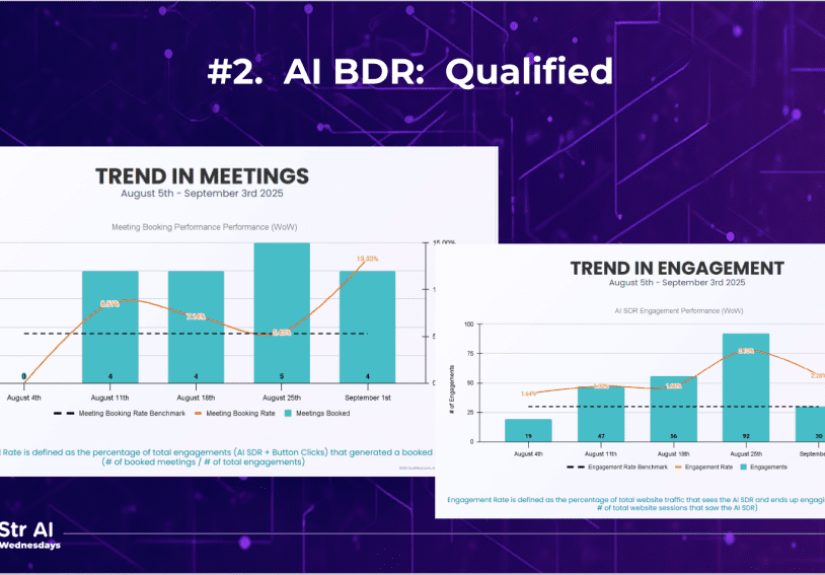
That is why SaaStr’s own numbers matter. SaaStr reported that its AI inbound agent handled more than 45,000 engaged sessions, qualified more than 1,000 prospects, booked dozens of meetings, and influenced more than $1 million in closed-won revenue, with millions more in pipeline. Qualified’s SaaStr case study also points to more than 130 meetings booked over five months and $2.5 million in pipeline generated.
The most interesting part is not just the volume. It is the shift in revenue mix. SaaStr has described inbound as historically contributing roughly one-third of revenue, while AI-qualified inbound helped push that contribution much higher during a recent period. That is the kind of metric that makes a revenue leader sit up straighter and suddenly become very interested in “the chatbot thing.”
Of course, this does not mean every company can install an AI SDR on Tuesday and retire to a yacht by Friday. SaaStr has strong brand demand, high traffic, a defined audience, and clear offers. AI works best when there is something meaningful to convert. Piper is not magic fairy dust sprinkled over a confused go-to-market strategy. It is more like a very fast, very consistent operator that helps capture value already moving through the funnel.
How Qualified’s Piper AI SDR Works
1. It Engages Visitors in Real Time
The first advantage is speed. When a prospect is on the website, interest is alive. Wait an hour, and interest cools. Wait a day, and the buyer may have already booked a meeting with a competitor whose website did not treat them like a voicemail from 2008.
Piper can greet visitors while they are still browsing. If the visitor is known in Salesforce, the conversation can be personalized using CRM context. If the visitor is unknown, Piper can qualify them through questions and behavior. This is especially useful for high-intent pages such as pricing, demo, event sponsorship, customer stories, integrations, or product comparison pages.
2. It Qualifies Based on Business Rules
Good sales development is not just “talk to everyone.” It is knowing who deserves human attention now, who should be nurtured, who should be routed elsewhere, and who is not a fit. Qualified supports qualification logic based on criteria such as company size, use case, buying stage, account ownership, region, industry, and existing opportunity status.
That matters because AI without qualification can become an enthusiastic golden retriever: friendly, energetic, and occasionally running straight into traffic. The value of Piper is that it connects engagement with go-to-market structure. It does not just chat. It helps decide what should happen next.
3. It Books Meetings Instantly
Meeting scheduling sounds boring until you calculate how much pipeline dies in the swamp of “How’s Tuesday?” “Actually, Wednesday is better.” “Looping in my colleague.” “Sorry, traveling.” “Can you send times?” This is not a sales process. This is calendar ping-pong, and nobody bought tickets.
Piper can move qualified prospects directly from conversation to calendar booking. That reduces friction, protects buyer momentum, and gives sales teams a cleaner handoff. For inbound programs, speed-to-meeting can be the difference between a serious opportunity and a prospect who forgets why they clicked in the first place.
4. It Follows Up Through Email
Website conversations are important, but buyers do not live entirely inside chat bubbles. Qualified’s Piper can also nurture and convert inbound leads through email, using context from previous engagement. That allows the experience to continue beyond the website and helps avoid the common B2B problem where every channel behaves like it has never met the other channels.
5. It Connects With Salesforce and the Revenue Stack
Qualified’s Salesforce connection is a major reason it stands out for many enterprise SaaS teams. Pipeline generation is not useful if the data ends up in a lonely spreadsheet named “final-final-real-leads-v7.” Piper can use Salesforce records, write back important activity, create or update leads, route to account owners, and support workflows that already exist inside the revenue organization.
This is also why Salesforce’s completed acquisition of Qualified is such a big market signal. The deal shows how important agentic pipeline generation has become to the broader CRM ecosystem. AI sales agents are moving from “interesting experiment” to “core go-to-market infrastructure.”
Why AI BDRs Are Having a Moment
The rise of AI BDRs is not happening in a vacuum. B2B buyers increasingly want control. They research independently, compare vendors before talking to sales, use AI tools to summarize options, and expect fast answers. Gartner has reported that a majority of surveyed B2B buyers prefer rep-free experiences, and many buyers are already using AI during purchase research.
That does not mean human sellers are finished. Actually, the opposite is more likely. Human reps become more valuable when they are reserved for the moments where expertise, trust, negotiation, and strategic guidance matter. The AI BDR handles the repetitive early motion: greeting, qualifying, routing, answering common questions, surfacing resources, and booking time.
Think of it as a better division of labor. AI should not replace the best seller in the room. It should stop that seller from spending half the day asking, “Could you remind me of your company size?” while a buyer silently wonders why the vendor’s CRM apparently has the memory of a goldfish.
What Makes Qualified Different From a Basic Chatbot?
The easiest way to understand Qualified is to compare three levels of website engagement:
Level one is the static form. It collects information and sends it somewhere. It is simple, but it creates delay. The buyer submits, waits, and may lose interest.
Level two is the scripted chatbot. It offers menu-based answers and basic routing. It can be useful, but it often breaks when the buyer asks anything outside the script.
Level three is the AI SDR agent. It uses context, intent, CRM data, and business logic to engage dynamically. It can answer, qualify, route, schedule, and follow up. That is the territory Qualified wants to own.
For SaaS companies, the third level is where the ROI becomes clearer. The goal is not to have a cute chat window. The goal is to identify serious buyers faster, reduce manual work, improve conversion, and generate more pipeline from traffic the company already paid to attract.
Where Qualified Fits Best
Qualified is especially compelling for B2B SaaS companies with meaningful website traffic, a Salesforce-centered revenue stack, high-value inbound demand, account-based marketing motions, event or demo requests, and a need to convert visitors quickly. It is also a strong fit for companies where human SDR capacity is stretched thin or where inbound response time is inconsistent.
The platform is less likely to be a miracle cure for companies with very low traffic, unclear positioning, weak offers, poor CRM hygiene, or no defined qualification process. AI agents are powerful, but they are not psychic interns. If your ideal customer profile is vague, your routing logic is a mess, and your website says “innovative solutions for modern teams” fifteen times without explaining what you sell, Piper may still help, but the larger problem is not the bot.
Practical Examples for SaaS Teams
Example: The High-Intent Pricing Visitor
A director at a target account visits the pricing page twice in one week. Piper recognizes the account, sees the visitor is already connected to a campaign, asks whether they are evaluating options, answers a pricing-range question, and offers meeting times with the correct account executive. Instead of waiting for a form fill, the sales team gets a qualified meeting.
Example: The Event Sponsor Inquiry
A potential sponsor lands on an event partnership page after reading several SaaStr articles. Piper answers questions about sponsorship options, qualifies budget and timing, shares the right deck or resource, and books a call. The buyer receives immediate help while the human team gets a cleaner conversation.
Example: The Existing Opportunity
A buyer from an open opportunity returns to the website and views implementation content. Piper recognizes the account, alerts the assigned rep, offers help, and routes the conversation. That kind of signal can help sales teams respond when buying intent is fresh rather than discovering it three weeks later in analytics.
The Risks: AI BDRs Still Need Adult Supervision
Any honest discussion of AI sales agents should include the risks. Gartner has warned that many agentic AI projects may fail because of cost, unclear value, or vendors overstating capabilities. That warning is healthy. The AI market has enough glitter to decorate a small parade, and not every “agent” is truly agentic.
Teams using AI BDRs need clear guardrails. The agent should know what it can say about pricing, legal terms, integrations, implementation timelines, and product capabilities. It should have escalation paths. It should be monitored for accuracy. It should be trained on approved content. It should not invent discounts, promise unsupported features, or tell a Fortune 500 buyer that the CEO “will definitely hop on tomorrow.”
The best implementation model is not “turn it on and hope.” It is a revenue operations project: define plays, map routing, connect systems, audit responses, measure conversion, and refine continuously. AI BDRs work best when they are treated like digital teammates with management, not like magic appliances.
What SaaStr’s Use of Qualified Teaches the Market
SaaStr’s experience with Qualified offers a useful lesson: AI agents become interesting when they are tied to a specific revenue job. “Use AI in sales” is too broad. “Qualify high-intent inbound visitors 24/7 and book meetings with the right owner” is concrete. That is why the Qualified story is stronger than generic AI hype.
The lesson is also cultural. SaaStr is not merely writing about AI from the balcony. It is testing AI in its own operations. That makes the Qualified example more persuasive because it is rooted in a real workflow: traffic arrives, AI engages, prospects qualify, meetings get booked, pipeline gets created, and revenue teams learn from the data.
Experience Notes: What It Feels Like to Use an AI BDR in the Real World
Using an AI BDR like Qualified’s Piper feels less like adding a chatbot and more like hiring a tireless front-desk operator for your revenue team. The first surprise is how many buying signals used to disappear unnoticed. Before an AI agent, a website visitor might read three case studies, visit pricing, compare integrations, and leave without raising a hand. After an AI agent, that same behavior can trigger a timely conversation. It is like turning the lights on in a room you thought was empty.
The second surprise is how much emotional friction exists in B2B buying. Many buyers do not want to fill out a form because they fear the follow-up avalanche. They do not want to “talk to sales” yet. They want one question answered. A good AI BDR creates a softer entry point. The buyer can ask about fit, timing, pricing structure, event options, product use cases, or next steps without feeling trapped in a sales funnel with fluorescent lighting.
The third experience is operational. Sales managers quickly discover that the AI agent needs the same clarity a human rep needs: who is a qualified lead, which accounts matter most, when to route, what language to use, what not to promise, and what success looks like. If leadership cannot explain those rules, the AI will expose the confusion faster than a new SDR on their first Monday.
There is also a fun morale effect. Human reps often worry that AI will replace them, but in strong implementations, the AI removes the low-value grind. Nobody’s dream sales career is manually responding to weak-fit form fills at midnight. When Piper handles basic questions and schedules qualified meetings, human sellers can focus on discovery, strategy, negotiation, relationship-building, and closing. That is where humans still shine.
The best experience comes when the AI BDR is treated as part of the team. Review its conversations. Tune its prompts. Update its content. Watch which pages trigger the best meetings. Compare conversion by segment. Look at where buyers ask the same question repeatedly, then improve the website. In that sense, Qualified is not just a conversion tool. It is a listening system. It tells you what buyers care about when nobody is watching.
For SaaStr, the experience appears to be a practical example of where AI in go-to-market is headed. The winner is not the company with the loudest AI announcement. The winner is the company that applies AI to a measurable bottleneck and keeps improving the motion. Qualified’s Piper does one job extremely well: it helps turn inbound attention into pipeline. In SaaS, attention is expensive. Letting it leak is silly. Letting an AI BDR catch it before it disappears is just good business with better timing.
Conclusion
Qualified earns its place as a SaaStr AI App of the Week because it solves a painfully real SaaS problem: buyers show up when they are ready, not when your sales team is perfectly available. Piper, Qualified’s AI SDR Agent, gives B2B companies a way to engage those buyers instantly, qualify them intelligently, route them correctly, and book meetings without adding more manual work to an already overloaded revenue team.
The bigger takeaway is not that every company needs an AI BDR tomorrow. The takeaway is that inbound conversion is becoming more active, more contextual, and more automated. Static forms and generic chat widgets are giving way to AI agents that understand CRM data, buyer behavior, and pipeline goals. SaaStr’s own results show why this matters: when AI qualification is connected to real demand, the impact can move beyond engagement metrics and into revenue.
Qualified is not just “another AI chatbot.” It is a serious example of agentic marketing becoming revenue infrastructure. And for SaaS teams trying to squeeze more value from the traffic they already have, that is a pretty compelling reason to pay attention.
Note: This article is written as an original, web-ready synthesis of current public information about SaaStr, Qualified, Piper AI SDR, Salesforce, and the AI BDR market. It contains no copied source text, no raw source links, and no publishing artifacts.