Table of Contents >> Show >> Hide
- Quick Answer: Was Russia Planning a January Invasion?
- Why the January Invasion Question Became So Serious
- The Diplomatic Background: NATO, Security Demands, and Pressure Politics
- What Were the Main Warning Signs?
- Why Russia Might Have Delayed Beyond January
- What Actually Happened in February 2022
- Why the Question Still Matters Today
- Was It a Bluff or a Real Plan?
- How Ukraine Responded
- What Readers Should Take Away
- Experiences and Reflections: What It Felt Like to Watch the Crisis Unfold
- Conclusion
Note: This article is written as a historical and analytical retrospective. The question “Is Russia planning a January invasion of Ukraine?” became urgent in late 2021 and January 2022, when Western intelligence agencies, Ukrainian officials, and major media outlets warned that Russia was building the military capability for a large-scale attack. Russia did not launch the full-scale invasion in January. It began on February 24, 2022. That timing matters, because the story is not just about a date on the calendar. It is about how warning signs, military pressure, diplomacy, and political messaging collided before one of the most consequential wars in modern Europe.
Quick Answer: Was Russia Planning a January Invasion?
The short answer is: Russia appeared to be preparing for a possible invasion in early 2022, and January was one of the windows many analysts worried about. However, the full-scale attack did not happen in January. It happened in late February 2022.
That distinction may sound like a small scheduling issue, as if the Kremlin simply missed a calendar reminder. But in geopolitics, timing is strategy. Military forces need logistics, weather conditions, political cover, command readiness, and diplomatic positioning. By January 2022, Russia had already created the conditions for a possible attack: tens of thousands of troops near Ukraine, equipment positioned on multiple fronts, pressure on NATO, and a public narrative accusing Ukraine and the West of creating the crisis.
The January invasion question was not wild speculation. It was based on visible military movements and intelligence warnings. Still, an invasion is not the same thing as a weather forecast. Even when the clouds are black and the wind is howling, leaders can delay, escalate, bluff, negotiate, or attack.
Why the January Invasion Question Became So Serious
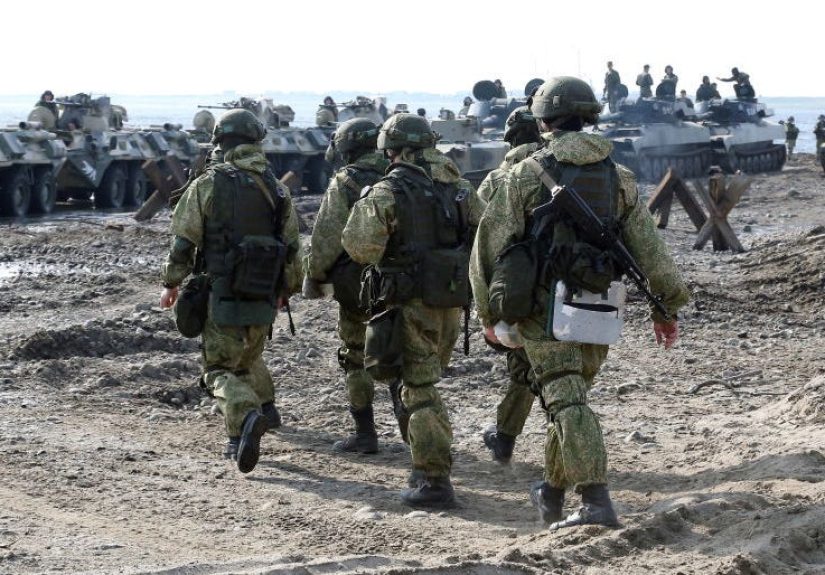
By late 2021, Russia had massed forces near Ukraine in a way that looked different from ordinary training. The buildup included troops, armor, artillery, missile systems, and support equipment. The concern was not simply that Russian soldiers were “near the border.” Large armies do not become dangerous only because they are standing in a dramatic location. They become dangerous when they have the fuel, command structure, supply lines, medical support, and political orders needed to move.
U.S. intelligence assessments reported that Russia could be preparing a multi-front offensive involving a very large force. Ukraine also warned that Russia had already deployed substantial numbers of troops near its borders. Russia repeatedly denied that it planned to invade, but the military picture told a different story: Moscow was increasing pressure from the north, east, and south, including areas near Belarus, Russia’s western regions, occupied Crimea, and the Donbas conflict zone.
January mattered because winter can shape military operations in Eastern Europe. Frozen ground can make movement easier for heavy vehicles, while muddy conditions can slow them down. In simple terms, tanks dislike mud about as much as students dislike surprise exams. Weather is not the only factor, but it can influence the timing of an offensive.
The Diplomatic Background: NATO, Security Demands, and Pressure Politics
Russia’s military buildup was paired with a diplomatic offensive. Moscow demanded security guarantees from the United States and NATO, including limits on NATO activity in Eastern Europe and a pledge that Ukraine would not join the alliance. These demands were not minor requests. They challenged the basic principle that countries should be able to choose their own security relationships.
For Ukraine, NATO membership was not only a military issue. It was tied to sovereignty, national identity, and the country’s long struggle to move away from Russian domination. For Russia, Ukraine’s Western orientation was portrayed as a threat. That disagreement was at the heart of the crisis.
The United States and its allies warned that Russia would face severe consequences if it launched a new invasion. Those consequences included sanctions, increased military assistance to Ukraine, and reinforcement of NATO’s eastern flank. The diplomacy was intense, but it had a strange quality: everyone was talking while the military machine kept getting heavier. It was like negotiating over a kitchen fire while someone kept bringing in more gasoline cans.
What Were the Main Warning Signs?
1. A Large and Unusual Troop Buildup
The first major warning sign was the size and pattern of Russia’s deployment. Troop movements alone do not prove intent, but they can show capability. By late 2021 and early 2022, Russia was building a force that could do more than posture. It could strike.
2. Multi-Front Positioning
Russia’s forces were positioned in ways that could threaten Ukraine from several directions. That was especially concerning because a multi-front threat forces the defender to spread resources thinly. Ukraine had to worry about Kyiv, Kharkiv, the Donbas, the southern coast, and the role of Belarus.
3. Political Demands That Were Hard to Accept
Russia’s demands to NATO and the United States were so sweeping that many Western officials viewed them as impossible to accept in full. When a country makes demands it knows the other side will reject, analysts often ask whether the demands are genuine negotiating goals or part of a justification for escalation.
4. Information Warfare and Accusations
Before the invasion, Russia accused Ukraine and NATO of threatening Russian security. Such messaging can be used to prepare domestic audiences for conflict. It creates a storyline in which military action is presented as defensive, even when the evidence points toward aggression.
5. The Donbas Factor
The war in eastern Ukraine had already been running since 2014. Russia-backed separatist areas in Donetsk and Luhansk gave Moscow a lever inside Ukraine. In early 2022, rising tension around these areas increased fears that Russia might use the Donbas as a pretext for a wider attack.
Why Russia Might Have Delayed Beyond January
Because the invasion did not happen in January, some people later asked whether the warnings were exaggerated. That misses the point. A warning can be accurate about danger even if the exact date changes. Military operations are flexible, and political leaders may wait for better conditions.
Russia may have delayed for several reasons. It may have needed more forces in place. It may have wanted to test Western unity. It may have hoped diplomatic pressure would force concessions without war. It may also have waited for a better operational moment. In crisis analysis, the question is rarely “Will it happen on Tuesday at 9:04 a.m.?” The better question is: “Are the forces, motives, and political signals lining up?” In this case, they were.
January was a danger window. February became the month of the full-scale invasion.
What Actually Happened in February 2022
On February 24, 2022, Russia launched a full-scale invasion of Ukraine. The attack came from multiple directions, including from Russian territory, occupied Crimea, and Belarus. Russian forces moved toward Kyiv, attacked major cities, and attempted to break Ukraine’s military and political resistance quickly.
The early Russian plan appeared to assume that Ukraine would collapse fast. That did not happen. Ukrainian resistance was far stronger than many expected, and Russia failed to seize Kyiv. Instead of a quick victory, Moscow triggered a long war, massive sanctions, NATO reinforcement, and deep international support for Ukraine.
In hindsight, the January question was not wrong. It was early. The machinery of invasion was already moving into place, even if the final order came later.
Why the Question Still Matters Today
The title “Russia and Ukraine – Is Russia Planning a January Invasion of Ukraine?” may sound frozen in time, but it still matters because it teaches readers how modern crises unfold. Wars often begin before the first missile is launched. They begin with pressure campaigns, propaganda, troop movements, cyber concerns, economic threats, and diplomatic ultimatums.
By studying the January 2022 warning period, readers can better understand how governments interpret risk. Intelligence is not magic. It is a careful reading of signals: where forces are moving, what leaders are saying, what logistics are being prepared, and whether diplomacy is reducing danger or simply running beside it.
The Russia-Ukraine crisis also showed how public intelligence can shape events. The United States and its allies released warnings before the invasion, partly to expose Russian planning and reduce Moscow’s room to create a false narrative. That strategy did not prevent the war, but it helped prepare allies and inform the world.
Was It a Bluff or a Real Plan?
At the time, one of the hardest questions was whether Russia was bluffing. Military buildups can be used to force concessions without firing a shot. A leader can move troops, make threats, and hope the other side panics. In poker terms, it can be a big raise before the flop. But unlike poker, the chips are people’s lives, cities, economies, and borders.
Russia’s buildup had elements of coercive diplomacy. Moscow wanted NATO and Ukraine to take its demands seriously. But the scale of the deployment, the nature of the equipment, and the later invasion suggest that this was not only a bluff. Russia had built the option to attack and then used it.
That is the key lesson: a threat can be both a bargaining tool and a real military plan. Those two things are not opposites. Sometimes the threat is meant to win concessions. If concessions do not come, the same threat becomes action.
How Ukraine Responded
Ukraine faced a difficult balancing act. Panic could damage the economy and weaken morale. Denial could leave the country unprepared. Ukrainian leaders had to reassure citizens while seeking weapons, intelligence, financial support, and diplomatic backing from allies.
President Volodymyr Zelenskyy and his government called for calm, but Ukraine also prepared for defense. Western countries increased military assistance, including anti-armor weapons and other supplies. The goal was not to make Ukraine stronger than Russia overnight. It was to raise the cost of invasion and give Ukraine a better chance to resist.
That resistance became one of the defining stories of the war. Russia expected pressure to break Ukraine. Instead, the invasion hardened Ukrainian national identity and turned Kyiv into a symbol of defiance.
What Readers Should Take Away
The January invasion question teaches three big lessons. First, military capability matters. When a state puts large forces in position, the world should pay attention. Second, political language matters. Demands, accusations, and denial can all be part of the same strategy. Third, timing is uncertain. Analysts can correctly identify danger even if they cannot predict the exact day a leader will act.
So, was Russia planning a January invasion of Ukraine? The best answer is that Russia was preparing for a possible early-2022 invasion, and January was a credible danger window. The final assault came on February 24, 2022, but the warning signs were visible weeks before.
Experiences and Reflections: What It Felt Like to Watch the Crisis Unfold
For readers following the Russia-Ukraine crisis in real time, the weeks before the invasion felt like watching a storm form on radar. At first, the signs were technical: troop numbers, satellite images, diplomatic meetings, and phrases like “security guarantees.” Then the mood changed. The crisis moved from foreign-policy pages to front pages, from expert panels to dinner-table conversations, and from “could this happen?” to “what happens if it does?”
One experience many people shared was uncertainty. News updates arrived quickly, but clarity did not. Russia denied invasion plans. Western governments warned that the danger was real. Ukraine asked the world not to panic, while also preparing for the possibility of war. For ordinary readers, it was difficult to know which signal mattered most. A troop movement might mean preparation for war, pressure for negotiations, or both. A diplomatic meeting might reduce the risk, or it might simply mark one more failed attempt before escalation.
Another experience was learning how modern conflict is discussed before it begins. People watched maps, listened to intelligence briefings, followed aircraft tracking, and read explanations of NATO, sanctions, energy markets, cyberattacks, and military logistics. The crisis became a crash course in geopolitics, whether anyone had signed up for the class or not. Unfortunately, the tuition was paid by Ukrainians facing the direct threat.
The period also showed how easy it is to underestimate a country under pressure. Before the invasion, many observers focused on Russia’s size and military power. Fewer understood how determined Ukraine would be to defend itself. Once the invasion began, Ukraine’s resistance changed the world’s assumptions. The lesson was simple but powerful: national morale, leadership, local knowledge, and public unity can matter as much as hardware.
For writers, analysts, and readers, the experience offered a reminder to be careful with predictions. It is tempting to demand certainty: yes or no, January or February, bluff or invasion. But real-world crises often refuse to fit into neat boxes. The honest answer in January 2022 was not “nothing will happen” or “the invasion will definitely start tomorrow.” The honest answer was that Russia had created a dangerous military and political situation in which invasion was increasingly possible.
That is why the question remains valuable. It captures the tension of a moment when the world could see warning lights flashing but could not yet see the full road ahead. Looking back, those warnings were not noise. They were the beginning of a tragedy that reshaped Ukraine, Russia, Europe, NATO, energy markets, and global politics. The calendar said January. The crisis was already much larger than one month.
Conclusion
The question “Is Russia planning a January invasion of Ukraine?” was one of the defining security questions of early 2022. Russia did not launch the full-scale invasion in January, but the warnings were grounded in real military preparations and political pressure. By February 24, 2022, the danger that analysts had been tracking became reality.
The most accurate conclusion is that January was a serious warning window, not a false alarm. Russia had built the capability for a major attack, used diplomacy to press sweeping demands, and shaped a narrative that later supported escalation. The exact date changed, but the strategic direction did not.
For readers today, the Russia-Ukraine crisis is a reminder that invasions are rarely sudden in the deeper sense. They are preceded by signals. Some are loud, some are hidden, and some are disguised as routine exercises or diplomatic theater. The challenge is learning how to read them before history turns the page.