Table of Contents >> Show >> Hide
- First Things First: What Is an Electromagnetic Radiation Tester?
- What Does It Actually Measure?
- Why Would Anyone Need One?
- The Big Question: Do You Need One for Health Reasons?
- What an EMF Tester Does Well
- What an EMF Tester Does Poorly
- How to Choose One Without Buying a Plastic Panic Button
- So, Who Really Benefits from One?
- Final Verdict
- Experience Section: What It Feels Like to Actually Use One in Real Life
- SEO Tags
If you have ever stared at a router, a smart meter, a baby monitor, or the spaghetti monster behind your TV stand and thought, “Is this thing quietly blasting my living room with invisible chaos?” congratulations: you are the exact kind of person who has probably noticed an electromagnetic radiation tester online.
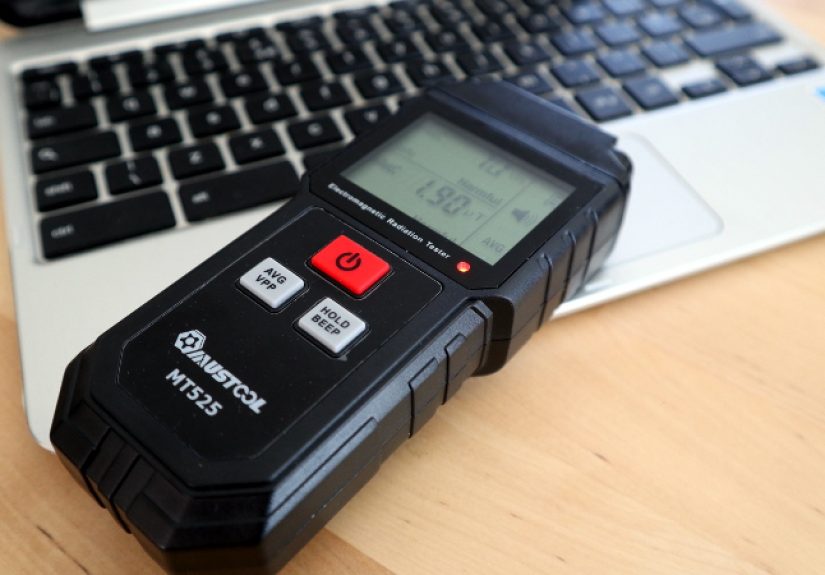
The name sounds dramatic. It sounds like something a sci-fi engineer would wear on a belt while jogging through a glowing lab. In real life, though, an electromagnetic radiation tester is usually just a consumer meter designed to measure certain kinds of non-ionizing electromagnetic fields, often called EMFs. That means it may detect low-frequency electric and magnetic fields from wiring and appliances, radiofrequency energy from wireless devices, or both. It is not a universal “danger detector,” and it is definitely not a magic wand that reveals all the secrets of the modern home.
Still, these meters can be genuinely useful. Used correctly, they help you identify sources, compare rooms, understand how distance changes exposure, and troubleshoot annoying interference issues. Used incorrectly, they can turn a perfectly normal Wi-Fi router into the villain in a home wellness thriller.
So what on earth is an electromagnetic radiation tester, what does it actually measure, and do you really need one? Let’s get into it without the tinfoil hat, the panic marketing, or the fake laboratory drama.
First Things First: What Is an Electromagnetic Radiation Tester?
“Electromagnetic radiation tester” is a broad marketing phrase, not a single technical instrument class. In plain English, it usually refers to an EMF meter, RF meter, gauss meter, or a combo device that tries to measure more than one kind of field. Some models focus on household electricity. Some focus on wireless signals. Some do a little of both, which sounds convenient until you realize “a little of both” can sometimes mean “excellent at neither.”
That matters because the electromagnetic world is not one neat category. A meter that can read the magnetic field from your breaker panel may not be the right tool for measuring radiofrequency energy from your Wi-Fi router. And a meter that sniffs out RF from a smartphone is not the same thing as a detector for ionizing radiation like X-rays or gamma rays.
In other words, buying an electromagnetic radiation tester without knowing what kind of radiation it measures is like buying “a sports thing” and hoping it works equally well for baseball, swimming, and ice hockey. Enthusiastic? Sure. Precise? Not so much.
What Does It Actually Measure?
Electric Fields
Electric fields are associated with voltage. They are often measured in volts per meter (V/m). These fields can be present around wiring, power cords, lamps, walls with electrical circuits, and plugged-in devices, even when the device is not actively working hard. If voltage is there, an electric field can be there too.
Magnetic Fields
Magnetic fields are associated with current, meaning electricity actually flowing. They are commonly shown in microtesla (µT) or milligauss (mG). These readings often rise near motors, transformers, large appliances, power supplies, breaker panels, and anything drawing more current than a sleepy night-light.
Radiofrequency Fields
Radiofrequency, or RF, covers the wireless stuff people usually worry about first: Wi-Fi, Bluetooth, cell phones, smart home gear, cordless phones, and nearby towers. RF readings may be displayed as field strength or as power density, depending on the device. These measurements can bounce around because wireless signals vary with distance, data traffic, walls, body position, and whether your phone is quietly resting or trying to upload a 4K video like it has a deadline.
What It Usually Does Not Measure
This is the part that saves people money and unnecessary drama. Most consumer electromagnetic radiation testers do not measure ionizing radiation such as X-rays, gamma rays, or radioactive contamination. That is the territory of devices like Geiger counters and other radiation detectors. So if a product page seems to imply that one handheld gadget can measure router emissions, phone radiation, and nuclear hazards in the same cheerful screen, step away slowly.
Also important: a handheld consumer meter does not directly tell you SAR, or specific absorption rate, the value used for certain U.S. regulatory evaluations of cell phones. SAR is about how RF energy is absorbed in tissue under specific testing conditions. A pocket meter can be useful, but it is not a shortcut to laboratory dosimetry.
Why Would Anyone Need One?
This is where the product stops sounding weird and starts sounding practical. You may want an electromagnetic radiation tester for one of several normal, non-doomsday reasons.
1. You Want to Identify Household “Hot Spots”
Maybe your desk sits on the other side of a breaker panel. Maybe your bed is against a wall shared with major wiring. Maybe your child’s room is next to a utility area, and you simply want to understand what is there. A tester can help you compare locations and make sensible layout choices, such as moving a desk, shifting a router, or increasing distance from a large appliance.
2. You Want to Troubleshoot Interference
Sometimes the issue is not health anxiety. Sometimes it is plain old annoyance. Buzzing speakers, glitchy audio gear, strange behavior in sensitive electronics, or equipment acting weird near certain devices can all send you looking for field sources. In that case, a meter becomes less “mystery detector” and more “tiny detective with a numeric attitude.”
3. You Want Data Instead of Guesswork
For many people, the biggest benefit is not the number itself. It is the end of vague suspicion. A tester lets you compare: near the router versus across the room, next to the power brick versus two feet away, beside the fridge compressor versus at the kitchen table. That kind of before-and-after information is often more useful than one dramatic reading taken inches from a device doing exactly what it was designed to do.
4. You Work Around Electrical or RF Equipment
In occupational settings, measurements can matter more. Workplaces with industrial equipment, antennas, transmitters, or specialized electronics may use measurements as part of a broader safety and exposure-evaluation process. That does not mean a cheap consumer meter replaces professional methods, but it explains why these devices exist in the first place: measurement is valuable when the environment is complex.
The Big Question: Do You Need One for Health Reasons?
Here is the balanced answer: maybe for awareness, not as a substitute for science or medical advice.
Most consumer concern in this category involves non-ionizing radiation, not ionizing radiation. That distinction matters. Non-ionizing radiation includes radio waves, microwaves, visible light, and the low-frequency electric and magnetic fields associated with power. It does not have the same mechanism as ionizing radiation, which can remove electrons from atoms and damage tissue and DNA at sufficient exposure.
The research conversation is not all-or-nothing. Some earlier literature on extremely low-frequency magnetic fields found limited associations with childhood leukemia, which is why this area still gets attention. At the same time, human evidence has not established that normal consumer wireless exposure causes brain cancer, and more recent large reviews have generally been reassuring for everyday cellphone use. In the United States, phones must meet FCC exposure limits, and occupational settings use much more formal measurement and safety approaches than the average living room ever will.
So if you are buying a tester because you want to understand your environment better, fair enough. If you are buying one because you expect it to diagnose symptoms, settle medical questions, or prove that your toaster is plotting against you, that is asking too much from a handheld meter.
What an EMF Tester Does Well
A good electromagnetic radiation tester is useful at showing patterns.
It can reveal that magnetic fields are often strongest very close to motors and power supplies. It can show that RF levels can spike when a phone actively transmits data, then drop when the phone settles down. It can confirm that moving even a short distance away from a source can reduce readings significantly. It can also help you verify whether a change you made, such as relocating a router or moving a bed, had the effect you wanted.
That makes it a handy tool for practical decision-making. It is especially useful for people who prefer measurements over rumors and numbers over internet comment sections. Frankly, that is already a win.
What an EMF Tester Does Poorly
Now for the honest review section, because every gadget deserves one.
It does not measure everything. Many devices cover only part of the spectrum. Some are decent at low-frequency magnetic fields but weak on RF. Others chase RF but tell you little about house wiring.
It can mislead beginners. Taking a reading directly against a device and declaring the whole room unsafe is not measurement. It is performance art. Distance, orientation, traffic load, shielding, background levels, and meter range all matter.
Cheap models can be noisy or vague. Consumer meters vary widely in sensitivity, bandwidth, response time, and calibration quality. Some are excellent for home use. Some are basically digital drama machines with a beep function.
It does not prove health risk. A high reading near an appliance does not automatically mean danger. A low reading does not automatically mean “perfectly safe forever under all conditions in all universes.” Measurement is part of understanding, not the entire story.
It is not a Geiger counter. This deserves repeating because online marketplaces love confusion. A consumer EMF tester is generally not the right tool for radioactive sources, contamination, or emergency radiological detection.
How to Choose One Without Buying a Plastic Panic Button
If you decide you want one, shop like a realist.
Look for the Right Measurement Type
If you care about breaker panels, appliances, and house wiring, prioritize a meter with good low-frequency electric and magnetic field measurement. If your focus is Wi-Fi, Bluetooth, smart devices, and cell phones, pay close attention to the RF frequency range it covers.
Prefer Clear Units and Clear Documentation
A solid meter tells you what it is measuring and in what units. Vague displays and mystery scales are a red flag. A proper manual should explain frequency range, response behavior, and how to take a reading without accidentally measuring your own confusion.
Tri-Axis Is Helpful
Tri-axis or three-axis measurement is convenient because fields have direction. A tri-axis meter reduces the chance that you under-read something simply because the device is angled wrong.
Check Frequency Coverage
Not all RF meters cover the same wireless bands. If a device barely reaches part of the spectrum you care about, it may miss important sources or underrepresent them.
Understand That Calibration Matters
For casual home comparisons, a decent consumer meter may be enough. For legal disputes, technical audits, workplace programs, engineering validation, or anything high-stakes, you want properly calibrated professional instrumentation and a qualified expert. That is not snobbery. That is just measurement grown-up mode.
So, Who Really Benefits from One?
You will probably benefit from an electromagnetic radiation tester if you are curious, practical, and comfortable with numbers. It makes sense for homeowners rearranging rooms, people troubleshooting electronics, renters trying to understand a weird utility-wall setup, and anyone who prefers checking reality over doomscrolling about “invisible waves.”
You probably do not need one if you expect constant reassurance from a gadget, if you are likely to obsess over every fluctuation, or if you are looking for a medical answer from a consumer electronics tool. In that case, the meter may create more anxiety than clarity.
Final Verdict
An electromagnetic radiation tester is not ridiculous. It is also not magical. At its best, it is a practical measurement tool for understanding non-ionizing electromagnetic fields in homes, offices, and everyday environments. It helps you spot patterns, compare locations, and make common-sense adjustments. At its worst, it becomes a handheld stress amplifier used without context.
My review? It is worth considering if you want to measure rather than guess, especially for layout decisions, source identification, and general environmental awareness. Just buy the right kind, learn what it actually measures, and remember this golden rule: a meter is there to inform your judgment, not replace it.
Or, to put it less elegantly: useful tool, terrible crystal ball.
Experience Section: What It Feels Like to Actually Use One in Real Life
Here is the funny thing about using an electromagnetic radiation tester for the first time: you expect a grand revelation, and what you usually get is a lesson in how ordinary modern life works.
The first experience most people have is pure overconfidence. You walk around the house like a low-budget scientist, point the meter at a router, and wait for the truth to explode out of the screen. Instead, the readings jump, pause, change again, and immediately teach you that invisible energy is not a polite houseguest. It moves. It fluctuates. It reacts to distance, walls, device activity, and whether your phone is quietly sleeping or suddenly downloading an update behind your back.
One of the most common real-world surprises is that the “scariest-looking” device is not always the strongest source at the spot where you spend time. People often expect the Wi-Fi router to dominate everything. Then they discover that a laptop charger, the back of a refrigerator, a power strip under the desk, or the wall near the breaker panel produces more noticeable low-frequency readings at close range. That does not mean those things are automatically dangerous. It just means the meter is doing something useful: showing where the fields actually are instead of where your imagination assumed they were.
Another practical experience is learning how dramatically distance matters. Move a foot or two away from a source and the reading often drops a lot. This is probably the most valuable lesson a tester can teach. It turns a vague fear into a fixable problem. You stop thinking, “My whole room is impossible,” and start thinking, “Maybe I just should not press my bed against the wall with the wiring and park my head next to a power brick.” That is a much more reasonable outcome.
People also discover that measurements are contextual. A router may read modestly most of the time and spike during heavy traffic. A phone may seem quiet until a call starts or a video uploads. A microwave oven may make the meter react differently depending on where you stand and what mode the meter is in. The experience teaches patience. One reading is a snapshot, not a biography.
Emotionally, using the tester can go two ways. For some people, it reduces anxiety because the numbers are lower than expected in normal use areas. For others, it briefly increases anxiety because they finally see how many devices emit something. But after a bit of experience, most sensible users end up in the same place: less drama, more perspective. The meter shows that modern homes are full of electrical and wireless activity, yes, but also that exposure is not one giant mystery cloud. It has sources, patterns, and practical ways to reduce it when you want to.
That is the real experience in a nutshell. You start by looking for danger. You end by learning about distance, usage, placement, and the difference between a scary headline and an actual measurement. Honestly, that is a pretty good return for one little gadget with a screen.