Table of Contents >> Show >> Hide
- What Makes a Greek Easter Meal Special?
- The Essential Greek Easter Menu
- The Main Event: Greek Easter Lamb
- Must-Have Greek Easter Side Dishes
- Greek Easter Desserts Worth Saving Room For
- A Practical Greek Easter Cooking Timeline
- How to Build a Greek Easter Shopping List
- Tips for Hosting Without Losing Your Mind
- A Sample Greek Easter Menu With Recipe Link Ideas
- Experience Notes: What It Feels Like to Plan a Greek Easter Meal
- Conclusion
Planning a Greek Easter meal is not the same as tossing a ham in the oven, setting out a bowl of jelly beans, and calling it a holiday. Greek Easter, also known as Orthodox Easter or Pascha, is a celebration with layers: faith, family, symbolism, spring ingredients, slow-cooked lamb, glossy red eggs, braided sweet bread, lemony potatoes, and enough phyllo pastry to make your kitchen look like it hosted a snowstorm.
The good news? You do not need to be a professional chef, a Greek grandmother, or someone who owns a backyard lamb spit the size of a small submarine. With a smart plan, a realistic menu, and a few well-chosen Greek Easter recipe links, you can create a meal that feels festive, traditional, and deeply satisfying without turning your holiday into a full-contact sport.
This guide walks you through how to build a Greek Easter menu, when to prep each dish, which recipes deserve a spot on the table, and how to keep the whole event joyful instead of chaotic. The goal is simple: rich flavors, meaningful traditions, happy guests, and a host who is still smiling when dessert appears.
What Makes a Greek Easter Meal Special?
A traditional Greek Easter meal celebrates the end of Lent and the arrival of Easter Sunday with foods that feel abundant, symbolic, and unmistakably springlike. Lamb often takes center stage because it is closely tied to Easter traditions and the image of the Paschal lamb. In many Greek households, the meal also includes red-dyed eggs, tsoureki, Greek Easter cookies, lemon potatoes, fresh salads, dips, and desserts soaked in honey syrup.
The flavors are bright but comforting: lemon, garlic, oregano, dill, mint, olive oil, feta, yogurt, cinnamon, honey, and toasted nuts. It is a cuisine that knows exactly how to balance richness with freshness. A slow-roasted lamb shoulder may be deeply savory, but a crisp Greek salad or cool tzatziki keeps the plate from feeling heavy.
Most Greek Easter meals also follow a rhythm. Some families break the Lenten fast after the midnight Resurrection service with magiritsa, a traditional lamb soup enriched with egg-lemon sauce. Others serve avgolemono, a gentler lemony chicken-and-rice soup that brings similar comfort without the stronger offal flavors of magiritsa. Easter Sunday then becomes the larger feast: lamb, sides, bread, eggs, wine, sweets, and the happy sound of relatives debating whether someone cheated during the red egg cracking game.
The Essential Greek Easter Menu
A complete Greek Easter meal does not need twenty dishes. It needs balance. Think of the menu in courses: starters, a symbolic item, a main dish, sides, bread, dessert, and drinks. Here is a practical structure that works for most home cooks.
1. Starter: Tzatziki, Feta Dip, Olives, and Pita
Begin with simple mezze. Tzatziki is a classic yogurt-cucumber-garlic dip that tastes refreshing next to lamb. A whipped feta dip, marinated olives, warm pita, and sliced vegetables make the table feel generous before the main course arrives. These appetizers are also host-friendly because they can be prepared ahead.
Suggested recipe links to include on your site: Greek tzatziki recipe, whipped feta dip recipe, marinated olives recipe, homemade pita recipe.
2. Soup: Magiritsa or Avgolemono
For a deeply traditional menu, magiritsa is the classic Holy Saturday soup. It is usually made with lamb parts, rice, greens, dill, scallions, and an avgolemono sauce of eggs and lemon. It is rich, tangy, and symbolic because it uses parts of the lamb not served during the main feast.
If your guests are new to Greek Easter food, avgolemono soup may be the smoother introduction. It uses chicken broth, rice or orzo, eggs, and lemon to create a silky texture without cream. It is bright, cozy, and much easier to sell to picky eaters than “surprise lamb organ soup,” which, admittedly, is not the strongest marketing phrase.
Suggested recipe links to include on your site: traditional magiritsa recipe, avgolemono chicken soup recipe, vegetarian avgolemono soup recipe.
3. Symbolic Tradition: Red Easter Eggs
Red-dyed eggs are one of the most recognizable Greek Easter traditions. The red color is commonly associated with the blood of Christ, while the egg itself represents new life and resurrection. At the table, guests play tsougrisma, the egg-cracking game. One person taps their egg against another person’s egg, and the egg that remains uncracked is declared the champion. It is simple, joyful, and surprisingly competitive. Never underestimate a cousin holding a hard-boiled egg and a family reputation.
Dye the eggs ahead of time, usually during Holy Week, and display them in a bowl or tucked into a loaf of tsoureki. They add color, meaning, and a bit of friendly table drama.
Suggested recipe links to include on your site: Greek red Easter eggs recipe, natural red egg dye tutorial, tsougrisma Easter egg game guide.
4. Bread: Tsoureki
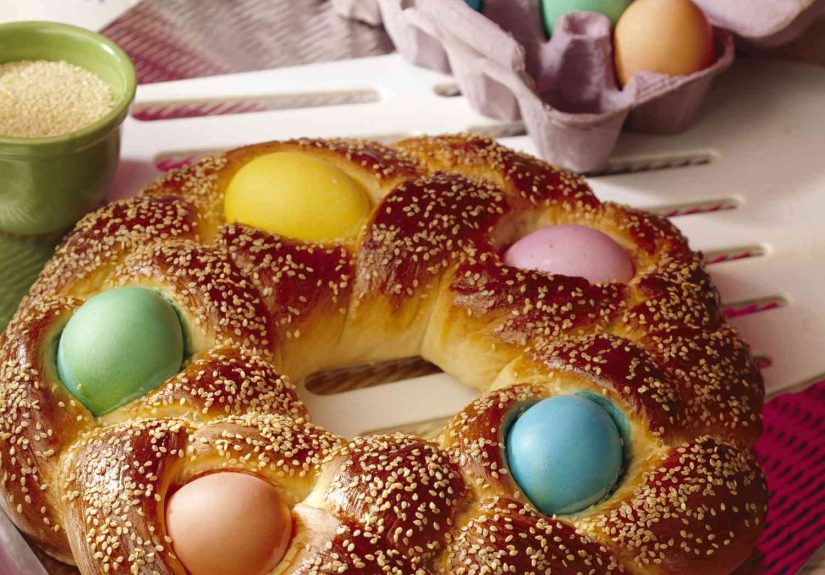
Tsoureki is the sweet braided Greek Easter bread that deserves a dramatic entrance. It is soft, enriched, lightly sweet, and often flavored with mahlepi, mastiha, orange zest, or vanilla. Its braided shape is traditionally associated with the Holy Trinity, and red eggs are sometimes baked or placed into the loaf as decoration.
Because tsoureki requires kneading, rising, shaping, and baking, it is best made a day ahead. If bread baking is not your spiritual gift, buying a good loaf from a Greek bakery is not a failure. It is called strategy.
Suggested recipe links to include on your site: traditional tsoureki recipe, easy Greek Easter bread recipe, overnight tsoureki recipe.
The Main Event: Greek Easter Lamb
Lamb is the centerpiece of many Greek Easter meals. Some families roast a whole lamb on a spit outdoors, but most home cooks can create an excellent Easter meal with leg of lamb, lamb shoulder, lamb chops, or lamb shanks. The classic flavor base is simple and powerful: olive oil, garlic, lemon juice, oregano, salt, pepper, and sometimes rosemary, thyme, mustard, or orange juice.
For a large gathering, slow-roasted lamb shoulder is forgiving because it becomes tender over several hours. Leg of lamb is elegant and slices beautifully. Lamb chops cook quickly and work well for smaller groups. Lamb souvlaki is ideal for a casual Easter meal or a cookout-style celebration.
How Much Lamb Should You Buy?
Plan for about 8 to 12 ounces of bone-in lamb per person, or about 6 to 8 ounces of boneless lamb per person. If you want leftovers, and you should, add extra. Greek Easter leftovers can become pita wraps, grain bowls, lamb sandwiches, or a next-day hash with potatoes and herbs.
Suggested recipe links to include on your site: Greek roast lamb and potatoes recipe, slow-roasted lamb shoulder recipe, Greek lamb chops recipe, lamb souvlaki recipe, lamb shanks with orzo recipe.
Must-Have Greek Easter Side Dishes
Greek Lemon Potatoes
Greek lemon potatoes are not merely potatoes with a squeeze of lemon. They are roasted until tender, soaked with broth, olive oil, lemon juice, garlic, and oregano, then cooked until the edges become golden and the centers turn creamy. They are the dish people keep “evening out” on their plate until half the pan has disappeared.
Suggested recipe links to include on your site: Greek lemon potatoes recipe, roasted potatoes with garlic lemon and oregano recipe.
Greek Salad
A proper Greek salad brings freshness to the table. Use ripe tomatoes, cucumbers, red onion, bell pepper, Kalamata olives, feta, oregano, olive oil, and vinegar or lemon juice. Skip the lettuce if you want the more traditional horiatiki style. The salad should be chunky, juicy, salty, and bright enough to cut through lamb and buttery phyllo.
Suggested recipe links to include on your site: traditional Greek salad recipe, horiatiki salad recipe.
Spanakopita
Spanakopita, the beloved spinach and feta pie wrapped in crisp phyllo, is a smart Easter side because it works as an appetizer, vegetarian main, or lunch leftover. The filling usually combines spinach, feta, onions or scallions, dill, parsley, eggs, and olive oil. Make it in a large baking dish for easy serving or as triangles for a party platter.
Suggested recipe links to include on your site: classic spanakopita recipe, spinach feta phyllo pie recipe, make-ahead spanakopita triangles.
Dolmades or Stuffed Grape Leaves
Dolmades add a beautiful bite-sized element to the meal. They may be filled with rice, herbs, lemon, and sometimes ground meat. They can be served warm or at room temperature, which is a gift to anyone juggling oven space.
Suggested recipe links to include on your site: vegetarian dolmades recipe, stuffed grape leaves with rice and herbs recipe.
Greek Easter Desserts Worth Saving Room For
After lamb, potatoes, bread, and salad, dessert should feel festive but not fussy. Greek Easter desserts often lean into honey, nuts, citrus, butter, and warm spices.
Baklava
Baklava layers phyllo dough with chopped nuts, cinnamon, butter, and syrup or honey. It is crisp, sticky, sweet, and dramatic enough to make people forget they said they were “too full.” Bake it ahead because baklava improves after the syrup settles into the layers.
Suggested recipe links to include on your site: classic Greek baklava recipe, walnut baklava recipe, pistachio baklava recipe.
Koulourakia
Koulourakia are Greek Easter cookies, often shaped into twists, braids, rings, or little S shapes. They are buttery, lightly sweet, often flavored with orange or vanilla, and perfect with coffee. They also keep well, making them ideal for gifting or serving with dessert wine.
Suggested recipe links to include on your site: koulourakia Greek Easter cookies recipe, orange-scented Greek butter cookies recipe.
Galaktoboureko or Rice Pudding
If you want a second dessert, galaktoboureko is a custard-filled phyllo pastry soaked with syrup. For something softer and easier, Greek rice pudding with cinnamon is a comforting option. Either one plays nicely with strong coffee and post-feast storytelling.
Suggested recipe links to include on your site: galaktoboureko recipe, Greek rice pudding recipe.
A Practical Greek Easter Cooking Timeline
The secret to a relaxed Greek Easter meal is not magical talent. It is doing as much as possible before Easter Sunday.
Three to Four Days Before
Plan the menu, write the shopping list, order lamb if needed, buy phyllo dough, check your spices, and choose which dishes will be homemade versus store-bought. This is also the time to make baklava, since it holds well at room temperature.
Two Days Before
Make dips such as tzatziki or whipped feta. Wash herbs, chop nuts, prepare salad dressing, and thaw phyllo dough in the refrigerator. If making tsoureki, confirm that you have yeast, eggs, flour, sugar, butter, and flavorings.
One Day Before
Bake tsoureki, make koulourakia, dye the red eggs, marinate the lamb, and prepare spanakopita filling. You can also peel and cut potatoes, then store them in cold water in the refrigerator.
Easter Morning
Roast the lamb, bake the potatoes, assemble salads, warm bread, finish spanakopita, and set out appetizers. Keep the menu moving, but do not chase perfection. Greek Easter is about abundance and welcome, not whether every herb leaf is facing north.
How to Build a Greek Easter Shopping List
A smart shopping list prevents the classic holiday problem of discovering you are out of lemons when every dish requires lemons. For a Greek Easter meal, stock up on extra virgin olive oil, lemons, garlic, oregano, dill, parsley, mint, Greek yogurt, feta, cucumbers, tomatoes, red onion, potatoes, phyllo dough, honey, walnuts, eggs, flour, butter, and your chosen cut of lamb.
For drinks, consider Greek wine, sparkling water with lemon, iced tea with mint, or a citrusy mocktail. For coffee service, Greek coffee is traditional, but strong brewed coffee or espresso also works nicely with sweets.
Tips for Hosting Without Losing Your Mind
First, do not make every dish from scratch unless you truly enjoy spending quality time with your oven. Buy pita, olives, and maybe even tsoureki from a bakery if that helps you focus on the lamb and sides. Second, choose dishes that can sit at room temperature. Greek salad, dolmades, dips, cookies, baklava, and bread are all forgiving. Third, label dishes if you have guests with dietary restrictions. Greek cuisine is friendly to vegetarians in many ways, but feta, eggs, lamb, and phyllo with butter can surprise people.
Finally, create flow. Place appetizers where guests can help themselves. Keep drinks separate from the stove area. Put serving spoons out before the food is ready. These small details stop the kitchen from becoming a traffic jam with better smells.
A Sample Greek Easter Menu With Recipe Link Ideas
Here is a complete menu you can adapt for your own website or holiday table:
- Starter: Tzatziki, whipped feta, olives, warm pita, and raw vegetables
- Soup: Avgolemono soup or traditional magiritsa
- Symbolic dish: Red-dyed Greek Easter eggs
- Bread: Tsoureki, served sliced with butter or honey
- Main dish: Slow-roasted Greek lamb with lemon, garlic, and oregano
- Sides: Greek lemon potatoes, spanakopita, horiatiki salad, and dolmades
- Dessert: Baklava, koulourakia, and fresh fruit
- Drinks: Greek wine, mint lemonade, coffee, and sparkling water
This menu feels generous without being impossible. It offers tradition, variety, and enough make-ahead dishes to keep the host from greeting guests while wearing flour on one cheek and panic in both eyes.
Experience Notes: What It Feels Like to Plan a Greek Easter Meal
The first thing you learn when planning a Greek Easter meal is that the food is not just food. It is memory, meaning, and hospitality stacked high on platters. Even if you are not Greek, cooking this kind of meal teaches you something about the pleasure of slowing down. The lamb does not rush. The bread rises on its own schedule. The phyllo demands patience. The potatoes become better because they sit in lemony juices and take their sweet time.
A good Greek Easter table also teaches you that “enough food” is a flexible concept. You may begin with a sensible plan for eight people and somehow end up with appetizers for twelve, dessert for twenty, and enough potatoes to negotiate peace between neighboring households. This is not necessarily a mistake. Leftovers are part of the joy. The next day, lamb tucked into pita with tzatziki and salad may taste even better than the original feast.
One useful hosting lesson is to protect the oven schedule like it is a sacred scroll. Lamb, potatoes, spanakopita, and bread all want heat, but not always at the same temperature. That means the smartest move is to bake desserts and bread earlier, serve room-temperature appetizers, and give the lamb the oven spotlight. If you have only one oven, do not plan five dishes that all need to be baked at 375 degrees at the exact moment your guests arrive. That is how recipes become rumors and hosts become legends for the wrong reasons.
Another experience-based tip is to let guests participate. Ask someone to arrange the red eggs. Let another person stir the tzatziki or crumble feta over the salad. Invite kids to shape koulourakia or place napkins on the table. Greek Easter food naturally encourages shared effort. When people help, the meal feels less like a performance and more like a celebration.
The egg-cracking game is always worth including. It is simple enough for children, funny enough for adults, and symbolic enough to give the table a meaningful pause before everyone goes back to discussing lamb. Keep a bowl nearby for cracked shells and accept that at least one person will claim superior egg-cracking technique. Smile politely. They have been waiting all year for this moment.
Most importantly, do not let tradition intimidate you. A Greek Easter meal can be fully traditional, gently adapted, or inspired by the classics. You can serve magiritsa, or you can serve avgolemono. You can roast lamb, grill lamb chops, or prepare a vegetarian spread with spanakopita, dolmades, lemon potatoes, dips, salad, and sweets. The heart of the meal is abundance, brightness, and welcome. If the table is full, the flavors are lively, and people linger after dessert, you have done it right.
Conclusion
Planning a Greek Easter meal with recipe links is all about combining tradition with practical hosting. Start with the symbolic essentials, such as red eggs and tsoureki, then build a balanced menu around lamb, lemon potatoes, fresh salads, dips, phyllo dishes, and honeyed desserts. Choose recipes that can be prepared ahead, give yourself a clear timeline, and do not be afraid to simplify where needed.
The best Greek Easter meals are not perfect. They are generous, fragrant, colorful, and full of moments people remember: the first slice of bread, the crack of red eggs, the smell of garlic and oregano, the sticky corner piece of baklava, and the happy silence that happens when everyone takes that first bite.
Note: This article is written as original, publication-ready content based on widely recognized Greek Easter traditions and reputable cooking guidance.