Table of Contents >> Show >> Hide
- Muscular System Anatomy: Big Picture to Microscopic Detail
- Diagram: How the Muscular System Is Organized
- The Three Types of Muscle Tissue and Their Core Functions
- How Muscle Contraction Works: Simple Step-by-Step
- Primary Functions of the Muscular System
- Major Muscle Groups You Should Know
- Common Muscular System Issues and Red Flags
- How to Keep Your Muscular System Healthy
- Conclusion
- Experience Section: from Real-World, Muscle-Focused Scenarios
- SEO Tags
If your body were a city, your muscular system would be the power grid, public transit, delivery trucks, and emergency services rolled into one. Muscles help you sprint, smile, swallow, breathe, pump blood, hold posture, and even shiver when it’s cold. In other words, they’re busy 24/7even when you’re “doing nothing” on the couch debating whether standing up for water is worth it.
The muscular system includes more than 650 muscles working with bones, tendons, nerves, blood vessels, and connective tissue. Its three tissue typesskeletal, cardiac, and smoothhandle everything from deadlifts to digestion to heartbeat rhythm. Understanding muscular system anatomy and function is useful for students, athletes, healthcare learners, and anyone who has ever said, “Why is my neck so tight after one day at my laptop?”
This guide breaks down muscular system anatomy from macro to micro level, explains how contraction works, provides a text-based diagram, and covers practical muscle care strategies for everyday life. We’ll keep the science clear, the examples concrete, and the tone humanbecause muscle biology is complicated enough without sounding like a robot wrote your textbook.
Muscular System Anatomy: Big Picture to Microscopic Detail
1) Macro anatomy: what you can see and feel
Most people think first of skeletal musclesthe muscles attached to bones via tendons. These are the muscles you can consciously control, like your quadriceps during a squat or your biceps when lifting groceries you absolutely should have split into two trips.
Skeletal muscles are organized in groups and layers (superficial and deep), and they usually cross joints. That crossing is key: when a muscle contracts, it pulls on bone and creates movement at a joint. Muscles often work in agonist-antagonist pairs. Example: when your biceps contract to flex the elbow, the triceps lengthen; when triceps contract to extend the elbow, biceps ease off.
2) Tissue architecture: how muscles are wrapped and wired
Each skeletal muscle is an organ made of muscle fibers, connective tissue, blood vessels, and nerves. Connective tissue layers include:
- Epimysium: surrounds the entire muscle.
- Perimysium: surrounds bundles of fibers (fascicles).
- Endomysium: surrounds individual muscle fibers.
This layered design is not just anatomical triviait helps distribute force, allows blood and nerve supply, and supports coordinated contraction. It also explains why strains and tears can behave differently depending on which structures are stressed.
3) Micro anatomy: where force is created
Zoom in far enough and you reach the contractile units inside muscle fibers: myofibrils, made of repeating sarcomeres. Sarcomeres contain thick (myosin) and thin (actin) filaments. During contraction, these filaments slide past each other, shortening the sarcomere and generating force.
Muscles also rely on calcium, ATP (energy currency), and nerve signals. If any of those links are disruptedsignal, fuel, or contractile machineryperformance drops fast. Think of it like a car: no battery, no fuel, or broken transmission, and you’re not going anywhere.
Diagram: How the Muscular System Is Organized
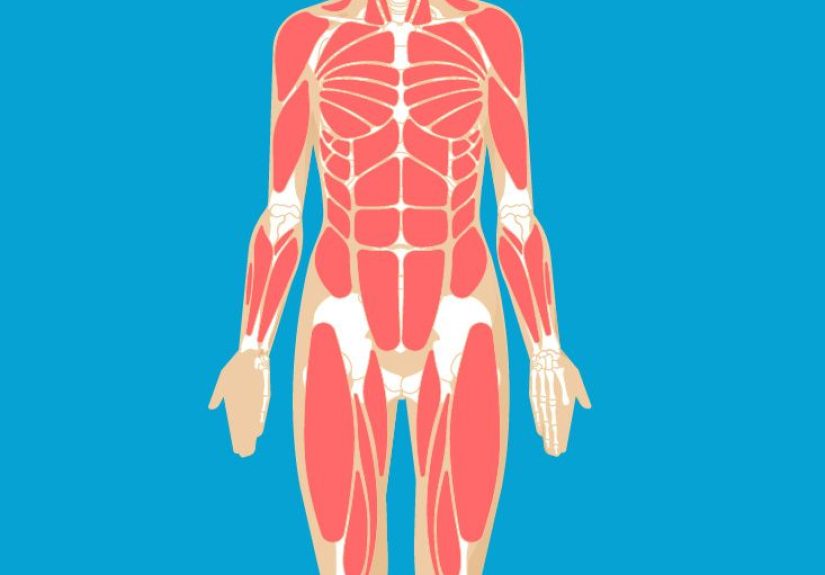
If you remember one thing from the diagram, make it this: skeletal muscle moves your frame, cardiac muscle powers circulation, and smooth muscle runs internal traffic flow.
The Three Types of Muscle Tissue and Their Core Functions
Skeletal muscle: movement, stability, and heat
Skeletal muscle is striated (striped under a microscope) and under voluntary control. Its jobs include locomotion, posture, facial expression, breathing support, and joint protection. It also contributes to temperature regulation because ATP breakdown during contraction produces heat. That’s why exercise warms you upand why shivering is your body’s emergency heat generator.
Cardiac muscle: your life-long pump
Cardiac muscle lives only in the heart and contracts involuntarily. It has an intrinsic electrical conduction system that initiates and coordinates each beat. Electrical signals start in the SA node, pass through the atria, pause at the AV node, then spread through the ventricles. That timing sequence ensures blood filling and ejection happen in a useful order, not random chaos.
Smooth muscle: the quiet operator
Smooth muscle lines hollow organs and passageways. It controls airway diameter, blood vessel tone, GI movement, bladder emptying, pupil size, and more. Unlike skeletal muscle, it isn’t under conscious control. You can’t “decide” to peristalse your lunch downwardbut smooth muscle can, and thankfully does.
How Muscle Contraction Works: Simple Step-by-Step
From brain signal to movement
- A motor neuron sends a signal to muscle fibers at the neuromuscular junction.
- The signal triggers calcium release inside the muscle cell.
- Calcium exposes actin sites so myosin heads can bind (cross-bridge formation).
- Myosin pulls actin inward; sarcomeres shorten.
- ATP allows myosin to detach and reset for another pull cycle.
- Repeated cycles create smooth contraction and force output.
This is called the sliding filament model. The filaments don’t shrink; they slide. Think rowing team: oars (myosin heads) repeatedly pull water (actin interface) to move the boat (muscle shortening).
Why ATP, oxygen, and blood flow matter
Contraction is energy-intensive. ATP is continuously regenerated through metabolic pathways fueled by nutrients and oxygen. During high effort, energy demand spikes. If supply can’t keep up, force falls and fatigue rises. This is normal physiologynot personal failure. Your muscle cell isn’t lazy; it’s doing biochemistry at full tilt.
Primary Functions of the Muscular System
- Movement: walking, lifting, speaking, chewing, blinking, and fine motor control.
- Posture and balance: continuous low-level contraction keeps you upright.
- Joint stability: muscles dynamically protect joints during activity.
- Circulation support: cardiac muscle pumps blood; skeletal muscle helps venous return during movement.
- Respiratory contribution: diaphragm and intercostals power breathing mechanics.
- Internal transport: smooth muscle moves food, urine, and other substances.
- Thermoregulation: muscle contraction generates heat.
- Metabolic reserve: skeletal muscle is a major site for glucose use and protein storage capacity.
Major Muscle Groups You Should Know
Upper body
- Deltoids (shoulder movement and stability)
- Pectorals (pushing and arm adduction)
- Latissimus dorsi (pulling, shoulder extension)
- Biceps and triceps (elbow flexion/extension)
- Forearm flexors/extensors (grip, wrist control)
Core and trunk
- Rectus abdominis (trunk flexion)
- Obliques (rotation, lateral stability)
- Transverse abdominis (deep abdominal bracing)
- Erector spinae (spinal extension, posture)
- Diaphragm (primary breathing muscle)
Lower body
- Gluteals (hip extension, pelvic stability)
- Quadriceps (knee extension)
- Hamstrings (knee flexion, hip extension)
- Calves (plantarflexion, gait propulsion)
- Hip adductors/abductors (frontal-plane control)
In real movement, these groups work as integrated chains. A good squat, for example, is not “just quads.” It’s hips, knees, ankles, trunk stiffness, breathing control, and neural timing all in one synchronized event.
Common Muscular System Issues and Red Flags
1) Strains and overuse injuries
Muscle strains can be mild (small fiber damage) to severe (complete tear). Common signs: pain, tenderness, swelling, weakness, bruising, and limited range of motion. Early care usually includes rest, ice, compression, and elevation, followed by gradual reloading and mobility work.
2) Normal soreness vs problem soreness
Post-workout soreness can be normal, especially after new or intense activity. But pain that worsens, causes functional loss, persists beyond expected recovery, or includes neurologic symptoms deserves professional evaluation.
3) Sarcopenia (age-related muscle loss)
Sarcopenia involves declining muscle mass and function with aging and can reduce mobility and increase fall risk. Strength training, protein adequacy, and consistent physical activity are major protective tools.
4) Rhabdomyolysis (urgent condition)
Rhabdomyolysis is rapid muscle breakdown and can become serious. Warning signs include severe muscle pain/swelling/weakness and dark urine (tea or cola colored). This needs urgent medical care, especially after extreme exertion, heat stress, trauma, or dehydration.
5) When to seek help now
- Sudden severe weakness or inability to move a limb
- Muscle pain with fever, confusion, or dark urine
- Persistent pain beyond a week with no improvement
- Numbness, tingling, or progressive coordination loss
- Any symptoms affecting breathing or swallowing
How to Keep Your Muscular System Healthy
Train for function, not just for mirror angles
A smart program includes strength, mobility, and aerobic work. For adults, a common baseline is regular aerobic activity plus muscle-strengthening work for all major muscle groups at least two days per week. For children and adolescents, daily movement with muscle- and bone-strengthening activities at least three days weekly supports lifelong musculoskeletal health.
Use progressive overload (gently, not dramatically)
Muscles adapt to challenge. Increase load, reps, complexity, or volume gradually. Sudden spikes are a classic route to strains, overtraining, and “why did I do this” soreness.
Recovery is training
- Sleep enough (muscle repair loves sleep).
- Hydrate consistently, especially in heat.
- Alternate hard and easy training days.
- Warm up before intense sessions.
- Cool down and maintain joint range of motion.
Nutrition basics for muscle support
Muscle tissue depends on adequate total energy, quality protein, and micronutrients. Underfueling can blunt recovery and increase injury risk. Overcomplicating nutrition is optional; consistency is not.
Daily life muscle care for non-athletes
You don’t need to train like an Olympian to protect your muscles. Practical habits work:
- Stand and move every 30–60 minutes if you sit for long periods.
- Carry groceries evenly, not all on one side like a dramatic movie hero.
- Learn hip-hinge mechanics for lifting.
- Do short bodyweight routines (squats, push-ups, rows, planks) 2–3 times weekly.
- Keep walkingyour calves and glutes are designed for it.
Conclusion
The muscular system is not just a collection of “big muscles” for sports or aesthetics. It is a high-precision biological network that powers movement, posture, circulation, breathing, internal organ function, and thermal balance. Understanding muscular system anatomy, diagram structure, and core function gives you practical power: you can train smarter, recover better, identify warning signs earlier, and support healthy movement for decades.
Whether you’re a student learning anatomy, a parent guiding an active teen, an office worker fighting desk stiffness, or an older adult preserving independence, muscle health is foundational. Protect it early, train it regularly, and treat symptoms intelligently. Your future mobility will thank you.
Experience Section: from Real-World, Muscle-Focused Scenarios
The following are composite, real-world style experiences based on common patterns seen in fitness, rehabilitation, and everyday life.
Experience 1: “Weekend Warrior Calf Panic.” A 34-year-old software engineer spent months mostly seated, then jumped into a high-intensity pickup game on Saturday. By Sunday morning, his calves felt like concrete. He assumed he had “ruined his legs forever” and started doom-scrolling medical forums. In reality, he had severe post-exercise soreness plus minor strain signs from sudden load. What helped: 72 hours of gentle walking, hydration, light range-of-motion work, and a gradual return. What changed long term: he now uses a 10-minute warm-up, increases weekly activity in small steps, and does two short strength sessions each week. Outcome: fewer flare-ups, better endurance, and a dramatic reduction in Monday regret.
Experience 2: “Neck and Shoulder Burn from the Invisible Dumbbell Called Laptop Life.” A college student reported daily neck tension headaches and upper-back fatigue despite “not doing anything physical.” The issue was muscular overuse in static posture, not a dramatic gym injury. Deep neck flexors were weak, thoracic mobility was limited, and scapular stabilizers were undertrained. Her plan was intentionally simple: posture resets every hour, band pull-aparts, wall slides, split-stance rows, and brisk walks between study blocks. Within four weeks, headache frequency dropped and concentration improved. The lesson: muscles can be overworked by stillness, not just movement.
Experience 3: “The Teen Athlete Who Thought More Was Always Better.” A 16-year-old athlete added extra workouts on top of team practice, skipped sleep to study, and kept energy drinks as a food group. Performance stalled, soreness persisted, and minor strains became frequent. His coach reframed progress around recovery metrics: sleep hours, hydration, meal timing, and rest-day quality. Training was periodized rather than maxed daily. Within two months, sprint times improved and injury episodes decreased. The big insight: adaptation happens between workouts, not during ego contests.
Experience 4: “Strength After 60.” A retired teacher feared resistance training because she believed muscle loss with aging was inevitable. She started with chair squats, light carries, step-ups, and band work twice weekly, plus daily walks. At first, improvements were subtlebetter stair confidence, less fatigue carrying groceries, easier balance while dressing. After six months, she reported fewer near-falls and higher confidence with daily tasks. She didn’t chase “fitness influencer numbers”; she trained for independence. That is muscular system function in its most meaningful form.
Experience 5: “Knowing the Red Flags.” A recreational exerciser developed severe thigh pain, swelling, and unusually dark urine after an extreme heat workout. Instead of waiting it out, he sought urgent care quickly and was treated appropriately. That early decision mattered. The practical takeaway is powerful: not all muscle pain is “just soreness.” If symptoms are severe, systemic, or unusual, acting early protects long-term health.
Across these experiences, one pattern repeats: muscles respond beautifully to consistent, progressive, well-recovered trainingand they protest loudly when load, sleep, hydration, and technique fall out of balance. The muscular system rewards patience more than intensity spikes. Small daily decisions beat occasional heroic efforts.