Table of Contents >> Show >> Hide
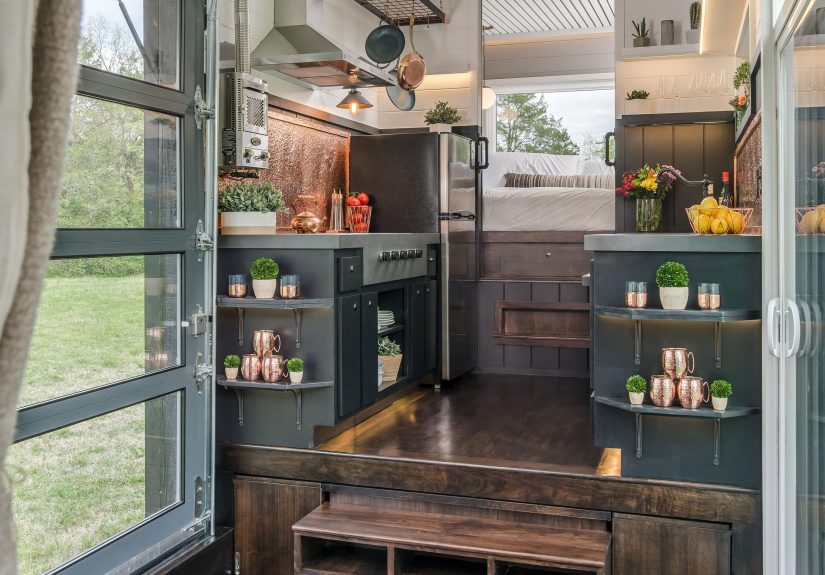
- 1) Turn Your Stairs Into a Storage Wall (Drawers, Cubbies, and a Secret Closet)
- 2) Claim the “Dead Zones” With Toe-Kick Drawers and Skinny Pull-Outs
- 3) Build Banquette or Window-Seat Storage That Flips Up (Seating + Stash in One)
- 4) Go Vertical Like a (Very Organized) Workshop: Pegboards, Rails, Hooks, and Ceiling Shelves
- 5) Choose Disappearing and Double-Duty Furniture: Lift-Up Beds, Fold-Down Tables, and Hidden Compartments
- How to Make These Tiny-House Storage Ideas Actually Work (Without Losing Your Mind)
- Real-Life Experiences and Lessons From Tiny-House Storage (The Extra You’ll Thank Later)
- Conclusion
Tiny-house living isn’t “small living” so much as it is precision living. In a regular home, clutter can hide in a spare room,
a basement, or that one closet where holiday decorations go to form a new civilization. In a tiny home, every stray object becomes a
tripping hazard, a mood killer, or both.
The good news: tiny-house designers and small-space pros have been solving this puzzle for years. Their best tricks all share the same
philosophystorage isn’t furniture you add later; it’s architecture you plan from day one. The even better news: you can steal
their ideas without stealing their blueprints.
Below are five expert-approved tiny-house storage ideas that consistently show up in well-designed micro-homes, AD-worthy small apartments,
and the kind of kitchens that somehow fit a coffee bar, a pantry, and a human being all at once. Each idea includes practical “how to copy it”
steps, plus real-world examples so you can picture it in your own tiny space.
1) Turn Your Stairs Into a Storage Wall (Drawers, Cubbies, and a Secret Closet)
If your tiny house has a loft, you already need stairs (or at least a ladder). Experts almost always choose stairs because they can do double duty:
steps on the outside, storage system on the inside. This is one of the highest-return upgrades in tiny-house storage because it uses a big chunk of
“required” space to create “extra” space.
Why the experts love it
- It uses “negative space” (the wedge under stairs) that often goes wasted.
- It keeps heavy items low, which matters in tiny homes where balance and safety are a real thing.
- It organizes by category: drawers for clothes, cubbies for shoes, a tall compartment for a vacuum or broom.
How to steal it
-
Pick one stair strategy: all drawers, all cubbies, or a hybrid. Drawers hide clutter (great if you like a calm look). Open cubbies
make grab-and-go items easy (great if you’re realistic about your morning routine). - Use full-extension slides so the back of a deep drawer isn’t a black hole where socks disappear.
- Design one “tall zone” for awkward itemsbrooms, folding chairs, yoga mats, tool bags, or a slim hamper.
- Add a tiny “landing strip” near the entry (even just one cubby) for shoes, dog leashes, or the keys you swear you set down “right here.”
Specific examples you’ll see in tiny homes
A common pro move is mixing functions: the first step hides a pull-out shoe drawer, the middle steps become a stack of deep bins for clothing,
and the last section turns into a narrow pantry or cleaning closet. If your stairs sit beside the kitchen, that under-stair pantry can be a game-changer
for bulk items like rice, canned goods, and small appliances.
2) Claim the “Dead Zones” With Toe-Kick Drawers and Skinny Pull-Outs
Tiny-house storage isn’t only about big furniture. The pros also obsess over dead zonesthose small, ignored spaces that add up:
the shallow gap under cabinets, the 3-inch slice beside the fridge, the awkward corner that refuses to behave.
One of the most famous dead-zone steals is the toe-kick drawera hidden drawer built into the recessed space below base cabinets.
It’s sneaky, surprisingly roomy for flat items, and it feels like you unlocked a secret level in your kitchen.
Why the experts love it
- It adds storage without adding cabinets (and without making your tiny kitchen feel tighter).
- It’s perfect for “flat but annoying” items: baking sheets, foil, wraps, cutting boards, placemats, pet bowls.
- It keeps countertops cleaner, which makes small spaces feel instantly larger.
How to steal it
- Start with one cabinet run (like the stretch beside the sink) rather than trying to retrofit the entire kitchen.
- Store lightweight, flat items in toe-kicks. Save heavy cookware for regular drawers.
- Add one skinny pull-out if you have a narrow gap: think spices, oils, cleaning sprays, or pantry staples.
- Use vertical dividers inside standard cabinets for trays and lids. Tiny kitchens love vertical storage because it prevents the dreaded “pan avalanche.”
Specific examples you’ll see in tiny homes
In tiny-house kitchens, toe-kick drawers often become the “wrap station”foil, parchment, zip bags, and reusable containersbecause they’re
slim, flat, and used often. Designers also love pairing a toe-kick drawer with a narrow pull-out pantry so everyday cooking supplies live close together.
3) Build Banquette or Window-Seat Storage That Flips Up (Seating + Stash in One)
Tiny-home pros treat seating like an opportunity, not an obstacle. A chair is a chair. But a banquette or window seat with hidden storage
is seating, a cabinet, and sometimes even a guest bedwithout requiring more floor space.
This idea shows up everywhere: breakfast nooks, tiny-house dining corners, and small living rooms where a “couch” would eat the entire home.
A well-built bench also helps define zones (kitchen vs. living vs. work), which makes tiny spaces feel more intentional and less like you’re living inside your pantry.
Why the experts love it
- It replaces bulky dining furniture with something streamlined and custom-fit.
- It creates deep storagegreat for less-frequently used items.
- It can be soft or sturdy: cushioned reading nook, firm workbench-style seating, or both.
How to steal it
- Choose your access style: flip-up lids (fast and cheap) or drawers (more expensive but easier day-to-day).
-
Assign it a category so it doesn’t become the “random stuff bench.” Great categories: linens, winter gear, pantry overflow, board games,
camera equipment, or hobby supplies. - Add dividers or bins inside so the space stays usable. Deep storage is amazing until everything becomes one tangled pile.
- Make it earn its footprint: pair it with a small table, a wall-mounted fold-down desk, or a window ledge that becomes a mini office.
Specific examples you’ll see in tiny homes
Designers often place banquettes along a wall to free up the walkway. In tiny houses, you’ll see bench storage used for seasonal items (jackets, boots),
large kitchen appliances (slow cooker, blender), or even a pull-out “file drawer” for paperworkbecause yes, adulting still happens in tiny homes.
4) Go Vertical Like a (Very Organized) Workshop: Pegboards, Rails, Hooks, and Ceiling Shelves
Tiny-home experts have a not-so-secret superpower: they treat walls like storage real estate. If your floor plan is small, your walls become the plan.
The goal is vertical storage that looks intentional, not like you’re one step away from opening a hardware store.
The best vertical systems are flexible: pegboards you can rearrange, rail-and-hook setups, floating shelves that climb toward the ceiling,
and door-backed storage for light items. In kitchens, this can replace a whole cabinet run. In entryways, it can replace a closet.
Why the experts love it
- It uses height (the one thing most tiny homes still have plenty of).
- It keeps daily-use items visible so you don’t buy duplicates because you “couldn’t find the scissors.”
- It creates “zones”cooking zone, coffee zone, tool zone, drop zone.
How to steal it
- Pick one wall to be the “utility wall.” The wall above a desk, next to the kitchen counter, or by the front door is ideal.
- Use a rail system or pegboard for frequently used items: utensils, mugs, small pans, keys, hats, bags, cleaning tools.
- Store “rarely used” items high (top shelves) and keep daily items at arm level. Tiny-house living rewards common sense.
- Use matching containers (or at least matching vibes). A consistent look makes storage feel like decor instead of clutter.
- Don’t overload doors: over-the-door organizers are best for lighter thingsshoes, toiletries, small cleaning supplies, accessories.
Specific examples you’ll see in tiny homes
A classic tiny-house kitchen move is a wall rail with hooks and bins for utensils, spices, and small tools, plus a pegboard section for pots or colanders.
Another common trick: a “vertical pantry” on the wallnarrow shelves holding jars and dry goodsso countertop and cabinet space stays clear.
5) Choose Disappearing and Double-Duty Furniture: Lift-Up Beds, Fold-Down Tables, and Hidden Compartments
Experts don’t just ask “Where will we store things?” They ask “Can this thing store things and do its main job?” That’s why the best tiny houses
are full of furniture that transforms: beds with drawers, ottomans that swallow blankets, tables that fold down, and benches that hide everything you own
(in a charming way, not a concerning way).
Why the experts love it
- It reduces furniture count, which keeps tiny spaces from feeling cramped.
- It supports daily routines: fold out a table when you need it, tuck it away when you don’t.
- It hides visual clutter, making tiny interiors feel calmer and more “home,” less “storage unit with a coffee maker.”
How to steal it
- Start with the bed. A platform bed with drawers or a lift-up storage top can replace a dresser in a tiny bedroom or loft.
- Pick one fold-down surface. A wall-mounted table can act as dining table, desk, craft station, or extra counter space.
- Choose seating with hidden storage. Storage ottomans, benches, and sofa bases are tiny-home MVPs.
- Use under-bed storage containers for seasonal clothing, extra linens, or bulky gearespecially if your tiny home doesn’t have a dedicated closet.
- Don’t forget built-ins. Custom built-in furniture can fit your exact dimensions so you aren’t wasting space on awkward gaps.
Specific examples you’ll see in tiny homes
A popular expert layout: a lift-up bench near the entry (shoes + backpacks), a wall-mounted fold-down table that becomes a workstation, and a platform bed
with drawers that holds clothes and linens. Add a storage ottoman for blankets and you’ve basically replaced a closet, a dresser, and a guest room with
three pieces that don’t hog the floor.
How to Make These Tiny-House Storage Ideas Actually Work (Without Losing Your Mind)
Here’s the part most storage articles skip: no storage system survives contact with real life unless it matches your habits.
The best tiny-house storage ideas are the ones you’ll use on a tired Tuesday, not just the ones that look perfect on a Saturday morning.
Three expert rules that make tiny-house storage feel effortless
- Rule #1: Store by routine. If you use it daily, it should be reachable without moving three other things. That’s why wall rails and pegboards shine.
- Rule #2: Give categories a home. “Random stuff” is a category that expands to fill every drawer. Use bins, dividers, and labels where it matters.
-
Rule #3: Keep one empty buffer. Tiny homes need a “landing zone”a small basket, tray, or drawer for the stuff that arrives midweek (mail, receipts, cords).
Without it, clutter will spawn on every surface like it pays rent.
Real-Life Experiences and Lessons From Tiny-House Storage (The Extra You’ll Thank Later)
If you spend time reading tiny-house build logs, watching tours, or talking to people who’ve actually tried living small, you’ll notice something funny:
the “best” storage idea isn’t always the fanciest one. The best idea is the one that still works when you’re rushing out the door, cooking dinner with
a friend in your tiny kitchen, or trying to find that one charging cable that vanishes like it has a side hustle.
One experience many tiny-house owners describe is the “first-week overflow”. On day one, everything has a place. On day seven,
your counters have sprouted a water bottle collection, two jackets have claimed the only chair, and your “temporary” pile of mail is starting to look permanent.
That’s usually when people realize they need a designated drop zonesomething as simple as a wall hook rack and a small trayso daily items stop migrating
across the house.
Another common lesson: deep storage is both a gift and a trap. A flip-up banquette looks brilliant until you have to lift the cushion
every time you want a board game. People often end up creating a simple hierarchy: frequently used items go into drawers or open cubbies, while less-used
items live under bench lids or on top shelves. In practice, the magic isn’t the bench itselfit’s deciding what deserves “easy access” status.
Tiny-house dwellers also talk about vertical storage confidence. At first, hanging pots on a pegboard or rail can feel like you’re turning
your kitchen into a stage set. Then you realize it’s wildly practical: you can see everything, grab what you need fast, and stop playing cabinet Tetris.
The key is restraint. A wall system works best when it’s curateddaily tools and a few nice-looking containersrather than every object you own hanging
in the open like a yard sale.
There’s also the “unexpected hero” category: toe-kick drawers. People tend to underestimate them until they’re living in a tiny space
and need one more spot for flat items. Over time, toe-kicks often become the home for things that would otherwise clutter a counter or jam a standard drawer:
parchment, foil, zip bags, extra dish towels, or placemats. It’s not glamorous storage, but it’s the kind that keeps a tiny kitchen functional.
Finally, experienced small-space folks repeatedly mention that storage and lifestyle are inseparable. Tiny-house living encourages a gentle kind of editing:
fewer duplicates, fewer “just in case” items, and a stronger habit of putting things away immediately. The storage systems that succeed usually do two things:
they’re simple enough to maintain, and they match real routines (coffee stuff lives near the coffee setup; shoes live near the door; cleaning supplies live
where you actually clean). In other words, the most expert tiny-house storage tip might be this: design your storage around how you live, not how you
want to live in an imaginary perfect week.
Conclusion
The secret to smart tiny-house storage isn’t owning a million organizersit’s using space the way experts do:
build storage into what you already need (stairs, seating, beds), claim forgotten inches (toe-kicks and skinny pull-outs),
and use your walls like they’re valuable real estate (because they are).
Start with one upgrade that solves your biggest daily annoyanceshoes everywhere, no pantry space, nowhere to work, or a bedroom that feels like a closet.
Once you feel the relief of a tiny home that’s actually organized, you’ll be hooked (sometimes literally, with wall hooks).