Table of Contents >> Show >> Hide
- What is the MCL (and why does it matter)?
- Symptoms of an MCL tear (aka your knee’s complaint list)
- Diagnosis: How clinicians confirm an MCL tear
- Treatment: what recovery usually looks like (from “ow” to “I’m back”)
- Practical examples: what treatment can look like in real life
- Prevention and avoiding re-injury (because doing rehab twice is not a flex)
- Quick FAQ
- Real-life experiences with MCL tears (what people often say it’s actually like)
- The moment it happens: “That didn’t feel normal”
- The next few hours: swelling and stiffness show up to the party
- The brace era: practical, annoying, and weirdly reassuring
- Physical therapy: the plot twist is that the hips matter
- Returning to sport: straight-line feels easy… then cutting humbles you
- The mental side: patience is the real treatment
- Conclusion
The knee is basically a high-maintenance hinge that thinks it’s a ball-and-socket. It bends. It twists (a little).
It takes impacts. It politely tolerates your “just one more rep” decisions. And then, one awkward step later,
it sends an HR email to your brain titled: We need to talk.
One common reason for that sudden inner-knee drama is an MCL tear (or, more often, an MCL sprain).
The good news: many MCL injuries heal well with the right plan. The not-as-fun news: the right plan still
involves patience, and your knee doesn’t accept “but I have a game this weekend” as a medical argument.
This article breaks down what an MCL tear is, the symptoms that typically show up, how clinicians diagnose it,
and what treatment usually looks likefrom first aid to return-to-sport. (As always: this is educational info,
not a personal diagnosis. If your knee is unstable, extremely swollen, or you can’t bear weight, get checked out.)
What is the MCL (and why does it matter)?
The medial collateral ligament (MCL) is a strong band of tissue on the inner side of your knee.
It connects your thighbone (femur) to your shinbone (tibia) and helps keep your knee from collapsing inward.
Think of it as the knee’s “don’t cave in” seatbelt.
How MCL injuries usually happen
The classic MCL injury happens when force hits the outside of the knee, pushing it inward.
This can occur in contact sports (football, soccer, hockey), awkward landings, sudden changes of direction,
or falls where the knee twists while the foot is planted.
Grades: sprain vs. “tear” (yes, people use the words differently)
Many people say “MCL tear” to describe any level of injury. Clinically, MCL injuries are commonly graded like this:
- Grade 1: The ligament fibers are stretched, with microscopic damage. Pain is usually mild to moderate; the knee feels mostly stable.
- Grade 2: A partial tear. Pain and swelling are more noticeable, and the knee may feel somewhat unstable.
- Grade 3: A complete tear (rupture). Instability is more likely, and it may be hard to trust the knee during pivoting or lateral movement.
Symptoms of an MCL tear (aka your knee’s complaint list)
Symptoms can vary by grade, but MCL injuries tend to cluster around a few classic signsespecially pain along
the inner side of the knee.
Common symptoms
- Inner-knee pain and tenderness: Often right along the ligament line on the inside of the knee.
- Swelling: Can be mild or moderate; sometimes it increases hours after the injury.
- Stiffness: The knee may not want to fully bend or straighten.
- Bruising: Some people notice bruising along the inner knee a bit later.
- Instability or “giving way”: Especially with side-to-side movement or pivoting.
- A pop at the time of injury: Not always, but it can happen.
Symptoms that suggest a “bigger” knee injury
MCL injuries can happen alone, but they can also occur with other damage (like ACL or meniscus injuries).
Consider getting evaluated promptly if you have:
- Major swelling within a few hours (a “ballooning” knee).
- Locking or catching that prevents normal motion.
- Inability to bear weight or take several steps.
- Obvious instability where the knee feels like it won’t hold you up.
- Numbness, coldness, or color change in the lower leg/foot (urgent).
Diagnosis: How clinicians confirm an MCL tear
Diagnosing an MCL injury is usually a combination of your story (what happened), a focused exam,
and imaging when needed. No single detail is perfectgood diagnosis is more like detective work than fortune-telling.
1) History: the “how did you do it?” interview
Clinicians often ask about the mechanism: Did you take a hit to the outside of the knee? Twist while planted?
Feel a pop? Have immediate swelling? The answers help estimate which structures might be involved.
2) Physical exam: checking stability (the famous valgus stress test)
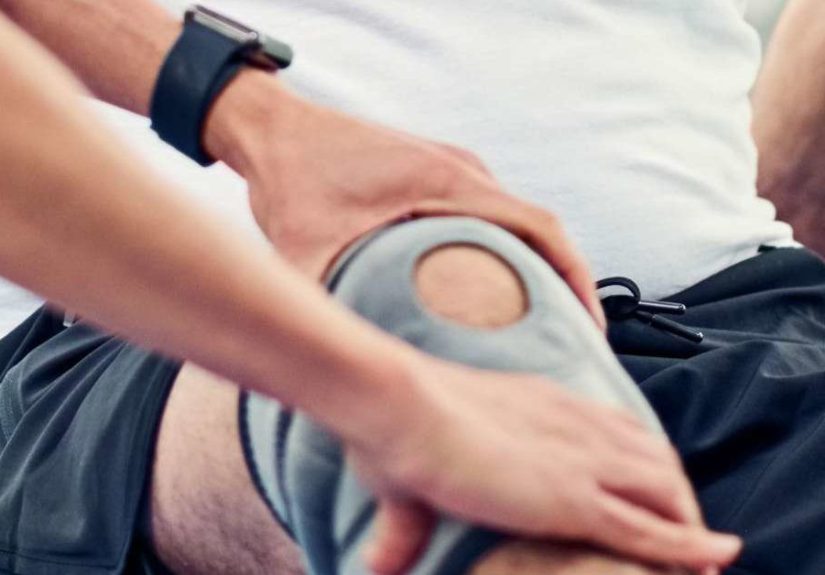
A key exam maneuver is the valgus stress test, where controlled pressure is applied to see if the knee opens up
on the inner side compared with the uninjured knee. Testing at different knee angles helps isolate the MCL
and also evaluate whether other structures might be injured.
Clinicians also check the ACL, PCL, meniscus signs, range of motion, swelling patterns, and walking ability,
because a knee rarely injures itself in a “single-issue” way just to be polite.
3) Imaging: when X-rays or MRI make sense
Imaging is not always necessary for every mild MCL sprain, but it becomes important if there’s concern for fracture,
major instability, or additional ligament/meniscus injury.
-
X-ray: Often used first after acute trauma to rule out fractureespecially when there’s focal tenderness,
effusion, or inability to bear weight. - MRI: The best test to visualize ligaments and meniscus injuries when symptoms or exam suggest more than a mild sprain.
- Ultrasound (sometimes): Can evaluate some ligament injuries in experienced hands, but MRI is more comprehensive.
Treatment: what recovery usually looks like (from “ow” to “I’m back”)
Most MCL injuries are treated without surgery. The main goals are to protect the ligament while it heals,
restore motion, rebuild strength, and re-train balance and control so the knee stops acting suspicious during cutting and pivoting.
Step 1: The first few days (calm things down)
- Rest: Reduce the activity that hurts (especially cutting/pivoting).
- Ice: Short sessions to reduce pain and swelling (wrap itno bare-skin ice heroics).
- Compression: Elastic wrap or sleeve if advised.
- Elevation: When swelling is noticeable.
- Crutches (if needed): If walking hurts or you’re limping, reducing load early can help.
- Brace (often hinged): Commonly used to limit side-to-side stress while allowing some movement.
Over-the-counter pain relievers may help, but they’re not “push through it” permission slips. Follow label directions,
and if you have other medical conditions or take other meds, check with a clinician.
Step 2: Early rehab (get motion back without annoying the ligament)
Once pain and swelling start improving, rehab usually focuses on:
- Gentle range-of-motion work: Prevents stiffness and helps normal walking return.
- Quad and hamstring activation: Because those muscles are the knee’s best bodyguards.
- Hip and core strength: Helps control knee position during movement.
- Balance and neuromuscular training: Re-teaches the knee how to behave during real-life motion.
Step 3: Strength, control, and sport-specific return
As stability improves, rehab progresses to:
- Progressive strengthening: Squat patterns, step-ups, deadlift variations, and resistance work (scaled to your stage).
- Dynamic balance: Single-leg control, direction changes (later), and reactive drills.
- Gradual return to running and cutting: Based on function, not just the calendar.
- Confidence rebuilding: Yes, this is real. Your brain also needs proof the knee is trustworthy again.
How long does recovery take?
Timelines vary based on severity, other injuries, your age, and how consistently rehab happens. But as a general pattern:
- Grade 1: Often improves in roughly 1–3 weeks, sometimes sooner for day-to-day activity.
- Grade 2: Commonly takes 3–6+ weeks for stronger function, with bracing/therapy often recommended.
- Grade 3: May take 6–12+ weeks (sometimes longer), especially for pivoting sports and higher-demand activity.
Translation: you might feel “fine” walking before you’re actually ready for hard cutting, sudden stops, or contact.
That last part of rehab is where re-injury prevention lives.
When is surgery needed?
Surgery for an isolated MCL tear is uncommon. It becomes more likely when:
- Multiple ligaments are injured (for example, MCL plus ACL) and the knee is unstable.
- The tear involves certain patterns (like the ligament pulling off bone in a way that won’t heal well) or persistent instability remains after rehab.
- There are complex associated injuries that change the treatment plan.
The key point: “complete tear” doesn’t automatically mean surgerycontext matters (and knees love context).
Practical examples: what treatment can look like in real life
Example 1: Grade 1 sprain in a recreational runner
A runner missteps on a curb, feels inner-knee pain, but can still walk. The plan may include a brief period of rest,
ice for comfort, a few days of activity modification, and then progressive strength and balance work. They might return
to easy running first, then hills and speed lateronce the knee is stable and pain-free.
Example 2: Grade 2 tear in a soccer player
After a tackle, the player’s knee feels unstable with cutting. Treatment often includes a hinged brace, short-term
reduction in weight-bearing if limping, and structured physical therapy. Return-to-play usually happens in phases:
straight-line running first, then controlled agility, then sport-specific cutting drills, then contact practice.
Example 3: Grade 3 tear with suspected additional injury
A skier falls with a twisting mechanism, has notable swelling and instability. Evaluation may include X-ray and MRI
to check for associated ligament or meniscus damage. Treatment could still be non-surgical for the MCL component,
but the overall plan depends on what else is injured.
Prevention and avoiding re-injury (because doing rehab twice is not a flex)
- Strengthen the chain: Quads, hamstrings, hips, and calves all influence knee control.
- Train movement quality: Landing mechanics and change-of-direction technique reduce risky knee collapse.
- Don’t rush cutting/pivoting: Straight-line activity usually returns before sport-level demands.
- Use bracing when advised: Some athletes benefit from temporary bracing during return-to-sport.
- Warm up like you mean it: A real warm-up beats the “two toe touches and vibes” approach.
Quick FAQ
Can an MCL tear heal on its own?
Many MCL injuriesespecially grade 1 and grade 2heal well with conservative treatment (activity modification,
bracing when needed, and physical therapy). Even some grade 3 injuries can recover without surgery, depending on the situation.
Do I always need an MRI?
Not always. Mild cases can often be diagnosed clinically. MRI is more useful when the exam suggests additional injury,
symptoms are significant, or progress isn’t matching expectations.
When should I get checked right away?
Seek prompt care if you can’t bear weight, have major swelling, the knee feels unstable, you notice numbness or color change
in the foot, or the injury happened with high-force trauma.
Real-life experiences with MCL tears (what people often say it’s actually like)
Medical explanations are helpful, but lived experience is where things get reallike realizing you can’t carry a backpack
downstairs normally because your knee suddenly has “opinions.” Here are common themes people describe during MCL recovery,
across different sports and day-to-day life. (These are shared patterns, not personal medical advice.)
The moment it happens: “That didn’t feel normal”
A lot of people report a very specific feeling: the knee gets pushed inward, and there’s a sharp inner-knee sting.
Some hear or feel a pop; others don’t. What stands out is the instant mental math: “Can I keep going?” In mild sprains,
walking is possiblethough it may feel sore and wobbly. In more significant tears, the knee can feel like it’s lost its
side-to-side “guardrail,” especially when turning or stepping sideways.
The next few hours: swelling and stiffness show up to the party
People are often surprised that swelling can increase later, not just immediately. You might finish the day thinking,
“Okay, it hurts but I’m fine,” and then wake up with stiffness and a knee that bends like a rusty door hinge.
That delayed “tightness” is one reason early rest and swelling control mattersbecause a stiff knee can slow rehab down.
The brace era: practical, annoying, and weirdly reassuring
Hinged braces get mixed reviews. Some people love the stabilityfinally, the knee stops feeling like it might
“slide” during a simple turn. Others hate the bulk, the straps, and the way it turns skinny jeans into a negotiation.
But many end up appreciating the brace for one big reason: it gives them confidence to walk normally again while the ligament heals.
Confidence isn’t just emotional; it changes how you move. When you stop guarding, you start restoring normal mechanics.
Physical therapy: the plot twist is that the hips matter
People expecting “knee rehab” often get a surprise: a lot of the work targets hips and core, not just the knee.
That’s because knee position is heavily influenced by hip strength and control. A common experience is realizing
that a single-leg balance drill is way harder than it looksuntil it’s suddenly not. Progress in rehab often feels
like that: awkward, shaky, then smoother over time. Small wins (less limping, better stairs, deeper squat without pain)
are the milestones that keep motivation alive.
Returning to sport: straight-line feels easy… then cutting humbles you
Many athletes describe a classic pattern: they can jog in a straight line and feel “basically back,” then try a quick cut
or pivot and realize the knee still isn’t ready for chaos. That’s normal. Side-to-side control is exactly what the MCL helps with,
and it’s also one of the last things to feel fully trustworthy again. People who do best long-term often follow a stepwise return:
walk → jog → run → agility drills → sport-specific movements → full participation. The best “return date” is the one your knee earns,
not the one your calendar demands.
The mental side: patience is the real treatment
If there’s one consistent experience across ages and activity levels, it’s that recovery tests your patience.
It’s tempting to speed-run rehab, especially when pain fades early. But many people learn that feeling better
isn’t the same as being fully stable. Those who stick with strengthening and balance work after symptoms improve
often report fewer setbacks, more confidence, and better performance once they’re back.
Conclusion
An MCL tear can be scary in the momentmostly because knees are dramatic and instability feels unsettling.
But the overall outlook is often good. Recognizing the symptoms, getting a smart evaluation, and following a staged rehab plan
(with bracing and imaging when appropriate) usually gets people back to normal lifeand back to sportsafely.
If your knee feels unstable, swelling is significant, or you can’t bear weight, don’t guess. Get it assessed and give recovery
the respect it deserves. Your future self will thank youpreferably with pain-free stairs.