Table of Contents >> Show >> Hide
- Quick verdict: who Jabra Enhance is best for
- What happened to Lively? The name change, explained
- How Jabra Enhance works: the “online + remote care” model
- Jabra Enhance models and pricing: what you’re actually choosing
- Sound quality: what “good” sounds like in real life
- Remote audiology: the feature you don’t appreciate until you need it
- How it compares: Jabra Enhance vs other popular alternatives
- Pros and cons (the honest version)
- FAQ: common questions before you buy
- Real-World Experiences : What it’s like living with Jabra Enhance day to day
- Bottom line: is Jabra Enhance worth it?
- Notes
Lively used to be the cool online hearing-aid brand with the peppy name that sounded like it should come with free dance lessons.
Now it’s Jabra Enhancesame “hear better from home” vibe, different jersey. If you’ve been Googling
“Lively hearing aids review” and feeling like you accidentally time-traveled, you’re not alone.
The short version: Lively was folded into GN’s consumer hearing business and rebranded under Jabra Enhance.[1]
This review breaks down what actually matters: how Jabra Enhance works (and why it still feels like “old Lively”),
which models exist, what they cost, what the tele-audiology experience is like, and what kinds of people tend to loveor hatethis setup.
Expect practical examples, a little humor, and zero “revolutionary life-changing” fluff.
Quick verdict: who Jabra Enhance is best for
Jabra Enhance (formerly Lively) is best for adults with perceived mild to moderate hearing loss who like the idea of
online ordering + remote professional support rather than repeated clinic visits.[3]
It’s also a strong pick if you want a long trial period and solid warranty coverage for an OTC-style, direct-to-consumer experience.[4]
Great fit if you…
- Want hearing aids that are discreet and feel closer to “clinic tech” than bargain amplifiers.
- Like the convenience of getting adjustments remotely (especially if driving to appointments sounds like a personal insult).
- Are comfortable using a smartphone app for controls, streaming, and support.
- Care about a generous trial window and long warranty coverage.[4]
Not the best fit if you…
- Think you may have severe hearing loss (or sudden changes, one-sided loss, pain, drainage, or dizziness)you should start with a clinician.
- Refuse to use a phone app (some features and tuning workflows depend on it).
- Need deep-in-the-ear invisibility above all else (some competitors specialize more in that look).
- Want the absolute cheapest option on the internet (Jabra Enhance aims for value, not rock-bottom price).
What happened to Lively? The name change, explained
Lively was acquired by GN (the parent company behind brands like ReSound and Jabra), and in 2022 the Lively brand was reintroduced as
Jabra Enhance with a new consumer-facing home at JabraEnhance.com.[1] If you bought from Lively in the past,
the spirit of the model is familiar: an online hearing test or submitted audiogram, devices shipped to your door,
and professional support delivered remotely.
In other words, it’s less “Lively disappeared” and more “Lively got a new haircut and a corporate badge.” GN’s strategy has been to combine
consumer-friendly branding (Jabra) with hearing-industry hardware and audiology know-how.[2]
How Jabra Enhance works: the “online + remote care” model
Jabra Enhance is built around three pillars:
(1) at-home onboarding, (2) app-based controls, and (3) remote support from licensed hearing professionals.[4]
You typically take an online hearing screening (or provide prior test results), pick a model, and get devices shipped to you.
Then you do an orientation call and request tuning tweaks through the app as you use them in real life.
Trial period, warranty, and support
- 100-day risk-free trial with refunds if you return within the window.[4]
- 3-year warranty and loss/damage protection are commonly bundled for Enhance Select models, which is longer than many direct-to-consumer offers.[4]
- Remote adjustments and access to a support team are core to the experience (and a major part of the price you’re paying).[4]
One detail people overlook: loss-and-damage protection often involves a deductible for replacements.
That’s not “gotcha,” it’s standard in the categorybut it’s worth knowing before your hearing aid takes an unplanned vacation into a couch cushion universe.[5]
Jabra Enhance models and pricing: what you’re actually choosing
Jabra Enhance tends to offer a small menu of models that cover different budgets and feature sets.
Prices can shift with promotions, bundles, or retailer partnerships, but the ranges below reflect commonly listed pricing from Jabra Enhance and major review outlets.[6][7][8][9]
| Model | Typical price (pair) | Best for | Highlights |
|---|---|---|---|
| Enhance Select 50R | $995–$1,195[8] | Value shoppers who still want pro support | Solid basics, streaming support; fewer premium features than higher tiers[8] |
| Enhance Select 300 | ~$1,695[6] | Most people (sweet spot) | Stronger speech-in-noise tools; often cited as best value in the lineup |
| Enhance Select 500 | ~$1,995[7] | More automation and premium processing | Flagship-tier features, stronger noise handling; higher cost |
| Enhance Select 700 | ~$1,995 (often promo-based)[9] | Top features + “future-ready” connectivity | SoundScape + Auto Focus, Bluetooth LE Audio/Auracast, hands-free calling[9] |
There’s also a separate track: Jabra Enhance Pro, which is commonly associated with in-store availability (notably through Costco partnerships).[12]
If you prefer in-person help but like Jabra/GN tech, that route may be worth comparing.
Sound quality: what “good” sounds like in real life
The best hearing aid isn’t the one with the most featuresit’s the one that makes the world feel normal again.
For many people with mild to moderate loss, that means voices stop sounding like they’re being delivered through a pillow,
and background noise becomes less bossy.
Speech in noise (restaurants, family dinners, “open office chaos”)
Jabra Enhance models emphasize speech clarity and noise reduction, with higher tiers adding more advanced automation.
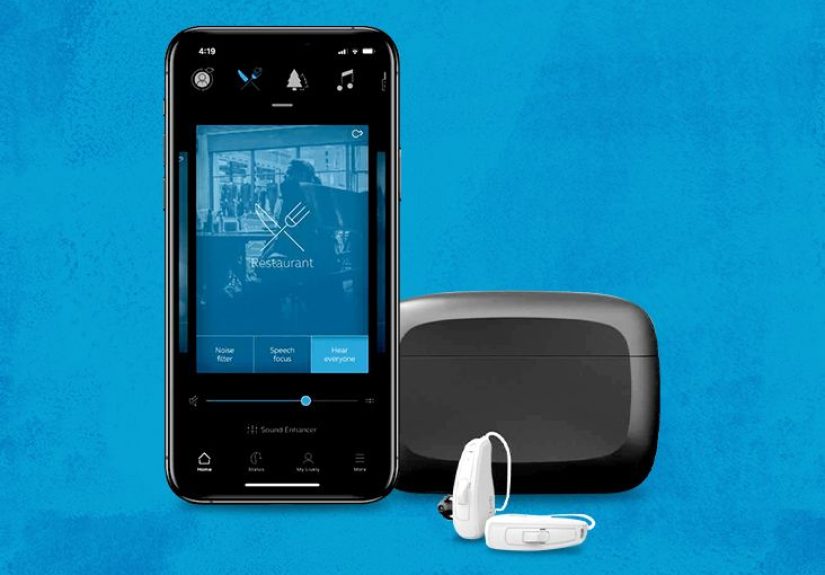
The Select 700, for example, highlights SoundScape with Auto Focus, designed to prioritize speech while reducing surrounding noiseparticularly useful in busy environments like restaurants.[9]
Here’s a practical example: imagine a dinner where you’re trying to follow your friend across the table while a server is describing specials
and three other conversations are happening within a six-foot radius. With a well-fit device, you still hear the roombecause you’re not living in a vacuum
but speech becomes easier to grab without exhausting your brain by dessert.
Music and streaming: hearing aid vs earbuds expectations
Many modern hearing aids stream calls and audio, but they’re not built to be audiophile earbuds first.
If you stream podcasts, TV audio, or calls, Jabra Enhance can be convenient. If you expect concert-level bass drops,
you may feel underwhelmed (because hearing aids prioritize clarity and feedback control over thump).
Bluetooth, hands-free calling, and “future-ready” features
Some models (notably higher tiers) support newer connectivity standards like Bluetooth LE Audio and Auracast-ready features.[9]
Translation: better power efficiency and new broadcast-style audio possibilities in certain public venues as adoption grows.
If you’re the type who keeps a phone for five years, “future-ready” is more than marketingit can be insurance.
Battery life and charging
Rechargeable designs are now the norm in this category. In daily life, what matters is not the lab number but whether you can get through
a long day plus an evening out without the dreaded “low battery” chirp at the exact moment someone tells a story punchline.
Expect full-day performance with regular overnight charging for most modern RIE/RIC designs, with higher-tier bundles sometimes including more travel-friendly cases.
Remote audiology: the feature you don’t appreciate until you need it
The big differentiator between Jabra Enhance (and old Lively) and many bargain devices is the professional support loop.
Instead of trying to self-diagnose why voices sound sharp or why wind noise is winning, you can request tuning changes and get updates pushed through the app.[4]
That can make the difference between “I gave up after three days” and “I forgot I’m wearing them.”
What the setup experience is usually like
- You take an online hearing test or submit results.
- You choose a model and receive it by mail.
- You do an orientation call and learn insertion, cleaning, and app controls.[4]
- You wear them in real environments and request tweaks (restaurants, outdoors, TV time, etc.).
A good remote-care workflow feels like texting a tailor: “The left side feels a little loud in crowds,” and a day later it’s smoother.
A bad workflow feels like yelling into the void. Jabra Enhance’s brand promise is that you’re not yelling into the voidyou’re messaging a real team.[4]
How it compares: Jabra Enhance vs other popular alternatives
Most shoppers cross-shop three broad categories:
(1) online + pro support, (2) self-fit OTC, and (3) ultra-budget amplifiers.
Jabra Enhance lives comfortably in category (1), straddling the line between clinic-grade hardware roots and consumer-friendly access.
Compared to ultra-budget devices
If your current “hearing solution” costs less than a nice dinner, it may simply amplify everythingspeech, plates clanking, and the existential dread of loud restaurants.
Jabra Enhance aims for smarter processing and personalization, which tends to matter more than raw volume.
Compared to sleek in-ear competitors
Some brands emphasize near-invisible in-ear style above all else. Jabra Enhance typically uses discreet receiver-in-canal designs that are still subtle,
but not always “spy-movie invisible.” The tradeoff can be better microphones, battery options, and easier servicing.
Compared to clinic fittings
If you want in-person testing, ear impressions, and the hands-on confidence of a local provider, clinics still win on that experience.
But clinics often cost more, and scheduling can be a pain. Jabra Enhance is basically a compromise: pro involvement, minus repeated office visits.
Pros and cons (the honest version)
Pros
- Strong value for an online model that includes professional support and multiple years of coverage.[4]
- 100-day trial gives you time to actually live with the devices (not just “try them in your kitchen”).[4]
- Remote fine-tuning can be a game-changer for comfort and clarity.
- Options across price tiers, including a lower-cost entry model.[8]
- Higher tiers include modern connectivity features for streaming and calls.[9]
Cons
- App dependence: controls, requests, and streaming features require comfort with smartphone basics.
- Not ideal for severe loss or complex medical scenariosthose deserve in-person evaluation.
- Some users report connectivity/app frustrations (common across many Bluetooth hearing devices, but still annoying).[11]
- Streaming audio quality may not satisfy people expecting “earbuds first” performance.
FAQ: common questions before you buy
Is Jabra Enhance the same as Lively?
It’s the continuation of the Lively concept under the Jabra Enhance brand after GN’s acquisition and rebrand.[1][2]
The core modelonline purchase, at-home setup, remote professional careremains central.
Are these OTC hearing aids?
Jabra Enhance Select models are marketed for adults with perceived mild to moderate hearing loss, aligning with the FDA’s OTC category concept that expanded access starting in October 2022.[3]
If you suspect severe loss or have medical red flags, start with a clinician.
How long is the trial and what does the warranty cover?
Trial periods and warranty terms can vary by bundle, but a 100-day trial and multi-year warranty/loss-damage protection are commonly advertised for Enhance Select purchases.[4]
Replacement coverage may involve a deductible.[5]
Do I need a hearing test first?
You can start with an online screening, but a comprehensive hearing exam is still valuableespecially if your hearing changed suddenly,
you struggle a lot in noise, or you want to rule out treatable medical causes.
Real-World Experiences : What it’s like living with Jabra Enhance day to day
Let’s talk about the part no spec sheet can capture: the first two weeks. With hearing aids, the “tech” is only half the story.
The other half is your brain, which has been quietly improvising for months or yearsfilling in missing words, guessing punchlines,
and smiling politely when it’s actually confused. When you put on hearing aids that are properly tuned, your brain doesn’t just hear more;
it has to relearn what “normal” sounds like.
A common early experience is the “Why is everything so loud?” phase. Footsteps sound sharper. Paper bags sound like tiny thunderstorms.
And your refrigeratorapparentlyhas been running a side hustle as a white-noise machine. This doesn’t mean the devices are wrong.
It often means you’re hearing frequencies you haven’t heard clearly in a while. The goal is not “turn the world up”;
it’s “make speech easier.” That’s why remote fine-tuning matters: you can tell the support team, “Voices are clearer, but clanking dishes are attacking me,”
and adjustments can rebalance your settings over time.[4]
Another real-world moment: restaurants. The first time you wear hearing aids to a busy place, you might expect magiclike the background noise will politely leave.
In reality, hearing aids can help, but they can’t rewrite physics. What many users report (in reviews across the category) is that the win is subtle but meaningful:
you don’t have to lean in as much, you ask for fewer repeats, and you don’t feel as mentally drained after an hour. Models that emphasize speech-in-noise automation
can help most here, and higher tiers highlight features designed for exactly this scenario.[9]
Then there’s the app relationship. On good days, the app feels empowering: you nudge volume, switch into a restaurant mode, or message for a tweak.
On bad days, Bluetooth does what Bluetooth sometimes does: it forgets, reconnects, disconnects, and generally behaves like a cataffectionate only on its own terms.
Some customer complaints specifically mention app or Bluetooth reliability frustrations, while others praise support responsiveness and outcomes.
The honest takeaway: if streaming and connectivity are your main reasons for buying, you should verify your phone compatibility and set expectations that it may take
a little troubleshooting at first.[11]
Comfort is another “it depends” factor. Many people adjust quickly to receiver-in-canal styles because they’re lightweight and sit discreetly behind the ear.
But comfort can hinge on tiny details: dome size, receiver length, how you wear glasses, and whether you’re the kind of person whose ears dislike change.
The good news is that comfort issues are usually solvable (different domes, different fit, different settings to reduce occlusion).
The bad news is that you have to speak up about what feels offbecause “I’m fine” doesn’t help your ears.
Finally, there’s the emotional part. People often underestimate how much hearing loss affects confidence. You might stop talking in groups because it’s too hard to follow.
You might avoid calls. You might think, “Everyone mumbles now,” when it’s really your hearing doing the quiet fade-out.
When hearing aids are tuned well, the emotional payoff is often the biggest one: you engage again. You crack a joke at the right time.
You stop nodding like a dashboard bobblehead because you’re actually catching the words. That’s why the 100-day trial window matters:
it gives you time to live your life, not just test the devices in a silent room with perfect lighting and no humans.[4]
Bottom line: is Jabra Enhance worth it?
If you’re shopping for a modern, discreet hearing aid experience without committing to a traditional clinic route,
Jabra Enhance is one of the stronger “online + pro support” optionsespecially for mild to moderate hearing loss.
The best value tends to come from choosing a model that matches your real lifestyle (quiet home vs noisy social calendar),
and using the remote tuning process like it’s part of the productbecause it is.
Think of it this way: you’re not just buying tiny speakers for your ears. You’re buying a systemhardware, software, and human supportto make hearing easier.
For the right person, that’s absolutely worth it. For the wrong person (severe loss, medical red flags, or zero patience for apps),
the better move is an in-person audiology path.
Notes
[1] Lively rebrand to Jabra Enhance and launch of JabraEnhance.com.
[2] GN acquisition timeline / background on the name change.
[3] FDA OTC hearing aid category (adults, mild to moderate; effective Oct 17, 2022).
[4] Jabra Enhance trial/warranty/support and audiology services details.
[5] Replacement coverage deductibles (example amounts) and warranty specifics from a major review outlet.
[6] Jabra Enhance Select 300 pricing reference.
[7] Select 500 pricing and lineup positioning context.
[8] Select 50R pricing and feature tradeoffs summary from a major reviewer.
[9] Select 700 feature set (Auto Focus, LE Audio/Auracast, hands-free calling) and pricing context.
[11] Examples of reported app/Bluetooth or service issues in public complaint/review channels.
[12] Jabra Enhance Pro in-store channel mention (e.g., Costco exclusivity noted by Jabra).