Table of Contents >> Show >> Hide
- What Is a Leg Ulcer?
- The Most Common Types of Leg Ulcers
- Causes and Risk Factors: Why Leg Ulcers Happen
- How Leg Ulcers Are Diagnosed
- Treatments That Work: The Core Principles
- Treatment by Ulcer Type
- Two Quick Examples: Why the Right Diagnosis Changes Everything
- What You Can Do at Home (Safely) While Waiting for Care
- When to Seek Urgent Medical Help
- FAQ (Because You’re Not the Only One Wondering)
- Real-Life Experiences: What Living With a Leg Ulcer Often Feels Like (and What Helps)
A leg ulcer is the kind of problem that looks like it should be “no big deal” (it’s just a sore, right?)until it
stubbornly refuses to heal, overstays its welcome, and starts acting like it pays rent. In reality, leg ulcers are
often a sign that something deeper is going on, especially with circulation, nerve function, pressure, or chronic
inflammation. The good news: once the underlying cause is identified, treatment can be targeted, healing is much
more likely, and recurrence becomes preventable instead of inevitable.
This guide breaks down the most common causes of leg ulcers, how clinicians diagnose them, and what treatments work
bestplus what real-life day-to-day management tends to feel like for people living with these wounds. (Spoiler:
compression wraps are effective, but they’re also a lifestyle.)
What Is a Leg Ulcer?
A leg ulcer is an open sore on the lower leg or foot that doesn’t heal in the usual timeframe. Unlike a simple cut,
an ulcer often forms because the skin and underlying tissue aren’t getting what they need to repairmost commonly
adequate blood flow, oxygen, and normal pressure distribution. That’s why treating the surface alone rarely solves
the problem. Think of it like repainting a wall while ignoring the leaky pipe behind it.
The Most Common Types of Leg Ulcers
1) Venous leg ulcers (the “blood is pooling” ulcer)
Venous ulcers are commonly linked to chronic venous insufficiencywhen leg veins struggle to push blood back toward
the heart. Pressure builds, fluid leaks into tissues, swelling increases, and the skin becomes fragile. These ulcers
often appear around the ankle area (frequently the inner ankle), with swelling, skin discoloration, or itchiness
from “stasis” changes. Pain can vary and often improves with leg elevation.
2) Arterial ulcers (the “not enough blood getting in” ulcer)
Arterial ulcers are caused by reduced blood flow to the legs and feet, often due to peripheral artery disease (PAD).
With less oxygen delivery, tissues break down and struggle to rebuild. These ulcers are more likely on toes, the
outer ankle, heels, or pressure points of the foot. They’re often more painfulespecially at night or when the leg
is elevatedand the foot may feel cool with weak pulses.
3) Diabetic/neuropathic ulcers (the “pressure + numbness” ulcer)
Diabetes can contribute to ulcers in two main ways: nerve damage (neuropathy) reduces protective sensation, and
circulation problems reduce healing capacity. When someone can’t feel repeated pressure or minor injuriesespecially
on the bottom of the footskin breaks down and an ulcer can form. These ulcers are strongly linked to footwear,
calluses, foot deformities, and not noticing a problem early.
4) Pressure injuries and mixed ulcers
People with limited mobility can develop pressure-related wounds on the heel or areas that bear weight for long
periods. Also, many real-world ulcers are “mixed,” such as venous disease plus PAD, or diabetes plus PADmeaning
treatment must be carefully tailored (and sometimes staged).
5) Atypical ulcers (inflammatory, infectious, or malignant)
If an ulcer looks unusual, is extremely painful, has a strange border, or doesn’t improve with appropriate care,
clinicians consider atypical causes such as vasculitis, autoimmune disease, uncommon infections, or (rarely) skin
cancer arising in chronic wounds. This is where a biopsy may become important.
Causes and Risk Factors: Why Leg Ulcers Happen
Leg ulcers are usually a symptom of an underlying condition. Common causes and risk factors include:
- Chronic venous insufficiency (varicose veins, prior blood clots, vein valve problems)
- Peripheral artery disease (often linked to smoking, diabetes, high cholesterol, aging)
- Diabetes (neuropathy, circulation issues, immune changes)
- Swelling/edema (which stresses skin and reduces oxygen delivery)
- Immobility or pressure (especially heels)
- Kidney disease, heart failure, or poor nutrition (can slow tissue repair)
- Infection (usually complicates an existing wound rather than starting one)
- Inflammatory/autoimmune disorders (less common, but important to identify)
How Leg Ulcers Are Diagnosed
Good diagnosis is less about guessing and more about structured detective work. Clinicians typically assess (1) what
the wound looks like, (2) what the surrounding skin and circulation look like, and (3) what’s happening system-wide.
A correct diagnosis matters because treatments can conflictespecially compression, which helps venous ulcers but
can be unsafe in severe arterial disease.
Step 1: History and wound exam
Expect questions about how long the ulcer has been present, pain patterns, swelling, prior ulcers, diabetes, smoking,
vein problems, prior clots, mobility level, and footwear. The ulcer is measured and described (location, size, depth,
drainage, tissue type, and the condition of surrounding skin).
Step 2: Vascular assessment (this is a big one)
For any nonhealing lower-extremity ulcer, clinicians commonly check pulses and perform an
ankle-brachial index (ABI), a simple test comparing blood pressure at the ankle to the arm. ABI helps
estimate arterial blood flow and guides whether compression is safe. In many care pathways:
- ABI ≥ 0.8: higher compression is often considered safe (if no other contraindications)
- ABI 0.5–0.8: reduced/modified compression may be considered with close supervision
- ABI < 0.5: compression is generally avoided and vascular evaluation becomes urgent
If venous disease is suspected, a duplex ultrasound may be used to assess vein reflux or obstruction.
If arterial disease is suspected, additional vascular imaging may be recommended.
Step 3: Labs and imaging when needed
Depending on the situation, clinicians may check blood sugar control, anemia, kidney function, inflammatory markers,
or nutrition status. If there’s concern for deeper infection (like bone infection), imaging such as X-ray or MRI may
be used.
Step 4: Cultures and biopsyselectively
Not every wound needs a culture. Many chronic ulcers are colonized with bacteria without true infection. Cultures are
more helpful when there are clinical signs of infection. If an ulcer is atypical or not healing despite appropriate
care, a skin biopsy may be recommended to rule out unusual inflammatory causes or malignancy.
Treatments That Work: The Core Principles
Treatment is most effective when it addresses both the wound and the underlying cause. Almost every plan includes:
Foundational wound care (the “daily driver”)
- Cleaning with gentle methods (harsh antiseptics can damage healing tissue)
- Debridement (removing nonviable tissue when appropriate)
- Dressings chosen for moisture balancetoo wet and skin breaks down; too dry and healing stalls
- Pain control (because uncontrolled pain reduces mobility and sleepboth needed for healing)
- Infection management when infection is present (not “just in case”)
When antibiotics are (and aren’t) used
Antibiotics are used to treat infection, not to “speed up healing” in an uninfected ulcer. In diabetes-related
foot wounds especially, guidelines emphasize that antibiotics are not required for uninfected ulcers; they’re used when
there’s clear infection (for example, spreading redness, warmth, swelling, increasing pain, pus, fever, or systemic
illness). Treatment may also include targeted therapy based on culture results when appropriate.
Treatment by Ulcer Type
Venous leg ulcer treatment
If venous insufficiency is the driver, the headline treatment is usually:
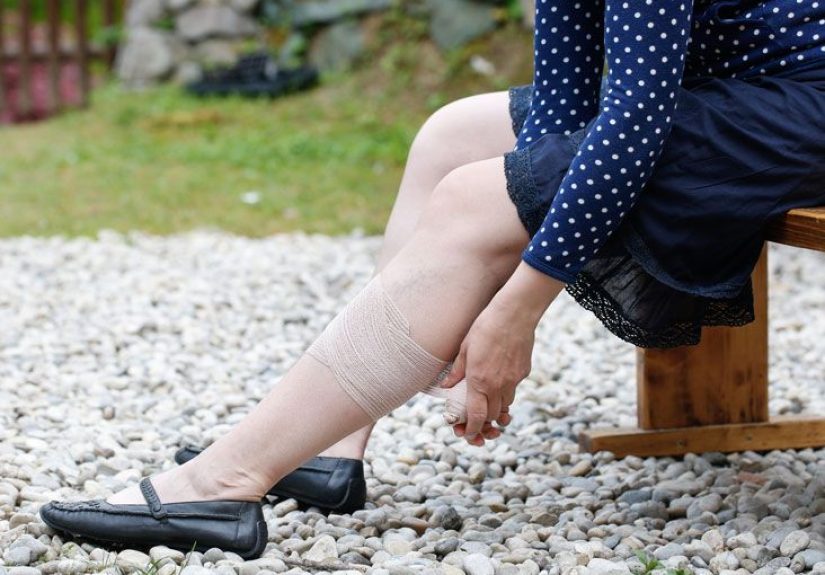
compression therapybandages, wraps, or compression stockings designed to reduce swelling and improve
venous return. Compression works best when paired with:
- Leg elevation (above heart level when possible)
- Walking and calf-muscle activity (your calf acts like a “second heart” for venous return)
- Skin care to manage stasis dermatitis and protect fragile tissue
- Appropriate dressings under compression for moisture control
For some people, treating underlying vein reflux (for example, with endovenous procedures) may be recommended to help
healing and reduce recurrence. Medication may sometimes be used as an adjunct in chronic venous ulcers, but it’s
individualized (because benefits and risks vary).
One important nuance: routine topical antimicrobial dressings or ointments are not automatically “better.”
If there’s no infection, many guidelines recommend focusing on good wound care and compression rather than routine
antimicrobial products.
Arterial leg ulcer treatment
Arterial ulcers typically need a circulation-first approach. The priority is improving blood flow to the area,
which may include:
- Vascular evaluation (often urgent if there’s rest pain or nonhealing toe/foot ulcers)
- Risk-factor management: smoking cessation, cholesterol and blood pressure control, diabetes management
- Medications as directed for PAD (for example, antiplatelet therapy) and supervised exercise where appropriate
- Revascularization (angioplasty, stenting, or bypass) in selected cases
Compression is not automatically off the table in every arterial caseespecially if swelling is also presentbut
high compression can be risky when arterial flow is significantly reduced. That’s why ABI (and clinician guidance)
matters before wrapping.
Diabetic/neuropathic ulcer treatment
The essential ingredient here is offloadingremoving pressure from the ulcer site so tissue can
rebuild. Without offloading, even the best dressing is like trying to mop a floor while the faucet is still running.
Common offloading strategies include:
- Total contact cast (TCC) or other non-removable offloading devices (often very effective for plantar ulcers)
- Removable boots (effective when worn consistently)
- Custom orthotics and footwear to redistribute pressure and reduce recurrence
Clinicians also focus on blood sugar control, callus management, checking for PAD, and rapid identification and
treatment of infection when present. Prevention is huge: daily foot checks, protective footwear, and routine foot
exams can keep a “tiny problem” from becoming a months-long project.
Pressure injuries and atypical ulcers
Pressure-related wounds require pressure relief (heel protection, repositioning, mobility support) and addressing
contributing factors like nutrition and circulation. Atypical ulcers often require specialist input (dermatology,
rheumatology, infectious disease, or vascular surgery) and may need biopsy, advanced imaging, or targeted systemic
therapy.
Two Quick Examples: Why the Right Diagnosis Changes Everything
Example A: The ankle ulcer with swelling
A 68-year-old with ankle-area ulceration, chronic swelling, and skin discoloration has a normal ABI. This pattern
strongly suggests venous disease. A care plan centered on compression therapy, elevation, walking, and protective
skin care is likely to outperform “random ointments and hope.”
Example B: The toe sore that hurts at night
A 62-year-old smoker develops a painful toe ulcer with a cool foot and weak pulses. ABI is low. This points toward
arterial disease and raises the urgency for vascular evaluation. Here, a “tight wrap” could be harmful, and restoring
blood flow may be the key step that allows the wound to heal at all.
What You Can Do at Home (Safely) While Waiting for Care
- Protect the wound with clean dressings and avoid friction from shoes or socks.
- Keep an eye on changes: increasing pain, spreading redness, fever, foul odor, or sudden color change needs prompt medical attention.
- Move regularly if you’re ablegentle walking supports circulation.
- Elevate if swelling is part of the problem (especially with venous disease).
- Do not start compression unless a clinician confirms it’s safe for your circulation.
- Avoid harsh “cleaners” unless instructed; some can damage healing tissue.
When to Seek Urgent Medical Help
Seek urgent care if you notice any of the following:
- Rapidly spreading redness, warmth, swelling, or severe worsening pain
- Fever or feeling seriously unwell
- New numbness, a suddenly cool/pale foot, or severe pain at rest
- Black tissue, sudden discoloration, or a wound that deteriorates quickly
- Diabetes plus any new foot wound (early treatment can prevent major complications)
FAQ (Because You’re Not the Only One Wondering)
Are leg ulcers contagious?
The ulcer itself isn’t contagious. Infection can occur, but most leg ulcers are primarily driven by circulation,
pressure, or neuropathynot something you “catch.”
Do leg ulcers always mean poor circulation?
Often, yeseither poor arterial inflow, poor venous return, or both. But ulcers can also be pressure-related or
atypical inflammatory conditions, which is why a proper evaluation matters.
Why do leg ulcers come back?
Recurrence usually happens when the underlying cause persistslike chronic venous insufficiency without ongoing
compression, uncontrolled diabetes with ongoing pressure points, or PAD without risk-factor management.
Real-Life Experiences: What Living With a Leg Ulcer Often Feels Like (and What Helps)
People rarely talk about leg ulcers at brunch, which is unfortunate because they’re surprisingly commonand also
because a little practical wisdom can go a long way. While every situation is different, there are patterns that show
up again and again in patient experiences.
The “I didn’t think it was serious” phase is extremely common. Many people notice a small sore or
irritated patch, assume it’s a scrape, and wait it out. Then weeks pass. Then the sore is still therenow with
swelling, discomfort, or a “why is my sock leaving a crater?” moment. Venous ulcers especially often come with a
background of ankle swelling, itchy skin, or discoloration that’s been quietly building for years. By the time the
ulcer appears, the skin has already been under stress.
Compression: effective, annoying, and oddly emotional. If you’ve never worn compression wraps or
stockings, it’s hard to explain how something can be both helpful and mildly infuriating. People often report that
compression reduces swelling and achingsometimes dramaticallyyet still feel frustrated by the daily routine:
learning how to apply it, keeping it from slipping, finding shoes that fit, and dealing with heat. A common “aha”
moment is realizing that the best compression plan is the one you can actually stick with. Consistency beats
perfection.
Wound care becomes a schedule. Dressing changes can feel like a second job at first. People describe
having to plan showers, clothing choices, and errands around keeping the dressing clean and dry. Over time, many
develop a rhythm: supplies in one place, a repeatable routine, and a clear plan for what to do if the dressing leaks
or the skin gets irritated. Some say the biggest quality-of-life improvement is simply getting the right dressing
typeone that manages moisture well and doesn’t stick painfully.
Foot ulcers and diabetes: the “I couldn’t feel it” surprise. For neuropathic ulcers, a frequent theme
is disbelief: “I would have sworn nothing was wrong.” People often discover an ulcer because of a stain on a sock, a
family member noticing something, or a routine exam. That’s why daily foot checks, good lighting, and a mirror (or a
helper) are so often recommended. Offloading devices can also be a mental shiftespecially non-removable options.
Many patients describe an initial resistance (“How am I supposed to do life like this?”), followed by acceptance once
they see measurable healing.
Sleep and pain can be the hidden villains. Chronic wounds aren’t only about skinthey affect energy,
movement, and mood. Some people with arterial disease describe nighttime pain that improves when the leg is lowered,
which can lead to poor sleep and exhaustion. Others with venous disease find that swelling and heaviness get worse
after long days sitting or standing. Clinicians often focus on the wound (as they should), but patients frequently
say that managing pain, improving sleep, and restoring mobility are what make them feel human again.
The biggest win: understanding the “why.” Across experiences, one thing stands out: once people learn
what type of ulcer they have and why it formed, they feel more in control. “Compression makes sense now.” “Offloading
is annoying, but I get it.” “I finally understand why smoking mattered.” Leg ulcers can be stubbornbut when care
addresses the underlying cause and daily management is realistic, many patients report steady progress and fewer
setbacks. The goal isn’t just to close the wound; it’s to keep it closed.