Table of Contents >> Show >> Hide
- Quick Navigation
- Why Being Late Matters (Without the Guilt Trip)
- The “True Excuse” Hall of Fame: Wild Late Reasons That Actually Checked Out
- 1) “The bus didn’t come… and I have receipts.”
- 2) “There was a road closure and I literally couldn’t get through.”
- 3) “My parent’s car got a flat tire. Yes, I brought proof.”
- 4) “A train stopped and we were stuck.”
- 5) “I got locked in a bathroom.”
- 6) “Our apartment building’s elevator got stuck.”
- 7) “We had to deal with flooding… in the parking lot / street / underpass.”
- 8) “I had a medical issue that needed attention right now.”
- 9) “My little sibling had an emergency, so I had to help.”
- 10) “We had a sudden housing or utility problem.”
- 11) “There was an actual community emergency.”
- 12) “I was helping someoneand it was the right thing to do.”
- How Teachers Figure Out What’s Real (Without Turning Class Into Court)
- How Schools Reduce Tardiness (Without Punishing the Kid Who Had a Flat Tire)
- What Students (and Families) Can Do When Life Gets Weird
- Bonus: of Teacher Experiences With “True Tardy” Moments
- Conclusion
Teachers hear a lot of “creative writing” before 9 a.m. The dog ate my homework. My alarm clock betrayed me. My backpack got “lost” (in my bedroom, where it clearly lives).
After a while, you develop a special sixth sense: Is this a real-life emergency… or a toddler-level attempt at improv?
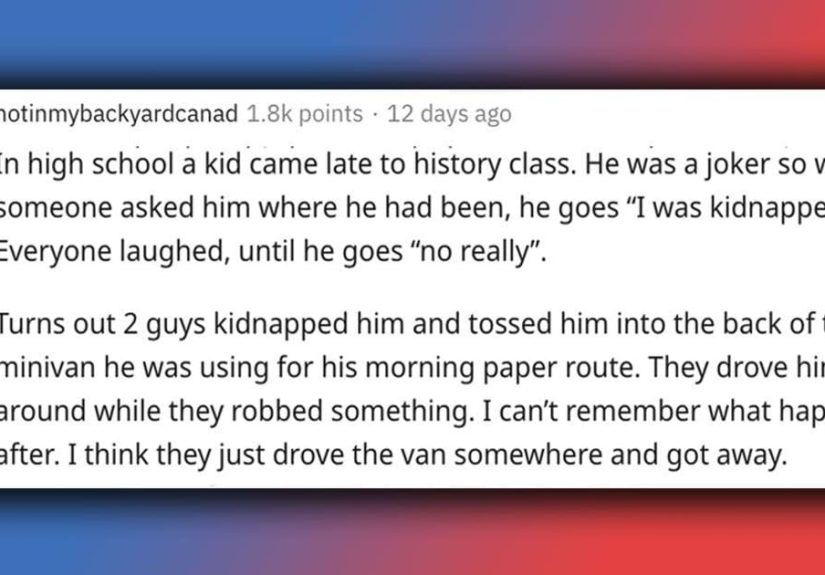
But every so often, a student drops an excuse so outlandish it sounds like the plot of a low-budget action movieand then it turns out to be completely, weirdly, undeniably true.
The teacher’s face says, “Sure, Jan,” but the universe says, “Actually, yes.”
This article rounds up the most memorable true tardy stories teachers have reportedplus the bigger picture behind lateness: why it matters, what’s usually going on underneath it,
and how schools can handle punctuality without forgetting that students are, you know, human beings with human lives.
Quick Navigation
- Why being late matters (without the guilt trip)
- The “True Excuse” Hall of Fame
- How teachers figure out what’s real
- How schools reduce tardiness without turning into prison wardens
- Bonus: of teacher experiences and “true tardy” moments
- Conclusion + SEO tags (JSON)
Why Being Late Matters (Without the Guilt Trip)
In most U.S. schools, a student is considered tardy when they aren’t in their seat when class begins. Sounds simpleuntil you remember that “class begins” is the end of a long chain of events:
bus routes, morning traffic, siblings, custody handoffs, alarm clocks, weather, and the mysterious force that makes a left shoe vanish five minutes before the bell.
Teachers care about lateness for two main reasons. First: instruction time. Even tiny daily delays add up over the year. Second: disruptions. When students walk in after class has started,
it can derail momentum for everyoneespecially in younger grades where routines are basically the engine of learning.
Here’s the part that surprises families: minutes stack up into days. A student who’s 5 minutes late every day can lose multiple days of instruction across the school year.
At 10 minutes a day, it can become nearly a week and a half of missed learning. When teachers say “every minute counts,” they’re not being dramatic; they’re doing math.
At the same time, schools have learned (sometimes the hard way) that the question isn’t just “Why are you late?”
It’s also “Is this a one-off problem… or a pattern that signals bigger barriers?”
Chronic absenteeismoften defined as missing about 10% of the school yearbecame a major national concern post-pandemic, and it overlaps with frequent tardiness more than people realize.
The earlier schools spot a trend, the faster they can help.
And let’s be real: sometimes the truth is simply that teenagers are tired. Medical groups have long pointed out that adolescent sleep rhythms make early mornings harder than adults remember.
That doesn’t mean “sleepy” is a free pass for being latejust that it’s a factor schools increasingly consider when they plan schedules, transportation, and morning routines.
The “True Excuse” Hall of Fame: Wild Late Reasons That Actually Checked Out
The stories below are written as composite examples based on common teacher-reported scenarios and verified “turned out to be true” patterns shared in educator communities and U.S. education resources.
Details vary, but the heart of each story is the same: the excuse sounded unbelievableuntil the evidence showed up.
1) “The bus didn’t come… and I have receipts.”
This one is a classic because it’s both common and often dismissed. But sometimes the bus truly doesn’t arrive, arrives late, breaks down, or gets rerouted.
Teachers have seen students walk in holding a printed email alert from the district, a screenshot from a transportation app, or a note from the office confirming a route problem.
It’s not glamorous, but it’s realand it’s a reminder that for many kids, punctuality isn’t fully in their control.
2) “There was a road closure and I literally couldn’t get through.”
A student claims the main route was blocked. Teachers assume “ordinary traffic.” Then the front office confirms a crash, a downed power line, a police detour, or a temporary closure.
In these cases, the student isn’t late because they didn’t plan; they’re late because the city decided to do surprise geography that morning.
The telling detail is usually consistency: multiple students (and staff) arrive late from the same area.
3) “My parent’s car got a flat tire. Yes, I brought proof.”
A flat tire sounds like a convenient excuseuntil the student shows up with a tow receipt, greasy hands, and the kind of irritation you can’t fake before first period.
The teacher learns a new truth: a tire can go flat at the exact wrong time, and it is always the exact wrong time.
This kind of excuse tends to be legitimate when the student communicates early (message to the office, call from a guardian) rather than dropping it as a last-second surprise.
4) “A train stopped and we were stuck.”
In areas with rail crossings, students have arrived late because a train stalled, moved slowly, or blocked the road longer than anyone expected.
Teachers who have lived near crossings immediately believe it. Teachers who haven’t… learn quickly.
It’s one of those excuses that sounds made up until you’ve experienced it oncethen you become the person who says, “Yep. That happens.”
5) “I got locked in a bathroom.”
This excuse has “middle-school comedy” energy, which is why it’s often doubted. But broken locks are real.
Teachers have seen students escorted in by a custodian, an administrator, or a very apologetic staff member holding a screwdriver like a tiny rescue mission trophy.
The student is embarrassed, late, and not remotely in a joking moodstrong indicators that this wasn’t a planned performance.
6) “Our apartment building’s elevator got stuck.”
Similar vibe: “Sure, like in a movie.” Except it happens.
The confirmation usually comes from a guardian call, building management note, or the student’s timeline making too much sense to ignore.
Teachers tend to respond with a blend of concern (“Are you okay?”) and curiosity (“So… how long were you in there?”) and then everyone moves on.
But the story lives forever in the staff lounge.
7) “We had to deal with flooding… in the parking lot / street / underpass.”
A surprise storm can turn a normal route into a no-go. In some communities, flooded underpasses or impassable streets make lateness unavoidable.
Teachers find these excuses credible when weather reports match, multiple students are affected, or the school issues a general advisory.
It’s also a good reminder that “just leave earlier” doesn’t help if the road is literally underwater.
8) “I had a medical issue that needed attention right now.”
Most teachers don’t ask for private details, and they shouldn’t. But they can usually tell when a student is shaken, pale, or accompanied by a guardian.
Sometimes it’s an urgent appointment. Sometimes it’s a sudden health flare-up. Sometimes it’s a medication issue.
The “turned out true” part is often confirmed through the office without the teacher needing to interrogate the student.
The best response tends to be simple: “I’m glad you’re here. Let’s get you settled.”
9) “My little sibling had an emergency, so I had to help.”
This one hits hard because it reveals something adults sometimes forget: older kids often carry real responsibilities.
A parent might be working an early shift, a caregiver might be unavailable, or a family plan might collapse in real time.
Teachers sometimes learn laterthrough a counselor or a family meetingthat the student’s morning looked more like a logistics job than a childhood.
It’s a powerful reason schools talk about supporting the whole family, not just punishing the student.
10) “We had a sudden housing or utility problem.”
It’s not the most “funny” excuse, but it’s one of the most real: power outage, water shutoff, landlord issues, an urgent move, or a temporary displacement.
Teachers may hear a vague version first (“Something happened at home”), then the truth emerges through the counselor or attendance team.
The lesson here is empathy: sometimes students arrive late because their lives are unstable in ways adults don’t see.
11) “There was an actual community emergency.”
Natural disasters, local evacuations, severe storms, or public safety incidents can disrupt a school morning in a way no planner can outsmart.
On those days, the most common “proof” is simply reality: staff are late, buses are late, the office is flooded with calls, and the first hour becomes triage.
Good schools respond by prioritizing safety and communication, not blame.
12) “I was helping someoneand it was the right thing to do.”
Occasionally a student is late because they stopped to help a younger child who got separated, assisted an elderly neighbor, or handled a small emergency at home.
Teachers verify these stories through a guardian, a neighbor, or a staff member who saw it happen.
When it’s true, it becomes a teachable moment: yes, punctuality mattersbut character matters too. The key is helping the student learn how to communicate quickly with the school next time.
Notice what’s missing from the Hall of Fame: excuses that are purely entertainment. The ones that “turn out to be true” usually have a consistent timeline, some kind of confirmation through the office,
and a student who looks like they’ve been through itnot like they’ve been practicing lines.
How Teachers Figure Out What’s Real (Without Turning Class Into Court)
Teachers aren’t trying to “catch” students. They’re trying to keep a classroom running while also building trust. That’s a balancing act.
Many schools handle this best with a simple principle: be consistent with expectations, but flexible with people.
What helps teachers believe a story quickly
- Early communication: A call to the office, a message through the school system, or a guardian note is often more convincing than a last-minute explanation.
- Pattern awareness: A student who is rarely late gets more benefit of the doubt than a student who is late daily with a new plot twist each time.
- Office confirmation: Schools can verify transportation issues, appointments, or building-wide problems without putting a teacher in an awkward role.
- Private follow-up: If lateness is frequent, many educators address it one-on-one rather than calling the student out publicly.
Education experts consistently recommend approaching chronic tardiness with curiosity and support before jumping to punishment.
A private, respectful conversation can uncover a solvable barrier: anxiety in the hallway, a class transition that’s too tight, a bus drop-off that’s unreliable,
or a home routine that needs help.
In other words: the best “late policy” doesn’t just create consequencesit creates a path back to success.
How Schools Reduce Tardiness (Without Punishing the Kid Who Had a Flat Tire)
If schools want fewer tardies, they need more than stern speeches. They need systems.
Many U.S. schools use a mix of accountability and support: clear expectations, smoother check-in procedures, family partnerships, and early interventions when patterns appear.
1) Protect instruction time with a smooth late-arrival routine
A “closed door + late pass” approach is common: class starts on time, and late students get a pass from the office without interrupting instruction.
Done well, it reduces disruptions and keeps teachers from spending the first ten minutes rehashing the same lecture for individual arrivals.
2) Use progressive consequences thoughtfully (and realistically)
Progressive discipline can work if the school has the staffing and structure to support it. The problem is when consequences pile up faster than the school can manage
then tardiness becomes a paperwork factory instead of a behavior change plan.
The best systems combine consequences with problem-solving: “What’s getting in the way, and what support can we put in place?”
3) Reward on-time behavior in a way that doesn’t feel cheesy
Rewards don’t have to be giant prizes. Some schools use simple recognition: homeroom shout-outs, class points, or small privileges.
The goal isn’t briberyit’s culture. When punctuality is noticed and normalized, it becomes easier for students to buy in.
4) Address the “why” behind chronic lateness
Chronic absenteeism and chronic tardiness are rarely about laziness alone. National education resources point to common drivers like disengagement, limited access to supports,
and family health challenges. When schools treat lateness as a signal instead of a moral failure, they can respond with targeted help.
5) Take sleep and schedules seriously (especially for teens)
Many adolescents don’t get enough sleep on school nights, and medical groups have recommended later start times for middle and high schools (often cited as 8:30 a.m. or later).
Even if a district can’t change start times immediately, schools can still help by teaching sleep habits, reducing morning bottlenecks, and designing realistic routines.
If your school is seeing a wave of first-period tardies, it’s worth asking whether the schedule is setting students up to fail.
What Students (and Families) Can Do When Life Gets Weird
Sometimes students are late for reasons no planner can prevent. But there are ways to reduce the chaosand make the occasional “wild but true” excuse easier for adults to accept.
- Build a buffer: Leaving 10 minutes earlier feels annoying until it saves your whole morning.
- Prep the night before: Clothes, charger, backpack, lunchfuture-you deserves less drama.
- Communicate quickly: If you’re going to be late, message the office or have a guardian call as soon as possible.
- Be honest without oversharing: “Family emergency” or “transportation issue” is often enough. The office can verify details as needed.
- Ask for help if it’s a pattern: A counselor, teacher, or attendance team can help troubleshoot routines, anxiety, transportation, or schedule issues.
The big takeaway: punctuality is a skill. It’s learned. And like most skills, it improves faster with coaching than with shame.
Bonus: of Teacher Experiences With “True Tardy” Moments
Teachers don’t just remember the excusesthey remember the moments. The look on a student’s face when they realize an adult finally believes them.
The class hush that falls when the “late kid” rushes in with genuine panic, not performative excuses. The sudden shift from annoyance to empathy when the real story becomes clear.
Here are a few teacher-style “true tardy” experiences that echo across schools, grade levels, and time zones.
The Day the Whole Town Was Late
One teacher described a morning when a routine commute turned into a slow-motion parade. Staff were trickling in, students were arriving in clusters, and the front office phones were ringing nonstop.
The culprit wasn’t a single family’s poor planningit was a community-wide disruption: a major road closure that forced everyone onto side streets built for bicycles and brave squirrels.
Instead of scolding, the school shifted gears. Teachers started class with a calm warm-up, administrators communicated clearly, and attendance staff marked patterns without turning the day into a lecture.
The teacher’s reflection afterward was simple: “When everyone is late, it’s not a character flaw. It’s a systems problem.”
The “I Swear I Was Trapped” Bathroom Rescue
A student arrived ten minutes into class, eyes wide, cheeks red, and completely out of breathcarrying the kind of embarrassment you can’t fake.
The student whispered, “I got locked in,” and the teacher mentally filed it under “classic excuse.” Two minutes later, a custodian appeared at the door, nodded once, and quietly confirmed it:
the lock had jammed, and it took tools to open it. The teacher didn’t make a spectacle. They just pointed to the seat and said, “Glad you’re okay. Catch up with us.”
Later, the teacher admitted it changed how they listenbecause sometimes the most ridiculous thing really did happen.
The Sibling Situation Nobody Saw
Another teacher recalled a student who was late oftenbut never disruptive, never cocky, always quietly anxious. The reasons sounded repetitive: “I had to help at home.”
Eventually a counselor looped in the teacher with context (no private details, just what mattered for support): the student was responsible for getting a younger sibling ready and safely delivered,
because a caregiver’s schedule had shifted. Suddenly, the tardies weren’t “defiance”they were the result of a student doing adult-level work before first period.
The school’s response wasn’t a free pass; it was a plan: adjusted check-in, a safe arrival routine, and a family support connection. The teacher’s note was blunt and compassionate:
“We can teach responsibility without ignoring reality.”
The Weather That Picked One Street to Ruin
A final story comes up constantly in educator circles: localized weather chaos. One neighborhood gets heavy flooding, an underpass becomes impassable, and suddenly a handful of students from one area
arrive late while everyone else assumes they’re “making excuses.” Teachers who’ve seen it once learn to check patterns first. If the same cluster of students shows up late, soaked, and rattled,
the correct response isn’t sarcasmit’s problem-solving. “Are you safe?” “Do you need dry socks?” “What’s the plan if this happens again?”
Those questions don’t excuse chronic lateness; they help students navigate situations that adults can’t magically control.
These experiences share a common thread: the best teachers hold the line on expectations while staying open to the truth.
They don’t need a dramatic confession or a courtroom cross-examination. They need a workable system, consistent communication, and enough humanity to remember that school happens inside real lifenot outside it.
Conclusion
Teachers will probably always hear wild excuses for being late. It’s part of the job descriptionright after “explains fractions” and “finds lost water bottles.”
But the best “true tardy” stories aren’t just funny. They’re reminders that students’ mornings can be complicated, unpredictable, and sometimes genuinely absurd.
The goal isn’t to believe everything. The goal is to build a school culture where punctuality is taught, barriers are addressed early, and honesty is easier than making up a plot twist.
When schools combine clear routines with empathyand when families communicate quicklythose rare, unbelievable-but-true excuses become what they should be:
a story, a lesson, and a reason to start class with a little more patience.