Table of Contents >> Show >> Hide
- Why Jobsite Coffee Makers Are Suddenly a Big Deal
- What Is a Jobsite Coffee Maker?
- Types of Jobsite Coffee Makers
- Key Features to Look For in Jobsite Coffee Makers
- Best Use Cases for Different Jobsite Coffee Makers
- Jobsite Coffee Maker Safety Tips
- Pods, Grounds, or Instant Coffee?
- How to Build a Better Jobsite Coffee Station
- Common Mistakes When Buying Jobsite Coffee Makers
- Are Jobsite Coffee Makers Worth It?
- Field Notes: Real-World Experiences with Jobsite Coffee Makers
- Conclusion
Note: This article is written for web publishing in standard American English and is based on current product information, jobsite safety considerations, and practical coffee-making use cases for construction crews, contractors, mobile technicians, remodelers, and serious DIYers.
Why Jobsite Coffee Makers Are Suddenly a Big Deal
A jobsite coffee maker sounds like a luxury until the first cold morning when the crew is staring at framing lumber, the wind is acting like it has a personal grudge, and the nearest coffee shop is twenty minutes away. At that point, hot coffee becomes less of a beverage and more of a morale system with a handle.
Jobsite coffee makers are designed for workers who need caffeine where real life is happening: construction sites, workshops, garages, service vans, remote cabins, outdoor projects, temporary offices, and renovation zones where the “break room” is a folding table next to a stack of drywall. Unlike a polished kitchen coffee machine, a jobsite-friendly brewer needs to survive dust, bumps, limited counter space, unpredictable power, and the occasional coworker who treats every object like a hammer.
The category includes battery-powered coffee makers, rugged plug-in brewers, compact single-serve machines, commercial pour-over units, travel presses, portable espresso makers, and manual brewers that require no electricity at all. The best choice depends on how many people need coffee, what power source is available, how much abuse the machine will face, and whether your crew drinks coffee like polite adults or like a small village preparing for battle.
What Is a Jobsite Coffee Maker?
A jobsite coffee maker is any coffee brewing setup that works reliably in rough, mobile, or temporary work environments. Some are purpose-built for jobsites, such as cordless coffee makers that run on power tool batteries. Others are everyday compact brewers that become jobsite heroes because they are simple, affordable, and easy to pack away.
The key difference is context. A home coffee maker sits on a clean counter, near a grounded outlet, with a sink nearby and nobody cutting tile ten feet away. A jobsite coffee maker may sit in a trailer, on a tailgate, in a shop corner, beside a generator, or inside a work van. It has to deal with real-world mess, quick breaks, gloves, reusable mugs, limited water access, and people who do not have time to read a 37-step brewing ritual before installing cabinets.
Types of Jobsite Coffee Makers
1. Cordless Battery-Powered Coffee Makers
Cordless coffee makers are the most “jobsite” option in spirit. Models like the Makita DCM501Z are designed to brew coffee using compatible tool batteries, making them useful where standard power is not available. The big advantage is independence. If you already run Makita batteries, a cordless brewer can make coffee in a van, at an unfinished house, at a campsite, or in a work area without dragging out an extension cord.
There are also third-party cordless coffee makers marketed for battery platforms such as DeWalt, Ryobi, and Milwaukee-style batteries. Buyers should pay close attention here. Some are convenient, but quality, warranty support, battery protection, and real-world performance can vary widely. A coffee maker pulls serious energy because heating water is hard work. In plain English: making hot coffee with a battery is like asking your drill battery to run a tiny electric kettle. It can do it, but it will not be subtle about battery drain.
2. Rugged Plug-In Jobsite Coffee Makers
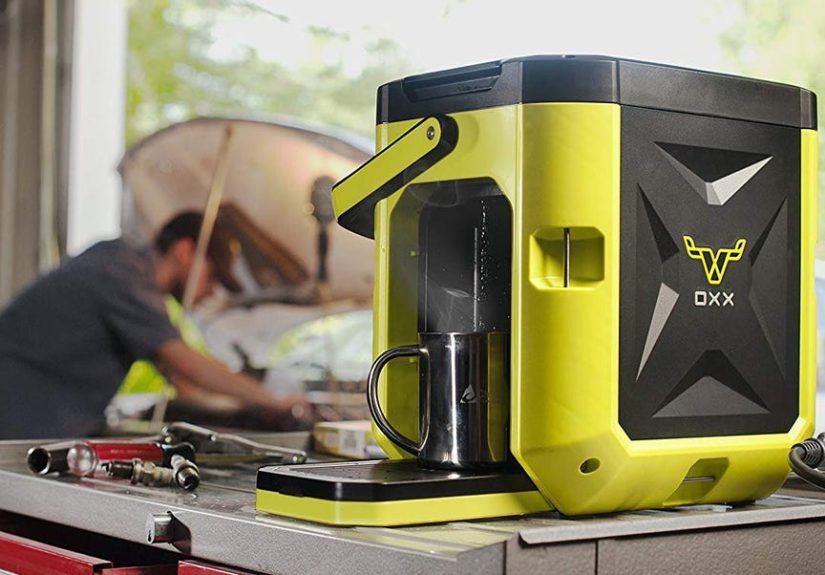
The famous OXX COFFEEBOXX helped define the rugged jobsite coffee maker idea. It was built like a tool case, used single-serve pods, and was designed to resist impact, dust, and rough handling. Although it is no longer widely available new, it remains a useful example of what contractors want: pod convenience, durable housing, easy operation, and a machine that does not panic when placed next to a circular saw.
Plug-in rugged brewers make sense for trailers, shops, garage workspaces, and sites with generator power or reliable outlets. They usually brew faster than cordless models because they can draw more power. The tradeoff is obvious: no electricity, no coffee. That is a cruel sentence, but someone had to say it.
3. Compact Single-Serve Coffee Makers
Compact machines such as the Keurig K-Mini are popular for small offices, trailers, RVs, dorms, and temporary workspaces because they take up very little room and brew one cup at a time. They are not rugged in the same way a jobsite-specific machine might be, but they are simple, familiar, and easy for different crew members to use.
A compact single-serve brewer works best when the jobsite has stable indoor space, clean water, and an outlet. It is a good fit for project managers, remodelers, mobile office trailers, and workshop owners who want convenience without brewing a full pot. The downside is pod waste and the need to keep pods stocked. Once the pods run out, the machine becomes a countertop sculpture of disappointment.
4. Commercial Pour-Over Brewers
For larger crews, a commercial pour-over coffee brewer such as a BUNN VP-series machine can be a smarter choice. These brewers are not cordless, and they are not tiny, but they are built for repeated use and can keep coffee flowing in offices, break rooms, service counters, and busy shop environments. Many models do not require plumbing, which makes them more flexible for temporary or semi-permanent setups.
This type of brewer is best for shops, warehouses, crew trailers, and operations where ten people reach for coffee at the same time. It is less ideal for a dusty outdoor site or a small van. Think of it as the reliable foreman of coffee machines: not flashy, not pocket-sized, but ready to work all day.
5. Manual and No-Power Coffee Makers
Sometimes the smartest jobsite coffee maker is not electric at all. A French press, AeroPress-style brewer, pour-over cone, moka pot, or insulated travel press can be excellent when paired with hot water from a thermos, kettle, or trailer kitchen. Manual brewers are lightweight, affordable, easy to replace, and less likely to quit because sawdust got into a button.
The downside is that someone must supply hot water and do a little cleanup. Still, for small crews, inspectors, mobile techs, and solo contractors, manual brewers offer great coffee without batteries, cords, pods, or drama. And on a jobsite, less drama is always a premium feature.
Key Features to Look For in Jobsite Coffee Makers
Power Source
The first question is simple: where will the power come from? If your site has outlets, a plug-in brewer is usually faster and more practical. If your work often happens before power is connected, a cordless coffee maker or manual brewer may be better. If you use a generator, check wattage needs before plugging in a high-draw coffee machine alongside chargers, saws, lights, heaters, and every other device that thinks electricity grows on trees.
Durability
A jobsite coffee maker should tolerate movement, dust, and regular handling. Look for strong housing, protected controls, stable footing, and parts that do not feel like they were borrowed from a toy. If the machine will live in a trailer or shop, moderate durability may be enough. If it will travel in a truck bed, durability matters much more.
Brew Capacity
Single-cup brewers are great for one or two people. Larger crews need more capacity. A cordless machine that brews one small cup at a time may be perfect for a solo electrician but painfully slow for a framing crew. For groups, consider a drip brewer, commercial pour-over machine, or large insulated dispenser filled before the shift begins.
Speed
Coffee break is not a slow-motion documentary. A good jobsite brewer should fit the pace of work. Pod machines and plug-in brewers are usually faster than cordless battery-powered units. Manual brewing can be quick if hot water is ready. If the machine takes too long, workers may skip it and drive off-site, which turns a five-minute coffee need into a thirty-minute productivity pothole.
Cleaning and Maintenance
Jobsites are already messy, so the coffee system should not add a science experiment. Choose a machine with removable parts, simple filters, easy access to the water reservoir, and minimal tiny pieces. Hard water can create mineral buildup, so descaling matters. If the brewer uses pods, keep the pod area clean. If it uses grounds, empty them daily unless you are intentionally growing a tiny compost swamp.
Mug Compatibility
Many workers use tall insulated tumblers. Before buying, check whether the brewer fits travel mugs or requires a short cup. A removable drip tray helps. If the machine only fits one tiny cup, it may frustrate people who carry 20-ounce tumblers like emotional support equipment.
Best Use Cases for Different Jobsite Coffee Makers
For Remote Construction Sites
Remote sites often lack stable power, so cordless or manual coffee makers are the most practical. A battery-powered brewer is convenient when you already carry compatible batteries. A manual brewer with a large thermos of hot water is even simpler and often more efficient. For crews, bringing a pre-filled insulated coffee dispenser may beat brewing on-site altogether.
For Work Trailers
A work trailer is a good home for a compact single-serve brewer, small drip coffee maker, or commercial pour-over machine. The trailer offers some protection from dust and weather, and the coffee station can be organized with cups, filters, pods, stirrers, and cleaning supplies. Add a small trash bin nearby unless you enjoy finding sugar packets in places sugar packets should never be.
For Workshops and Garages
In a garage or shop, a plug-in coffee maker is usually the best value. You can use a standard drip machine, thermal carafe brewer, single-serve pod machine, or commercial pour-over brewer depending on traffic. A thermal carafe is especially useful because it keeps coffee hot without leaving a warming plate on for hours.
For Service Vans and Mobile Technicians
Mobile workers need compact, spill-resistant, low-maintenance solutions. Cordless coffee makers, manual brewers, and insulated travel mugs are the top contenders. A van-based setup should prioritize secure storage. Nobody wants to hear a coffee machine sliding across the cargo area like a haunted appliance every time the van turns left.
Jobsite Coffee Maker Safety Tips
Any coffee maker that heats water deserves respect. On a jobsite, the risks include electrical hazards, unstable surfaces, burns, water spills, overloaded circuits, and damaged cords. Always follow the manufacturer’s instructions, use grounded outlets where required, keep electrical appliances away from wet areas, and avoid running cords through walkways or work zones.
Do not place a coffee maker near sawdust piles, solvents, flammable materials, or active cutting areas. Keep it on a flat, stable surface. If using a generator, make sure the generator can handle the load. If using batteries, inspect them for damage and avoid exposing them to excessive heat, moisture, or impact. Coffee is important, but not important enough to turn the break table into a safety meeting.
Pods, Grounds, or Instant Coffee?
Pods
Pods are convenient, clean, and consistent. They are great when multiple people want different flavors. However, they create waste and cost more per cup than ground coffee. Reusable pods can reduce waste, but they require cleaning.
Ground Coffee
Ground coffee is affordable and flexible. It works with drip machines, pour-over brewers, French presses, and some cordless coffee makers. The challenge is mess. On a windy jobsite, coffee grounds can travel farther than gossip.
Instant Coffee
Instant coffee is not glamorous, but it is extremely practical. Add hot water and you are done. For emergency backup, instant packets deserve a place in every jobsite coffee kit. Even coffee snobs become philosophers when the alternative is no coffee.
How to Build a Better Jobsite Coffee Station
A good coffee station does not need to be fancy. It needs to be organized. Use a durable storage bin or tool-style organizer for coffee, filters, pods, stirrers, sweeteners, powdered creamer, napkins, and cleaning wipes. Keep bottled water or a refillable water jug nearby. Label supplies clearly so the crew does not confuse coffee filters with sanding discs, which would be memorable but not delicious.
For trailers and shops, add a small mat under the brewer to catch drips. Use a covered trash container. Store mugs upside down or in a closed bin. If the site is dusty, cover the brewer when it is not in use. At the end of each day, empty water reservoirs, remove used grounds or pods, wipe surfaces, and leave the setup ready for the next morning.
Common Mistakes When Buying Jobsite Coffee Makers
Buying for One Person When Ten People Drink Coffee
A tiny single-cup brewer may be fine for a supervisor, but it can become a bottleneck for a full crew. Match the machine to the number of users.
Ignoring Battery Drain
Cordless coffee makers are convenient, but heating water consumes a lot of battery power. If your batteries are already needed for tools, plan accordingly.
Choosing a Machine That Is Hard to Clean
If cleaning takes too long, it will not happen. Choose simple designs with accessible parts.
Forgetting About Water
No water, no coffee. Keep clean water available and do not use questionable water from buckets, hoses, or mystery containers. Coffee should wake you up, not challenge your immune system.
Using Indoor Appliances in Rough Outdoor Conditions
Many compact coffee makers are not designed for dust, rain, vibration, or outdoor exposure. Protect them or choose a more rugged option.
Are Jobsite Coffee Makers Worth It?
For many crews, yes. A jobsite coffee maker can save time, reduce off-site coffee runs, improve morale, and make early mornings less painful. The value is not only in the coffee itself. It is in convenience, routine, and keeping people close to the work area during breaks.
That said, the best setup may not be the most expensive machine. A cordless coffee maker is cool and useful for certain workers, but a large thermos, a manual brewer, or a simple trailer coffee station may be better for others. The smartest choice is the one that fits your crew’s workflow, power situation, and coffee habits.
Field Notes: Real-World Experiences with Jobsite Coffee Makers
In real jobsite conditions, coffee equipment has a way of revealing the difference between a nice idea and a useful tool. A cordless coffee maker sounds perfect when you imagine a quiet sunrise, a clean tailgate, and one fresh cup before work begins. It becomes less romantic when three people are waiting, the battery is half-drained, and someone asks whether the charger is free while two impact drivers are also begging for power. For solo contractors, inspectors, cabinet installers, and service techs, a battery-powered brewer can be a genuine convenience. For large crews, it is better as a personal machine than a group solution.
The most successful jobsite coffee setups are usually boring in the best way. In a trailer, a compact pod machine or small drip brewer works because everyone understands it. Fill water, insert pod or filter, press button, drink coffee. No ceremony. No lecture about extraction ratios. No one standing around with a gooseneck kettle while drywall dust floats through the air like confetti from a very sad parade.
For shops and garages, thermal carafes are underrated. A standard glass carafe on a hot plate can turn good coffee into bitter lava by midmorning. A thermal carafe keeps coffee hot without cooking it to death, and it is safer than leaving a warming plate on all day near wood dust, paper towels, or random shop clutter. If several people drink coffee throughout the morning, brewing into a thermal dispenser can be more practical than making cup after cup.
Manual brewers also earn respect quickly. An AeroPress-style brewer, French press, or pour-over cone paired with a reliable thermos of hot water can make excellent coffee without any outlet at all. This works especially well for mobile workers who start the day with hot water from home or from a shop kettle. The cleanup is the main drawback, so the kit should include a small trash bag, paper towels, and a sealed container for used grounds if there is no convenient disposal nearby.
One practical lesson is that coffee supplies need a home. Loose pods, filters, sugar packets, and stirrers scattered in a truck or trailer become clutter fast. A small latching bin solves most of the problem. Keep coffee, cups, napkins, and cleaning wipes together. Add a permanent marker so people can label mugs. Add backup instant coffee packets for emergencies. Backup coffee is like a spare battery: you may not need it every day, but when you do, it feels like genius.
Another lesson is to keep the machine away from the dirtiest work. Coffee makers do not enjoy sawdust, concrete dust, paint overspray, or metal shavings. Even rugged machines last longer when covered between uses. At the end of the day, empty the water reservoir, remove used pods or grounds, and wipe the area. A clean coffee station signals that the crew respects the space. It also prevents the Monday morning discovery of Friday’s forgotten coffee puck, which is less of a smell and more of a personal attack.
Ultimately, the best jobsite coffee maker is not the one with the toughest marketing slogan. It is the one your crew will actually use, clean, and maintain. If it saves a drive to the gas station, keeps people warm, and prevents the morning mood from falling into a trench, it has earned its place beside the tools.
Conclusion
Jobsite coffee makers are more than novelty gadgets. They are practical tools for better mornings, smoother breaks, and happier crews. The right choice depends on your work environment: cordless brewers for remote solo work, compact pod machines for trailers, commercial pour-over brewers for larger teams, and manual coffee makers for simple no-power brewing.
Before buying, think about power, durability, capacity, speed, cleaning, and safety. A great jobsite coffee setup should be easy to use, easy to maintain, and tough enough for the environment. Whether you choose a battery-powered brewer, a rugged plug-in machine, or a humble French press, the goal is the same: hot coffee where the work happens. Because sometimes the most important tool on-site is not the one that cuts, drills, lifts, or measures. Sometimes it is the one that keeps everyone from speaking in grunts before 8 a.m.