Table of Contents >> Show >> Hide
- Why Measuring Lower Body Strength Actually Matters
- Method 1: Measure Max Strength With a Squat or Leg Press
- Method 2: Use a Chair Stand Test for Functional Lower Body Strength
- Method 3: Measure Lower Body Power With a Vertical Jump Test
- Which Lower Body Strength Test Should You Choose?
- How to Get More Accurate Results
- Final Thoughts
- Real-World Experiences With Measuring Lower Body Strength
- SEO Tags
If your legs had a résumé, lower body strength would be listed under “core job skills.” It helps you squat, sprint, climb stairs, stand up from a chair without making sound effects, and keep moving well as you age. But here’s the catch: a lot of people say they want stronger legs without ever measuring what “stronger” actually means.
That is a little like bragging about your cooking while refusing to taste the food.
The good news is that measuring lower body strength does not have to be complicated. You do not need a sports science lab, a clipboard army, or a soundtrack from an action movie. You just need the right test for your goal. Some methods are best for gym lifters chasing raw force. Others are better for everyday function, rehab, or healthy aging. And some measure explosive leg power, which is close cousin to strength and a huge deal for sports and fast movement.
In this guide, we will break down three practical ways to measure lower body strength: a max-strength test using a squat or leg press, a chair-stand test for functional strength, and a vertical jump test for lower body power. By the end, you will know which test fits your needs, how to perform it safely, and how to track progress without fooling yourself with wishful thinking.
Why Measuring Lower Body Strength Actually Matters
Lower body strength is not just a “leg day” vanity metric. It affects how well you move, how stable you feel, and how much force you can produce in daily life and sports. Stronger legs help with walking, getting up from a chair, climbing stairs, lifting objects from the floor, changing direction, and reducing the chance that small balance problems turn into big problems.
That is why different professionals measure it in different ways. Coaches may care about how much weight you can squat. Physical therapists may compare one leg to the other after injury. Healthcare providers may use a chair-stand test to see whether your leg strength and endurance support safe, independent movement. For athletes, jump testing often adds another layer by showing how quickly the lower body can turn strength into motion.
In other words, there is no single “best” test for everyone. There is only the best test for your goal.
Method 1: Measure Max Strength With a Squat or Leg Press
What This Test Measures
If you want to know how much raw force your lower body can produce, the classic option is a one-rep max, often called a 1RM. This is the heaviest load you can lift one time with good form. For lower body strength, the back squat is one of the most common choices, and the leg press is a solid alternative for people who do not squat safely or confidently.
This method is popular for a reason. It gives you a concrete number. No vibes. No guessing. Just force production with a barbell, machine, or load that politely demands honesty.
How to Do It
- Warm up thoroughly with light cardio and several progressively heavier warm-up sets.
- Choose your movement: back squat, front squat, goblet squat for beginners, or leg press if needed.
- Perform increasing loads for low reps while keeping technique consistent.
- Stop when your form breaks down or when you reach the heaviest load you can lift once with control.
If testing a true 1RM feels too aggressive, use an estimated 1RM instead. This is often smarter for general fitness. You perform a weight you can lift for several clean reps, then estimate your max. For example, if you squat 160 pounds for 8 solid reps, your estimated 1RM is roughly 200 pounds. That gives you a useful strength marker without the drama of an all-out grinder rep.
Why It Works
This test is ideal when your goal is maximal strength. It is especially useful for lifters, field athletes, and anyone following strength programs based on percentages of 1RM. If your training plan says to lift at 80% of your max, you need a reasonably accurate max in the first place. Otherwise, you are basically seasoning dinner by guessing with your eyes closed.
Best For
- Intermediate and advanced lifters
- People training for strength or muscle gain
- Athletes who need an objective force benchmark
- Anyone wanting a clean number to track over time
Limitations
A max-strength test is only useful if the movement pattern is solid. Bad squat mechanics can make the result less meaningful and more risky. It also favors people who already know the lift well. A beginner may have strong legs but poor barbell skill, which means the test can underestimate actual strength.
That is why many people do better with an estimated 1RM, a trap-bar variation, or a machine-based test such as the leg press. The goal is to measure your legs, not your ability to survive a questionable rep attempt.
Smart Tracking Tip
Do not only track absolute load. Track relative strength too by comparing your lift to your body weight. A 200-pound squat means something different at 120 pounds than it does at 240. Relative strength gives a more useful picture of how strong you are for your size.
Method 2: Use a Chair Stand Test for Functional Lower Body Strength
What This Test Measures
The chair stand test, also called a sit-to-stand test, measures functional lower body strength and endurance. Instead of asking, “How much can you lift once?” it asks, “How well can you repeatedly stand up under control?” That sounds simple because it is simple. It is also incredibly revealing.
This test is widely used in healthcare, physical therapy, fall-risk screening, and healthy-aging settings because standing up from a chair is one of the most basic real-world strength tasks there is. If that becomes difficult, daily life gets harder very quickly.
Two Common Versions
30-Second Chair Stand Test: Count how many full stands you can complete in 30 seconds without using your arms.
Five Times Sit-to-Stand Test: Time how long it takes to stand up and sit down five times in a row.
The 30-second version is excellent for general function. The five-rep version is useful when you want a quick timed measure. Both give helpful information about lower body strength, especially in adults, older adults, and anyone returning from deconditioning or injury.
How to Perform the 30-Second Version
- Use a sturdy chair that does not roll or slide.
- Sit near the middle or front edge of the seat.
- Place your feet flat on the floor, about hip-width apart.
- Cross your arms over your chest if you can do so safely.
- On “go,” stand up fully and sit back down as many times as possible in 30 seconds.
Count only controlled, full stands. Half reps belong in social media arguments, not testing.
Why It Works
This method reflects real-life lower body strength. It is practical, accessible, and more relevant than a barbell test for many people. Someone may never care how much they can squat, but they absolutely care whether they can get off the couch, use stairs confidently, or stay steady while moving through the day.
It is also a useful option for people with limited equipment, people exercising at home, beginners, and older adults. That is a big reason healthcare providers use it during strength and fall-risk assessments.
Best For
- Beginners
- Older adults
- People training at home
- Post-rehab or deconditioned individuals
- Anyone who wants a practical measure of everyday leg strength
Limitations
The chair stand test is not a pure maximal-strength test. It blends strength, muscular endurance, coordination, and body control. Chair height also matters. So does whether you use your hands. That means you need to keep the setup consistent every time you repeat the test.
If you want valid comparisons, use the same chair, the same foot position, the same arm position, and the same rules every single time. Consistency is what turns a simple home test into useful data.
Good to Know
If you have knee, hip, or back pain, or feel unsteady when standing, do this near a support surface or with a clinician or trainer nearby. Safety first. There is no trophy for wobbling heroically.
Method 3: Measure Lower Body Power With a Vertical Jump Test
What This Test Measures
Now for the fun one. A vertical jump test measures lower body power, which is your ability to produce force quickly. Power is not exactly the same thing as strength, but it is closely related. Strength asks, “How much force can you produce?” Power asks, “How fast can you apply that force?”
This matters more than many people realize. Sprinting, cutting, jumping, bounding up stairs, and reacting quickly all depend on how fast the lower body can generate force. A person can have decent squat strength and still produce a mediocre jump if they cannot express that strength explosively.
How to Perform It
- Warm up first with light movement, bodyweight squats, and a few practice jumps.
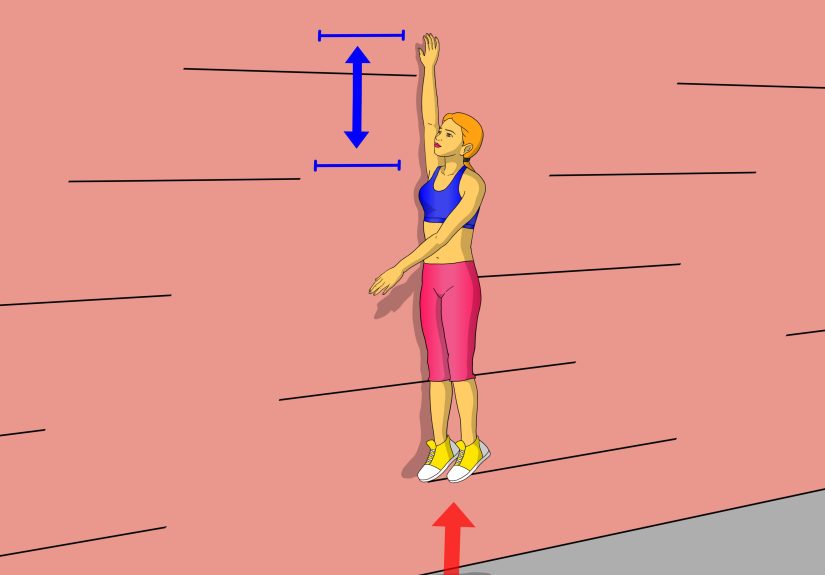
- Stand next to a wall and mark your standing reach, or use a jump mat or testing device.
- Perform a countermovement jump by dipping quickly and jumping as high as possible.
- Record the difference between your standing reach and your highest touch point, or use the device reading.
- Take the best score from two or three strong attempts.
Why It Works
Jump testing is widely used in performance settings because it is quick and sensitive to change. It is helpful for athletes in basketball, volleyball, football, soccer, and track, but it can also be useful for recreational exercisers who want to assess explosive capacity.
It is also a nice complement to a strength test. If your squat is improving but your jump is flat, you may be building force without converting it into speed. If both improve, your training is likely carrying over well.
Best For
- Athletes
- People doing speed or power training
- Recreational lifters who want a broader performance picture
- Coaches tracking neuromuscular freshness and explosiveness
Limitations
Jump tests are useful, but they are not perfect. Technique matters a lot. Arm swing, depth of the dip, timing, and landing strategy can all change the result. That is why you should use the same style every time and avoid comparing a highly practiced jump to a random “let’s see what happens” effort.
Also, jump height alone does not tell the whole story. A person can maintain jump height by changing technique, so power testing is most useful when performed consistently and interpreted in context. Think of it as a powerful clue, not the entire detective novel.
Which Lower Body Strength Test Should You Choose?
| Goal | Best Test | Why It Fits |
|---|---|---|
| Build maximal strength | Squat or leg press 1RM / estimated 1RM | Gives a direct force benchmark and works well with strength programming |
| Assess everyday function | 30-second chair stand or five-times sit-to-stand | Reflects practical leg strength needed for daily movement |
| Measure explosiveness | Vertical jump test | Shows how quickly the lower body can produce force |
| Return from injury | Chair stand plus side-to-side strength comparison | Helps reveal deficits and functional readiness |
The smartest approach is often to use more than one test. A lifter may use an estimated squat max and a vertical jump. An older adult may track chair stands and walking ability. A rehab client may compare the involved leg to the uninvolved leg while also monitoring sit-to-stand performance. One number is nice. A fuller picture is better.
How to Get More Accurate Results
- Use the same warm-up every time.
- Test at a similar time of day when possible.
- Keep equipment and technique consistent.
- Do not test right after a brutal workout.
- Write down the result immediately.
- Compare trends over time instead of obsessing over one day.
Testing is not supposed to be a random talent show. Standardize the setup, and your results become far more useful.
Final Thoughts
If you want to improve lower body strength, measuring it is not optional forever. At some point, “my legs feel stronger” has to shake hands with an actual result. The best test depends on your age, goal, training background, and movement quality. A barbell-based max test is excellent for raw strength. A chair stand test is perfect for practical function. A vertical jump test captures explosive lower body power.
The real win is choosing a test you can repeat safely and consistently. Because once you can measure progress, you can coach it, adjust it, and improve it. And that is much more satisfying than guessing while your quads send strongly worded complaints after every workout.
Real-World Experiences With Measuring Lower Body Strength
One of the most interesting things about lower body testing is how quickly it reveals the gap between what people think they can do and what their body can actually do on command. That is not an insult. It is just a very honest mirror. Many active adults discover this the first time they perform a chair stand test. They assume standing up from a chair is easy because they do it every day. Then they try to repeat it for 30 seconds without using their arms, and suddenly their thighs light up like they are filing a formal complaint. The lesson is simple: daily activity and measurable strength are related, but they are not the same thing.
Recreational lifters often have the opposite experience. They feel confident because they train hard, and in many cases they are strong. But when they test a vertical jump, the score can be surprisingly average. That does not mean their training failed. It usually means they have built force but not much explosiveness. Heavy squats can raise strength, but power requires coordination, speed, and intent. This is why coaches like using more than one test. A squat number tells one story. A jump test tells another. Together, they stop the guesswork.
Older adults and people returning from inactivity often describe chair-stand testing as eye-opening in a different way. Instead of feeling defeated by the result, many feel motivated because the test is so relatable. They can immediately connect it to real life: getting out of the car, rising from the couch, standing from the toilet, climbing stairs, or carrying groceries. Improvements feel meaningful because they show up outside the gym. Going from eight controlled stands to twelve is not just a better score. It can mean more confidence, less hesitation, and more independence.
In rehab settings, side-to-side comparison can be especially powerful. Someone recovering from a knee injury may assume both legs are “basically the same” until testing proves otherwise. That moment is frustrating, but useful. It helps explain why running feels uneven, why jumps feel awkward, or why fatigue shows up so quickly on one side. Once the imbalance is measured, the training becomes more specific. Progress also becomes more encouraging, because the person can see the gap narrow over time instead of wondering whether recovery is happening at all.
Even experienced athletes benefit from the reality check of testing. Some feel amazing on training days but score poorly when fatigued. Others feel flat, then surprise themselves with strong results. That is why testing should not be treated like a personality test or a moral judgment. It is feedback. Sometimes the feedback says you are improving. Sometimes it says you need rest, better technique, or a smarter program. Either way, it is useful.
The best experience people report is not usually the biggest number. It is clarity. Once you know whether your lower body strength is best described by maximal force, everyday function, or explosive power, your training gets sharper. You stop doing random leg work and start doing targeted work. And that is when testing stops feeling intimidating and starts feeling empowering.