Table of Contents >> Show >> Hide
- What Makes a Sequel “Better”?
- The Case for Top Gun: Maverick
- The Case for Hot Shots! Part Deux
- Sequel Craft: Emotional Depth vs Comic Escalation
- Which Movie Has Aged Better?
- Audience Experience: Theater Roar vs Living Room Chaos
- Final Verdict: Is Hot Shots! Part Deux Better?
- Experience Section: Watching Both Sequels Back-to-Back
- Conclusion
Note: This article is written in publish-ready HTML body format and synthesizes real film history, box-office data, critical reception, sequel structure, and pop-culture context.
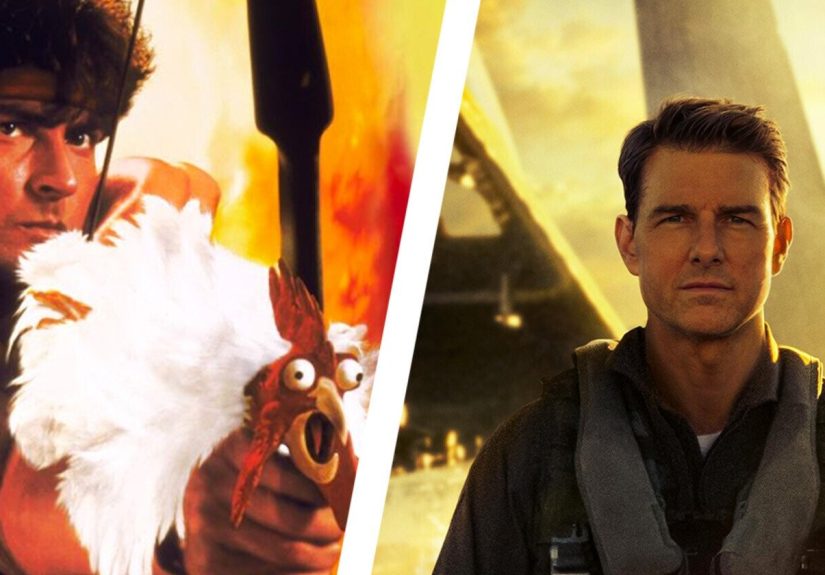
Some movie debates arrive wearing a tuxedo. This one bursts through the wall in aviator sunglasses, salutes a houseplant, and asks the impossible: is Hot Shots! Part Deux actually a better sequel than Top Gun: Maverick? On paper, that sounds like comparing a precision-built fighter jet to a rubber chicken with afterburners. One is a sleek, emotionally charged blockbuster that helped bring adult audiences back to theaters. The other is a 1993 parody sequel that treats plot logic like a banana peel waiting for Lloyd Bridges.
But that is exactly why the question is fun. Top Gun: Maverick is widely regarded as one of the best legacy sequels ever made. It honors the 1986 original, updates the emotional stakes, delivers breathtaking practical aerial photography, and gives Tom Cruise one of his most triumphant star vehicles. Hot Shots! Part Deux, meanwhile, is not trying to be majestic. It is trying to hit you with jokes so quickly that your brain has to file a noise complaint.
So which is the better sequel? The honest answer is: Top Gun: Maverick is the better movie by traditional standards, but Hot Shots! Part Deux may be the bolder sequel. It does what great comedy sequels often should do: it escalates, mutates, and refuses to simply repeat the first film beat for beat. Let’s taxi down the runway and settle this cinematic dogfight.
What Makes a Sequel “Better”?
Before choosing a winner, we need a fair scoreboard. A sequel should not only ask, “Did people like it?” It should also ask: did it expand the original idea? Did it justify its existence? Did it deepen or sharpen what audiences loved the first time? Did it avoid becoming a reheated microwave burrito of nostalgia?
By that standard, Top Gun: Maverick enters the debate with serious ammunition. Directed by Joseph Kosinski and released in 2022, it brings back Pete “Maverick” Mitchell decades after the original Top Gun. Instead of pretending Maverick is still the same cocky young pilot, the film makes age, regret, mentorship, and legacy central to the story. That is smart sequel writing. The movie is not just “more jets.” It is “what happens when the guy who never wanted to slow down becomes responsible for teaching others how to survive?”
Hot Shots! Part Deux, released in 1993 and directed by Jim Abrahams, takes a completely different route. The first Hot Shots! primarily spoofed Top Gun and military melodramas. The sequel shifts the target toward Rambo-style action movies, prisoner rescue plots, overblown masculine heroism, and political action spectacle. That genre swerve matters. Instead of replaying the same parody, it upgrades the joke engine and aims at a new pile of Hollywood clichés.
The Case for Top Gun: Maverick
It Turns Nostalgia Into Story, Not Wallpaper
The strongest argument for Top Gun: Maverick is that it understands nostalgia without being trapped by it. Many legacy sequels behave like museum tours: “Here is the old jacket. Here is the old song. Please clap.” Maverick uses familiar imagesthe motorcycle, the beach, the aircraft carrier, the emotional shadow of Goosebut gives them dramatic purpose.
Miles Teller’s Rooster, the son of Goose, is not just a callback in a mustache. He is the emotional pressure point. His anger toward Maverick gives the sequel its human conflict. Val Kilmer’s return as Iceman also gives the film one of its most moving scenes, reminding viewers that time has passed not only in the story but in real life. The sequel treats the original film as history, not just IP.
The Aerial Action Feels Unusually Physical
Another reason Top Gun: Maverick became a cultural event is its action filmmaking. In an era when many blockbusters feel weightless, Maverick made speed, pressure, and danger feel tangible. The cockpit footage, actor training, and emphasis on real aerial movement created a visceral experience. You do not just watch the characters pull Gs; you feel your popcorn trying to enlist in the Navy.
This practical intensity helps explain why the movie connected across generations. Older viewers had the emotional memory of the 1986 film. Younger viewers got a clean, muscular mission movie with clear stakes and minimal homework. That combination is rare. Plenty of sequels speak only to existing fans. Maverick welcomed newcomers without insulting longtime fans.
It Was a Massive Critical and Commercial Success
Commercially, Top Gun: Maverick was a phenomenon. It grossed nearly $1.5 billion worldwide and became the highest-grossing film of Tom Cruise’s career. It also received major awards attention, including a Best Picture nomination and an Academy Award for Best Sound. In sequel terms, that is not just a victory lap. That is the movie equivalent of buzzing the tower and somehow getting promoted.
Critically, it was praised as a rare blockbuster that delivered old-school spectacle with new-school polish. It gave audiences a reason to go back to theaters after a turbulent period for cinema. When people talk about “movies saving movies,” they often exaggerate. In this case, the exaggeration at least had jet fuel in it.
The Case for Hot Shots! Part Deux
It Is Not Afraid to Be Ridiculous
Now comes the chaotic challenger. Hot Shots! Part Deux is not interested in prestige, legacy, or emotional closure. It is interested in firing jokes like confetti from a cannon. Charlie Sheen returns as Topper Harley, but the sequel moves him away from the Top Gun parody zone and drops him into a send-up of muscle-bound rescue movies, especially the Rambo sequels.
That is a surprisingly smart sequel move. If Hot Shots! had simply spoofed more fighter-pilot drama, it might have felt stale. Instead, Part Deux expands the parody universe. It says, “We made fun of one kind of macho movie. Now let’s make fun of the entire action-hero industrial complex.” That gives the sequel a broader comic canvas.
The Joke Density Is the Main Special Effect
In Top Gun: Maverick, the special effect is speed. In Hot Shots! Part Deux, the special effect is joke density. Visual gags, background nonsense, verbal absurdity, deadpan reactions, slapstick injuries, and movie references tumble over each other. Some jokes age better than others, and not every gag lands. But the film’s commitment is admirable. It never stands around waiting for applause; it sprints to the next bit like it owes money to a laugh track.
Jim Abrahams, one of the key minds behind classic parody comedy, understood that spoof works best when everyone on screen behaves as if the dumbest thing in the world is completely serious. That deadpan approach is crucial. Charlie Sheen plays Topper as if he is carrying the emotional burden of civilization, even while the movie is busy turning heroic poses into punchlines. Lloyd Bridges, as President Benson, remains a walking disaster zone of comic timing.
It Improves by Changing the Game
Here is where Hot Shots! Part Deux makes its strongest claim: it may be a better sequel because it takes a bigger creative risk. Top Gun: Maverick deepens and refines the original. Part Deux swerves. It does not merely ask fans to enjoy the same joke again. It changes genres, increases absurdity, and broadens its satirical target.
That shift is important because comedy sequels often fail by becoming louder copies of the first film. Part Deux is definitely louder, but it is not only a copy. It is more like a parody sequel that wandered into another franchise’s backyard, stole the garden hose, and started a rescue mission.
Sequel Craft: Emotional Depth vs Comic Escalation
The heart of this debate is the difference between emotional depth and comic escalation. Top Gun: Maverick wins on emotional continuity. It takes Maverick’s history seriously. It understands that Goose’s death was not just a plot event; it was the wound that shaped the hero. By making Rooster central to the story, the sequel transforms old grief into present conflict.
Hot Shots! Part Deux wins on escalation. It knows that a parody sequel must do more than recycle targets. The first film mocked Top Gun; the second throws action cinema, political rescue fantasies, military machismo, and celebrity absurdity into the blender. It does not deepen Topper Harley so much as weaponize his silliness.
That makes the two films hard to compare directly. One is trying to make you feel. The other is trying to make you laugh before you have finished processing the last laugh. Judging Part Deux by the standards of Maverick is unfair. Judging Maverick by the standards of Part Deux is also unfair, unless you are disappointed that Tom Cruise never fights a chicken while maintaining perfect dramatic intensity.
Which Movie Has Aged Better?
Top Gun: Maverick still feels fresh because it is recent, technically polished, and built around practical spectacle that resists aging quickly. Its emotional beats are classical and accessible. The mentor-student dynamic, the unresolved guilt, the impossible mission, and the final act teamwork all remain durable crowd-pleasers.
Hot Shots! Part Deux has aged in a more complicated way. Some jokes are firmly rooted in early-1990s pop culture and political references. The comedy style is also from a different era, when spoof movies moved at a frantic pace and trusted audiences to catch references without pausing to explain them. That can make the film feel dated, but also charming. Its practical silliness has texture. The jokes are often handmade, physical, and proudly stupid in a way modern studio comedies sometimes avoid.
In other words, Maverick aged like a polished aircraft. Part Deux aged like a novelty mug that still makes you laugh because it says something completely unhinged before breakfast.
Audience Experience: Theater Roar vs Living Room Chaos
Top Gun: Maverick is designed for the biggest screen available. Its sound design, aerial photography, and mission structure are built to overwhelm the senses. Watching it in a theater with a full crowd gave many viewers the kind of old-fashioned blockbuster thrill that streaming cannot easily duplicate.
Hot Shots! Part Deux thrives differently. It is a couch movie, a group movie, a late-night movie. It rewards casual rewatching because if one joke misses, another is already climbing through the window. It is also the kind of comedy that becomes funnier when watched with people who enjoy pointing at the screen and saying, “Wait, did that background gag just happen?”
So the better viewing experience depends on the setting. For cinematic awe, Maverick wins easily. For communal nonsense, Part Deux punches above its weight.
Final Verdict: Is Hot Shots! Part Deux Better?
If we are ranking overall filmmaking, Top Gun: Maverick is the stronger sequel. It has sharper dramatic construction, cleaner emotional payoff, extraordinary technical execution, and broader cultural impact. It is one of the rare legacy sequels that feels both nostalgic and necessary.
But if the question is whether Hot Shots! Part Deux is a better sequel in the sense of being more daring, more surprising, and less dependent on simply repeating the original, then the parody has a real argument. It takes the spirit of Hot Shots! and fires it into a different action-movie battlefield. It understands that parody needs new prey. It is not better than Maverick as cinema, but it may be better at sequel mutation.
The cleanest answer is this: Top Gun: Maverick is the better sequel for the head and heart. Hot Shots! Part Deux is the better sequel for the funny bone, especially if that funny bone was injured during a ridiculous rescue mission. One soars. The other crashes through the roof and somehow sticks the landing.
Experience Section: Watching Both Sequels Back-to-Back
The best way to understand this debate is to watch both films as a double feature. Start with Top Gun: Maverick, and the room immediately changes. People sit up straighter. The sound design pulls everyone into the cockpit. The story is simple, but the emotional machinery works. You understand Maverick’s loneliness, Rooster’s resentment, and the pressure of sending young pilots into a mission where skill alone may not be enough. Even viewers who do not care about aviation usually understand the stakes because the movie translates flight into feeling.
During a group watch, Maverick tends to create shared silence. Not boredomattention. The big training sequences make people lean forward. The final mission triggers the familiar blockbuster symptoms: clenched hands, nervous laughter, and at least one person saying, “Okay, that was awesome,” as if they are surprised joy still exists. It is the kind of sequel that makes people remember why big movies became big in the first place.
Then put on Hot Shots! Part Deux, and the room becomes a completely different ecosystem. Nobody is leaning forward with emotional tension anymore. They are watching corners of the frame, waiting for nonsense. Someone laughs at a tiny background gag. Someone else groans at a pun. A third person misses a joke entirely because another joke arrived too soon and blocked traffic. That is the unique pleasure of old-school spoof comedy: it rewards chaos.
The experience also reveals how differently the two films treat masculinity. Maverick reframes the hotshot hero as a man carrying regret. His courage is still central, but the film asks him to grow through responsibility. Part Deux takes the same action-hero seriousness and pokes it until it squeaks. Topper Harley is intense, wounded, and heroic, but the movie keeps reminding us that heroic posing can be very funny when inflated one inch too far.
In a modern viewing context, Top Gun: Maverick feels like a premium theatrical meal. It is expertly plated, emotionally satisfying, and engineered for applause. Hot Shots! Part Deux feels like someone dumped a snack drawer into a helmet and called it dinner. Yet both experiences are valuable. One proves that a sequel can honor the past without becoming trapped by it. The other proves that a sequel can survive by refusing to behave.
After watching them together, the debate becomes less about which movie is “better” and more about what kind of sequel pleasure you want. Do you want craft, catharsis, and jet-powered sincerity? Choose Maverick. Do you want rapid-fire parody, absurd courage, and the sensation that the screenplay was assembled by very talented people who had consumed dangerous amounts of coffee? Choose Part Deux.
Personally, the most enjoyable answer is to keep both. Top Gun: Maverick is the sequel you recommend when someone says Hollywood forgot how to make crowd-pleasers. Hot Shots! Part Deux is the sequel you recommend when someone says comedy sequels never take enough risks. One is a victory salute. The other is a whoopee cushion under the general’s chair. Cinema, thankfully, has room for both.
Conclusion
Hot Shots! Part Deux is not objectively a better film than Top Gun: Maverick. It does not have the same emotional force, technical achievement, or cultural reach. But it is a fascinating sequel because it refuses to play safe. It changes targets, expands its parody universe, and commits fully to absurdity. Top Gun: Maverick is the better legacy sequel; Hot Shots! Part Deux is the more anarchic sequel experiment.
So, is Hot Shots! Part Deux a better sequel than Top Gun: Maverick? Not overall. But it is better than many people remember, smarter in its stupidity than it first appears, and absolutely worth revisiting if your movie night needs more explosions, fewer rules, and at least one joke that makes everyone ask, “Why did I laugh at that?”