Table of Contents >> Show >> Hide
- Why Kyoto Is a Photographer’s Cheat Code
- My Weekend Kyoto Photography Route (Realistic, Not Superhuman)
- Quick Gear Notes (So You Don’t Bring a Studio to a Shrine)
- My Favorite Kyoto Photos (23 Pics)
- 1) The Torii Tunnel That Actually Feels Quiet
- 2) Fox Guardian with a Side of Attitude
- 3) Torii Gates, but Make It Abstract
- 4) The “I’m Here” Snack Portrait
- 5) Kyoto’s Kitchen, One Detail at a Time
- 6) Steam = Free Drama
- 7) Kiyomizu-dera’s Big View, Small Human
- 8) The Sloped Streets of Higashiyama (Postcard Mode)
- 9) Lanterns in Daylight (Yes, They Still Work)
- 10) A Temple Roofline Against the Sky
- 11) The “Accidental” Kimono Moment
- 12) Gion at Dusk, When the Light Starts Whispering
- 13) Alleyway Reflections (The City’s Second Version of Itself)
- 14) Pontocho Energy, Minus the Chaos
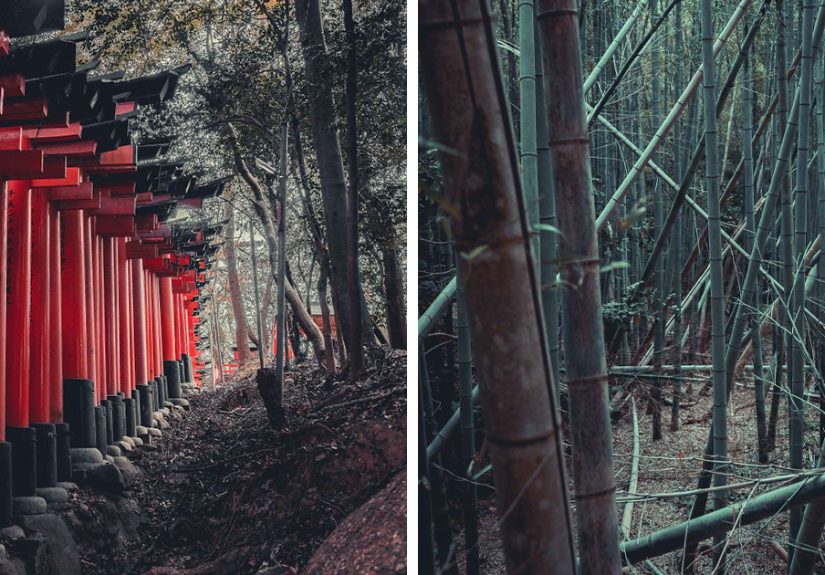
- 15) The Bamboo Grove, Before It Turns Into a Parade
- 16) Bamboo Details: The Lines, Not the Landmark
- 17) Morning Bike + Quiet Street = Kyoto Haiku
- 18) Bridge Lines and River Calm
- 19) Gold on Water (Hello, Kinkaku-ji)
- 20) Minimal Garden Geometry
- 21) Doorways, Curtains, and Layers
- 22) Blue Hour Silhouettes on the Kamogawa
- 23) The “Last Shot” Convenience Store Glow
- Kyoto Photography Etiquette (How Not to Be That Tourist)
- Editing Notes: Keeping Kyoto Looking Like Kyoto
- Conclusion: What I Learned After 48 Hours of Kyoto Photography
- Bonus: 500+ Words of Kyoto Weekend Photography Experiences
Kyoto is the kind of city that makes you want to apologize to your camera for all the times you called it “heavy.”
Between vermilion shrine gates, lantern-lit alleys, temple rooftops, and food that deserves its own portrait session,
it’s basically a 48-hour photowalk disguised as a vacation.
Below are my favorite 23 Kyoto photos from one jam-packed weekendplus exactly where I took them,
what I was looking for, and a few hard-earned lessons (like how to breathe calmly when a tour group materializes
in your frame like a jump-scare).
Why Kyoto Is a Photographer’s Cheat Code
Kyoto rewards photographers because it’s layered. You can frame a centuries-old wooden townhouse, a modern commuter
zipping by, and a paper lantern glowing in the backgroundthen realize the whole thing is happening next to a
vending machine selling corn soup. It’s history and everyday life stacked like a bento box.
The city is also built for wandering: narrow lanes, long sightlines, and “accidental” compositions everywhere
like a torii gate perfectly cropping a distant hillside, or steam rising from street food as if it were hired by
your art director. If you like shooting travel photography, street photography, architecture, details,
and quiet scenes, Kyoto photography delivers in bulk.
My Weekend Kyoto Photography Route (Realistic, Not Superhuman)
This is the route that let me capture iconic sights and come home with shots that don’t look like everyone
else’s screensaver.
Day 1: South Kyoto → Higashiyama → Gion at Night
- Sunrise: Fushimi Inari Taisha (torii gates before crowds)
- Late morning: Nishiki Market (food + detail shots)
- Afternoon: Kiyomizu-dera area, Ninenzaka/Sannenzaka streets
- Evening: Gion/Pontocho vibes (respectfully), lanterns, reflections
Day 2: Arashiyama → North Kyoto → Golden Hour by the River
- Early morning: Arashiyama Bamboo Grove + nearby quiet side streets
- Midday: Kinkaku-ji area (gold, water, minimalism)
- Late afternoon: Philosophers’ Path (if timing works) or riverside walks
- Blue hour: Kamogawa River silhouettes, bridges, city glow
Quick Gear Notes (So You Don’t Bring a Studio to a Shrine)
You can shoot Kyoto with anythingeven a phonebut if you’re choosing, I’d pack:
a wide lens (for gates, gardens, interiors), a fast “normal” lens (for street scenes and night), and a short telephoto
(for compressing rooftops and pulling patterns out of crowds).
- Best all-around combo: 24–70mm (or phone + 1 prime)
- Night help: f/1.8–f/2.8 glass, good stabilization, patience
- Filters: Skip most. A small circular polarizer can help with glare on water and foliage.
- Tripods: Use only where allowed and never where it blocks paths. Some areas are tight.
My unofficial rule: if your bag makes you turn sideways to pass someone, it’s too big for Kyoto sidewalks.
My Favorite Kyoto Photos (23 Pics)
Note: I’m including image placeholders below so you can drop your files into a webpage easily.
Replace each src with your own image URL or file path.
1) The Torii Tunnel That Actually Feels Quiet

I framed the path dead-center to lean into symmetry.
2) Fox Guardian with a Side of Attitude

3) Torii Gates, but Make It Abstract

4) The “I’m Here” Snack Portrait

5) Kyoto’s Kitchen, One Detail at a Time

6) Steam = Free Drama

7) Kiyomizu-dera’s Big View, Small Human

8) The Sloped Streets of Higashiyama (Postcard Mode)

9) Lanterns in Daylight (Yes, They Still Work)

10) A Temple Roofline Against the Sky

11) The “Accidental” Kimono Moment

12) Gion at Dusk, When the Light Starts Whispering

13) Alleyway Reflections (The City’s Second Version of Itself)

14) Pontocho Energy, Minus the Chaos

15) The Bamboo Grove, Before It Turns Into a Parade

16) Bamboo Details: The Lines, Not the Landmark

17) Morning Bike + Quiet Street = Kyoto Haiku

18) Bridge Lines and River Calm

19) Gold on Water (Hello, Kinkaku-ji)

20) Minimal Garden Geometry

21) Doorways, Curtains, and Layers

22) Blue Hour Silhouettes on the Kamogawa

23) The “Last Shot” Convenience Store Glow

Kyoto Photography Etiquette (How Not to Be That Tourist)
Kyoto is welcoming, but it’s not a movie set, and some areas have specific restrictionsespecially around historic
neighborhoods. If you’re photographing in places like Gion, be extra mindful: stay on public streets, respect signage,
and don’t photograph people in a way that feels like harassment.
- Don’t block narrow lanes (locals still live and work there).
- Ask before photographing close-up when people are clearly identifiable.
- Follow posted rules about private roads, no-photo zones, and restricted alleys.
- Keep your gear compact so you’re not turning sidewalks into obstacle courses.
The best Kyoto photos come from patience and respectbecause nothing ruins “timeless” like a confrontation in the background.
Editing Notes: Keeping Kyoto Looking Like Kyoto
Kyoto light can swing from soft and foggy to bright and reflective. My editing goal was consistency:
warm wood tones, natural greens, and reds that feel rich without looking radioactive.
- Reds (torii + lanterns): Slightly lower saturation, raise luminance, keep detail in highlights.
- Greens (bamboo + gardens): Reduce green saturation a touch and shift hue subtly toward yellow for a calmer look.
- Night shots: Keep blacks clean, protect highlights around lanterns, and embrace a little grain if it feels honest.
- Skin tones: If you include people, prioritize natural skin tones over “perfect” color grading.
Conclusion: What I Learned After 48 Hours of Kyoto Photography
Kyoto taught me a simple truth: the famous places are famous for a reason, but the best photos happen when you slow down.
The torii gates are stunningbut so is a quiet doorway with morning light. The bamboo grove is iconicbut the bamboo texture
is where the story lives.
If you’re planning your own Kyoto weekend itinerary, prioritize early mornings, embrace walking,
and build time for “nothing”because “nothing” is usually when Kyoto hands you your favorite frame.
Bonus: 500+ Words of Kyoto Weekend Photography Experiences
I didn’t go to Kyoto with a perfect shot list. I went with a loose plan, two charged batteries, and the kind of optimism
that only exists before you realize your first location is uphill. The weekend started at an hour that technically counts as
“night,” because everyone who has ever taken a clean photo at Fushimi Inari seems to share the same strategy: show up before
the crowds and let the gates feel like gates, not like an outdoor hallway.
The first surprise was how quickly Kyoto changes moods. One minute you’re walking through torii gates that look like a glowing
corridor, and the next you’re watching a stray sunbeam hit the edge of a stone lantern and thinking, “This is the shot,” even
though it’s literally just a lantern doing lantern things. That’s Kyoto’s magic: it makes ordinary details look intentional.
It’s like the city is quietly overachieving at composition.
Later, around Nishiki Market, I had to switch mental gears. Shrines and temples invite slow photographysymmetry, patience,
clean lines. Markets are the opposite: quick decisions, moving subjects, and the constant temptation to photograph everything
at once (which is how you end up with images that look like a cluttered fridge shelf). I started choosing one theme per scene:
steam, hands, color, or signage. The moment I stopped “covering” the market and started hunting for micro-stories, my photos
improved immediately. A vendor’s hand reaching into frame, a line of skewers catching window light, the rhythm of repeated shapes
those were my keepers.
In Higashiyama, I learned my second big lesson: Kyoto rewards photographers who walk a little slower than everyone else.
When I rushed, I got the same angle everyone gets. When I slowed down, I noticed reflections in windows, shadows on stone steps,
and tiny bits of colorlike a curtain fluttering in a doorway or a single flower placed near a sign. Those details made my photos
feel personal rather than predictable.
Night photography in Kyoto felt like a different city altogether. Lanterns don’t just light the streetthey create a mood that’s
half warmth and half mystery. I kept my distance, stayed out of narrow alleys with posted restrictions, and treated the neighborhood
like a real place people live, not a backdrop. Ironically, that respect made the photos better. When you’re not chasing people,
you start seeing the light itselfhow it pools on the pavement, how it bounces off wood, how it turns a simple corner into a scene.
The next morning in Arashiyama, Kyoto handed me the classic trade: beauty in exchange for effort. Early morning air felt crisp,
the bamboo looked softer, and there were moments when the path went quiet enough that you could hear footsteps as a texture.
That’s what I tried to capturenot just “bamboo,” but the feeling of being there. By the end of the weekend, I had plenty of
landmark shots, sure. But my favorites were the in-between frames: a bicycle on a quiet street, a doorway layered with fabric and
shadow, a river scene at blue hour where the people became silhouettes and the city turned gentle.
If I could redo the weekend, I’d change only two things: I’d schedule more “aimless” time (because Kyoto is best when it surprises
you), and I’d pack one fewer item in my bagbecause the real souvenir wasn’t a heavier lens, it was the habit of noticing.