Table of Contents >> Show >> Hide
- Start With the “What Do We Actually Do Out Here?” Audit
- Think in Zones, Not Square Footage
- Layout Rules That Make Everything Feel Bigger and Smarter
- Three Real-World Layout Recipes (Small, Medium, Large)
- Comfort Is a System: Shade, Wind, Bugs, and Temperature
- Pick Surfaces That Match Your Lifestyle (Not Your Fantasy Self)
- Lighting: Layer It Like a Sundae
- Privacy Without Turning Your Yard Into a Fortress
- Make It Sustainable (and Still Pretty)
- Accessibility and Safety: The “Everyone Enjoys This” Checklist
- Budgeting and Phasing: Build the Bones First
- Common Mistakes (and Easy Fixes)
- Experiences and Lessons From Real Multifunctional Outdoor Spaces (500+ Words)
- Conclusion
A great outdoor space shouldn’t be a “look, don’t touch” museum where the furniture exists solely to hold pollen. It should work hard: breakfast coffee nook at 7 a.m., kid-and-dog chaos zone at 4 p.m., and “we definitely meant to host a dinner party” hangout at 8 p.m. In other words, a multifunctional outdoor space is less about buying one expensive sectional and more about designing a backyard that can handle real lifemessy, social, and occasionally full of mosquitoes with an agenda.
The good news: you don’t need acreage or a reality-TV budget. You need a plan that matches how you actually use your home, plus a few smart design moves that make one outdoor area feel like three (without your lawn filing a complaint).
Start With the “What Do We Actually Do Out Here?” Audit
Before you pick pavers or fall in love with a fire pit the size of a small moon, get specific about the activities you want your outdoor living space to support. A multifunctional setup works best when it’s built around behavior, not vibes.
Ask these questions (and answer them honestly)
- Who uses the space? Two adults and a book collection? A family of five? People plus pets plus the neighbor’s dog who “just wandered in”?
- What happens here weekly? Grilling, dining, lounging, gardening, yoga, kids’ play, watching sports, working on a laptop, napping (the most aspirational category).
- What happens here monthly? Hosting, birthdays, game nights, weekend brunch, a “just one drink” gathering that becomes a four-hour event.
- What’s your climate reality? Hot summers, wet springs, windy evenings, buggy seasons, or “we get all four seasons in one day.”
- What are your dealbreakers? No splinters, no fussy maintenance, no slippery surfaces, no furniture that becomes an all-you-can-eat buffet for mildew.
Write your top three priorities on a sticky note. If you can’t name them, the rest of the decisions will turn into a chaotic shopping cart filled with “cute” and “on sale.” (We’ve all been there.)
Think in Zones, Not Square Footage
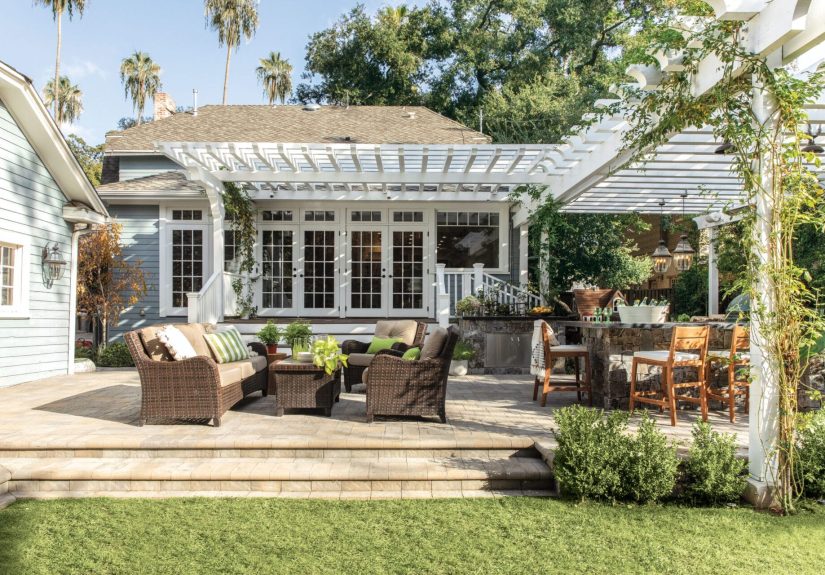
The secret sauce of a multifunctional outdoor space is zoning. Instead of one blob of patio furniture, you create distinct “rooms” outdoorsdining, lounging, cooking, play, gardeningso different activities can happen without everyone sitting on top of each other like a human Jenga tower.
The core zones most people need
- Conversation/Lounge: Sofas or chairs oriented toward each other. This is where you talk, relax, and pretend you don’t have emails.
- Dining: Table + comfortable seating + enough elbow room to avoid “fork wars.”
- Cooking/Serving: Grill or outdoor kitchen elements, plus a landing zone for trays, plates, and the inevitable sauce lineup.
- Flex Space: Open area for yoga, kids’ play, cornhole, or pulling extra chairs into the circle when guests multiply.
- Storage/Utility: Because cushions, toys, tools, and citronella candles don’t teleport into the garage on their own.
How to define zones without building walls
Outdoors, “walls” are often subtle: a rug under seating, planters that create a boundary, a change in paving pattern, a pergola overhead, a privacy screen, or even lighting that visually anchors an area. The goal is to signal, “This is the dining room,” without hanging a chandelier that requires a structural engineer and three permits.
Layout Rules That Make Everything Feel Bigger and Smarter
Good patio design is basically traffic management with throw pillows. You want clear circulation, logical adjacencies, and furniture that doesn’t force people to do a sideways crab-walk to reach a chair.
Rule 1: Put food near the kitchen (and the door)
If your dining area is a mile from the back door, every meal turns into a cardio event. Keep the dining zone reasonably close to the house, or at least create a “server station” (cart, console, small table) so you can stage plates and drinks.
Rule 2: Keep pathways obvious
A multifunctional outdoor space needs a main route that doesn’t cut through the center of the lounge seating. Think: walkway to grill, walkway to table, walkway to the yard. If guests have to step over ottomans like they’re crossing a river on stones, you’ve designed an obstacle course.
Rule 3: Make at least one zone flexible
The MVP items are movable: lightweight chairs, nesting side tables, stackable stools, a storage bench that doubles as seating. Flexibility is what turns a small patio into a “small patio that hosts like a champ.”
Three Real-World Layout Recipes (Small, Medium, Large)
1) Small patio or balcony (under ~150 sq ft)
Aim for two zones: a compact lounge + a micro dining setup. Use a bistro table or narrow rectangle table against a wall, then place two to four lounge chairs with a small coffee table. Add vertical elements: a trellis, wall planters, or shelving for herbs. Your “secret weapon” is a bench with hidden storage so you’re not storing cushions in your living room like they’re weird decorative pets.
2) Medium backyard patio or deck (150–400 sq ft)
Go for three zones: dining, lounge, and a flex strip. Place dining closest to the door; lounge a bit farther out where it feels like an “outdoor room.” Keep a flexible open area at the edge for a portable fire pit, kids’ play, or extra seating during parties. Use an outdoor rug and planters to separate dining from lounging without boxing yourself in.
3) Larger yard (400+ sq ft of usable space)
Now you can create a true multifunctional outdoor space with a “spine” pathway connecting zones: cooking/serving near the house, dining under partial cover, lounge around a fire feature, and a separate activity zone (garden beds, play set, or lawn games). Think of it like a tiny resortminus the towel fees.
Comfort Is a System: Shade, Wind, Bugs, and Temperature
People don’t abandon patios because they hate fresh air. They abandon patios because they’re hot, wet, windy, or being eaten alive. Design for comfort and the space gets used more oftenwhich is the whole point.
Shade options that don’t look like a sad beach umbrella
- Umbrellas: Affordable, flexible, great for dining tables or lounge areas. Pick a sturdy base.
- Pergolas: Define a zone beautifully and can support fabric, slats, or vines for more shade over time.
- Awnings (retractable or fixed): Excellent for decks/patios connected to the house, especially when you want shade on demand.
- Trees and tall plantings: Provide cooling and privacy, but plan for growth and leaf drop.
Wind and bugs: the uninvited guests
Screens, outdoor curtains, and strategic plantings can soften wind and create privacy. Fans (especially under covered patios) help with air movement and can discourage mosquitoes. And if your neighborhood’s mosquito population has formed a union, consider adding a screened area or focusing on daytime use with shade and hydration.
Pick Surfaces That Match Your Lifestyle (Not Your Fantasy Self)
Your patio floor is the foundation of everything: furniture stability, drainage, safety, and maintenance. Common choices include concrete, pavers, flagstone, gravel, and wood/composite decking. There’s no universal “best,” but there is a “best for you.”
Quick guide to smart material choices
- Concrete: Practical, modern, and customizable (stamped, tinted). Can feel hot in direct sunshade helps.
- Pavers: Great for defining zones, repairing sections, and improving traction. Many styles, lots of flexibility.
- Natural stone: Beautiful and durable, often higher cost. Choose textures that aren’t slippery when wet.
- Decking (wood or composite): Great for raised spaces. Composite reduces splinters and maintenance, but can warm up in full sun.
- Permeable options: Helpful for drainage and reducing runoff, especially in areas where puddles love to linger.
If you’re building from scratch, consider drainage early. A “pretty patio” that floods becomes a seasonal pond with excellent frog vibes and terrible furniture longevity.
Lighting: Layer It Like a Sundae
A multifunctional outdoor space needs different lighting for different moods. One harsh floodlight turns your dinner party into an interrogation scene. Layer lighting so you can dial in safety and ambiance.
The three lighting layers
- Ambient: Soft overall glowstring lights, lanterns, wall sconces, or overhead fixtures under a cover.
- Task: Focused lighting for grilling, serving, steps, and paths.
- Accent: Spotlights or small fixtures to highlight trees, planters, textures, and architectural features.
Put lighting on switches or smart controls so you can go from “family dinner” to “late-night lounge” without wandering around the yard flipping tiny toggles like you’re defusing a bomb.
Privacy Without Turning Your Yard Into a Fortress
Privacy is a major factor in whether people actually relax outdoors. If you feel like you’re on display, you won’t lingerno matter how cute your throw pillows are.
Smart privacy moves
- Layered landscaping: Mix shrubs, tall grasses, and small trees for a natural screen that feels lush, not blocky.
- Treillis and vines: Create vertical privacy on a budget while adding texture and greenery.
- Slatted screens: Modern look, partial visibility, great for defining a lounge zone.
- Outdoor curtains: Flexible, dramatic, and surprisingly effectiveespecially under pergolas and covered patios.
Make It Sustainable (and Still Pretty)
Sustainability isn’t just about saving the planetit’s also about saving your Saturday. A low-maintenance backyard design can still look polished if you choose plants and features that thrive where you live.
Design choices that reduce work over time
- Right plant, right place: Choose plants suited to your light, soil, and climate so you’re not constantly troubleshooting.
- Vertical gardening: Great for small spaces and can add a living privacy wall.
- Smarter watering: Water in the morning, avoid overwatering, and use efficient sprinklers or drip irrigation where possible.
- Rain-friendly landscaping: Consider rain gardens or permeable surfaces to manage runoff and reduce puddles.
Your outdoor living space can be both functional and responsible: fewer chemicals, less wasted water, and a yard that supports birds and pollinators instead of just being a giant green rug.
Accessibility and Safety: The “Everyone Enjoys This” Checklist
The best multifunctional outdoor space works for all ages and abilities. Plus, “safe” is a stylebecause nobody thinks a sprained ankle is an aesthetic.
Design details that matter
- Clear pathways: Keep routes wide enough for comfortable walking and easy movement of chairs.
- Non-slip surfaces: Especially near pools, hot tubs, or rainy climates.
- Step and edge lighting: Make transitions obvious after sunset.
- Fire safety basics: Place fire features on stable surfaces, away from structures and low branches; keep a clear “no-clutter zone” around flames.
Budgeting and Phasing: Build the Bones First
If you’re prioritizing, spend on the “bones” before the “sparkle.” The bones are surfaces, drainage, power, lighting infrastructure, and shade structure. Sparkle is the furniture and décor you can swap or upgrade later.
A practical phasing approach
- Phase 1: Layout, hardscape, and basic lighting for safety.
- Phase 2: Shade and privacy elements that increase comfort.
- Phase 3: Furniture, textiles, accessories, and the “fun stuff.”
This approach keeps you from buying a gorgeous outdoor sofa that ends up roasting in full sun because shade was “a later problem.”
Common Mistakes (and Easy Fixes)
- Mistake: One giant furniture set that dictates the whole layout.
Fix: Mix smaller pieces so you can rearrange zones. - Mistake: No storage.
Fix: Add a deck box, storage bench, or a small shed that matches the house style. - Mistake: Pretty, but unusable at night.
Fix: Add layered lighting with at least one task light near cooking and steps. - Mistake: Dining area too far from the kitchen.
Fix: Add a serving station or relocate dining closer to the door. - Mistake: No shade plan.
Fix: Add an umbrella now; plan pergola/awning later if needed.
Experiences and Lessons From Real Multifunctional Outdoor Spaces (500+ Words)
When homeowners set out to create a multifunctional outdoor space, the first “experience” is usually optimism: the patio will be used daily, dinners will be outdoors all summer, and everyone will read books instead of staring at screens. Then reality shows upoften in the form of harsh sun, surprise rain, and the realization that outdoor cushions are basically sponges with aspirations.
A common lesson is that comfort beats aesthetics every time. People routinely report that the “prettiest” corner of the yard becomes the least used if it’s too hot or too exposed. One family might build a gorgeous dining area in the sunniest spotbecause it looked great in the afternoononly to discover that, at actual dinnertime, that area is a heat trap. The fix is rarely dramatic: a shade sail, a well-placed umbrella, or a pergola can turn “we never sit there” into “this is our favorite spot.”
Another experience many homeowners share: zones change how gatherings feel. When there’s only one seating area, everyone clumps together, conversations overlap, and someone inevitably perches on a planter like it’s a chair. Once you add a second zonemaybe two lounge chairs near a fire feature, or a small bistro set off to the sideguests naturally spread out. It feels more relaxed and more “designed,” even if you didn’t add any square footage. The space becomes adaptable: kids can play in one area while adults chat in another, and nobody is forced to shout over the grill like a sports commentator.
Storage is the unsung hero of every outdoor living space story. People often start without it, thinking they’ll “just bring things inside.” After the tenth trip carrying cushions, candles, and a tray of drinks, the romance fades. The day a storage bench or deck box arrives is often described with the kind of relief normally reserved for finding your phone after it’s been missing for three hours. Suddenly, using the patio takes two minutes instead of twenty. That ease is what builds habitsand habits are what make the outdoor space truly multifunctional.
Homeowners also learn that lighting changes the emotional clock of a yard. Without good lighting, outdoor time ends when the sun goes down. With layered lightingsoft ambient glow plus task lights for steps and cookingpeople linger. It becomes a nighttime lounge, a post-dinner hangout, or a quiet place to unwind after the house is finally calm. Many describe this as the moment their backyard started feeling like an actual extension of the home, not just “the outside part.”
Finally, there’s the experience of phasing. Plenty of people begin with a modest plan and upgrade over time. The key insight: if you build the bones first (solid surfaces, good drainage, basic power and lighting), everything else is easy to layer in. You can change furniture, add plants, swap rugs, and tweak zones as you learn what you like. The most successful multifunctional outdoor spaces are rarely “finished” in one weekendthey evolve. And that’s not a failure. That’s the whole point: the outdoor space grows with your life, your routines, and your favorite way to spend a Saturday.
Conclusion
Designing a multifunctional outdoor space is less about chasing a picture-perfect patio and more about building a backyard that works: zones that match real routines, comfort that keeps you outside longer, and flexible pieces that adapt when your plans change. Start with how you live, shape the layout around movement and priorities, and invest in the features that remove frictionshade, lighting, and storage. Do that, and your outdoor living space won’t just look good. It’ll get used. A lot.