Table of Contents >> Show >> Hide
- How to Alpine Ski if You Are a Beginner: 15 Steps
- 1. Book a Beginner Ski Lesson Before You Guess Your Way Downhill
- 2. Choose a Beginner-Friendly Ski Resort and Terrain
- 3. Rent Skis, Boots, Poles, and a Helmet Instead of Buying Everything
- 4. Wear the Right Ski ClothingNo Jeans, Please
- 5. Learn How Ski Boots Should Feel
- 6. Practice Carrying and Putting On Your Skis
- 7. Start With the Athletic Ski Stance
- 8. Learn to Glide on Flat Snow First
- 9. Use the Wedge to Slow Down and Stop
- 10. Practice Wedge Turns
- 11. Understand the Fall Line
- 12. Learn How to Fall and Get Back Up
- 13. Ride Beginner Lifts Safely
- 14. Follow Ski Etiquette and the Responsibility Code
- 15. Build Progress Slowly: Green Runs Before Bigger Goals
- Beginner Alpine Skiing Mistakes to Avoid
- What to Practice After Your First Lesson
- Extra Experience: What Your First Beginner Ski Day Really Feels Like
- Conclusion
Learning how to alpine ski as a beginner can feel like joining a secret winter society where everyone else already knows how to walk in plastic boots, carry long slippery sticks, and casually slide down a mountain without making the face of a startled raccoon. The good news? Every confident skier once started exactly where you are: standing awkwardly in the snow, wondering why ski boots were apparently designed by medieval furniture makers.
Alpine skiing, also called downhill skiing, is a skill-based sport built on balance, control, patience, and smart decision-making. You do not need to be fearless. In fact, a little caution is useful. What you do need is the right gear, a beginner-friendly slope, a basic understanding of how skis work, and enough humility to accept that falling is not failureit is just snow giving you feedback.
This beginner skiing guide breaks the process into 15 practical steps, from choosing equipment and dressing correctly to stopping, turning, riding the lift, and building confidence on green runs. Whether you are preparing for your first ski vacation, joining friends at a resort, or simply trying to avoid becoming a human snowplow sculpture, this guide will help you start safely and enjoy the ride.
How to Alpine Ski if You Are a Beginner: 15 Steps
1. Book a Beginner Ski Lesson Before You Guess Your Way Downhill
The fastest way to learn alpine skiing is to take a lesson from a certified ski instructor. Friends and family may mean well, but “just go that way and turn” is not exactly a teaching method. A good instructor helps you understand balance, braking, turning, lift loading, trail choice, and mountain etiquette in a calm, structured way.
Group lessons are usually more affordable and great for first-timers because everyone is learning together. Private lessons cost more but give you customized coaching. If your resort offers a first-time skier package with rentals, a lift ticket, and instruction, that is often the easiest way to begin. Think of it as buying confidence instead of buying panic in bulk.
2. Choose a Beginner-Friendly Ski Resort and Terrain
Not every mountain is ideal for learning. Look for a resort with a dedicated learning area, magic carpet lifts, gentle green trails, clear signage, rental shops, and beginner lesson programs. A wide, mellow slope is your best friend on day one. A steep blue run is not “character building”; it is how people discover new sound effects.
Check the trail map before you arrive. Green circles mark the easiest runs in North America, blue squares are more difficult, and black diamonds are for advanced skiers. As a beginner, stay on green terrain until you can stop, turn, control speed, and avoid other people without needing dramatic negotiations with gravity.
3. Rent Skis, Boots, Poles, and a Helmet Instead of Buying Everything
For your first few days, renting ski equipment is smarter than buying. Rental technicians can match your skis, boots, poles, and bindings to your height, weight, ability level, and terrain. Beginner skis are usually shorter, softer, and easier to turn than advanced skis. That means they are more forgiving when your technique is still under construction.
Do not skip the helmet. A properly fitted ski helmet helps protect your head and keeps you warm. It should sit level on your head, feel snug without creating pressure points, and work comfortably with your goggles. A bike helmet is not the right substitute for skiing because ski helmets are designed for snow-sport conditions.
4. Wear the Right Ski ClothingNo Jeans, Please
Ski clothing should keep you warm, dry, and able to move. Start with a moisture-wicking base layer, add an insulating mid-layer such as fleece or light down, and finish with a waterproof or water-resistant ski jacket and snow pants. Cotton is a poor choice because it holds moisture and gets cold. Jeans on a ski hill are basically denim-flavored regret.
Wear one pair of thin or medium ski socks, not three pairs of bulky socks. Too much sock material can create pressure points and make boots feel tighter. Add waterproof gloves or mittens, goggles, sunscreen, and neck protection. The sun reflects off snow, so your face can burn even when the air feels cold enough to store leftovers.
5. Learn How Ski Boots Should Feel
Ski boots are not supposed to feel like slippers, but they should not cause sharp pain. Your toes may lightly touch the front when standing upright, then pull back slightly when you bend your knees and press your shins forward. Buckles should be secure, not crushing. If your feet go numb or you feel stabbing pressure, ask the rental shop for an adjustment.
Walk carefully in ski boots. They are stiff because they transfer movement from your legs to your skis, but they are awkward on stairs and icy walkways. Use short steps, keep your weight centered, and save your heroic runway walk for shoes that actually bend.
6. Practice Carrying and Putting On Your Skis
Before you slide anywhere, learn how to handle your equipment. Carry skis with tips forward and bindings behind your shoulder, or use a ski strap if available. Keep the sharp metal edges away from people. In crowded areas, move slowly and be aware that your skis are longer than your usual personal space bubble.
To step into skis, place them across the slope on flat or nearly flat snow. Clear snow from the bottom of your boots so they click properly into the bindings. Put the toe of the boot into the front binding, then press your heel down until it clicks. If you are struggling, ask an instructor or rental technician for help rather than wrestling your skis like an angry folding chair.
7. Start With the Athletic Ski Stance
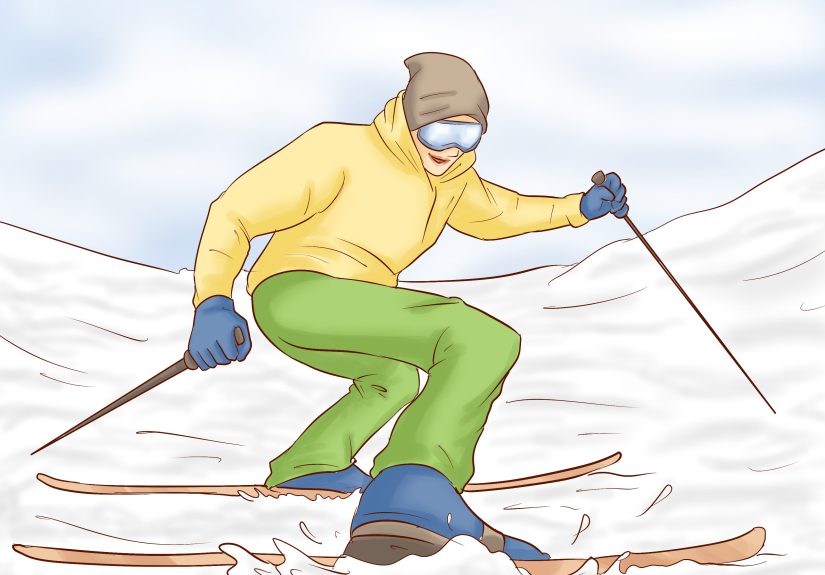
The basic alpine skiing stance is athletic and balanced. Keep your feet about hip-width apart, knees and ankles slightly bent, shins gently pressing into the front of the boots, hands forward, and eyes looking where you want to go. Your weight should be centered over the middle of your skis.
A common beginner mistake is leaning back. This feels safer for about two seconds, then your skis accelerate and your legs start writing a strongly worded complaint. Stay forward enough to feel your shins against your boot tongues. This position gives you better control and makes turning easier.
8. Learn to Glide on Flat Snow First
Before heading downhill, practice sliding on flat snow. Push gently with your poles or take small skating steps. Get used to the feeling of skis moving under you. Practice standing still, stepping sideways, turning around, and stopping yourself on gentle terrain.
This stage may feel basic, but it builds comfort. Skiing is much easier when your brain stops treating sliding as an emergency. Spend a few minutes here before moving to a beginner slope. Confidence grows faster when you do not skip the boring-but-important part.
9. Use the Wedge to Slow Down and Stop
The wedge, sometimes called the snowplow or pizza shape, is the classic beginner braking position. Point the tips of your skis closer together while keeping the tails farther apart. Keep the ski tips from crossing. Apply gentle pressure to the inside edges of both skis and bend your knees.
A wider wedge creates more braking. A smaller wedge lets you glide faster. Practice changing the size of your wedge on a very gentle slope. Your first goal is simple: move, slow down, and stop under control. Once you can stop reliably, skiing becomes much less mysterious and much more fun.
10. Practice Wedge Turns
To turn in a wedge, guide your skis by shifting more pressure to one ski. To turn left, gently press more on your right ski. To turn right, press more on your left ski. Keep your upper body quiet, hands forward, and eyes looking toward the direction of the turn.
Do not rush. Make big, round turns across the slope instead of pointing straight downhill. Turns are your speed control. The more you finish each turn across the hill, the more you slow down naturally. Beginners often try to twist their shoulders dramatically, but skiing works better when the legs guide the skis and the upper body stays calm.
11. Understand the Fall Line
The fall line is the most direct path downhillthe route a snowball would take if it rolled down the slope. When your skis point into the fall line, you gain speed. When your skis point across the slope, you slow down. Understanding this concept helps you manage fear and control speed.
Instead of thinking, “I am going too fast,” think, “I need to turn more across the hill.” This small mental shift helps beginners solve the real problem. Speed is not controlled by panic; it is controlled by turn shape, edge pressure, and terrain choice.
12. Learn How to Fall and Get Back Up
Falling is normal. Try to relax, let yourself come to a stop, and avoid using your poles to catch yourself. Once stopped, move your skis so they are below you and across the slope, not pointing downhill. This prevents you from sliding away while trying to stand.
To get up, bring your body close to your skis, place your hands on the snow beside you, and push yourself upright. If you cannot stand with both skis on, remove the uphill ski, stand up on the downhill ski, then step back into the other binding. Take your time. Snow is cold, but it is also patient.
13. Ride Beginner Lifts Safely
Many learning areas use magic carpets, which are moving conveyor belts. Slide onto the belt, stand still, and let it carry you uphill. Chairlifts require more attention. Before riding one, make sure you know how to load, sit, lower the safety bar when appropriate, raise your ski tips near the unload area, and slide off at the top.
If you are unsure, tell the lift attendant you are new. They can slow the lift or give instructions. There is no shame in asking. The lift attendant has seen everything, including people who tried to sit down too early and briefly became modern art.
14. Follow Ski Etiquette and the Responsibility Code
Safe skiing depends on predictable behavior. Always stay in control and be able to stop or avoid people and objects. Skiers and riders downhill from you have the right of way because they cannot easily see behind them. Look uphill before merging onto a trail, and never stop where others cannot see you from above.
Obey all signs, stay off closed trails, and do not ski terrain that is too difficult for your ability. Keep your equipment secure so runaway skis do not become high-speed yard darts. If you are involved in a collision, stop and exchange information with the other person and resort staff. Good etiquette keeps the mountain enjoyable for everyone.
15. Build Progress Slowly: Green Runs Before Bigger Goals
Your first ski day is not about conquering the mountain. It is about learning the basics, staying safe, and ending the day with enough enthusiasm to come back. Begin on the easiest slope. Once you can stop, turn both directions, ride the lift, and control speed, try a slightly longer green run.
Avoid chasing advanced friends onto harder terrain. They may say, “You’ll be fine,” but gravity does not accept peer pressure as a training plan. Progress is more enjoyable when you build skill step by step. Skiing rewards patience, and the mountain will still be there tomorrow.
Beginner Alpine Skiing Mistakes to Avoid
Skipping the Warm-Up
Skiing uses your legs, core, hips, and balance muscles. Before your first run, do a light warm-up with easy walking, gentle squats, ankle circles, and leg swings. Cold muscles are less responsive, and tired muscles make sloppy decisions. A five-minute warm-up can make your first runs smoother.
Forgetting to Hydrate and Eat
Cold weather can trick you into thinking you are not thirsty. Add altitude, exertion, and heavy clothing, and dehydration can sneak up quickly. Drink water before and during your ski day. Pack snacks such as granola bars, fruit, trail mix, or a sandwich. Hunger turns beginners into philosophers who ask, “Why did I choose this sport?”
Over-Tightening Boots
Boots should be snug, but circulation matters. If your toes are numb or your calves are screaming, loosen the buckles during breaks. Many beginners tighten everything as hard as possible, then wonder why their feet feel like frozen emails. Comfort helps performance.
Looking Down at Your Skis
Your skis are still there. Promise. Looking down throws off your balance and makes turning harder. Keep your eyes up and look where you want to go. Your body tends to follow your vision, so choose your line with your eyes before your skis arrive there.
What to Practice After Your First Lesson
Once you understand the wedge, stopping, and turning, practice consistency. Make five controlled stops in a row. Then make linked wedge turns across a gentle slope. Try turning around cones, signs, or imaginary landmarks. Focus on smooth movements instead of speed.
As you improve, your wedge may naturally become smaller. You can begin matching your skis more parallel at the end of each turn. Do not force this too early. Parallel skiing develops from balance, edge control, and confidence. The goal is not to look fancy; the goal is to ski safely and feel in charge.
Extra Experience: What Your First Beginner Ski Day Really Feels Like
Your first day of alpine skiing will probably begin with optimism, confusion, and at least one moment where you wonder how everyone else is walking so normally in ski boots. The rental shop may feel busy, your gloves may temporarily disappear, and carrying skis may seem like transporting a pair of slippery metal giraffes. This is normal. Give yourself extra time. Arriving early reduces stress and helps you start the lesson with a calm brain instead of a breakfast burrito in one hand and panic in the other.
The first surprise is that skiing is not only about going downhill. Before the downhill part, you need to learn how to move on flat snow, turn around, side-step, and stand still without drifting away like a confused penguin. These tiny skills matter. A beginner who can move comfortably on flat terrain learns faster once the slope tilts downward.
The second surprise is how much your emotions affect your skiing. When you get nervous, your body may lean back, your legs may stiffen, and your hands may drop. Suddenly the skis feel like they have joined a rebellion. When you breathe, soften your knees, look ahead, and make a round turn, control comes back. Skiing teaches you that calm technique beats dramatic energy almost every time.
You may fall. You may fall while moving slowly. You may fall while standing still, which is both unfair and extremely common. The key is not to treat each fall as a disaster. Check that you are okay, move out of traffic if needed, reset your skis across the slope, and get back up slowly. Most beginner falls are gentle, especially on learning terrain. Snow has a way of humbling people, but it also cushions the story.
Another real beginner experience is fatigue. Skiing uses muscles that may not get invited to your usual workouts. Your quads, calves, hips, and core all help control your skis. By midday, your legs may feel like they have read the terms and conditions and would like to unsubscribe. Take breaks before you are exhausted. Many beginner mistakes happen late in the day when people keep skiing after their coordination has left the mountain for hot chocolate.
One of the best beginner strategies is to repeat the same easy run several times. It may feel tempting to explore immediately, but repetition builds skill. The first run is survival. The second run is recognition. The third run is learning. By the fourth or fifth run, your brain starts to understand the slope, and your body begins to trust the movements. That is when skiing changes from “Why is this happening?” to “Wait, I think I like this.”
Do not compare yourself with other skiers. Children may zoom past you with supernatural confidence. Experienced adults may carve elegant turns while you are celebrating a successful stop. Let them have their journey. Your job is to stay safe, learn the fundamentals, and enjoy your own progress. A good beginner day is not measured by speed or number of runs. It is measured by whether you improved, stayed in control, and finished wanting to ski again.
At the end of the day, return your rentals carefully, stretch gently, drink water, and celebrate the small victories: you learned new equipment, managed slippery terrain, practiced balance, and faced a mountain. That counts. Alpine skiing has a learning curve, but it also has a huge reward. Few things feel better than linking your first smooth turns on a quiet green run while the snow sparkles and your confidence finally catches up with your courage.
Conclusion
Learning how to alpine ski as a beginner is not about becoming an expert overnight. It is about building the right foundation: proper gear, safe terrain, a balanced stance, controlled stops, smooth wedge turns, lift awareness, and smart mountain etiquette. Start with a lesson, stay on beginner slopes, listen to your body, and progress at a pace that keeps skiing fun.
The mountain can feel intimidating at first, but skiing becomes much easier when you break it into simple steps. Learn to stop before you worry about speed. Learn to turn before you chase longer trails. Learn to rest before your legs become noodles with goggles. With patience and practice, your first awkward slides can turn into confident, joyful runsand possibly a lifelong winter obsession.