Table of Contents >> Show >> Hide
- What Makes a Great Utility Knife?
- Best Overall Utility Knife: Milwaukee Fastback Folding Utility Knife
- Best Classic Utility Knife: Stanley Classic 99 Retractable Utility Knife
- Best Retractable Utility Knife: DeWalt Retractable Utility Knife
- Best Heavy-Duty Snap-Off Knife: OLFA LA-X Utility Knife
- Best Premium Retractable Knife: LENOX Gold Quick Change Utility Knife
- Best Pocket Utility Knife: Gerber EAB Lite
- Best Two-in-One Utility Knife: ToughBuilt Scraper Utility Knife
- Best Safety Cutter: Slice Auto-Retractable Mini Cutter
- Best Utility Knife by Use Case
- Utility Knife Safety Tips That Actually Matter
- How to Choose the Best Utility Knife
- Field Notes: Real-World Experience With Utility Knives
- Final Verdict: Which Utility Knife Should You Buy?
- SEO Tags
A good utility knife is the quiet hero of the toolbox. It does not roar like a circular saw, throw sparks like a grinder, or make you feel like a suburban Viking the way a demolition hammer does. It simply shows up, slices cardboard, scores drywall, trims carpet, opens stubborn packaging, and occasionally saves you from attacking a clamshell package with kitchen scissors and poor judgment.
But not all utility knives are created equal. Some feel like precision instruments. Some feel like a gas-station giveaway. Some open smoothly with one hand, while others make blade changes feel like a tiny escape room designed by a grumpy engineer. After comparing popular tool reviews, manufacturer specs, retailer feedback, and real-world use cases, the best utility knives stand out for the same reasons: safe blade control, solid grip, easy blade changes, reliable locking, useful blade storage, and a design that fits the job.
This tool test breaks down the best utility knives for homeowners, DIYers, contractors, warehouse workers, remodelers, and anyone who has ever muttered, “Where did I put the box cutter?” while standing next to a mountain of delivery boxes.
What Makes a Great Utility Knife?
The best utility knife is not necessarily the fanciest one. It is the one you actually reach for, use safely, and do not immediately regret buying. A great utility knife should feel secure in your hand, lock the blade firmly, change blades without drama, and survive being tossed into a tool bag with screws, dust, tape, and whatever mystery crumbs live at the bottom.
Blade Security
A loose blade is not a “feature.” It is a tiny metal liability. A strong utility knife holds the blade tightly with minimal wobble, especially during scoring cuts, carpet trimming, drywall work, or heavy cardboard breakdown. Folding models need a dependable lock. Retractable models need a slider that stays where you put it.
Comfort and Grip
Utility knives are often used for repetitive cuts, so handle comfort matters. A rubberized grip helps when your hands are sweaty, dusty, or wearing gloves. Metal bodies feel durable, but they can become slippery or cold. Plastic handles are lighter, but cheap plastic can flex or crack. The sweet spot is a handle that feels confident without turning your palm into a complaint department.
Blade Change System
If changing the blade requires a screwdriver, two prayers, and a clean workbench, the knife loses points. Tool-free blade changes are faster and safer when well designed. The keyword is “well designed,” because a bad quick-change mechanism can jam, pinch, or release the blade too easily. The best systems are simple, obvious, and secure.
Carry Style
Some users want a pocket clip and folding body for everyday carry. Others prefer a classic retractable knife that controls cutting depth. Contractors may keep several knives loaded with different blades: standard blades for general work, hook blades for carpet or shingles, and rounded-tip blades for safer package opening.
Best Overall Utility Knife: Milwaukee Fastback Folding Utility Knife
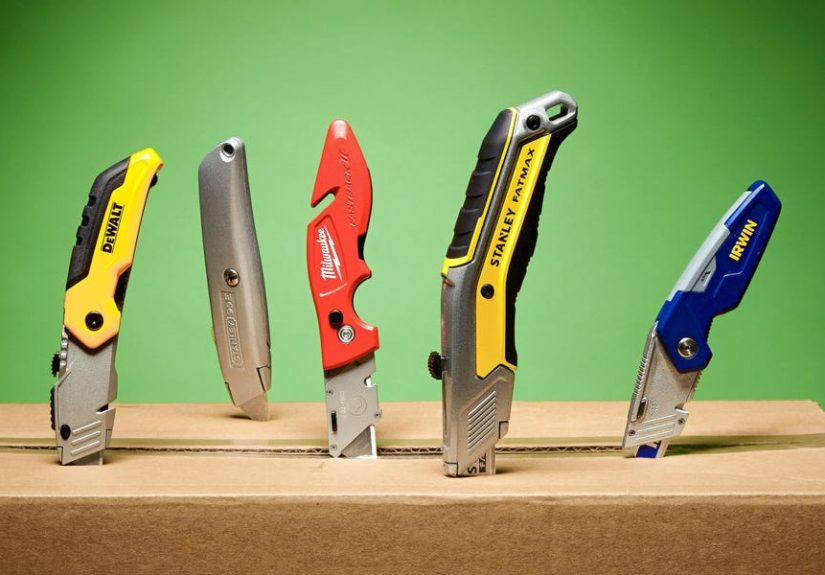
The Milwaukee Fastback is the utility knife that shows up again and again in tool conversations, review lists, jobsite pockets, and “I swear I had one right here” moments. Its biggest strength is convenience. The press-and-flip opening mechanism lets you deploy the blade with one hand, and the folding design makes it easier to carry than a bulky retractable knife.
Milwaukee offers several Fastback versions, but the folding utility knife with blade storage is especially practical. It stores extra blades, uses standard utility blades, and generally feels more like a sturdy pocket knife than a disposable box cutter. The wire belt clip is also better than many thick stamped clips because it slips into a pocket without chewing up fabric like an angry beaver.
Why It Wins
The Fastback wins because it balances speed, comfort, durability, and carry convenience. It is excellent for opening boxes, cutting packaging, trimming material, scoring drywall, slicing rope, and handling daily jobsite tasks. The blade change system is quick, the lock feels secure, and the one-handed opening is genuinely useful when your other hand is holding a sheet of material, a tape measure, or your rapidly fading patience.
Where It Falls Short
Because it is a folding utility knife, it does not offer the same variable blade-depth control as a traditional retractable model. If you frequently cut thin material where controlling blade exposure is critical, a retractable knife may be safer and more precise.
Best for: everyday carry, contractors, DIYers, warehouse work, general toolbox use.
Best Classic Utility Knife: Stanley Classic 99 Retractable Utility Knife
The Stanley Classic 99 is the hammer of utility knives: basic, familiar, and somehow always present in a garage drawer. Its metal body, retractable blade, and simple sliding mechanism have made it a long-running favorite for homeowners and pros who prefer function over flash.
This is not the slickest knife on the market, and that is part of the charm. It is affordable, durable, and easy to understand. The retractable blade allows different cutting depths, which is useful when opening boxes without slicing the contents inside. It also stores spare blades in the handle, though accessing them may require opening the body depending on the version.
Why It Still Matters
The Stanley Classic 99 proves that old-school designs survive for a reason. It is sturdy, widely available, inexpensive, and compatible with standard utility blades. For a homeowner who needs one reliable knife for cardboard, plastic sheeting, light drywall scoring, and garden tasks, it is still a smart buy.
Where It Falls Short
Blade changes are not as fast as modern quick-change knives. The handle is also less ergonomic than newer rubberized designs. If you change blades constantly, you may want something more modern. If you only change blades when the current one is so dull it could safely butter toast, the Stanley will be fine.
Best for: budget buyers, home toolkits, occasional DIY projects, traditional retractable knife users.
Best Retractable Utility Knife: DeWalt Retractable Utility Knife
DeWalt’s retractable utility knife earns its place because it combines a rugged body with practical comfort. The design typically includes a metal or bi-material handle, onboard blade storage, a rapid blade-change button, and variable blade depth. That combination makes it more flexible than many folding knives when you need controlled cuts.
The shape of DeWalt retractable knives tends to feel natural in the hand. The handle gives you enough body to grip firmly, and the retractable blade is useful for jobs like opening shipping cartons, cutting housewrap, trimming plastic, and scoring material without exposing more blade than necessary.
Why It Works
This is the knife for people who like a traditional utility knife but want modern convenience. The quick-change system saves time, the handle is comfortable, and the retractable design provides better control over blade length. That matters because one of the easiest ways to reduce accidents is to use only as much blade as the task requires.
Where It Falls Short
It is bulkier than a slim folding pocket model. If you want something that disappears into a pocket, the Gerber EAB Lite or Milwaukee Fastback may feel better. But for a workbench, tool pouch, or garage, the DeWalt retractable knife is a strong all-around choice.
Best for: controlled cutting depth, jobsite tasks, DIY remodeling, frequent cardboard and material cutting.
Best Heavy-Duty Snap-Off Knife: OLFA LA-X Utility Knife
Snap-off knives are often misunderstood. Cheap ones feel flimsy, but a good snap-off knife can be excellent for long, clean cuts. The OLFA LA-X is a standout because it uses an 18mm snap-off blade, a fiberglass-reinforced handle, an anti-slip grip, and a stainless-steel blade channel. It is built for more serious work than the lightweight craft knives that live in kitchen junk drawers next to batteries of unknown age.
The big advantage of a snap-off knife is continuous sharpness. When the blade tip dulls, you snap off a segment and expose a fresh edge. That makes the OLFA especially useful for insulation, foam board, plastic sheeting, wallpaper, vinyl, and long trimming cuts where blade sharpness matters.
Why It Works
The OLFA LA-X feels controlled, sharp, and efficient. Its auto-locking mechanism keeps the blade in position, while the longer blade reach helps with materials that standard trapezoid blades cannot handle as gracefully. For clean slicing rather than aggressive puncturing, it is excellent.
Where It Falls Short
Snap-off blades require care. You need to snap segments safely and dispose of used pieces properly. They are not ideal for prying, twisting, or rough demolition cuts. In other words, do not use it like a tiny crowbar unless you enjoy learning lessons quickly.
Best for: insulation, foam board, vinyl, long straight cuts, sharp-edge maintenance.
Best Premium Retractable Knife: LENOX Gold Quick Change Utility Knife
The LENOX Gold utility knife line has a reputation for toughness, especially among users who value solid blade holding and fast changes. The quick-change retractable version typically includes internal blade storage, a durable nose, and tool-free opening. LENOX blades are also widely respected, especially the titanium-edge and bi-metal options designed to flex rather than snap easily.
This knife feels like it was built for people who cut often and do not want to fiddle. The retractable format gives you depth control, while the quick-change mechanism keeps downtime low. It is the kind of utility knife that makes sense in a contractor’s bag, maintenance cart, or serious DIY setup.
Why It Works
The LENOX Gold is about reliability. It is sturdy, efficient, and pairs well with high-quality blades. If you regularly cut drywall, flooring, roofing felt, insulation, or packaging, upgrading the knife and the blade together can make a noticeable difference.
Where It Falls Short
It may feel like more knife than a casual user needs. If your main task is opening one online order per week, a simpler and cheaper knife will do. But if you cut daily, the LENOX earns its keep.
Best for: heavy use, contractors, maintenance workers, frequent blade changes.
Best Pocket Utility Knife: Gerber EAB Lite
The Gerber EAB Lite is a compact folding utility knife that uses standard contractor-grade utility blades. It has a stainless-steel body, liner lock, and a handle that doubles as a money clip or pocket clip. It is small, light, and ideal for people who want a utility blade without carrying a full-size knife.
This is not the tool you grab for all-day drywall work. It is the tool you carry because it disappears into a pocket and appears exactly when you need to open a box, cut tape, trim a tag, or slice packaging. Think of it as the minimalist’s utility knife: no drama, no bulk, no “why is this thing the size of a sandwich?” problem.
Why It Works
The EAB Lite is simple and portable. Because it uses replaceable utility blades, you do not need to sharpen it. Swap in a fresh blade and move on with your life. It is especially useful for office workers, delivery-heavy households, EDC fans, and anyone who wants a small blade for quick tasks.
Where It Falls Short
Blade changes are not as fast as larger quick-change utility knives, and the small handle is not ideal for high-force cuts. It is best treated as a compact everyday cutter, not a jobsite bruiser.
Best for: everyday carry, package opening, light-duty cutting, minimalist toolkits.
Best Two-in-One Utility Knife: ToughBuilt Scraper Utility Knife
The ToughBuilt Scraper Utility Knife solves a problem many remodelers know well: you need a knife, then suddenly you need a scraper, then you cannot find the scraper because it has apparently joined witness protection. ToughBuilt’s design converts from utility knife to scraper with a thumb-controlled mechanism, making it useful for paint, stickers, caulk residue, labels, and general cutting.
The knife uses compatible utility-style blades and usually includes several blades. The handle is robust, the grip is designed for control, and the scraper mode gives it a practical edge over ordinary utility knives in renovation work.
Why It Works
For painters, remodelers, flooring installers, and maintenance workers, the knife-plus-scraper concept is genuinely useful. It reduces the need to carry a separate scraper and makes quick cleanup tasks easier.
Where It Falls Short
It is bulkier than a simple utility knife, and not everyone needs the scraper function. If you mostly open boxes, this may be overkill. If you remove labels, old caulk, paint drips, or adhesive, it can feel like the tool you should have bought years ago.
Best for: remodeling, scraping tasks, paint prep, label removal, renovation work.
Best Safety Cutter: Slice Auto-Retractable Mini Cutter
For workplaces, schools, offices, and homes where safety matters more than brute cutting power, the Slice Auto-Retractable Mini Cutter is a smart option. It uses a ceramic blade designed to be safer to touch than traditional metal blades, and the auto-retracting slider helps prevent the blade from being left exposed.
This is not a heavy-duty construction knife. It is a safety-focused box cutter for opening packages, cutting shrink wrap, trimming tape, and reducing the chances of accidental cuts. The ceramic blade also lasts a long time and does not rust, which is a nice bonus for humid shops or warehouse environments.
Why It Works
The Slice cutter is ideal where many people share tools or where users may not be trained tradespeople. Auto-retraction and a finger-friendlier blade make it a safer choice for repetitive package work.
Where It Falls Short
It lacks the cutting depth and toughness of full-size utility knives. Do not expect it to score drywall or rip carpet. It is a safe package opener, not a tiny superhero.
Best for: offices, warehouses, schools, package opening, safety-focused workplaces.
Best Utility Knife by Use Case
For Contractors
Choose the Milwaukee Fastback, LENOX Gold, or DeWalt retractable knife. Contractors need secure blade locks, quick changes, durable bodies, and pocket or pouch convenience. A folding knife is great for carry; a retractable knife is better when blade depth matters.
For Homeowners
The Stanley Classic 99 or DeWalt retractable utility knife is hard to beat. Both are straightforward, versatile, and affordable enough to keep in a kitchen drawer, garage, and tool bag.
For Drywall
A Milwaukee Fastback, Stanley Classic 99, or LENOX Gold with sharp blades will work well for scoring drywall. The key is not magic; it is sharpness. Score the paper face, snap the sheet, and cut the back paper cleanly.
For Carpet and Flooring
Use a sturdy retractable or fixed utility knife with fresh blades. Hook blades can help for carpet and roofing tasks. Change blades often, because flooring materials dull edges quickly and dull blades require more force.
For Packages
If your main job is opening boxes, consider the Slice safety cutter, Gerber EAB Lite, or Milwaukee Fastback. For homes with kids nearby or shared workplace use, safety cutters make sense.
Utility Knife Safety Tips That Actually Matter
Utility knife safety is mostly common sense, which is unfortunate because common sense often leaves the room when tape refuses to cut. Always cut away from your body, keep your other hand out of the blade path, and use only enough blade for the cut. A fresh blade is safer than a dull blade because dull blades require more pressure and are more likely to slip.
Retract or fold the blade immediately after use. Do not carry a utility knife with the blade exposed. Do not use the blade as a screwdriver, pry bar, paint can opener, chisel, or emotional support tool. If you need a scraper, buy a scraperor choose a utility knife designed to become one, like the ToughBuilt.
Dispose of used blades in a blade bank, sealed container, or proper disposal slot. Loose blades in a trash bag are a surprise nobody wants, especially the person taking out the garbage.
How to Choose the Best Utility Knife
Before buying, ask yourself what you cut most often. If you cut boxes and packaging, prioritize safety and portability. If you score drywall or trim construction materials, prioritize blade security and comfort. If you work in a warehouse, an auto-retracting safety cutter may be a better choice than a heavy-duty folding knife. If you carry a knife daily, pocket feel matters more than you think.
Also consider blade availability. Standard trapezoid utility blades are easy to find and fit many knives. Snap-off blades are excellent for long, sharp cuts but require careful segment disposal. Specialty blades, such as hook blades, rounded-tip blades, or serrated blades, can make specific jobs easier.
Field Notes: Real-World Experience With Utility Knives
After using utility knives for everything from breaking down moving boxes to trimming drywall patches, one truth becomes obvious: the blade matters as much as the handle. A premium knife with a dull blade is just a fancy frustration stick. A budget knife with a fresh blade can feel surprisingly capable. The best setup is a comfortable handle paired with a generous supply of sharp replacement blades.
For cardboard, a folding knife like the Milwaukee Fastback is wonderfully convenient. It clips to a pocket, opens quickly, and makes short work of delivery boxes. The one-handed opening feels especially useful when you are holding a box steady with the other hand. However, for cutting cartons without damaging the contents, a retractable knife or safety cutter is often better because you can limit blade depth.
Drywall rewards patience. A sharp blade scores the paper cleanly, and a straightedge keeps the cut neat. Push too hard, and the blade can wander. Use a dull blade, and the paper tears instead of scoring. On drywall, I prefer a full-size utility knife with a solid grip because it gives better control during long straight cuts. The knife does not need to be expensive; it needs to be sharp, steady, and predictable.
Carpet and flooring are where weak utility knives start waving a white flag. Carpet backing is tough, vinyl can drag against the blade, and adhesive residue gums things up. A fresh blade is not optional here; it is the difference between a clean cut and a sweaty wrestling match. For carpet, hook blades can be excellent. For vinyl plank or sheet vinyl, a controlled scoring cut followed by snapping or bending often works better than trying to slice through in one heroic pass.
In a workshop, I like having more than one utility knife. One knife carries a standard blade for general cutting. Another gets a hook blade for carpet, shingles, or packaging straps. A snap-off OLFA-style knife handles long slicing jobs. This sounds excessive until you stop searching for the right blade and simply grab the right tool. Utility knives are affordable enough that having several is not tool hoarding; it is organization with sharper edges.
The most underrated feature is blade storage. When spare blades are built into the handle, you are more likely to replace a dull blade immediately. Without onboard storage, people keep cutting with a tired blade because the replacements are “somewhere.” Somewhere is not a location. Somewhere is where productivity goes to nap.
The best utility knife, in real use, is the one that makes safe behavior easy. It should retract or fold without fuss, lock securely, and encourage frequent blade changes. It should feel good enough that you use it correctly instead of forcing cuts. When a knife feels controlled, you make better cuts. When it feels sketchy, you start bargaining with physics, and physics has an undefeated record.
Final Verdict: Which Utility Knife Should You Buy?
If you want one utility knife for almost everything, buy the Milwaukee Fastback folding utility knife with blade storage. It is fast, comfortable, durable, and easy to carry. If you prefer a classic retractable knife, choose the DeWalt retractable utility knife or Stanley Classic 99. If you cut daily and want a premium workhorse, the LENOX Gold is a smart pick. If you need long slicing power, the OLFA LA-X is excellent. If you want compact everyday carry, the Gerber EAB Lite is hard to beat. If safety is the priority, choose the Slice auto-retractable cutter. If scraping is part of the job, the ToughBuilt scraper utility knife deserves a spot in the bag.
The best utility knife is not just sharp. It is safe, comfortable, reliable, and suited to your work. Pick the right one, keep fresh blades nearby, and stop using your keys to open boxes like a raccoon with a lease.
Note: This publish-ready article is written in original American English and synthesizes current product information, tool-review consensus, manufacturer features, retailer specifications, and practical utility-knife safety guidance without inserting source links into the body copy.