Table of Contents >> Show >> Hide
- First, define “better” (because engineers will, anyway)
- Why Buran existed: Cold War nerves, not a love of wings
- Copycat or cousin? The myth of the “perfect Soviet replica”
- The biggest difference: Buran wasn’t “the rocket” (Energia was)
- Automation: Buran’s greatest flex
- Heat shields, tiles, and the brutally unglamorous part of spaceflight
- Operational reality check: NASA’s shuttle flew. Buran didn’t.
- What Buran might have been best at (if it had kept flying)
- So… did the Soviets build a better Space Shuttle?
- FAQ: Quick answers people actually argue about
- Extra: of experiences from the Buran story (the human side)
- Conclusion
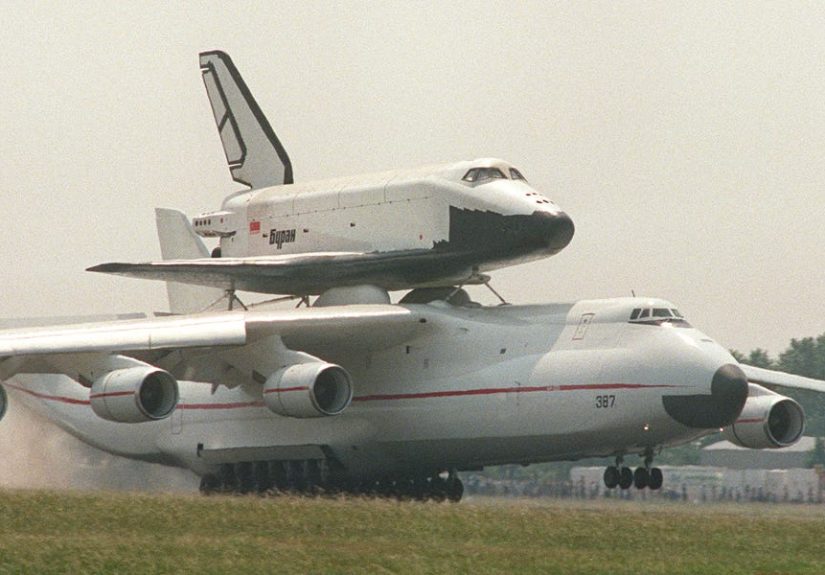
If you’ve ever seen a photo of the Soviet shuttle Buran, you’ve probably had the same thought everyone has:
“Wait… is that the Space Shuttle wearing a fake mustache?”
The resemblance is real, the conspiracy theories are plentiful, and the hot takes are evergreen: some people insist the Soviets built a
better shuttle than NASA ever did. Others say Buran was basically a copycat project that barely left the runway.
The truth is more interesting than either myth. Buran wasn’t simply a Xerox of the American Space Shuttleand it also wasn’t a proven,
operational workhorse. It was a different answer to the same big question: “How do we build a reusable spacecraft that can haul heavy cargo,
survive reentry, and land like an airplane?”
First, define “better” (because engineers will, anyway)
“Better” depends on what you’re measuring. A spacecraft can be better at:
- Technical elegance (clean architecture, smart design choices)
- Flexibility (different mission types, different payloads)
- Safety margins (risk reduction, abort options, redundancy)
- Cost and turnaround (how fast and cheaply you can fly again)
- Operational performance (how many missions it actually flew)
Buran shines in a couple of categories on paperespecially automation and launch-system architecture. But NASA’s Space Shuttle dominated the
one category that can’t be faked: real, repeated operations.
Why Buran existed: Cold War nerves, not a love of wings
The Soviet Union didn’t wake up one day and say, “You know what would be fun? Tiles. Thousands of tiles.” The Buran program was fueled by
Cold War logic: if the U.S. had a winged reusable spacecraft, the USSR wanted something with comparable capabilities. Military anxieties
mattered, toothere was serious concern that the Space Shuttle could become a platform for space-based weapons or rapid-return payloads.
By the mid-1970s, Soviet leadership pushed for a shuttle-class system. But here’s the twist: Soviet engineers didn’t just copy the U.S.
approach end-to-end. They used the American shuttle as the “requirements sheet,” then arguedoften painfullyabout a better architecture.
Copycat or cousin? The myth of the “perfect Soviet replica”
Yes, Buran looks like the U.S. orbiter. That wasn’t an accident, and it wasn’t (only) espionage magic. Aerodynamics is a harsh editor:
when you want a lifting-body spaceplane with a large payload bay that can survive reentry and land on a runway, you end up in the same
design neighborhood. Sometimes physics makes everyone shop at the same store.
The Popular Mechanics reporting on the program captures this nicely: Soviet engineers ultimately agreed the shuttle-like shape was a strong
solution, but they rejected key parts of NASA’s economic philosophy andcruciallybuilt a different launch system around the orbiter.
The biggest difference: Buran wasn’t “the rocket” (Energia was)
NASA’s Space Shuttle stack was famously integrated: the orbiter carried the three main engines, fed by the external tank, plus two large
solid rocket boosters providing most of the thrust at liftoff. That integration had upsides (reusing expensive main engines) and downsides
(complexity, tight coupling, and a launch profile heavily shaped by solids).
Buran went with a different philosophy: the orbiter rode to space on a separate heavy-lift rocket called Energia.
Energia used liquid-propellant strap-on boosters and placed the main engines in the rocket stage rather than the orbiter itself.
Why that architecture impressed people
-
Flexibility: Energia could (in principle) launch other payloads without dragging a winged orbiter along for the ride.
That’s like owning a truck you can use even when you’re not towing your entire garage. - Cleaner orbiter role: Buran could focus on being a spacecraft and glider, not a partially embedded rocket stage.
-
Heavy-lift potential: NASA documentation discussing Soviet heavy-lift concepts notes Energia’s intended class of capability
as extremely highroughly in the “move-a-small-building-to-orbit” tier.
The tradeoff (and it’s a big one)
The cost of separating the main propulsion into Energia is that you’re not necessarily reusing the most expensive engines each time.
Popular Mechanics points out that placing those main engines in a separate rocket stage meant losing them after each flight, making the system
less reusable in that sense than NASA’s approach.
So if your definition of “better” is “reuses the most expensive hardware,” NASA’s shuttle has a strong argument. If your definition is
“doesn’t force a winged orbiter to carry the whole propulsion story,” Buran’s architecture is awfully appealing.
Automation: Buran’s greatest flex
Here’s the headline feature that keeps Buran legendary: it flew to orbit and landed fully automatically.
On November 15, 1988, Buran launched on Energia, completed a short mission, and returned to Earth for an automated runway landing. In other
words: the Soviets built a shuttle that could stick the landing without a human hand flying the final approach.
That’s not a dunk on NASA’s pilotsNASA made a deliberate choice to keep the Shuttle’s landing as a piloted event. But from a pure systems
engineering standpoint, Buran’s autonomous capability was genuinely advanced for the era, and it signaled something important:
the USSR was thinking hard about operations, workload, and mission risk.
Automation wasn’t just for show
Buran’s autonomy wasn’t a single lucky trick. Reporting and historical accounts describe extensive atmospheric test work, including numerous
automated approach-and-landing tests using a full-scale prototype. That sort of incremental “trust the computer more each time” philosophy
looks very modern todaybecause it is.
Heat shields, tiles, and the brutally unglamorous part of spaceflight
Both programs had to solve the same nightmare: reentry heat. Both used thermal protection systems with lots of surface elements (tiles and
other materials), because returning from orbit is basically asking your vehicle to survive a controlled meteor impression.
One interesting Soviet approach was extensive subscale testing. Scientific American has highlighted BOR-4, a smaller test vehicle used in the
1980s to help validate thermal protection concepts tied to the Buran effort. It’s not as famous as a full orbiter, but it’s the kind of
practical test work that quietly separates serious programs from PowerPoint programs.
Operational reality check: NASA’s shuttle flew. Buran didn’t.
NASA’s Space Shuttle program ran for three decades and completed 135 missions, flying crews, deploying and servicing
satellites, and supporting major projects like the International Space Station. That long operational record produced enormous experience
and also exposed painful risks and costs.
Buran, by contrast, flew once. The orbiter’s single orbital mission in 1988 was technically impressive, but it never turned
into a routine transportation system. After the Soviet Union’s collapse and budget realities, the program was canceled in the early 1990s.
This is the core tension behind the “better shuttle” debate:
Buran is often judged by its design potential, while NASA’s shuttle is judged by its operational history.
Comparing them is a bit like comparing a concept car to a delivery van. One is sleek and full of promise. The other actually has mileage.
What Buran might have been best at (if it had kept flying)
If you build a “better shuttle” scorecard, Buran’s strongest case usually comes down to three themes:
1) A launch system with broader usefulness
Energia’s heavy-lift role wasn’t tied exclusively to the orbiter. In theory, that separation could have made the Soviet system more adaptable:
big cargo? Launch Energia. Winged return? Add Buran. Don’t need wings today? Leave the spaceplane in the hangar.
2) Autonomy and reduced dependence on crew input
The ability to fly an orbital mission uncrewedand land automaticallysuggests the Soviets were aiming for a system that didn’t require
a pilot’s hands on every critical moment. That could have been valuable for risky test flights, cargo-only missions, or scenarios where
keeping humans out of the loop reduced overall risk.
3) A narrower, arguably more realistic mission philosophy
NASA sold the Shuttle as a vehicle that could replace many expendable rockets and provide relatively routine access to space.
Soviet planners were more skeptical about that “one vehicle to do everything” promise. Popular Mechanics notes they did not subscribe to the
idea that the reusable system would replace all traditional rockets. Instead, Buran was intended for specific tasksespecially those requiring
return of cargo or on-orbit servicing.
Put bluntly: the Soviets were less likely to say, “This will make space cheap.” They were more likely to say, “This will do a few things
exceptionally well, and it will cost a lot because space is expensive, comrade.”
So… did the Soviets build a better Space Shuttle?
If “better” means more advanced in specific features, especially autonomy and the idea of a heavy-lift rocket not chained to
a winged orbiter, Buran has a real claim. It had a thoughtful architecture and demonstrated at least one capability NASA’s Shuttle wasn’t built
to do: an automated orbital mission with an automated runway landing.
If “better” means successful as a transportation system, the answer is no. Not because Buran was “bad,” but because it never
got the chance to become an operational program. NASA’s Shuttle flew 135 times. Buran flew once. Reliability, maintainability, cost, and
mission value are proven through repetitionnot press releases.
The fairest verdict is this: Buran may have been a better idea in some ways, but NASA’s Shuttle was the better reality.
One was an impressive peak of Soviet engineering ambition. The other was a complicated, risky, expensive machine that still managed to become
one of the most consequential spacecraft systems in history.
FAQ: Quick answers people actually argue about
Did the Soviets copy the Space Shuttle?
They matched the shape closely because the aerodynamic solution was effective and because they were tasked with comparable technical
capabilities. But the “guts,” especially the launch system and some operational philosophy, diverged significantly.
Could Buran have flown more than once?
The broader program envisioned additional vehicles and more missions, but the Soviet collapse and economic realities shut the program down.
“Could have” is doing a lot of work here.
Was Energia the real breakthrough?
Many analysts argue the rocket architecture was the most strategically valuable part of the Soviet system, because it offered heavy-lift
potential beyond the shuttle concept itself.
Extra: of experiences from the Buran story (the human side)
It’s easy to talk about Buran like it’s a debate prompttiles versus boosters, automation versus pilots, “better” versus “worse.”
But the most striking part of Buran’s legacy is how intensely human it is: pride, frustration, grief, and a weird afterlife in
museums and abandoned hangars.
Start with the test pilots. Soviet pilot-cosmonaut Igor Volkpicked to evaluate how Buran would glide, approach, flare, and landspent years
practicing the kind of dead-stick landings that made shuttle landings famous. And then came the irony: the vehicle was built to reduce the
pilot’s role. In accounts from the program, Volk’s work included flying an atmospheric prototype (a full-size analog equipped with jet engines)
through a series of tests where landings gradually shifted from manual control to computer control. The experience wasn’t simply “the computer
did it”; it was a methodical handoff of trust, flight by flight, until the software could complete landings alone.
Then there’s the ground infrastructurebecause “spaceplane” is only half the story. Buran’s runway at Baikonur was treated as a national-level
engineering project, with extreme smoothness requirements to reduce wear on the orbiter during rollout and landing. People who built it
described a sense of prestige: they were constructing something unique, something that (at least in theory) would signal Soviet parity with
the U.S. in reusable spaceflight.
But prestige doesn’t pay bills. As the Soviet economy deteriorated and the USSR dissolved, even insiders understood the money would dry up.
Buran’s first flight made a point“we can do it”and that point may have been enough. The program’s cancellation wasn’t just a policy decision;
it landed emotionally, too. Accounts describe a kind of collective heartbreak among those who had spent years building a system that might never
become routine.
That heartbreak shows up in Buran’s strange museum-and-ruins era. One vehicle became a public attraction in Moscow’s Gorky Park, where visitors
could climb aboard for a presentation. The caretaker described former program workers visiting and leaving in tearsbecause the spacecraft was
both a triumph and a tombstone for a chapter of Soviet ambition. Even the display itself carried a melancholy vibe: a machine built for orbit,
sitting among everyday city life, asking people to remember a future that didn’t happen.
And then came the most tragic punctuation mark: the collapse of a hangar roof at Baikonur that killed workers and destroyed the only Buran that
had flown to space. It’s hard to imagine a more literal symbol of a fallen programhistory crushed not by a launch failure or reentry disaster,
but by neglect, time, and gravity.
In the end, the “better shuttle” argument misses what makes Buran unforgettable. Buran is remembered not just because it looked like a rival,
but because it carried an entire era’s ambitionthen became a reminder of how quickly national priorities, budgets, and destinies can change.
The experience of Buran is the experience of the late Cold War itself: astonishing capability, enormous cost, and a sudden stop.
Conclusion
Did the Soviets build a better Space Shuttle? They built a shuttle system with some genuinely impressive advantagesespecially automation and a
launch architecture centered on a powerful heavy-lift rocket. But “better” isn’t only about clever design. It’s also about repeated success,
sustained funding, operational learning, and a program that survives long enough to become normal.
Buran proved what it could do once. NASA’s Shuttle proved what it could do 135 times. If you want the best answer, it’s this:
Buran was a brilliant alternative timeline. The Space Shuttle was the timeline we actually lived.