Table of Contents >> Show >> Hide
- What Colin Hanks Saw in the Footage (and Why It Still Stings)
- The Setup: A Culture That Treated Body Talk Like Small Talk
- John Candy’s Real Superpower: Making the Room Feel Safer
- The Documentary Lens: Not Just CelebrationContext
- Even Ryan Reynolds Went Off-Script (In a Thoughtful Way)
- What the “Weight Questions” Really Were: A Failure of Imagination
- How Entertainment Journalism Has Changed (and What Still Needs Work)
- John Candy’s Legacy: Bigger Than the Noise Around Him
- What We Can Learn (Without Turning John Candy Into a “Lesson”)
- Extra: of Experiences That Hit Close to Home
- Closing Thoughts
There are some old TV interviews that feel like a time capsule. Then there are the ones that feel like a jump scare.
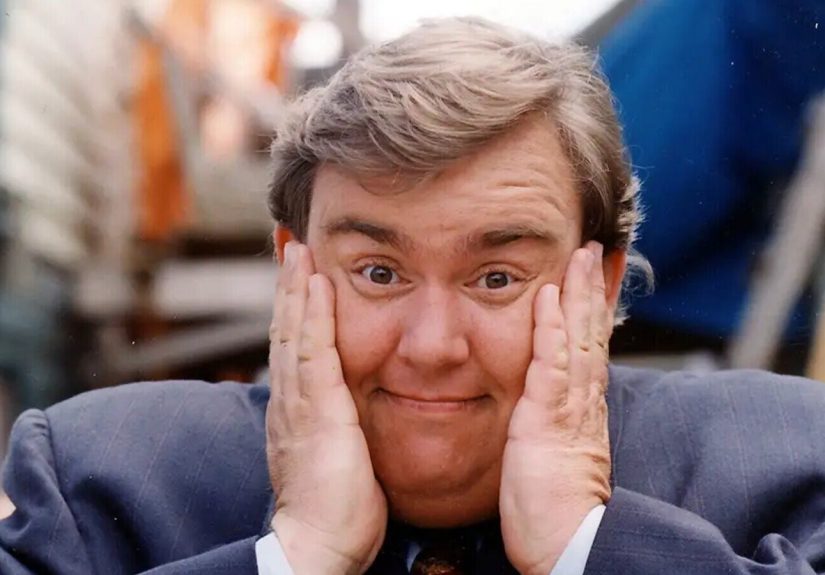
Colin Hanksdirector of the documentary John Candy: I Like Mehas been revisiting archival footage while telling Candy’s story, and he’s been openly stunned by how casually interviewers poked, prodded, and flat-out fixated on Candy’s body instead of his work.
Not the “gotcha” kind of stunned. The “how did adults say that out loud on camera?” kind.
If you grew up on John Candy’s movies, this hits a nerve because you remember the warmth: the big-hearted goofball energy, the tenderness under the punchlines, the way he could make a scene hilarious and then quietly break your heart without changing his tone.
The whiplash comes from realizing that, for years, plenty of interviewers treated him like a walking punchline about his sizeright to his face.
What Colin Hanks Saw in the Footage (and Why It Still Stings)
Hanks has described watching interview after interview where Candy seems braced for the same predictable line of questioningthe kind that reduces a person to a single physical trait. He’s talked about how uncomfortable Candy looked, and how “soul-crushing” it was to see the pattern repeat.
The point isn’t that the past was “a different time” and everyone should shrug. The point is that the footage makes it obvious: Candy had good reason to dread the “hot seat.”
That’s the hard truth Hanks keeps returning to: you can admire a star’s charisma and still recognize the emotional labor behind it. Candy often answered with grace, humor, or a polite pivotbecause he was a pro, and because he was kind, and because sometimes kindness is the only armor you’re allowed to wear on a press tour.
For people who never lived through the era of talk shows and entertainment reporting where “being rude” was practically framed as being “real,” this can be surprising. For anyone who did live through it, the surprise is more like: “Wait, we normalized that?”
The Setup: A Culture That Treated Body Talk Like Small Talk
In the late 1970s through the early 1990s, celebrity interviews often followed a formula that looks bizarre now:
tease the guest, comment on appearance, ask invasive questions, and then act like it’s all in good fun. If the guest laughed, the interviewer got a pass. If the guest didn’t laugh, the guest was labeled “difficult.”
John Candywho built a career on being approachablewas especially vulnerable to that setup. His brand was warmth and accessibility, and some interviewers treated that as permission to cross lines they wouldn’t cross with a more “dangerous” celebrity. The irony is that Candy’s persona was never about punching down. He wasn’t selling cruelty. He was selling a kind of comedic hospitality: “Come in, sit down, laugh with me.”
The documentary’s archival clips reportedly show just how blunt the comments could get. Sometimes they were framed as “concern.” Sometimes they were disguised as a joke. Sometimes they were asked as if they were a perfectly reasonable career questionlike your body is a PR strategy and not, you know, your body.
John Candy’s Real Superpower: Making the Room Feel Safer
If you try to explain John Candy’s appeal to someone who only knows him from memes or a single holiday rewatch, you end up using words like “safe,” “decent,” and “human.”
That can sound faintly boring until you remember how rare it is for a performer to be hilarious without feeling meanand how rare it is for a famous person to read as sincerely kind.
The documentary title, I Like Me, nods to a moment in Planes, Trains and Automobiles that fans still quote because it captures Candy’s gift: vulnerability without self-pity.
It’s not “feel sorry for me.” It’s “I’m still here, and I’m still worthy.” That’s a radical message in any era, and it becomes even more radical when the media keeps trying to shrink you down to a single talking point.
And that’s why Hanks’ reaction resonates: because it’s not just about “rude questions.” It’s about how a person who gave so much warmth had to spend energy deflecting coldnesswhile cameras rolled.
The Documentary Lens: Not Just CelebrationContext
From what’s been shared in interviews about the film, Hanks and the team didn’t set out to create a glossy highlight reel. The documentary uses never-before-seen archival material and reflections from people who knew Candy, including friends, collaborators, and family.
It’s a tribute, yesbut it’s also an attempt to tell the truth about what it cost to be “the lovable guy” in a spotlight that could be ruthless.
A meaningful choice here is that the film reportedly doesn’t treat the body-shaming footage as “juicy drama.” It treats it as part of the environment Candy worked inan environment that shaped how he felt walking into interviews, photo ops, and public spaces.
In other words: the film doesn’t ask you to gawk. It asks you to understand.
That’s especially clear in comments from Candy’s son, Christopher, who has spoken about how painful it was to see the old interview clips and to learn more about the coping behaviors Candy developed because of the scrutiny.
When the people closest to someone describe the ripple effects, it reframes the footage. It’s no longer “awkward vintage TV.” It’s an artifact of harm.
Even Ryan Reynolds Went Off-Script (In a Thoughtful Way)
One of the more eyebrow-raising details that emerged around the documentary: Ryan Reynolds, a producer on the project and a longtime Candy admirer, said he actually tracked down and called a journalist who had mocked Candy’s weight in old footage.
Not to dunk on them publicly. Not to manufacture a viral “accountability moment.”
By his telling, the goal was conversationan invitation to reflect on what was said and why it mattered.
Whether you find that move bold, awkward, cathartic, or all of the above, it highlights a shift in the culture:
people increasingly understand that media moments don’t evaporate. They stick. They get replayed. They shape how audiences thinkand how the person on the receiving end feels.
Calling it “just a joke” doesn’t erase the bruise.
What the “Weight Questions” Really Were: A Failure of Imagination
Here’s what’s so frustrating about the old clips, and why Hanks’ disbelief lands: the questions weren’t only cruel. They were lazy.
John Candy had plenty worth asking about:
- How he balanced sweetness and chaos in a single scene.
- Why his characters felt like real people instead of punchlines.
- How his sketch background shaped his film work.
- What he learned working with comedic heavyweights (and being one).
- How he played sincerity without tipping into sentimentality.
Instead, too many interviewers treated his body like a conversational shortcut: easy laughs, easy tension, easy clicksbefore clicks were even a thing.
It’s the same habit we see in modern culture when people ask intrusive questions because they can’t think of anything better.
The problem isn’t curiosity. The problem is choosing the most dehumanizing curiosity available.
How Entertainment Journalism Has Changed (and What Still Needs Work)
It’s true: many mainstream outlets today have more explicit standards about body talk, sensitivity, and the ethics of coverage. There’s greater awareness of how “harmless” jokes can amplify stigma.
Celebrities also have more power to push backsometimes in real timethrough social media and direct-to-fan channels.
But “changed” doesn’t mean “solved.” The internet didn’t eliminate cruelty; it gave cruelty better distribution.
Body-shaming can still show up in headlines, comment sections, and algorithm-fed trend cyclesjust with a different vocabulary and a faster refresh rate.
That’s why the documentary’s archival footage matters now. It’s not only about judging the past. It’s about recognizing patterns that can still sneak into the present under softer lighting.
John Candy’s Legacy: Bigger Than the Noise Around Him
Candy’s filmography reads like a comfort-food menu for comedy fans: the chaos of travel, the sweetness of found-family stories, the big reactions and bigger hearts.
He came up through sketch comedy, broke through in films, and became one of those performers who felt familiar even if you’d never met himlike a friend-of-a-friend who always makes sure you have a seat at the table.
People who worked with him consistently describe a decent man: generous with coworkers, protective with younger performers, and committed to the job.
That reputation is part of why the archival interview cruelty feels so jarring. The mismatch is glaring:
here’s a guy trying to do his work and be kind, and here’s a media machine treating him like a target.
The most powerful thing the documentary can dobeyond nostalgiais to re-center the story where it belongs: on Candy’s craft, his heart, and the human cost of a culture that couldn’t stop commenting on bodies.
What We Can Learn (Without Turning John Candy Into a “Lesson”)
Nobody needs a morality play stapled onto a beloved comedian’s memory. But it’s fair to say this story offers a few practical takeaways:
1) Better questions make better art conversations
When interviewers focus on craftprocess, choices, influences, collaborationthe audience gets something lasting.
When they focus on someone’s body, the “conversation” expires instantly and leaves only discomfort behind.
2) “He handled it well” is not a defense of the question
Candy often handled bad questions with professionalism. That speaks well of himnot of the questions.
A person’s grace under pressure doesn’t retroactively make the pressure ethical.
3) Media accountability can be quiet and still matter
Reflection, apologies, changed practicesthese aren’t as flashy as public takedowns, but they’re more likely to prevent harm next time.
If a culture wants to improve, it needs more than embarrassment; it needs better habits.
Extra: of Experiences That Hit Close to Home
The reason Colin Hanks’ reaction connects isn’t just because John Candy was famous. It’s because most people understandon some levelwhat it feels like to be reduced.
Maybe not on national television, sure, but in small, sharp moments: the relative who “teases” you at a family party; the classmate who narrates your lunch like it’s public entertainment; the coworker who thinks commenting on someone’s body is a form of bonding.
You’re standing there, trying to be a person, and someone decides you’re a topic.
One experience a lot of fans describe after watching the documentary clips is a strange mix of anger and tenderness.
Anger at the questioners, tenderness for Candy, andunexpectedlypride in how he kept showing up with warmth anyway.
That’s complicated, because it can accidentally slide into the idea that the “right” response to cruelty is to be charming.
But real life doesn’t always hand you a laugh track and a clean exit.
Sometimes you freeze. Sometimes you snap. Sometimes you laugh even though you didn’t want to, because you’re trying to survive the moment.
The takeaway isn’t “be as gracious as John Candy.” The takeaway is “stop putting people in that position.”
Another relatable part is the way body talk disguises itself as “concern.”
Plenty of people have heard some version of: “I’m just worried about you,” right after a comment that didn’t actually help, didn’t ask permission, and didn’t respect boundaries.
In Candy’s case, the concern often came wrapped in a career angleas if his body were a marketing decision that the public was entitled to debate.
In everyday life, it can show up as unsolicited advice, jokes that land like a shove, or that weird phenomenon where strangers feel licensed to evaluate you in the grocery store checkout line.
None of it is about health; it’s about control and comfortsomeone else’s comfort.
The healthiest response to stories like this might be to practice a different kind of curiosity.
Instead of “What’s going on with your body?” try “How are you doing?” (and mean it).
Instead of “You’d look better if…” try “I loved what you said in that meeting,” or “That work you did mattered.”
If you’re an interviewer, it’s the same principle at scale: ask about the craft, the choices, the storybecause that’s what the audience actually keeps.
And if you’re a fan rewatching John Candy movies after hearing Hanks talk about those “horrible things,” it can be grounding to notice what Candy gave people:
permission to be human, to be messy, to be sincere, to be funny without being cruel.
That’s a legacy worth protectingnot by pretending the ugly parts never happened, but by refusing to repeat them.