Table of Contents >> Show >> Hide
- Why Frozen Zucchini Is Totally Worth It (Even If It Gets a Little Soft)
- Start With the Right Zucchini: Small, Tender, and Not a Baseball Bat
- Freezer Basics That Make Everything Better
- Method 1: Freezing Zucchini Slices or Cubes (Best for Cooking Later)
- Method 2: Freezing Shredded Zucchini (Perfect for Baking)
- Method 3: Freezing Zucchini for Soups, Sauces, and Smoothies (Grated or Puréed)
- Method 4: Freezing Zucchini Noodles (Yes… with a Texture Warning Label)
- What Not to Do (Unless You Like Freezer Mysteries)
- How to Thaw Frozen Zucchini (Without Turning It Into a Sponge)
- How Long Does Frozen Zucchini Last?
- Easy, Specific Ways to Use Frozen Zucchini
- FAQ: Quick Answers for Busy People With Too Much Zucchini
- Extra : The “I Have So Much Zucchini” Experience (and What People Learn)
- Conclusion
Zucchini season has a special talent: it turns one innocent plant into a full-time produce delivery service.
One day you’re grilling a few spears like a responsible adult, and the next day your counter looks like it’s
auditioning for a zucchini-themed reality show.
The good news: yes, you can freeze zucchiniand if you do it the right way, you’ll be pulling
summer flavor out of your freezer in December like a tiny culinary magician. The key is knowing
how you plan to use it later, because zucchini is basically 95% water and 5% “I will become soggy if you disrespect me.”
Why Frozen Zucchini Is Totally Worth It (Even If It Gets a Little Soft)
Freezing zucchini is less about preserving crisp texture and more about preserving convenience. Once frozen,
zucchini won’t be the snappy raw veggie you toss into salads. But it becomes a superstar in:
soups, stews, sauces, casseroles, muffins, quick breads, fritters, and smoothies.
Think of it like this: fresh zucchini is a crunchy extrovert. Frozen zucchini is a cozy introvertbest in warm,
comforting dishes where nobody expects it to “stay firm under pressure.”
Start With the Right Zucchini: Small, Tender, and Not a Baseball Bat
For the best quality, freeze zucchini that’s young to medium-sized, with tender skin and minimal seeds.
Overgrown zucchini can be watery, seedy, and a little bitterkind of like a cucumber that’s had a rough week.
Quick quality checklist
- Firm to the touch (no soft spots).
- Glossy skin with no deep wrinkles.
- Smaller is better for flavor and texture (usually under 8–10 inches long).
- Wash well and trim ends before cutting.
Freezer Basics That Make Everything Better
Before we get into methods, here are the freezer habits that separate “future-you will be thrilled”
from “future-you will open a bag of icy sadness.”
- Freeze fast: Spread pieces out to chill quickly before packing tightly.
- Remove air: Less air = less freezer burn = better flavor.
- Portion smart: Freeze in recipe-friendly amounts (1 cup, 2 cups, etc.).
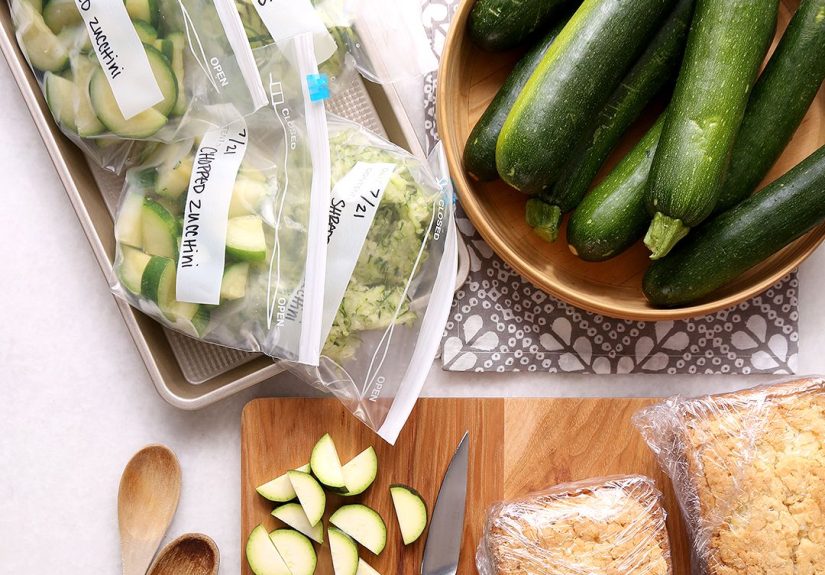
- Label like a grown-up: Date + cut style (slices, shredded, cubes) + amount.
- Keep it cold: Your freezer should stay at about 0°F for best quality.
Also, don’t freeze zucchini in a gigantic clump unless your dream is to chisel vegetables like an archaeologist.
Flat bags and portioned containers are your friends.
Method 1: Freezing Zucchini Slices or Cubes (Best for Cooking Later)
If you want zucchini for soups, casseroles, stir-fries, or pasta dishes, blanching is your best move.
Blanching briefly heats the zucchini to help preserve color and flavor and reduce quality loss in the freezer.
Step-by-step: blanch, chill, dry, freeze
- Prep: Wash zucchini, trim ends, and cut into 1/2-inch slices or cubes.
- Boil water: Use a large pot of vigorously boiling water so the temperature stays high when zucchini is added.
- Blanch: Add zucchini and blanch for about 3 minutes.
- Ice bath: Transfer immediately into a bowl of ice water to stop cooking.
- Drain well: Let it drain in a colander, then pat dry with clean towels/paper towels.
- Flash-freeze: Spread pieces in a single layer on a parchment-lined baking sheet and freeze 1–2 hours, until firm.
- Pack: Move to freezer bags or containers. Remove as much air as possible. Label and freeze.
Pro tips to avoid soggy zucchini later
- Dry it: Moisture turns into ice crystals, which turns into mush later.
- Don’t over-blanch: You want “briefly heated,” not “fully cooked.”
- Cook from frozen when possible: Toss frozen pieces straight into soups or sauces.
Method 2: Freezing Shredded Zucchini (Perfect for Baking)
Shredded zucchini is the freezer MVP if you bake. Zucchini bread, muffins, pancakes, browniesshredded zucchini
slides into all of them like it pays rent.
The biggest challenge is water. Zucchini holds a ton of it, and frozen shredded zucchini can thaw into a puddle
if you skip the draining step. The fix is easy: squeeze it out.
Step-by-step: shred and portion
- Wash and trim zucchini (peeling is optional; most people don’t).
- Shred with a box grater or food processor.
-
Remove excess moisture: Wrap shredded zucchini in cheesecloth (or a clean kitchen towel),
then wring it out over the sink until it stops dripping dramatically. -
Portion: Measure into common baking amounts (like 1 cup or 2 cups).
Put each portion into a freezer bag. - Freeze flat: Press the bag into a thin, flat “zucchini file folder” and freeze.
How much to portion? Many quick bread recipes use about 1–2 cups of shredded zucchini. Freezing
in those amounts makes baking day feel suspiciously easy.
Do you need to blanch shredded zucchini?
If you’re freezing shredded zucchini mainly for baking, many home cooks freeze it raw after squeezing.
Some food safety and extension guidance also uses a brief steam blanch for grated zucchini before freezing.
Either way, the big quality factor is draining and portioning.
Method 3: Freezing Zucchini for Soups, Sauces, and Smoothies (Grated or Puréed)
If your main goal is creamy soups or thick sauces, you can freeze zucchini in a form that’s already
“texture-proof.” Translation: it doesn’t matter if it softensbecause you’ll blend it anyway.
Option A: Freeze puréed zucchini in cubes
- Chop washed zucchini into chunks.
- Cook lightly (steam or simmer) until just tender.
- Blend until smooth (or slightly chunky, if you prefer).
- Cool completely.
- Freeze in silicone ice cube trays or muffin tins.
- Store the frozen cubes in a labeled freezer bag.
Purée cubes are fantastic for thickening soups, adding veggies to pasta sauce, and sneaking nutrition into
smoothies without turning them into salad-flavored regret.
Option B: Freeze grated zucchini as a “sauce helper”
Grated zucchini disappears into tomato sauce, chili, and stews. If you like, you can portion it in
1/2-cup or 1-cup packs. Then add it straight to simmering dishes from frozen.
Method 4: Freezing Zucchini Noodles (Yes… with a Texture Warning Label)
Can you freeze zucchini noodles? Yes. Should you expect them to behave like fresh zoodles? Absolutely not.
They’ll soften and release water when thawed.
Best use: frozen zoodles work well in soups, casseroles, or sautés where you can cook off extra moisture.
If you want the “fresh noodle vibe,” make zoodles fresh and save frozen zucchini for cooked dishes.
What Not to Do (Unless You Like Freezer Mysteries)
- Don’t freeze whole zucchini and hope for the best. It freezes unevenly and thaws into a watery, limp situation.
- Don’t skip draining shredded zucchini. Unless your recipe calls for “1 cup zucchini and 3 cups surprise liquid.”
- Don’t pack warm zucchini into the freezer. Warm food raises freezer temps and encourages ice crystals.
- Don’t repeatedly thaw and refreeze. Quality drops fast, and food safety can become a concern during warm holds.
How to Thaw Frozen Zucchini (Without Turning It Into a Sponge)
The best thaw method depends on what you’re making.
For soups, stews, and sauces
Skip thawing. Add frozen zucchini directly to hot liquids or simmering sauces. It will thaw as it cooks,
and you can reduce or blend as needed.
For baking
Thaw shredded zucchini in the fridge or at room temperature briefly, then drain/squeeze again if it’s watery.
Some recipes don’t mind a little extra moisture, but many quick breads bake up better when you control the liquid.
For sautéing
If you’re cooking slices in a pan, expect moisture. Use a hot skillet, don’t crowd the pan, and let steam escape.
If it looks watery, you’re not failingzucchini is just being zucchini.
How Long Does Frozen Zucchini Last?
Frozen foods kept consistently cold stay safe, but quality changes over time. For best flavor and texture,
aim to use frozen zucchini within about 10–12 months. Keep it well-sealed, remove air from bags,
and label everything so you’re not playing “Freezer Roulette” next spring.
Easy, Specific Ways to Use Frozen Zucchini
Here are practical, real-life ways to use itno complicated “infused zucchini foam” required.
1) Stir it into soups and stews
Add frozen slices or cubes to minestrone, chicken soup, lentil stew, or chili. If you puréed zucchini,
drop in a few cubes to thicken and add body.
2) Upgrade pasta sauce
Simmer grated zucchini into marinara. It softens, blends in, and makes the sauce taste richer and slightly sweeter.
Bonus: picky eaters tend not to notice.
3) Bake like it’s August
Use frozen shredded zucchini in zucchini bread, chocolate muffins, pancakes, waffles, or even meatballs/meatloaf
for extra moisture (the good kind).
4) Make fritters or veggie patties
Thaw shredded zucchini, squeeze it very dry, then mix with egg, flour (or breadcrumbs), seasonings, and pan-fry.
The secret is drynesssqueeze like you mean it.
5) Add to casseroles and skillet meals
Toss frozen zucchini into lasagna, baked ziti, enchilada casseroles, or one-pan sausage-and-veg dinners. Cook it hot
and let extra moisture evaporate.
FAQ: Quick Answers for Busy People With Too Much Zucchini
Do I have to blanch zucchini before freezing?
For slices/chunks, blanching helps preserve quality. For shredded zucchini (especially for baking),
many people freeze it after squeezing out moisture, though some guidance uses a brief steam blanch for grated zucchini.
Either way, drain well and pack airtight.
Can I freeze zucchini raw?
You can, but raw frozen zucchini tends to soften more and release more water when thawed. Raw freezing makes the most sense
for shredded zucchini used in baking or for zucchini you plan to blend into soups/sauces.
Why is my thawed zucchini watery?
Because zucchini is basically a water balloon with ambition. Thaw it, drain it, squeeze it, and use it in cooked dishes
where extra moisture won’t ruin the texture.
Extra : The “I Have So Much Zucchini” Experience (and What People Learn)
If you’ve ever grown zucchinior lived next to someone who doesyou’ve probably experienced The Great Zucchini Overflow.
It starts innocently: a couple of blossoms, a few baby squash, a smug little moment of “Look at me, I’m thriving.”
Then you blink. Suddenly there are three zucchini on your porch that you definitely did not buy, plus another two
on your kitchen counter that you also did not buy, plus one in your car (??) that may have just moved in.
That’s usually the moment people ask, “Can I freeze zucchini?” not as a casual question, but as a survival strategy.
The first freezer attempt often looks like this: someone chops zucchini, tosses it into a bag, and freezes it in a
heroic, no-nonsense way. A month later, they thaw it for a sauté and discover it’s… softer. Wetter. More “zucchini stew
starter” than “zucchini side dish.” This is when the second lesson happens: frozen zucchini shines most when you cook
it into something else. Soup? Great. Sauce? Amazing. Casserole? Perfect. Raw snack tray? Please don’t.
Many home cooks also learn that shredded zucchini is the easiest freezer win. It’s the difference between
“What do I do with this?” and “Oh, I can make muffins.” Once people start freezing shredded zucchini in 1-cup or 2-cup
portions, it becomes a system. A very cozy system. A “future me will love this” system. The biggest “aha” moment is the
squeeze: wringing out moisture before freezingand again after thawing if neededmakes baked goods taste better and keeps
batters from getting weirdly watery.
Another common experience is the joy of “freezer flat” storage. People discover that if you press zucchini bags into thin
sheets, they stack neatly, thaw faster, and don’t turn into icy boulders. Suddenly, the freezer looks organized, and the
brain releases a tiny burst of happiness usually reserved for matching Tupperware lids.
And then there’s the mid-winter moment: it’s dark at 5 p.m., you’re craving something warm, and you remember you froze zucchini.
You toss a handful into soup, or stir it into spaghetti sauce, or add it to a skillet dinner. It won’t taste like peak-August
zucchini sautéed with a little olive oil and saltbut it will taste like you planned ahead. Like you outsmarted the zucchini.
Like summer left you a note in the freezer saying, “Hey. I’m still here.”
If you take nothing else from the collective zucchini-freezing experience, take this: frozen zucchini is not a downgrade.
It’s a shift in purpose. Freeze it with intention (slices for soups, shredded for baking, purée for sauces),
and it becomes an ingredient you’ll actually usenot a frosty guilt project you rediscover in a year.
Conclusion
Freezing zucchini is a smart, simple way to stretch your summer harvest across the entire year. Pick tender zucchini,
choose the right method for your future recipe, manage moisture like a pro, and pack it airtight. Then enjoy the best part:
opening your freezer months later and realizing you already did the hard work.