Table of Contents >> Show >> Hide
- Are “breast cancer moles” actually a thing?
- Moles on the breast: what’s common and usually harmless
- Picture guide (descriptions): what to look for
- Risk factors: two buckets that matter
- What to do if you notice a new or changing mole on your breast
- Screening recommendations (U.S.): what most people actually need
- Frequently asked questions (because your brain will ask them anyway)
- Real-life (composite) experiences: what people notice and what happens next (about )
- Conclusion
Let’s address the phrase “breast cancer moles” the way your most honest friend would:
it’s a real search term, but it’s also a little bit of a mash-up. Breast cancer usually starts
in breast tissue (ducts or lobules). A mole is a skin growth. Different zip codes.
And yetif you’ve noticed a mole on your breast, a new dark spot near your nipple, or a “mole”
that suddenly looks suspicious, you’re not being dramatic. The skin on the breast can develop
skin cancers (like melanoma), and some breast cancers can cause skin changes that look “spotty,”
rashy, or weirdly textured. This article untangles what’s connected, what’s not, and what you
should do nextwithout yelling at you in all caps.
Are “breast cancer moles” actually a thing?
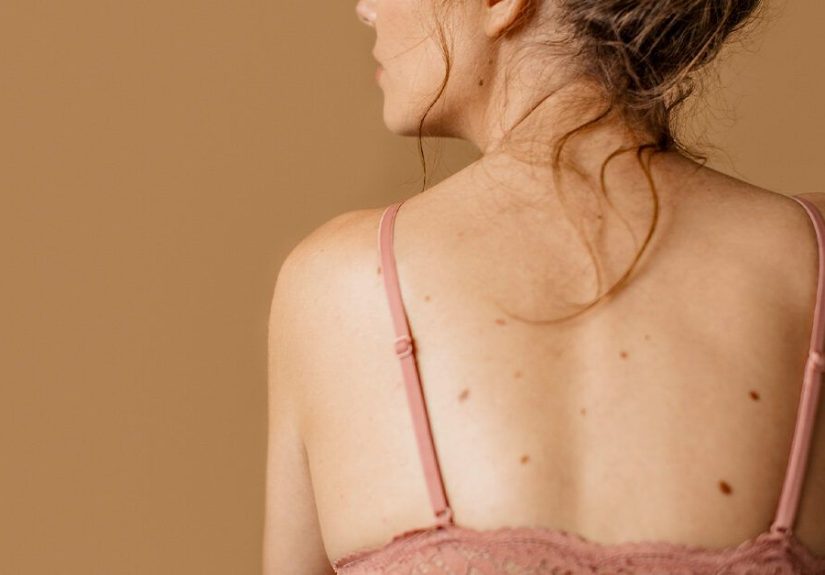
Most of the time, a mole on the breast is just… a mole. People get moles anywhere there’s skin,
including the breast, areola, and under-boob fold (the human body is nothing if not committed to
surprise locations).
The confusion usually comes from three scenarios:
-
A normal mole is mistaken for a sign of breast cancer. Understandablebecause it’s
on the breast, and “breast” + “cancer” is a stressful mental autocomplete. -
A melanoma (skin cancer) shows up on the breast. Melanoma can appear on sun-exposed
and sun-protected areas, including places that rarely see daylight. -
A breast cancer causes skin changes that can look like a rash, scab, discoloration,
or texture changesometimes near the nipple/areolaleading people to describe it as “mole-like.”
So while “breast cancer mole” isn’t a medical diagnosis, it is a useful flag that says:
“Something on the breast skin changedand I want to know if it matters.” That’s a smart instinct.
Moles on the breast: what’s common and usually harmless
A common mole (nevus) is typically a small, evenly colored spot that’s been stable
for years. It may be flat or slightly raised. It can darken a bit during pregnancy or with hormonal
shifts, and it can look different depending on your skin tone.
Other frequent “mole imposters” on the breast include:
- Freckles or sun spots (especially on the upper chest area)
- Skin tags (soft, small, sometimes in friction zones like under the breast)
- Seborrheic keratoses (“stuck-on” waxy brown patches, common with age)
- Folliculitis or ingrown hairs (tender bumps that come and go)
- Contact dermatitis (irritation from bras, detergents, fragrances, adhesives)
If a spot has been unchanged for a long time and you have no other symptoms, it’s often benign.
But “often” is not the same as “always,” so let’s talk about what deserves a closer look.
When a breast mole is more about skin cancer than breast cancer
Dermatologists love simple checklists because they workeven when your brain is spiraling at 2 a.m.
The classic tool is the ABCDE rule for melanoma warning signs:
- A Asymmetry: one half doesn’t match the other
- B Border: edges are irregular, scalloped, or poorly defined
- C Color: multiple colors or uneven coloring
- D Diameter: often larger than about 6 mm (but can be smaller)
- E Evolving: changing in size, shape, color, or symptoms (itching/bleeding)
Bonus concept: the “ugly duckling” signa spot that looks noticeably different from
the rest of your moles. Your body tends to repeat patterns; melanoma tends to freestyle.
When a “mole-like” change could reflect breast cancer-related skin findings
Some breast cancers don’t start on the skin, but they can affect it. Two examples matter here:
1) Paget disease of the breast (nipple/areola changes)
Paget disease of the breast is rare, but it’s famous for masquerading as everyday skin irritation.
It can look like eczema on the nipple and areolaredness, flaking, crusting, thickening,
and sometimes itching, burning, a flattened nipple, or yellow/bloody discharge.
If a “rash” is persistent and not improving with standard skin treatments, it deserves evaluation.
2) Inflammatory breast cancer (rapid skin and breast changes)
Inflammatory breast cancer is uncommon but aggressive, and it often doesn’t present as a single lump.
Instead, symptoms may include rapid breast swelling, red/pink/purple discoloration,
warmth, tenderness, and a pitted texture called peau d’orange
(skin that resembles an orange peel). Because it can mimic infection or irritation, speed matters.
Picture guide (descriptions): what to look for
You asked for picturesfair. I can’t embed medical image galleries here, but I can describe what
clinicians mean when they talk about “concerning” vs “reassuring” appearances. If you’re comparing your
spot to online images, try to match patterns rather than obsessing over perfect twins.
What a typical benign mole often looks like
- Round or oval
- Symmetrical
- One consistent shade (tan/brown/black depending on skin tone)
- Stable over time
- No spontaneous bleeding or crusting
What melanoma photos often show
- Asymmetry (one side “does its own thing”)
- Jagged, blurred, or notched borders
- Multiple colors (brown + black + red/white/blue tones)
- Looks different from nearby moles (“ugly duckling”)
- Evolution: new or changing spot, itching, bleeding, or oozing
What Paget disease photos often show (nipple/areola)
- Persistent redness and scaling on the nipple/areola
- Crusting or thickened skin that can resemble eczema
- Flattening or inversion of the nipple
- Possible discharge (yellowish or bloody)
What inflammatory breast cancer images often show
- Diffuse redness or “bruised” look across a large part of the breast
- Swelling and fast size change
- Warmth, heaviness, tenderness
- Pitted “orange peel” texture
- Possible swollen lymph nodes (underarm/collarbone area)
If your “mole” is actually a new scab that keeps returning, a bleeding spot,
a rash on the nipple that won’t quit, or a rapid breast skin change,
it’s worth getting checkedso you’re not stuck playing Google Image Roulette.
Risk factors: two buckets that matter
When people search “breast cancer moles,” they’re often asking about risk. The truth is you’re looking at
two related-but-different risk categories: breast cancer risk and melanoma/skin cancer risk.
Breast cancer risk factors
Breast cancer risk is influenced by a combination of factors. Some are non-modifiable, and some are lifestyle-related.
Examples commonly cited by U.S. public health and cancer organizations include:
- Age: risk rises as you get older
- Inherited genetic mutations: such as BRCA1/BRCA2
- Reproductive history: early periods, later menopause, first pregnancy after 30, not breastfeeding
- Dense breasts: can increase risk and make mammograms harder to interpret
- Personal history: prior breast cancer or certain high-risk benign findings
- Family history: especially a first-degree relative, or relatives diagnosed young
- Chest radiation at a young age (for example, some lymphoma treatments)
- Physical inactivity
- Overweight/obesity after menopause
- Alcohol use (risk increases with more drinking)
- Some hormone therapies (e.g., combined estrogen-progestin for menopause, especially longer duration)
Melanoma/skin cancer risk factors (relevant to “moles on the breast”)
A changing mole on the breast is often more in the skin-cancer lane than the breast-cancer lane. Risk factors for melanoma commonly include:
- UV exposure (sunlight, tanning beds)
- History of sunburns, especially severe blistering burns
- Many moles or atypical/dysplastic nevi
- Family history of melanoma
- Lighter skin/hair/eyes (melanoma can still occur in all skin tones)
- Weakened immune system (certain medications/conditions)
Translation: a suspicious spot on the breast may warrant a dermatologist, even if your breast cancer risk is low.
And if you have higher breast cancer risk, you may need a tailored screening planseparate from the mole question.
What to do if you notice a new or changing mole on your breast
Here’s a practical, low-drama plan that clinicians generally support:
-
Take clear photos in consistent lighting, with a ruler/coin for scale. (Yes, it feels weird.
No, it’s not weird. It’s documentation.) -
Check ABCDE + “ugly duckling.” If it’s evolving, asymmetric, multi-colored, irregularly bordered,
or just looks “off,” move to step 3. -
Book the right appointment:
- Dermatology for a changing mole/skin lesion
- Primary care or OB-GYN if you’re not sure where to start
- Breast clinic if there are breast symptoms (lump, nipple discharge, rapid swelling, peau d’orange)
-
Don’t self-treat persistent nipple/areola changes for weeks on end as “just eczema.”
If it doesn’t improve, it needs evaluation.
Red-flag symptoms that deserve prompt evaluation
- New breast or underarm lump
- Thickening/swelling of part of the breast
- Skin dimpling or “orange peel” texture
- Redness or flaky skin in the nipple area
- Nipple pulling inward or new pain in the nipple area
- Nipple discharge (especially bloody) not related to breastfeeding
- Rapid breast size change, warmth, heaviness, or tenderness
- A mole/spot that bleeds, crusts repeatedly, or changes quickly
None of these automatically equals cancer. But they’re solid reasons to let a professional do the detective work.
Screening recommendations (U.S.): what most people actually need
Screening is about finding breast cancer before symptoms appear. If you already have symptoms (like a new lump,
nipple discharge, or a rapidly changing breast), that’s typically a diagnostic work-up rather than “routine screening.”
USPSTF (average risk): the simple baseline
The U.S. Preventive Services Task Force recommends biennial (every 2 years) screening mammography starting at age 40 through age 74
for women and other people assigned female at birth at average risk. Digital mammography and 3D tomosynthesis (“3D mammograms”) are considered effective options.
Evidence is currently insufficient to recommend for or against routine screening mammograms after 74, and also insufficient for or against adding ultrasound or MRI
solely because of dense breasts.
American Cancer Society (average risk): a slightly different roadmap
The American Cancer Society says people at average risk may choose to start annual mammograms at 40–44,
should get annual mammograms at 45–54, and can switch to every other year at 55+ (or continue yearly),
continuing as long as they’re in good health and expected to live at least 10 more years.
High-risk screening: when the plan changes
If you have significantly elevated risksuch as certain genetic mutations, very strong family history, or prior high-dose chest radiationyour clinician may recommend
earlier and/or more intensive screening, sometimes including breast MRI in addition to mammography.
High-risk definitions vary, so this is one area where personalized guidance matters.
What mammograms do (and don’t) tell you about a “mole”
Mammograms look at breast tissue, not surface skin lesions. A changing mole is primarily a dermatology issue, while mammography is a breast tissue screening tool.
The overlap happens when a “skin change” is actually a sign of a breast conditionespecially near the nipple/areolaor when breast symptoms and skin symptoms occur together.
Tips to make mammograms less awful
- Try not to schedule during the week before or during your period if your breasts get tender.
- Skip deodorant, powder, and perfume on the day of the exam (they can show up on imaging).
- Bring prior mammogram records if you’re switching facilitiescomparison improves interpretation.
Frequently asked questions (because your brain will ask them anyway)
Can breast cancer look like a mole?
Breast cancer typically doesn’t form a classic “mole.” But some breast cancers can cause skin changes that people describe as a spot, scab, rash, or discoloration
especially Paget disease (nipple/areola) and inflammatory breast cancer (diffuse redness/swelling/texture change). A clinician can tell the difference with an exam
and the right tests.
Is a mole on the nipple always scary?
Not always. Benign pigmented lesions can occur there. But the nipple/areola is also where Paget disease shows up, and persistent crusting, scaling, discharge, or
non-healing changes should be evaluated rather than self-treated indefinitely.
What if it itches?
Itching can be irritation, allergy, dryness, eczema, or frictionespecially in sweaty or tight-clothing areas. But if itching is paired with persistent nipple/areola
scaling, crusting, discharge, or a rash that doesn’t improve, it’s worth checking for less common causes.
Do I need a dermatologist or a breast doctor?
If it looks like a changing mole or suspicious skin lesion: dermatologist. If you have breast symptoms like a new lump, nipple discharge, rapid swelling,
or orange-peel texture: breast-focused clinician (OB-GYN, primary care, breast clinic). If you have both? Start anywherejust start.
Real-life (composite) experiences: what people notice and what happens next (about )
The following are composite scenariosblended from common patterns clinicians and patients describemeant to help you recognize “this feels familiar”
moments. They aren’t medical diagnoses, and they’re not meant to replace an exam.
Experience #1: “It was just a mole… until it wasn’t”
Jordan had a small brown mole under the breast that had been there for years. It was basically a background character in the story of lifeuntil one day it started
catching on a bra seam. Over a couple of months, it looked darker in the center and the edge got fuzzy. The change was subtle enough that friends said,
“It looks fine,” which is the unofficial motto of delaying healthcare. Jordan finally took a photo and compared it to an older pictureboom: evolution.
Dermatology did a quick exam with a dermatoscope and recommended a biopsy. The outcome wasn’t a breast cancer diagnosis at all; it was a skin lesion that needed
treatment. The big win wasn’t the specific resultit was catching a changing spot before it could become a bigger problem.
Experience #2: The “eczema” that wouldn’t quit
Sam noticed dry, flaky skin on one nipple and assumed it was irritation from a new detergent. Moisturizer helped for a day, then the scaling came back.
Over the next few weeks, it became crusty and occasionally itchy. It wasn’t dramaticno movie-style symptomsjust persistently annoying. After trying a couple of
over-the-counter creams with minimal improvement, Sam mentioned it at a routine visit. The clinician’s reaction wasn’t panic, but it was specific:
“Because it’s on the nipple and it’s persistent, we should evaluate.” The next steps were straightforwardexam, imaging, and a targeted test of the skin.
Whether it turns out to be a benign dermatitis or something rarer, the lesson is the same: when a nipple-area rash persists, it deserves a real look.
Experience #3: “My breast looked bruised, and then it changed fast”
Alexis woke up with what looked like a bruise across one breast and assumed it was from the gym or sleeping oddly. But over the next week, the breast felt warmer and
heavier, and the skin texture looked a little pittedlike tiny dimples. There wasn’t a clear lump, which made it tempting to ignore. A friend suggested mastitis, even
though Alexis wasn’t breastfeeding. At urgent care, the clinician took the “rapid change” seriously and arranged prompt follow-up. The key detail here is speed:
fast swelling, redness, warmth, and texture change shouldn’t be written off as “probably nothing,” especially if it’s getting worse.
Experience #4: Screening clarity = less spiraling
Taylor had a family history of breast cancer and also had a few odd-looking moles. They worried constantly, but they worried vaguelywhich is the most exhausting kind
of worry. After a risk discussion with a clinician, Taylor left with two separate plans: a breast screening schedule based on age/risk, and a dermatology skin-check plan
focused on moles (including photos for monitoring). The anxiety didn’t vanish, but it became organized. And organized anxiety is basically anxiety that pays rent.
If these stories feel familiar, the takeaway is simple: you don’t need certainty to take action. You need a change worth checking. That’s enough.