Table of Contents >> Show >> Hide
- Why Proper Pruning Matters for a Healthy Garden
- Mistake #1: Pruning at the Wrong Time (Especially Before Bloom)
- Mistake #2: Making Bad Cuts (Flush Cuts, Stubs, or Random Snips)
- Mistake #3: Over-Pruning (Taking Off Too Much at Once)
- Mistake #4: Topping Trees or Shearing Everything Into Submission
- Mistake #5: Using Dirty, Dull, or Wrong Tools
- How to Prune Smarter: A Simple 7-Step Routine
- Final Takeaway
- Experience-Based Notes From Real Garden Scenarios (Bonus 500+ Words)
If your garden plants could text you, pruning season would trigger messages like: “Please don’t freestyle this.” Pruning is one of the best things you can do for trees, shrubs, and many perennialsbut it’s also one of the easiest ways to accidentally reduce blooms, stress plants, spread disease, or create long-term structural problems.
The good news? Most pruning disasters come from a handful of common mistakes. Fix those, and your garden usually looks better, flowers better, and stays healthier with less effort. In this guide, we’ll break down the five pruning mistakes gardeners should avoid, what to do instead, and how to make cleaner cuts with better timing. Think of this as your “save the hydrangea before the panic spiral” handbook.
Why Proper Pruning Matters for a Healthy Garden
Pruning is not just cosmetic. Done correctly, it helps improve airflow, removes damaged or diseased wood, supports stronger structure, and directs growth where you actually want it. It can also improve flowering and fruiting, keep shrubs from becoming woody and sparse, and reduce future maintenance.
Done poorly, pruning can do the opposite: fewer flowers, weak regrowth, bark tears, bigger wounds, and stressed plants that need extra time to recover. In other words, pruning is powerfulwhich is exactly why technique matters.
Mistake #1: Pruning at the Wrong Time (Especially Before Bloom)
This is the classic gardening heartbreak: you prune a shrub because it looks “messy,” then spend spring staring at exactly zero flowers and wondering what went wrong. The answer is usually timing.
Why it hurts your garden
Many flowering shrubs set their flower buds well before the next blooming season. If you prune at the wrong time, you may remove the buds before they ever open. That means fewer blooms, or no blooms at all, even if the plant is otherwise healthy.
Timing mistakes also matter for winter survival. Late-summer pruning can trigger tender new growth that may not harden off before cold weather arrives, leaving plants vulnerable to dieback.
What to do instead
- Spring-blooming shrubs (like forsythia, lilac, and many viburnums): prune right after flowering.
- Summer-blooming shrubs (like butterfly bush or Rose-of-Sharon): often do best with pruning in late winter or early spring.
- Exceptions exist: some hydrangeas and gardenias don’t follow simple “spring vs. summer” rules, so always check the specific plant variety before cutting.
Pro tip: If you don’t know what plant you have, don’t start with dramatic cuts. Start with dead, damaged, or rubbing branches only, then identify the plant and its bloom habit.
Mistake #2: Making Bad Cuts (Flush Cuts, Stubs, or Random Snips)
Plants are not impressed by confidence. You can prune with incredible enthusiasm and still make cuts that set a tree or shrub back for years. One of the biggest technical mistakes is cutting in the wrong place.
Why it hurts your garden
Two especially common problems are:
- Flush cuts: cutting too close to the trunk and removing the branch collar (the slightly swollen area at the base of a branch).
- Stub cuts: leaving too much branch behind, which can die back and become an entry point for pests or decay.
When you remove the branch collar, you remove tissue that helps the plant seal off the wound naturally. When you leave a stub, the plant struggles to close the wound efficiently. Either way, recovery is slower and risk goes up.
What to do instead
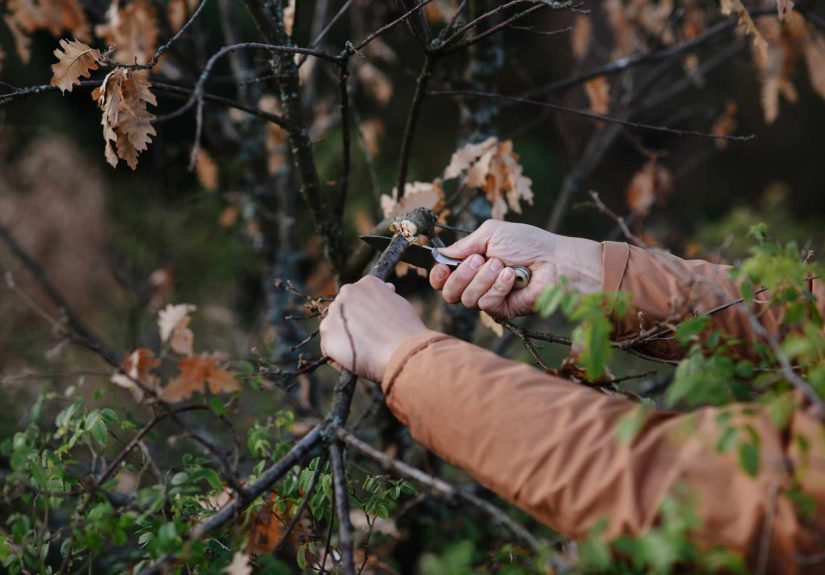
- For branch removal, cut just outside the branch collar, not flush with the trunk.
- When shortening a branch, cut back to a healthy side branch or an outward-facing bud.
- Use the three-cut method for larger branches so the bark doesn’t tear under the branch’s weight.
The three-cut method sounds fancy, but it’s just smart: an undercut first, a second cut farther out to remove weight, and a final cut near the collar. That sequence prevents ugly bark ripping and a much bigger wound than you intended.
Quick example
If you’re removing a thick branch from a small ornamental tree and make one long cut from the top, the branch can split before the cut finishes and rip bark down the trunk. That damage is harder for the tree to manage than the original pruning wound. The three-cut method avoids that “I regret everything” moment.
Mistake #3: Over-Pruning (Taking Off Too Much at Once)
There’s a fine line between “tidying up” and “accidentally re-enacting a plant survival movie.” Over-pruning is one of the most common mistakes home gardeners makeespecially when a shrub is overgrown and they want a fast reset.
Why it hurts your garden
Removing too much foliage at once reduces the plant’s ability to photosynthesize and can trigger stress responses, including weak, fast regrowth. Ironically, heavy pruning is often done to control size, but it can cause the plant to respond with a flush of vigorous shootsmaking the problem worse later.
Over-pruning can also weaken flowering performance and reduce the plant’s natural shape, especially on younger, vigorous shrubs.
What to do instead
- Follow the one-third rule as a general guide: avoid removing more than about one-third of a plant in a year (unless you are performing species-appropriate renovation pruning).
- Prioritize cuts in this order:
- Dead, diseased, or damaged wood
- Rubbing/crossing branches
- Weak, crowded, or poorly placed growth
- Light shaping
- If a shrub is seriously overgrown, rejuvenate it in phases over multiple seasons unless the plant is known to tolerate hard renovation pruning.
Garden reality check: Plants don’t care that you want “instant neat.” They care about energy balance. Slow and strategic pruning almost always beats one dramatic haircut.
Mistake #4: Topping Trees or Shearing Everything Into Submission
Somewhere, a tree is being topped right now and a certified arborist just got a headache. Topping and indiscriminate shearing are popular because they’re fastbut “fast” is not the same thing as “good.”
Why it hurts your garden
Topping trees (cutting back major branches or the upper crown to stubs) can lead to weakly attached sprouts, increased decay risk, poor structure, and a tree that becomes more hazardous over timenot less.
Over-shearing shrubs (especially flowering shrubs) can reduce blooms, create a dense outer shell that shades the interior, and leave you with a woody, bare center. It may look tidy for a week, then slowly turn into a green helmet with trust issues.
Even hedges can be damaged if shaped incorrectly. A wide top and narrow bottom blocks sunlight from the lower branches, which leads to thinning and bare growth near the base.
What to do instead
- Use selective pruning (removal and reduction cuts) rather than topping.
- If a tree is too large for the space, consult a qualified arborist about proper reduction, structural pruning, or replacement with a better-sized species.
- For hedges, maintain a shape that is wider at the base and narrower at the top so light reaches lower growth.
- For flowering shrubs, prune for natural form instead of forcing constant geometric shearing.
A better mindset
Pruning should reveal a plant’s structurenot erase it. A healthy garden usually looks more natural than “perfectly shaved.” If you can tell a shrub was heavily pruned from across the yard, it’s worth asking whether the cuts served the plant or just the calendar.
Mistake #5: Using Dirty, Dull, or Wrong Tools
Pruning with dirty tools is like doing surgery with a muddy butter knife: technically possible, deeply unwise. Tool hygiene and tool choice are often overlooked, but they matter a lot for plant health.
Why it hurts your garden
Pruning tools can spread fungal, bacterial, and viral pathogens from plant to plantespecially when cutting diseased material. Dull blades also crush stems instead of making clean cuts, leaving ragged wounds that take longer to close.
And then there’s the “wrong tool for the job” problem. Using hand pruners on wood that’s too thick can twist and tear tissue. Using hedge shears for selective shrub pruning often leads to poor cut placement and a lot of unnecessary snipping.
What to do instead
- Use clean, sharp tools matched to the branch size:
- Hand pruners for small stems
- Loppers for medium branches
- Pruning saw for thicker wood
- Disinfect tools when moving between diseased plants (and sometimes between cuts on the same plant, depending on the disease risk).
- For home gardeners, 70% isopropyl alcohol is often an easy and effective choice for quick disinfection.
- If using a bleach solution, rinse afterward because bleach can corrode metal.
Bonus mistake to avoid: painting pruning wounds with “tree wound dressing” in routine situations. Modern guidance generally recommends skipping it because it does not prevent decay and may interfere with natural wound responses. (If you have disease-specific concerns, follow local extension guidance.)
How to Prune Smarter: A Simple 7-Step Routine
If you want a healthy garden and fewer pruning regrets, use this short routine before every pruning session:
- Identify the plant (or at least whether it blooms on old wood or new wood).
- Check the season and bloom timing before major cuts.
- Start with dead, damaged, and diseased wood.
- Remove rubbing and crossing branches next.
- Make clean cuts in the right place (no flush cuts, no stubs).
- Don’t overdo itstep back often and assess.
- Clean and store tools so they’re ready for the next round.
This routine takes a few extra minutes, but it saves seasons of disappointment. Also, it dramatically reduces the odds of you googling “why didn’t my hydrangea bloom” at 11:47 p.m.
Final Takeaway
The best pruning strategy is not “cut more.” It’s “cut smarter.” Avoid bad timing, bad cuts, over-pruning, topping/shearing abuse, and dirty tools, and your garden will reward you with stronger growth, healthier structure, and better blooms. Pruning is one of those skills where small improvements create big results. You do not need to prune like a professional arboristyou just need to stop making the mistakes that plants remember.
When in doubt, go slow, research the specific plant, and make fewer cuts. Your garden will thank you by not looking offended all season.
Experience-Based Notes From Real Garden Scenarios (Bonus 500+ Words)
Below are practical, experience-style scenarios based on common home-garden situations. They’re included to help you recognize what pruning mistakes look like in real lifenot just in theory.
Scenario 1: The “Why didn’t it bloom?” spring surprise. A gardener trims a forsythia in late winter because it looks overgrown and uneven. The cuts feel productive, the shrub looks neat, and everyone moves on. Spring arrives… and the plant produces only a few flowers near the top. What happened? The plant had already set flower buds on older wood, and most of those buds were removed during the cleanup. The shrub wasn’t sick; it was simply pruned at the wrong time. The fix next year is easy: wait until just after flowering, then thin out older stems and shape lightly.
Scenario 2: The “I made one cut and the bark ripped” moment. This happens all the time on backyard trees. A branch looks manageable, so someone starts a top-down cut near the trunk. Halfway through, gravity takes over, the branch snaps, and the falling weight strips bark down the trunk. Suddenly a simple prune turns into a large wound. After learning the three-cut method, gardeners usually never go back. The first undercut and second relief cut take a little more time, but they prevent the damage that causes the real headaches later.
Scenario 3: The overgrown shrub panic haircut. A foundation shrub blocks a window, and the homeowner decides to “just cut it way back.” In a single afternoon, more than half the canopy is removed. For a few weeks, the shrub looks controlled. Then it explodes with fast, upright shoots that are even less attractive and harder to manage. This is a classic over-pruning response. A better long-term solution is staged pruning over two or three seasons, removing selected stems at the base and gradually restoring size and shape.
Scenario 4: The hedge that went bald at the bottom. Many gardeners shape hedges into a neat rectangle or even a top-heavy shape because it looks crisp immediately after trimming. By the next season, the lower branches thin out and the base looks woody and sparse. The issue is light distribution. When the top is wider than the base, it shades the lower growth. Reshaping the hedge so it is slightly narrower at the top and wider at the bottom often improves fullness over time.
Scenario 5: The mystery spread from plant to plant. A gardener prunes a rose with a suspicious cane, then moves to a nearby shrub, then a small fruit treeall with the same pruners, no cleaning in between. Weeks later, several plants show problems. While not every issue is caused by tools, contaminated blades can spread disease. Gardeners who start wiping or dipping pruners in 70% isopropyl alcohol during risky pruning jobs often report cleaner cuts, better habits, and more confidence overall.
The big lesson from all these experiences is simple: most pruning mistakes come from rushing. When gardeners slow down, identify the plant, and make each cut for a reason, results improve dramatically. Healthier shrubs, stronger trees, better flowering, less regrowth chaos, and fewer “I probably shouldn’t have done that” moments. That’s the kind of pruning progress any garden can use.