Table of Contents >> Show >> Hide
- Who Is Richard Miers?
- Bloom Time: The Secret Ingredient in a Garden That Feels Alive
- The Richard Miers Method: Structure First, Romance Second
- Lessons from The Perennial Garden “With Love”
- How to Design Bloom Time in an American Garden
- Planting Examples Inspired by Richard Miers
- Common Bloom-Time Mistakes to Avoid
- Why Richard Miers’ Style Feels So Timeless
- Experience Notes: What Bloom Time Teaches You in Real Life
- Conclusion: Bloom Time Is Design, Not Decoration
Bloom time is the garden’s version of good timing at a dinner party: arrive too early and nobody notices, arrive too late and the dessert is gone. UK garden designer Richard Miers understands this better than most. His work is known for classical structure, elegant proportion, soft planting, and that wonderfully British ability to make a garden look composed without looking like it has been shouted into submission.
For American gardeners who admire English garden design, Miers offers a useful lesson: flowers are not just decoration. They are pacing, rhythm, emotion, and seasonal drama. A border is not merely “pretty plants in a row.” It is a calendar with roots. A terrace is not just a place to put chairs. It is a stage where scent, shade, foliage, and flowers take turns being the star.
This article explores bloom time through the lens of Richard Miers’ garden design philosophy: plan the structure first, establish a disciplined color palette, then layer plants so the garden changes gracefully through the seasons. The result is a landscape that does not peak for one glorious weekend and then sulk for the rest of the year like a diva in gardening gloves.
Who Is Richard Miers?
Richard Miers is a London-based garden designer with nearly 30 years of experience designing and overseeing gardens in the UK and abroad. His portfolio includes town gardens, roof terraces, country landscapes, and international projects, from London courtyards to larger estates. He is particularly associated with bespoke, timeless gardens that blend formal structure with relaxed planting.
Many American readers discovered Miers through Gardenista and the Remodelista design world, where his gardens have been admired for their order, romance, and livable elegance. His approach is not about chasing trends. It is about making outdoor spaces feel deeply connected to the house, the site, and the people who will actually use them. In other words, no garden should look as though it was delivered by helicopter and dropped onto the lawn.
His public profile rose further with The Perennial Garden “With Love” at the RHS Chelsea Flower Show in 2022. Created with the horticultural charity Perennial, the garden appeared on Chelsea’s Main Avenue and won the RHS People’s Choice Award. It was compact in size but rich in meaning, using geometry, a central rill, formal axes, soft planting, and a sense of affection for the people who work in horticulture.
Bloom Time: The Secret Ingredient in a Garden That Feels Alive
Bloom time refers to when plants flower, how long they flower, and how their display overlaps with neighboring plants. It sounds simple until you realize that every garden bed is basically a botanical orchestra, and half the violins only play in May.
A well-designed garden does not depend on one dramatic burst. Instead, it moves from early spring bulbs and fresh foliage to summer perennials, late-season seed heads, autumn color, and winter structure. In this sense, bloom time is not only about flowers. It is about continuity. It asks: what is happening in March, June, September, and January?
Richard Miers’ work shows why structure matters so much. If the bones of the garden are strongpaths, hedges, walls, trees, terraces, clipped forms, water features, and sightlinesthe garden can remain handsome even when the flowers are between acts. Bloom time then becomes a performance layered over a reliable architectural framework.
The Richard Miers Method: Structure First, Romance Second
One of the most useful lessons from Miers is that planting should not begin with a shopping cart full of flowers. Tempting? Absolutely. Dangerous? Also yes. That is how people end up with seven purple salvias, one lonely peony, a mystery grass, and a backyard that looks like a plant sale had a small emotional breakdown.
Miers’ process has often been described as methodical. First comes the plan or structure of the garden. Then comes the color palette. Finally comes the planting strategy, developed with imagination but also discipline. This sequence is important because it prevents the garden from becoming a collection of unrelated pretty things.
1. Begin with the Garden’s Bones
Before choosing flowers, define the garden’s shape. Consider paths, terraces, seating areas, hedges, vertical screens, water, and focal points. In Miers’ gardens, geometry often provides calm. Straight lines, axes, clipped hedges, and framed views make the space feel intentional.
American gardeners can borrow this idea in any size yard. A suburban backyard may not need a grand allée, but it can benefit from a clear path, a defined dining terrace, a pair of symmetrical planters, or a hedge that quietly says, “Yes, an adult lives here.”
2. Choose a Color Palette Before Buying Plants
Color discipline is one reason English-inspired gardens feel sophisticated rather than chaotic. Miers often works with restrained palettes that allow texture, form, and contrast to shine. A soft scheme of green, white, lavender, blue, and pale pink can feel elegant and restful. A warmer palette of apricot, burgundy, cream, and bronze can feel richer and more dramatic.
The key is not to ban color. The key is to give color a job. Too many unrelated flower colors blooming at once can make a border look busy. A tighter palette lets the eye relax and appreciate the movement of grasses, the roundness of clipped shrubs, the haze of nepeta, or the candle-like spikes of salvia.
3. Layer Bloom Times Like Chapters
Once the structure and palette are set, bloom time becomes storytelling. Early spring might bring hellebores, bulbs, primroses, and emerging foliage. Late spring can shift into peonies, iris, alliums, and catmint. Summer may rely on roses, salvias, phlox, coneflowers, lavender, and ornamental grasses. Autumn can close the show with asters, anemones, sedum, seed heads, and burnished foliage.
The aim is not to have everything bloom at once. That is a fireworks show, not a garden. The aim is succession: one plant bows out while another steps forward.
Lessons from The Perennial Garden “With Love”
The Perennial Garden “With Love” captured many of Richard Miers’ design signatures. Though the Chelsea Flower Show plot was limited in size, the garden used strong geometry, classical references, a central water rill, and soft planting to create emotional depth. It showed that a small space can feel generous when the layout is clear and the planting is layered.
For home gardeners, the takeaway is not to copy Chelsea literally. Most of us do not have show-garden budgets, stone masons on speed dial, or a team of horticultural wizards hiding behind the shed. The lesson is to use contrast: hard with soft, formal with loose, evergreen with ephemeral, architecture with bloom.
A clipped hedge beside airy perennials. A straight path softened by billowing nepeta. A water bowl surrounded by lavender. A formal terrace edged with relaxed grasses. These combinations give a garden tension, and tension is what keeps design interesting.
How to Design Bloom Time in an American Garden
While Miers works in a British design tradition, his bloom-time principles translate beautifully to American yards. The plants may change depending on region, but the strategy remains the same: build structure, stagger flowers, repeat key plants, and choose varieties suited to your climate.
Spring: Start with Promise
Spring is the season of optimism. It is also the season when gardeners briefly believe they have everything under control. For early bloom, consider bulbs such as daffodils, tulips, crocuses, and alliums, combined with perennials like hellebores, bleeding heart, brunnera, columbine, creeping phlox, and dianthus.
In a Miers-inspired garden, spring should not feel random. Repeat bulbs in drifts rather than dotting them around like confetti. Use evergreen shrubs, boxwood alternatives, yew, holly, or structural grasses to keep the scene grounded while the flowers do their cheerful little trumpet solo.
Late Spring to Early Summer: Build the Romance
This is the season of peonies, iris, salvia, catmint, lady’s mantle, roses, and alliums. It is also the moment when a garden can become almost embarrassingly charming. To avoid chaos, repeat two or three anchor plants through the border.
For example, pair purple salvia with pale peonies and the soft gray-green froth of catmint. Add ornamental onions for round flower heads that echo clipped shrubs or spherical planters. The repetition gives rhythm, while the varied bloom shapes keep the design lively.
Summer: Keep the Garden from Falling Flat
Summer gardens need stamina. Many perennials bloom briefly, so choose long-blooming plants and foliage performers to carry the design. Coneflower, black-eyed Susan, bee balm, garden phlox, lavender, Russian sage, coreopsis, daylilies, gaillardia, and agastache can all contribute dependable color in sunny borders.
This is where bloom time becomes practical. If your garden looks glorious in May and exhausted by July, add summer workers. Think of them as the reliable friends who stay after the party to help stack chairs.
Late Summer and Fall: Plan the Encore
Fall should not be an afterthought. Asters, Japanese anemones, sedum, Joe Pye weed, helenium, ornamental grasses, chrysanthemums, and late coneflowers can extend the season beautifully. Seed heads are valuable too, especially when backlit by low autumn sun.
A Miers-inspired fall garden would not rely only on bright flower color. It would also use shape: domes, plumes, vertical stems, clipped hedges, and reflective water. The garden should age gracefully, not simply fade away with a dramatic sigh.
Planting Examples Inspired by Richard Miers
Here is a simple English-inspired planting idea for a sunny American border. Use a backbone of evergreen shrubs or clipped forms. Add three repeating perennials for long bloom: catmint, salvia, and coneflower. Include seasonal highlights such as peonies for late spring, lavender for summer fragrance, and asters or sedum for fall. Finish with ornamental grasses for movement.
For a softer shade garden, use hydrangea, boxwood alternatives, hellebores, astilbe, brunnera, ferns, hosta, and Japanese anemone. The bloom palette can stay restrainedwhite, pale pink, soft blue, and greenwhile texture does the heavy lifting.
For a courtyard or townhouse garden, borrow Miers’ interest in privacy and enclosure. Use trellis panels, pleached trees, tall planters, or layered shrubs to screen neighboring views. Add a small water feature for sound. Then plant in a limited palette so the small space feels serene rather than stuffed.
Common Bloom-Time Mistakes to Avoid
Planting Only for Peak Spring
Spring is seductive, but do not spend the entire budget on April and May. A garden needs summer and fall performers, too. Otherwise, you will have a magnificent spring display followed by three months of mulch appreciation.
Ignoring Foliage
Flowers are temporary; foliage is the daily wardrobe. Use leaf color, shape, and texture to keep the garden attractive between bloom cycles. Silver foliage, glossy leaves, fine grasses, and bold hosta-like forms can provide contrast even when nothing is flowering.
Using Too Many One-Off Plants
A single plant can be beautiful, but too many singletons make a garden feel spotty. Repeat important plants in groups or rhythms. Richard Miers has noted that designers need not be trapped by rigid odd-number planting rules; the point is to use the number that suits the space. Still, repetition matters. It creates calm.
Forgetting Maintenance
Bloom time improves when gardeners deadhead, divide overcrowded perennials, water new plantings, and edit plants that are not performing. Even a naturalistic garden benefits from a firm hand. Nature is wonderful, but she does not always care about your sightline from the kitchen window.
Why Richard Miers’ Style Feels So Timeless
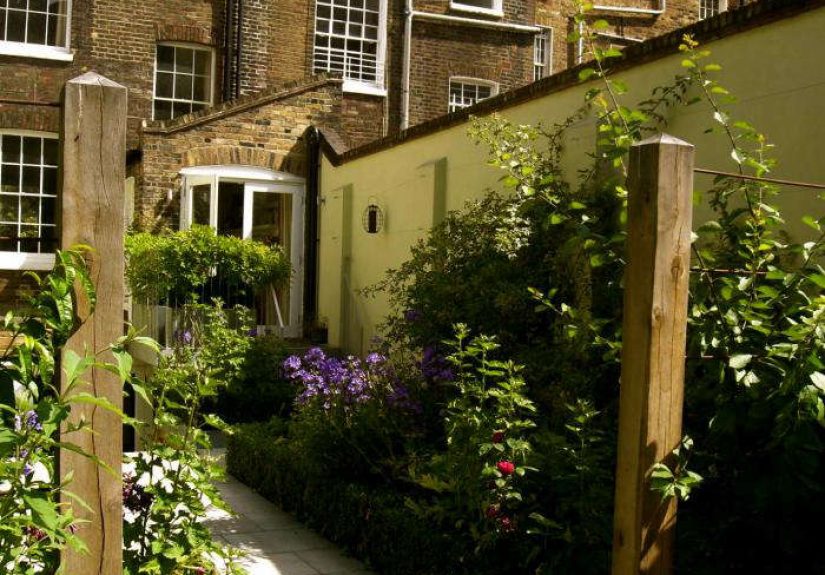
Richard Miers’ gardens feel timeless because they respect both architecture and emotion. They are not wild for the sake of wildness or formal for the sake of formality. They balance control and generosity. A path may be crisp, but the planting can spill. A hedge may be clipped, but roses, grasses, or perennials soften the edge.
This balance is especially useful today, when many homeowners want gardens that look beautiful, support wildlife, and feel usable. The answer is not necessarily to abandon design. It is to design better: more layered, more seasonal, more plant-rich, and more thoughtful about bloom time.
Experience Notes: What Bloom Time Teaches You in Real Life
The first thing bloom time teaches is humility. Every gardener begins with a fantasy: the border will flower continuously, the colors will harmonize, the bees will arrive on schedule, and the whole thing will look like a magazine spread photographed during golden hour. Then reality appears wearing muddy boots. The tulips bloom early. The peony opens during a thunderstorm. The salvia flops because someone, possibly you, believed the plant tag more than the weather forecast.
But that is exactly why bloom time is so satisfying. It turns gardening into observation. You begin to notice small changes: the first tight bud on a rose, the way catmint rebounds after a haircut, the moment ornamental grasses start catching light, the week when the garden shifts from fresh spring greens to deeper summer tones. These details make the garden feel personal.
A Richard Miers-inspired approach helps because it gives you a framework. If the structure is strong, small failures do not ruin the whole picture. A late frost may damage one plant, but the hedge still holds the space. A perennial may underperform, but the path, pots, trees, and repeated foliage keep the garden composed. Structure is the gardener’s insurance policy, minus the paperwork and hold music.
Another real-world lesson is that restraint feels better than excess. At the nursery, every plant looks irresistible. At home, too many unrelated plants can feel noisy. A limited palette makes maintenance easier and design stronger. You can repeat favorite plants, learn their habits, and understand when they need cutting back, dividing, or replacing. The garden becomes a relationship instead of a shopping habit.
Bloom time also changes how you use the garden. You may place a bench where early morning light hits the spring bulbs, or put a dining table near lavender and roses for summer evenings. You may add fall asters near a window because October deserves a little applause. When bloom time is planned well, the garden invites you outside again and againnot just during one perfect week, but throughout the year.
Perhaps the best experience is learning that a garden does not need to be finished to be beautiful. In fact, it never is finished. Plants mature, tastes evolve, shade increases, weather misbehaves, and gardeners learn. The goal is not perfection. The goal is rhythm: a garden that wakes, blooms, rests, surprises, and returns.
Conclusion: Bloom Time Is Design, Not Decoration
Bloom Time with UK Garden Designer Richard Miers is more than a pretty phrase. It is a design philosophy. Miers’ gardens remind us that flowers work best when supported by structure, guided by a palette, and arranged with seasonal intelligence. The result is not a garden that screams for attention, but one that reveals itself gradually.
For American gardeners, the lesson is wonderfully practical: do not start with flowers alone. Start with the shape of the space. Decide how you want the garden to feel. Choose a palette. Then layer bloom times so spring, summer, fall, and even winter have something to contribute.
That is the real magic of English-inspired garden design. It is not about copying a country manor or pretending your patio is in the Cotswolds. It is about creating a living composition that feels ordered, generous, and quietly romantic. Add the right plants at the right time, and your garden will not just bloom. It will keep a very elegant appointment with the seasons.