Table of Contents >> Show >> Hide
- Why 2025 Design Trends Hit Different
- 1. Color Finally Stopped Playing It Safe
- 2. Curves Softened Everything in the Best Way
- 3. Vintage Character Came Roaring Back
- 4. Pattern Was Back, and It Wasn’t Being Subtle About It
- 5. Materials Needed to Feel Real, Rich, and a Little Storied
- 6. Homes Started Working Harder Without Feeling Harder
- 7. Lighting Became the Jewelry of the Room
- What’s Actually Worth Borrowing From These Trends
- Design Experiences That Made These 2025 Trends Feel So Memorable
- Conclusion
- SEO Tags
By the end of 2025, one thing was obvious: the era of homes trying not to make eye contact with you was officially over. The all-gray, ultra-safe, “please don’t wrinkle the throw pillow” look started losing ground to rooms with warmth, personality, texture, and just enough drama to make a boring wall nervous. Across design coverage all year long, the same ideas kept bubbling up: richer colors, curved forms, patterned surfaces, vintage nods, expressive materials, and spaces designed to feel lived in rather than staged for a robot open house.
That’s why the design trends editors kept returning to weren’t just pretty. They were practical, emotional, and a little rebellious in the most charming way. They invited homeowners to stop decorating like resale was tomorrow and start decorating like they actually live there. Revolutionary, I know.
So if you’ve been wondering which 2025 design trends were worth loving, keeping, borrowing, or shamelessly stealing for your own home, here’s a closer look at the looks that truly mattered.
Why 2025 Design Trends Hit Different
The most interesting thing about 2025 wasn’t any single color, finish, or sofa shape. It was the mood behind them. Home design started leaning harder into comfort, individuality, and character. Instead of polished perfection, people wanted rooms with a pulse. Instead of cool minimalism, they wanted warmth. Instead of “neutral enough for everyone,” they wanted choices that felt specific, collected, and personal.
That shift explains why so many trends from 2025 seem connected. Moody earth tones made rooms feel grounded. Curves softened harsh lines. Unvarnished brass, oak cabinetry, and vintage-inspired details brought patina and history back into the conversation. Patterned wallpaper, striped fabrics, gingham accents, and bold tile layouts added movement and joy. Even ceilings got promoted from forgotten overhead drywall to full-on design feature status. About time. The fifth wall has been underperforming for years.
1. Color Finally Stopped Playing It Safe
If 2025 had a color story, it was less “whispering beige” and more “confident but civilized.” Designers and editors kept gravitating toward moody earth tones, deep greens, burgundy, chocolate, ochre, terracotta, and other warm shades that feel rich without becoming cartoonish. These colors worked because they added depth while still feeling cozy and livable.
And then there was color drenching, the trend that basically said, “Why stop at the walls when you can commit?” Instead of painting one accent wall and calling it a day, homeowners leaned into a full-room wash of color across walls, trim, molding, and even ceilings. The result was cocooning, immersive, and way more sophisticated than the old “feature wall and panic” method.
What made this trend especially useful was its flexibility. You could go dramatic with a deep eggplant, forest green, or navy, or keep it gentle with a muddy rose, mushroom brown, or warm taupe. Either way, the room felt intentional. Some designers even pushed the idea further with tonal variations on ceilings, a move often called color capping, which adds dimension without breaking the mood.
Another reason editors loved the return of strong color is simple: it made homes memorable. When cabinetry, upholstery, walls, and accessories all started trading cool gray for richer hues, rooms felt more welcoming and less generic. In 2025, color wasn’t just decoration. It was personality with excellent lighting.
2. Curves Softened Everything in the Best Way
One of the most repeated design themes from 2025 was the move away from sharp angles and toward softer silhouettes. Arched doorways, rounded furniture, curved countertops, puffball seating, and sculptural forms kept showing up across trend forecasts and editor picks. Turns out people got tired of rooms looking like they were designed by a protractor with trust issues.
Curves worked because they brought ease into a space. A rounded-back chair, a softly arched mirror, or a pillowy sofa can instantly make a room feel more relaxed. In open spaces, curved furniture also helped create flow and focal points without adding visual heaviness.
What’s especially appealing about this trend is that it isn’t limited to one style. Curves can feel vintage, modern, transitional, romantic, or even minimalist, depending on the materials around them. A curved oak chair reads differently from a velvet boucle sofa, but both tap into the same desire for softness and comfort.
In practical terms, this is one of the easiest 2025 trends to try. You don’t need to rebuild an archway or order a museum-worthy sofa. A rounded lamp base, a scalloped bowl used sparingly, a circular ottoman, or an arched cabinet can start the conversation without hijacking the whole room.
3. Vintage Character Came Roaring Back
Another reason 2025 design felt fresh is that it stopped pretending new automatically means better. Editors repeatedly embraced spaces that felt collected, layered, and a little nostalgic. Not dusty. Not theme-y. Just human.
That’s where the comeback of ’90s touches, Art Deco references, vintage furnishings, and older-style craftsmanship came in. Patterned wallpaper borders, gingham prints, oak cabinetry, brass hardware, antique-inspired lighting, and decorative trim suddenly looked relevant again. And honestly, it was about time oak got a better publicist.
The secret to making nostalgic design work in 2025 was restraint. The goal wasn’t to recreate Grandma’s house exactly as-is, unless Grandma happened to be an extremely chic maximalist with a gift for editing. It was to borrow the warmth, detail, and familiarity of earlier eras and mix those elements with cleaner lines and updated proportions.
Unvarnished brass became a favorite for exactly this reason. Its living finish patinas over time, which means it doesn’t stay frozen in perfection. That small shift captures a larger design truth from 2025: people wanted homes that age well, not homes that stay suspiciously untouched.
4. Pattern Was Back, and It Wasn’t Being Subtle About It
Pattern had a big year, and not in a timid, little-pillow kind of way. Stripes, florals, murals, gingham, plaid-inspired tile layouts, wallpapered ceilings, and large-scale motifs all pushed interiors toward more expressive territory. After years of safe solids and tasteful neutrals, 2025 basically said, “Let the walls have hobbies.”
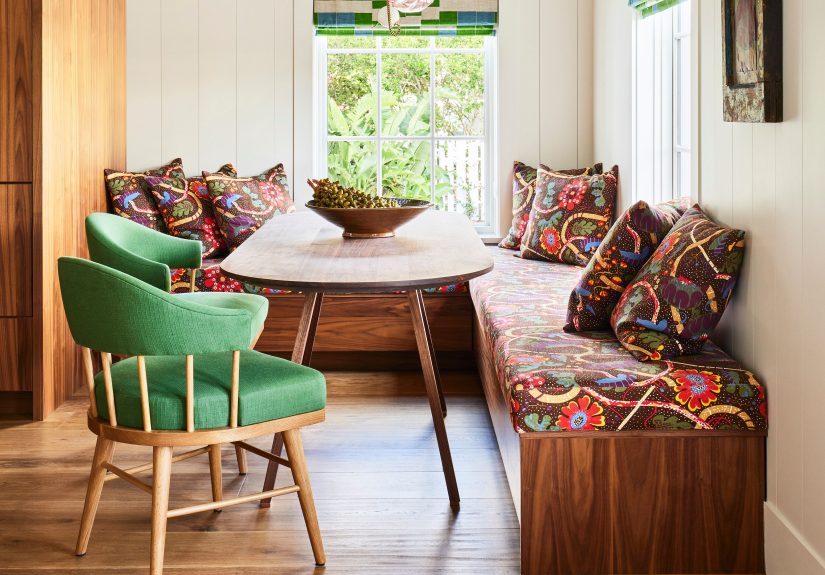
Stripes were among the most editor-loved looks because they’re versatile, energetic, and surprisingly easy to personalize. Narrow stripes feel tailored. Hand-drawn stripes feel playful. Oversized stripes can turn a plain room into a full-on character study. Gingham also came back in a more modern way, especially when paired with contemporary furniture or cleaner color palettes.
Tile patterns and mosaics stood out for the same reason. Instead of treating tile as a background material, designers used it as art. Floors, backsplashes, mudrooms, and bathrooms became places to play with layout, scale, and color. Checkerboard still had its fans, but 2025 moved beyond that into stripes, plaids, geometric arrangements, and more layered compositions.
And then there were ceilings. Wallpapered, painted, glossy, or richly textured, ceilings became a major design move. In smaller rooms especially, this shift created surprise and character without requiring a full-scale renovation. It also proved that the most ignored part of a room can sometimes be the exact place where the magic belongs.
5. Materials Needed to Feel Real, Rich, and a Little Storied
If you had to summarize the material trend of 2025 in one phrase, it would be this: no more flat, fake, forgettable stuff. Editors and designers kept leaning into materials that show grain, veining, texture, patina, and movement. Statement marble and bold stone brought drama. Richer woods replaced pale finishes in many rooms. Natural fibers, tactile wall treatments, and mixed materials added dimension. Homes stopped looking mass-produced and started looking considered.
Statement stone was especially big in kitchens and baths, where bold veining and sculptural slabs turned practical surfaces into centerpieces. But the broader point wasn’t luxury for luxury’s sake. It was authenticity. People wanted surfaces that looked alive, materials that had variation, and finishes that could hold their own without being covered up by trends every six months.
That same instinct fueled the rise of textured walls, decorative millwork, tonal hardwood moments, and “honest materials” that celebrate what something actually is. A good wood tone, a nubby fabric, a matte plaster finish, or a piece of cane furniture can add more soul to a room than ten shiny accessories ever will.
In other words, 2025 reminded everyone that texture is not a side dish. It is the meal.
6. Homes Started Working Harder Without Feeling Harder
Function mattered in 2025, but the best design didn’t scream about it. Instead, editors loved trends that made homes easier to live in while still looking beautiful. Defined spaces gained momentum as people pushed back against endless open-concept layouts. Wellness areas, casual dining nooks, supportive secondary spaces, and rooms with a clearer purpose all became more desirable.
This doesn’t mean everyone suddenly built a spa wing and a tea room. It means the design conversation shifted toward creating homes that support real life. A breakfast area that actually invites lingering. A reading nook that turns dead square footage into a ritual. A mudroom with charm instead of chaos. A bathroom that feels restorative rather than merely washable.
That’s one reason cabinetry details, vented cutouts, hidden storage, and more thoughtful architectural touches got so much attention. They’re functional, yes, but they also make a home feel custom. The best 2025 interiors weren’t just beautiful in photographs. They were easier to move through, easier to relax in, and easier to love on a random Tuesday.
7. Lighting Became the Jewelry of the Room
Decorative lighting had a real moment in 2025. Sculptural pendants, Murano-inspired fixtures, vintage-meets-modern combinations, and natural-form lighting all kept showing up in design coverage. The common thread was that lighting was no longer treated as a utility purchase you make while sighing in aisle 14. It became a defining style decision.
This makes sense. Lighting can change the emotional temperature of a room faster than almost anything else. A dramatic pendant can anchor a dining space. A warm table lamp makes a living room feel collected. A vintage fixture adds instant depth. And layered lighting, using overhead, ambient, task, and accent sources, creates the kind of visual richness that makes a room feel finished.
In 2025, people wanted lighting that looked beautiful when it was off and even better when it was on. Which, frankly, is a standard more things in life should meet.
What’s Actually Worth Borrowing From These Trends
Start with mood, not shopping
If you want to use 2025’s best design ideas well, begin by deciding how you want a room to feel. Warmer? More layered? More playful? More restful? Once the mood is clear, the right trend becomes easier to use.
Pick one strong move per room
Try color drenching or a patterned ceiling. Go for a curved sofa or a bold stone statement. Mixing everything at once can turn “editor favorite” into “why is my dining room yelling at me?”
Use vintage as seasoning, not costume
A brass lamp, an oak sideboard, or a gingham accent can add soul without pushing a room into nostalgia overload. The sweet spot is old-meets-now, not time capsule.
Let materials do some of the talking
When your woods, metals, fabrics, and stone already bring character, you don’t need to over-style the room. Good materials are excellent conversationalists.
Design Experiences That Made These 2025 Trends Feel So Memorable
What really made these trends stick wasn’t just how they photographed. It was how they changed the experience of being at home. A color-drenched room, for example, feels different from the second you walk in. The space wraps around you. It quiets the visual noise. Even people who swore they were “not color people” often discovered they loved the intimacy of a room that committed to one warm, saturated palette. Instead of looking busy, it felt calming.
The same thing happened with curved furniture and softer silhouettes. In real life, those shapes make rooms easier to settle into. A rounded chair tucked into a corner can turn an awkward area into the seat everyone mysteriously fights over. An arched mirror or curved lamp base can make a room feel less rigid without anyone needing to know exactly why. You may not walk into a room and announce, “Ah yes, the psychological power of geometry,” but your shoulders somehow drop anyway.
Vintage-inspired details also brought a kind of emotional resonance that newer trends often miss. Oak cabinets, old brass, framed art, patterned textiles, and collected decor gave rooms a sense of memory. Even when the pieces weren’t literal heirlooms, they felt like they could have a story. That matters. People don’t usually fall in love with a house because the finish is technically trendy. They fall in love because something about it feels familiar, warm, and oddly personal.
Pattern had a similar effect. Stripes in an office could make the space feel cheerful instead of dutiful. Tile mosaics in a bathroom could make a tiny footprint feel intentional rather than forgotten. Wallpaper on a ceiling could turn a pass-through hallway into a design moment. These details created delight, and delight is often the missing ingredient in homes that are perfectly fine but not especially lovable.
Even the move toward dedicated spaces and wellness-minded design changed daily routines in subtle ways. A breakfast nook encouraged people to linger over coffee. A calming bathroom with layered lighting felt less like a pit stop and more like a reset. A reading corner or flex room stopped square footage from going to waste. These weren’t flashy upgrades for bragging rights. They were design choices that improved ordinary life, which is actually where good interiors earn their keep.
That may be the clearest lesson from 2025: the best trends were not about showing off. They were about making home feel richer, softer, more expressive, and more useful all at once. That combination is hard to beat. And unlike a lot of trend cycles, this one leaves behind ideas that still feel worth living with after the hype settles down.
Conclusion
The design trends editors loved most from 2025 all pointed in the same direction: toward homes with warmth, texture, identity, and heart. Rich color replaced caution. Curves softened the mood. Vintage character returned with better styling. Pattern stopped apologizing. Materials got more tactile. Lighting got sculptural. And rooms became more supportive of the way people actually live.
That’s why these trends resonated. They weren’t just attractive; they were human. And in a world full of copy-and-paste interiors, a home that feels collected, comfortable, and unmistakably yours is more than trendy. It’s timeless.