Table of Contents >> Show >> Hide
- The Viral Story, Minus the Corporate Perfume
- Why This Hit So Hard
- The Money Problem Nobody Can Joke Away
- What Research Says About Guilt at Work
- Burnout Usually Starts Long Before the Breakdown
- Was the Worker Wrong to Say No?
- Why Managers Lose Trust When They Do This
- What Workers Can Learn From This Story
- What Managers Should Learn Before They Send the Next “Quick Favor” Text
- The Bigger Meaning of “I’m Paid $15/h”
- Related Workplace Experiences That Sound Very Familiar
- Conclusion
Every so often, a workplace story goes viral not because it is shocking, but because it is painfully, hilariously, suspiciously familiar. This is one of those stories. A young retail worker said her manager accused her of not being a “team player” after she refused to come in on her day off. Why the panic? Because corporate had just cut the team in half. Suddenly, the same company that had no trouble trimming headcount found religion on loyalty, flexibility, and the sacred power of “stepping up.” Funny how that works.
The worker’s response was the part that really landed: she was making $15 an hour, had no benefits, no paid time off, and no appetite for being guilted into unpaid devotion. That one line summarized a huge slice of modern work culture in America. Employees are often asked to act like owners while being compensated like they are lucky to have a lanyard and a break room microwave that sort of works.
This story struck a nerve because it is not really about one clothing store, one manager, or one bad text. It is about understaffing, low pay, blurred boundaries, and the weird corporate habit of calling a preventable staffing crisis a “team challenge.” Let’s unpack why so many readers saw themselves in this moment and why the worker’s refusal felt less like rebellion and more like basic common sense wearing comfortable shoes.
The Viral Story, Minus the Corporate Perfume
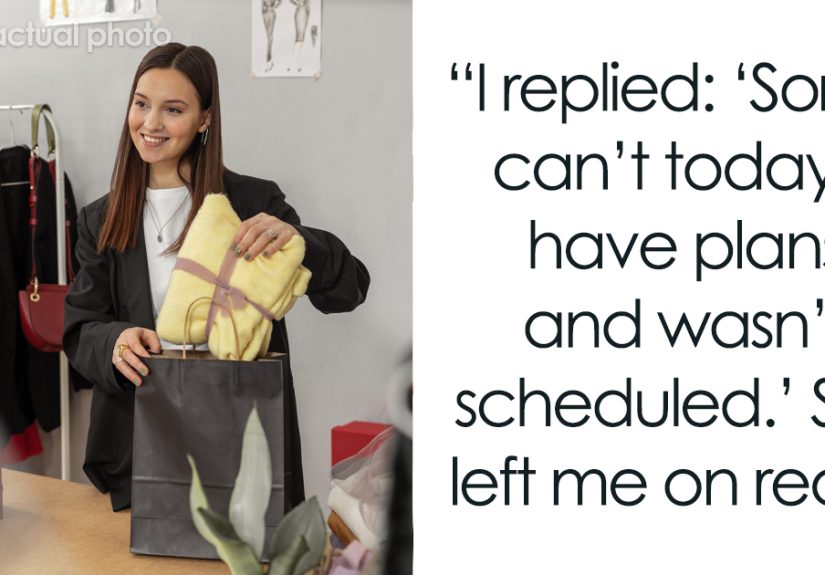
According to the now widely discussed account, a 22-year-old part-time retail employee at a mall store said her six-person staff had been slashed to three after corporate layoffs. On her first day off in more than a week, she had normal-human-person plans: errands, a doctor appointment, and the radical dream of sleeping in. Early that morning, her manager texted asking her to come in because the store was “slammed.” The worker politely declined, explaining that she had plans and was not scheduled.
That should have been the end of it. Instead, the manager reportedly posted a passive-aggressive social media story about selfish people, then later told the employee she was reconsidering her reliability because “real team players” show up when things get hard. The worker, unimpressed, pointed out the obvious: she was paid $15 per hour, received no benefits, had no PTO, and did not owe the company “unpaid loyalty.”
And there it is: the entire modern labor debate condensed into one retail shift that never happened.
Why This Hit So Hard
Understaffing Was Not an Accident
The first reason the story exploded is simple: the emergency was manufactured. The store was short-staffed because leadership had cut three out of six workers. This was not a snowstorm, a blackout, or a meteor with a grudge against denim. It was a management decision. Yet the burden of solving that decision was pushed onto the remaining employees, who were expected to absorb more work, more stress, and more emotional pressure.
That pattern is familiar across industries. Companies reduce labor costs, then turn around and ask the survivors to “be flexible.” Translation: do more with less, smile while doing it, and please don’t notice that the math is insulting. In retail especially, this hits hard because hourly workers often have limited schedule control, lower pay, and little cushion when work spills into personal time.
There is also an irony here sharp enough to cut packing tape: if the business truly needed all hands on deck, perhaps cutting half the deckhands was not the masterstroke leadership imagined.
“Team Player” Can Be a Compliment or a Trap
Being a team player sounds noble. In healthy workplaces, it usually is. It means helping coworkers, communicating well, covering the occasional surprise, and understanding that no job operates in a vacuum. But in unhealthy workplaces, “team player” becomes a velvet-covered crowbar. It is no longer about teamwork. It is about compliance.
That phrase gets especially slippery when it appears right after layoffs. Teamwork requires mutual obligation. A company cannot slash jobs, strip stability, and then demand family-style sacrifice from the people who remain. That is not solidarity. That is cost-cutting in a motivational poster costume.
The worker in this story understood something many employees learn the hard way: if a manager needs guilt instead of scheduling, the problem probably isn’t your attitude.
The Money Problem Nobody Can Joke Away
The worker’s “I’m paid $15/h” line mattered because it gave the story a hard floor of reality. Nationally, retail work is not exactly the place most people go to get rich, retire at 40, and write a memoir called How Folding Shirts Built My Empire. When a person is making modest hourly pay without benefits or PTO, every unscheduled ask has a cost. It affects appointments, childcare, errands, second jobs, rest, transportation, and mental bandwidth.
At that pay level, a company asking for extra loyalty while offering minimal security sounds less inspirational and more like a coupon that expired last Tuesday. Workers notice when expectations rise faster than compensation. They also notice when “we’re all in this together” somehow only applies downward.
This is one reason the story resonated beyond retail. Lots of people know what it feels like to be treated as essential one minute and disposable the next. The emotional whiplash is exhausting.
What Research Says About Guilt at Work
Here is where things get especially interesting. Research discussed by Harvard Business Review and Stanford has suggested that people who are more prone to guilt often work harder, behave more responsibly, and are even perceived as stronger leaders. In plain English, the people most likely to feel bad about letting others down are often the same people who carry teams through chaos.
That sounds flattering until you realize how easily that trait can be exploited. In a decent workplace, conscientious employees are valued and supported. In a dysfunctional one, they become the human equivalent of emergency generators: dragged out every time management neglects maintenance.
The worker in this case refused to play that role. She did not accept the emotional framing that her boundaries were the real problem. That is partly why so many readers cheered. They recognized the script. They had heard some version of it before: If you cared, you’d come in. If you were loyal, you’d stay late. If you were committed, you’d answer your phone on your day off.
That is not leadership. That is emotional outsourcing.
Burnout Usually Starts Long Before the Breakdown
Workplace burnout is often described like a personal failure, as if the employee somehow forgot to download enough resilience. In reality, research has repeatedly tied burnout to organizational conditions: unfair treatment, unmanageable workloads, poor communication, lack of support, and unreasonable time pressure. That sounds an awful lot like what happens after a team gets cut in half and the remaining staff are told to keep the ship floating with upbeat energy.
Public health and workplace well-being guidance in the United States has moved in a clear direction on this. Healthy work cultures are not built by asking individuals to sacrifice harder. They are built by reducing avoidable stressors, respecting nonwork time, making schedules more predictable, increasing worker control where possible, and training supervisors to manage like adults rather than panicked group-chat admins.
In other words, the fix for burnout is not a pizza party with limp crust and a speech about hustle. It is better work design.
Was the Worker Wrong to Say No?
Morally? No. Practically? Also no. She was off the clock, not scheduled, and already had commitments. A request is a request. It is not a moral exam. Employers are free to ask whether someone can cover a shift. Workers are free to decline. If the answer “no” triggers punishment, cold treatment, or character attacks, the issue is no longer scheduling. It is respect.
That distinction matters. There is a big difference between “Can you help if you’re available?” and “Your refusal proves you are unreliable.” One invites cooperation. The other weaponizes guilt.
It is also worth saying out loud that not every rude manager action automatically becomes a legal claim. But workers do have important protections around pay, hours, and certain kinds of retaliation. If someone is actually working, that time must generally be paid. Workers also have rights to discuss wages and working conditions with coworkers, including in some social media contexts, especially when those conversations relate to group concerns rather than solo venting.
So no, declining an unscheduled shift does not make someone selfish. Sometimes it just means they own a calendar and know how to use it.
Why Managers Lose Trust When They Do This
One passive-aggressive Instagram story can do more damage than a dozen bland emails about culture. Employees are extremely good at spotting when a leader is trying to replace planning with pressure. The minute a manager frames normal boundary-setting as betrayal, trust starts to rot.
And trust is not some soft, decorative concept kept in HR’s top drawer. It affects retention, performance, morale, and whether people tell the truth when something is going wrong. Workers who feel respected are more likely to engage, communicate, and help. Workers who feel manipulated start counting exits.
This is why so many people leave jobs over “small” incidents that management insists were misunderstood. It was never just one text. It was the text plus the disrespect plus the understaffing plus the low pay plus the growing suspicion that every crisis will become their personal problem.
What Workers Can Learn From This Story
First, you do not need a dramatic speech to set a boundary. “I can’t today” is a complete sentence. So is “I’m unavailable.” You do not need to submit your day off for committee review. Oversharing can actually make manipulative managers more likely to argue your reasons instead of respecting your answer.
Second, pay attention to patterns, not just moments. One emergency ask once in a while is normal. Constant “emergencies” after avoidable staffing cuts are not. If every inconvenience becomes your obligation, you are being trained to become the solution to someone else’s planning failure.
Third, document things. Keep texts. Save schedules. Write down comments that feel threatening or retaliatory. Documentation is boring until it becomes extremely interesting.
Finally, remember that being dependable does not require being endlessly available. Reliability means showing up for the work you agreed to do. It does not mean surrendering your life every time payroll gets skinny.
What Managers Should Learn Before They Send the Next “Quick Favor” Text
If you want help from employees, start with honesty. Say the store is short-staffed because the team was reduced. Acknowledge that the ask is inconvenient. Make it clear that “no” is acceptable. Offer extra pay where possible. Thank the employee either way. That is how adults request support.
What managers should not do is act like the worker caused the problem by having plans on a day they were not scheduled. That move is so common it almost deserves its own leadership seminar: How to Destroy Morale in Three Passive-Aggressive Steps.
The smartest managers understand something simple: people are more willing to help when they do not feel cornered. Respect builds flexibility. Guilt kills it.
The Bigger Meaning of “I’m Paid $15/h”
That quote resonated because it was not just about a wage. It was about the boundary between a job and an identity. Employers often love language like passion, ownership, family, and loyalty because it blurs that line. Workers increasingly push back because they know the relationship is still transactional, especially when compensation is modest and security is thin.
“I’m paid $15/h” was not a complaint so much as a reality check. It translated the manager’s emotional argument into business terms. If you want extraordinary commitment, create extraordinary conditions. If you want people to save the day, stop building a workplace that lives in permanent sunset mode.
The employee did not reject teamwork. She rejected the idea that teamwork means donating her personal time to cover for leadership choices. That is a distinction more workplaces need to hear without the motivational soundtrack.
Related Workplace Experiences That Sound Very Familiar
Stories like this spread because they echo thousands of smaller experiences workers talk about all the time. One common version is the “Can you just stay a little later?” routine. It sounds tiny, even harmless, until it happens three nights a week and turns a closing shift into a lifestyle. Employees begin by saying yes because they want to help. A month later, they realize “helping” has become the unofficial schedule.
Another familiar experience is the fake emergency call on a day off. Sometimes the situation really is urgent. Often, though, it is just bad forecasting, poor staffing, or a manager who waited too long to solve a problem. Workers get trained to feel heroic for rescuing the shift, while leadership gets trained to depend on last-minute pressure instead of better planning. That arrangement is terrific for chaos and terrible for everyone else.
Then there is the social pressure angle: the group text, the vague post online, the public comment about who is “really committed.” This is where ordinary scheduling trouble turns into reputation management. Instead of asking for coverage, the workplace starts grading personalities. People stop being employees and become characters in a loyalty contest no one asked to join.
A lot of workers also describe the post-layoff loyalty speech. You know the one. The company cuts staff, says the team must stay positive, and then praises resilience while quietly increasing workloads. Remaining employees are expected to feel grateful, worried, and productive all at the same time. It is an emotional triathlon with no medal, no snacks, and definitely no extra pay.
And finally, many people have experienced the moment when a manager mistakes availability for character. Say yes often enough, and you are labeled dependable. Say no once, and suddenly your commitment is under review. That is one of the clearest signs of an unhealthy culture. In good workplaces, occasional boundaries do not erase a person’s track record. In bad ones, one refusal becomes a referendum on their soul.
These experiences matter because they shape how employees think about work far beyond a single job. They affect trust, ambition, mental health, and whether someone believes effort will be met with respect or simply more demands. When workers see this viral story and nod in painful recognition, they are not being dramatic. They are noticing a pattern. And once people recognize the pattern, the guilt trick starts losing power.
Conclusion
The reason this story traveled so fast is that it captured a modern workplace truth with almost brutal efficiency: companies love to talk about teamwork right after they make teamwork harder. A worker making $15 an hour with no benefits and no PTO was asked to solve a staffing problem created by management, then shamed for refusing. Her response was not lazy, disloyal, or immature. It was clear-eyed.
That is the real lesson here. Workers are not rejecting cooperation. They are rejecting manipulation disguised as culture. The more employers rely on guilt instead of planning, the more employees will answer with the same energy this worker did: calm, direct, and gloriously unimpressed.