Table of Contents >> Show >> Hide
- Before You Upgrade: What “Adds Value” Actually Means
- 1) Refresh Cabinets (Paint, Reface, or Upgrade Doors)
- 2) Upgrade Countertops (Quartz, Stone, or a Smart Alternative)
- 3) Improve Lighting (Layered, Bright, and LED-Smart)
- 4) Upgrade the Sink and Faucet (Function Wins Hearts)
- 5) Replace Appliances Strategically (Efficient, Reliable, Matching)
- 6) Add Storage That Feels Custom (Pantry, Pull-Outs, and Smart Zones)
- 7) Update Flooring (Durable, Water-Friendly, Easy to Clean)
- 8) Improve Layout and the Island Experience (Flow + Landing Space)
- Quick “Highest-Value” Game Plan (If You’re Choosing Only a Few)
- Conclusion: Make Buyers Feel Like the Kitchen Is “Done”
- Experience Notes: What Homeowners Commonly Learn the Hard Way (500+ Words)
Kitchens are where memories are made… and where buyers decide whether they love your house or “love the idea of changing everything.”
The good news: you don’t need a celebrity-sized renovation (or a second mortgage) to boost resale appeal. The best value-adding
upgrades are the ones that make a kitchen feel clean, current, and easy to live inwithout turning your home into a
six-month construction zone with one lonely microwave as your “temporary kitchen.”
Before You Upgrade: What “Adds Value” Actually Means
“Value” isn’t just about fancy finishesit’s about what buyers in your market will pay for right now. In general,
smaller, targeted improvements tend to deliver stronger returns than dramatic, everything-must-go remodels. Why? Because buyers love
a kitchen that looks updated, functions smoothly, and doesn’t come with a list of “projects” they’ll have to tackle on move-in day.
- Match your neighborhood: Aim for “best kitchen on the block,” not “best kitchen on HGTV.”
- Fix function first: Sticky drawers, weak lighting, and worn finishes make buyers assume bigger problems.
- Choose timeless over trendy: Trends are fununtil they’re dated by the time you list.
1) Refresh Cabinets (Paint, Reface, or Upgrade Doors)
Cabinets dominate what buyers see, so they’re the fastest way to change the kitchen’s “first impression.” If your cabinet boxes are
solid, consider painting, refacing, or replacing just the doors (hello, modern Shaker style). The goal is a crisp, consistent look
that feels move-in ready.
Value-focused moves
- Choose durable finishes and hardware that feels substantial in the hand.
- Soft-close hinges are a small detail that screams “someone cared.”
- Keep colors broadly appealing (warm whites, light neutrals, natural wood tones).
2) Upgrade Countertops (Quartz, Stone, or a Smart Alternative)
Countertops are both visual and practicalbuyers picture chopping, hosting, and spilling coffee while late for work. Upgrading to a
durable, modern surface can lift the whole kitchen, especially if the current counters look stained, chipped, or dated.
Value-focused moves
- Pick a neutral pattern that complements cabinets and flooring.
- Upgrade the sink cutout and edge profile for a more custom feel (without custom pricing).
- If budget is tight, prioritize the main run/island firstbuyers notice the “hero” surfaces most.
3) Improve Lighting (Layered, Bright, and LED-Smart)
Bad lighting makes even a beautiful kitchen feel gloomy. Great lighting makes an average kitchen feel expensive. Aim for three layers:
ambient (overall), task (work areas), and accent (visual warmth). Bonus points if it’s LED-efficient and color-balanced so the kitchen
doesn’t look like a haunted aquarium.
Value-focused moves
- Add under-cabinet lighting for instant “designer kitchen” vibes.
- Use warm-to-neutral bulbs so whites don’t turn blue and wood doesn’t look orange.
- Put key zones on dimmers: island pendants, sink light, and dining nook.
4) Upgrade the Sink and Faucet (Function Wins Hearts)
This is one of the most-used spots in the entire home, and buyers can feel it. A deep, quality sink and a modern faucet (pull-down,
high-arc, or touchless if done well) adds convenience and a clean, updated lookespecially paired with fresh counters.
Value-focused moves
- Consider a single-bowl or workstation sink for busy kitchens.
- Choose finishes that coordinate with cabinet hardware (don’t mix five metals unless you’re very brave).
- Fix low water pressure issuesbuyers will notice immediately during showings.
5) Replace Appliances Strategically (Efficient, Reliable, Matching)
Buyers love “new appliances” because it means fewer surprises after closing. If your appliances are mismatched, older, or visibly worn,
replacing the most noticeable ones can pay offespecially the range and fridge. Efficiency and reliability matter, and an easy-to-read
energy label can help buyers feel good about monthly costs.
Value-focused moves
- Start with the “face” of the kitchen: range and refrigerator.
- Keep finishes cohesive (stainless, black stainless, panel-readywhatever fits the kitchen style).
- Consider induction if your market is receptive; it signals modern performance and efficiency.
6) Add Storage That Feels Custom (Pantry, Pull-Outs, and Smart Zones)
Storage is the kitchen upgrade buyers don’t always list by namebut they feel it instantly. A well-planned pantry, deep drawers, and
pull-out shelves make a kitchen look bigger and live better. And “organized kitchen” photographs like a dream for listings.
Value-focused moves
- Convert dead space into roll-outs, tray dividers, or a trash/recycling pull-out.
- Add a pantry cabinet or upgrade an existing closet into a true pantry zone.
- Create a beverage/coffee station so the main prep space stays uncluttered.
7) Update Flooring (Durable, Water-Friendly, Easy to Clean)
Kitchen floors take a beatingwater splashes, dropped pans, pet zoomies, and the occasional “oops” from the blender. If flooring is
cracked, stained, or peeling, replacing it can make the kitchen feel newer even if nothing else changes.
Value-focused moves
- Choose materials that handle moisture and foot traffic without drama.
- Keep transitions clean between roomsawkward step-ups and mismatched heights feel “DIY gone rogue.”
- Avoid ultra-trendy patterns that can date fast in photos.
8) Improve Layout and the Island Experience (Flow + Landing Space)
Layout upgrades can be expensive, so the value play is usually small layout improvements: better landing space by the fridge,
clearer pathways, and an island that provides prep room and storage. Even modest changeslike relocating a trash pull-out or widening
a pinch pointmake the kitchen feel calmer and more premium.
Value-focused moves
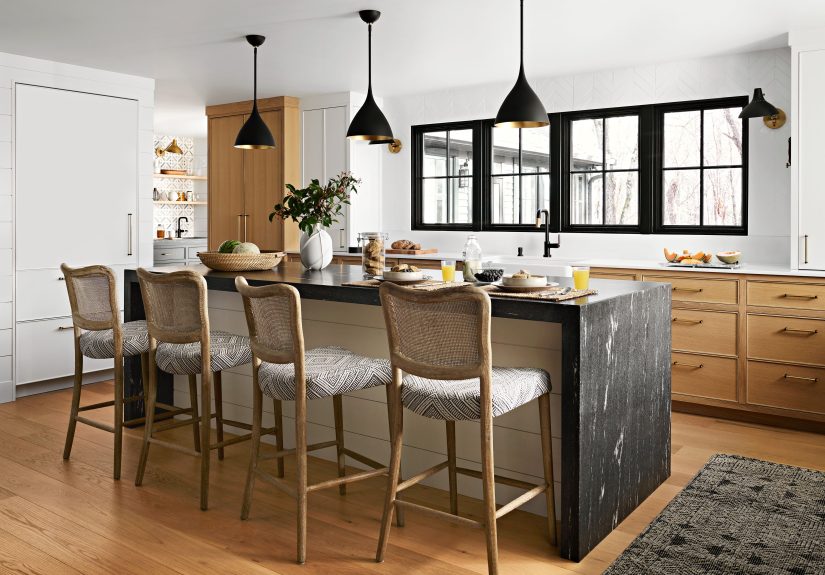
- If you add/upgrade an island, prioritize storage (drawers are gold).
- Make sure there’s comfortable clearance for traffic, stools, and open doors/drawers.
- Upgrade ventilation if cooking smells lingerbuyers interpret that as “this kitchen works hard.”
Quick “Highest-Value” Game Plan (If You’re Choosing Only a Few)
- Most visible impact: cabinets + counters + lighting
- Most daily-use impact: sink/faucet + storage upgrades
- Most buyer confidence: reliable appliances + clean flooring + smooth function everywhere
Conclusion: Make Buyers Feel Like the Kitchen Is “Done”
The kitchen upgrades that add the most value have one thing in common: they remove doubt. Buyers pay more when they don’t see a to-do
list. A fresh cabinet look, durable counters, great lighting, cohesive appliances, smarter storage, and floors that don’t whisper
“replace me” all help your home show better, live better, and sell with fewer concessions.
Experience Notes: What Homeowners Commonly Learn the Hard Way (500+ Words)
Here’s the real-life part nobody puts in a glossy “before and after” montage: kitchen upgrades are as much about decision fatigue
as they are about design. Homeowners often start with a simple goal“Let’s add value”and quickly end up debating 37 shades of white,
12 faucet finishes, and whether “greige” is a color or a cry for help.
One common experience is that people underestimate how much lighting changes everything. They’ll install beautiful
countertops, then realize the kitchen still feels dull because the overhead fixture is basically a sad ceiling pancake from 1998.
Once under-cabinet lighting goes in, it’s like the kitchen suddenly got a raise and started hanging out with cooler friends.
Homeowners also report that lighting upgrades are some of the least disruptive improvements: you’re not without a sink, you’re not
waiting on a slab, and you’re not washing dishes in the bathtub (which is a real low point for the human spirit).
Another frequent lesson: cabinets don’t always need to be replaced. Many homeowners assume value only comes from brand-new
cabinetry, then discover their cabinet boxes are perfectly finethey’re just worn or dated. Painting, refacing, or swapping doors can
deliver the “new kitchen” feeling without the “new kitchen” bill. The catch is that prep work matters. People who rush sanding,
cleaning, and priming often end up with chips and regrets. The homeowners who treat prep like it’s part of the job (because it is)
end up with finishes that hold up through real life.
Storage upgrades are another “quiet win.” Homeowners who add roll-outs, pantry zones, and drawer organizers say the kitchen becomes
easier to keep tidy. And tidy kitchens sell. A buyer walking into a kitchen where everything has a place subconsciously thinks,
“This home is well cared for.” That perception is powerfuland it’s often cheaper to create than people expect. The most celebrated
upgrades in everyday life aren’t always the flashiest; they’re the ones that reduce daily friction.
Appliance upgrades come with a different kind of learning: reliability and fit matter more than fancy features. Homeowners sometimes
buy a “dream fridge” and then realize the doors can’t open fully without hitting an island, or the depth sticks out like a parked car
in a bike lane. The best experiences tend to come from measuring twice, thinking through traffic flow, and choosing appliances that
match the way the household actually cooks. A household that mostly reheats and snacks doesn’t need a restaurant-grade rangeunless
they want it for joy, which is a valid reason, just not a guaranteed value strategy.
Finally, homeowners often say the biggest “value” surprise is emotional: once the kitchen feels brighter, more functional, and more
current, they use it more. They cook more, host more, and enjoy their home more. Even if you sell later, you get to live in the upgrade
now. That’s the best kind of return: the one you feel on a random Tuesday night when you’re not fighting a sticky drawer, squinting at
a cutting board in the dark, or wondering why your faucet has the personality of a leaky garden hose.