Table of Contents >> Show >> Hide
- Before You Build: What Makes an Outdoor Kennel “Good”
- 7 Outdoor Dog Kennel Ideas and Designs
- 1) The Classic Covered Chain-Link Run (Done Right)
- 2) The Roofed “Breezeway” Kennel Along a Fence Line
- 3) The “Kennel + Insulated Dog House” Combo (A True All-Weather Nook)
- 4) The Modular Panel Kennel With a Pergola (The “Nice Backyard” Version)
- 5) The Courtyard-Style “Dog Patio” (Low-Stress, Easy Cleaning)
- 6) The Split Kennel: Separate Runs + Shared Play Yard (For Multiple Dogs)
- 7) The Climate-Smart Kennel (Shade + Windbreak + Cooling Options)
- Flooring: The Make-or-Break Choice (A.K.A. “Where the Smell Lives”)
- Small Details That Make a Huge Difference
- Conclusion: Build for Comfort, Not Just Containment
- Real-World Experiences and Lessons Learned (Extra Notes)
An outdoor dog kennel can be a lifesaver: a safe place for deliveries, contractor days, muddy-paw timeouts, or that moment when your dog decides the neighborhood squirrels are clearly organizing a coup. But a kennel should never feel like “dog storage.” The best designs act more like a backyard mini-suite: secure, clean, shaded, and comfortableplus easy for you to maintain without turning every cleanup into a full-body workout.
This guide walks through seven outdoor kennel ideas (from simple-and-solid to “wow, that’s nicer than my first apartment”), along with practical design rules that keep dogs safer in hot summers, wet seasons, and cold snaps. You’ll see what materials hold up, how to avoid the classic “mud pit of despair,” and which upgrades actually matter (spoiler: shade and drainage beat fancy decor every time).
Before You Build: What Makes an Outdoor Kennel “Good”
Outdoor kennels work best when you design them around real life: your dog’s size, coat, energy level, habits (digger? climber? Olympic-level latch tester?), and your local weather. A kennel that looks perfect on Pinterest can still fail if it bakes in afternoon sun or turns into a swamp after one storm.
Non-negotiables (the “please don’t skip this” list)
- Shade that lasts all day: Morning shade can disappear by lunch. Plan for moving sun and heat radiating off surfaces.
- Fresh water that stays cool: Place bowls in shade, secure them against tipping, and refill often.
- Drainage + cleanability: If you can’t hose it, scrub it, and dry it, you’ll dread using itand your dog will live in stink.
- Escape resistance: Dig barriers, climb-resistant walls, and latches that can’t be opened by a clever nose or paw.
- Comfortable shelter: A dry, draft-protected spot for wind, rain, and cold; airflow and shade for heat.
- Time + enrichment: A kennel is a management tool, not a lifestyle. Dogs still need exercise, training, play, and people.
Quick planning questions
- Is your dog outside for minutes (short management) or hours (regular routine)?
- Do you get extreme heat, high humidity, heavy rain, snow/ice, or strong winds?
- Is your dog a digger, jumper, barker, or fence-runner?
- How will you clean ithose, shovel, scrub, or all of the above?
- Do you need visual privacy (for calmer behavior) or visibility (for supervision)?
7 Outdoor Dog Kennel Ideas and Designs
1) The Classic Covered Chain-Link Run (Done Right)
A chain-link run is popular because it’s affordable, sturdy, and easy to expand. The upgrade that turns it from “basic pen” into a genuinely useful kennel is a roof plus smart ground prep.
- Best for: Most dogs, especially families who want a reliable, flexible setup.
- Design wins: Add a solid or shade roof over at least part of the run, then build a ground layer that drains.
- Escape-proofing: Install a dig barrier at the perimeter (buried mesh or a footer) and use two-step latches.
Make the “rest zone” and the “potty/play zone” feel different. Even in a single run, you can create two experiences by placing shelter and bedding on one end and leaving the other end more open. Dogs often choose a spot that feels den-like for resting and a separate area for businessbecause they’re polite like that.
2) The Roofed “Breezeway” Kennel Along a Fence Line
If you have a narrow strip of yard (or a side yard that’s currently just an overgrown alley), a breezeway kennel can be a space-saving hero. Think of it like a long dog runway with a roofsecure, shaded, and surprisingly roomy.
- Best for: Small yards, side yards, and dogs who like pacing a route more than spinning in circles.
- Design wins: Long and narrow encourages walking and sniffing; a roof reduces heat and keeps the ground drier.
- Pro tip: Add a human gate wide enough for a wheelbarrow or trash bin so cleanup isn’t a geometry problem.
This is also neighbor-friendly if you add a partial privacy panel where your dog tends to bark at passersby. Sometimes blocking the “TV channel” is the simplest training aid.
3) The “Kennel + Insulated Dog House” Combo (A True All-Weather Nook)
This design adds a dedicated shelter boxan insulated dog house or a built-in sleeping nookattached to a secure outdoor run. The shelter is where comfort happens; the run is where movement happens.
- Best for: Dogs who spend regular time outside and need reliable protection from rain, wind, and cold.
- Design wins: Raised floor, draft protection, dry bedding, and a doorway flap or windbreak.
- Hot-weather note: A dog house should still have airflow and should never become a heat trapshade and ventilation matter.
Keep the shelter just big enough for turning and stretching, not gigantic. Oversized shelters can be harder for a dog to warm with body heat in cold weather, while a correctly sized shelter feels secure. (Also, dogs love “cozy” the way humans love hoodies.)
4) The Modular Panel Kennel With a Pergola (The “Nice Backyard” Version)
If you want a kennel that looks intentionallike it belongs with your patio furnitureuse modular welded panels and add a pergola-style roof. This gives you clean lines, strong structure, and easy customization.
- Best for: Homeowners who care about aesthetics and want a long-lasting build.
- Design wins: Mix materials: metal panels for strength, wood slats for partial privacy, and a pergola roof for shade cloth.
- Bonus: Add a small “gear rail” outside for leashes, a towel hook, and a brushbecause real life is messy.
You can also build a “calm corner” inside: a raised platform bed under the most shaded section. Raised resting spots help dogs avoid damp ground and often reduce pacing.
5) The Courtyard-Style “Dog Patio” (Low-Stress, Easy Cleaning)
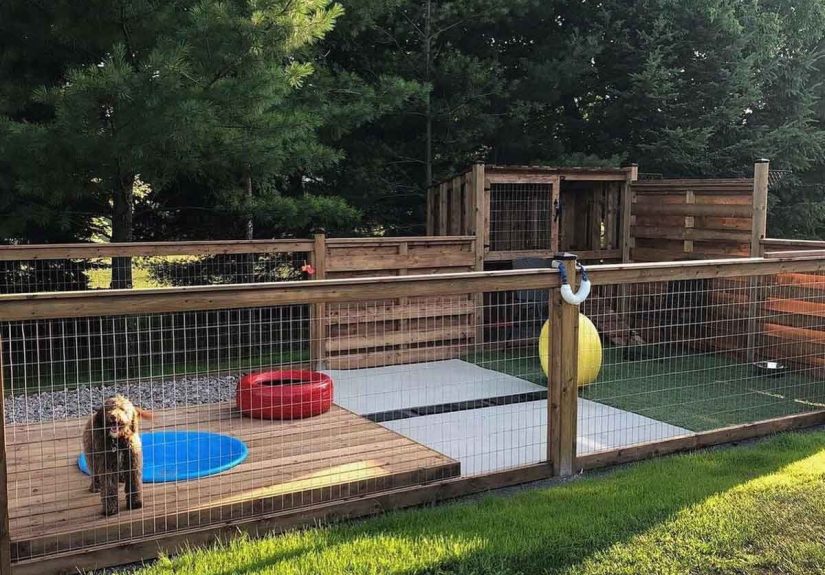
This is the design for people who hate mud, hate odors, and hate repeating themselves. A dog patio uses a hardscape base (like textured concrete, pavers, or a well-built pet-safe surface) with drainage and a hose-friendly layout.
- Best for: Mud seasons, multi-dog homes, and anyone who wants fast cleanup.
- Design wins: Slight slope for drainage, easy rinse points, and a dedicated potty corner.
- Comfort upgrade: Provide a cooler resting zone (platform bed, shaded mat) so paws aren’t stuck on warm surfaces.
If you go with a hard surface, plan for heat management: shade overhead, cooler zones for resting, and water in shaded spots. A well-designed patio kennel can stay fresher and drier than dirt or grasswhich often turn into “mystery soup” after rain.
6) The Split Kennel: Separate Runs + Shared Play Yard (For Multiple Dogs)
Two dogs who adore each other can still need separate spaces at timesmealtimes, rest breaks, training, injury recovery, or simply because one of them believes personal space is a myth. A split kennel gives you management flexibility without constant reshuffling.
- Best for: Multi-dog households, foster homes, or dogs who need controlled introductions.
- Design wins: Individual runs on the sides, with a shared central yard you can open when appropriate.
- Safety must: Use a “double-gate” entry (like an airlock) to prevent door-dashing escapes.
The shared yard can include enrichment: a sturdy chew station, a sniff box (pinecones, safe logs, or cardboard tubes), or a simple obstacle like a low platform. Keep it durable, washable, and supervisedthis isn’t the place for anything that can splinter or be swallowed.
7) The Climate-Smart Kennel (Shade + Windbreak + Cooling Options)
In tough climatesvery hot summers, intense sun, heavy humidity, or big temperature swingsyou can build a kennel that “behaves” better in weather: cooler in heat, drier in storms, and less drafty in cold.
- Best for: Regions with extreme heat/cold, high humidity, or frequent storms.
- Design wins: Full-time shade, cross-ventilation, windbreak panels, and a dry shelter zone.
- Optional add-ons: Outdoor-rated fan in a protected area, misting used carefully (humidity matters), and a kiddie pool for supervised cooling.
The goal is simple: reduce environmental stress. When dogs overheat, they can’t “power through” the way humans sometimes try. A climate-smart kennel treats shade, airflow, and hydration like the essentials they are.
Flooring: The Make-or-Break Choice (A.K.A. “Where the Smell Lives”)
Flooring is where most outdoor kennels succeed or fail. It affects paw comfort, cleanliness, parasites, odor, and how often you’ll mutter, “Why did I think this was a good idea?”
Common outdoor kennel flooring options (with real-world pros/cons)
- Concrete or textured slab: Very cleanable and durable. Can get hot in sun and may feel hard without a resting platform or mat. Needs good drainage planning so water doesn’t pool.
- Pavers: Easier on the eyes, good traction, repairable in sections. Weeds can sneak in if the base isn’t prepped well.
- Pea gravel over a barrier layer: Drains well and can stay cleaner than dirt. Needs edging and occasional refreshing. Pair with a dig barrier if your dog treats gravel like a challenge level.
- Artificial turf made for pets: Helps reduce mud, looks tidy, and can be comfortable. Requires proper base and regular rinsing to prevent odor buildup.
- Dirt/grass: Soft and naturaluntil rain turns it into a crater field. Usually the hardest to keep clean long-term.
A practical strategy is to combine surfaces: a hard, easy-clean potty corner and a more comfortable rest/play zone. Add a raised bed or platform in the shaded section so your dog always has a dry place to lie down.
Small Details That Make a Huge Difference
Shade that actually works
Trees are great, but not always reliable (seasonal leaf drop is real). Shade cloth, a solid roof panel, or a pergola top can create consistent shade. Plan for shade movement throughout the day, and don’t rely on a single small shadow.
Water that stays available
Use a heavy, tip-resistant bowl or a mounted bucket. Keep it shaded. In hot weather, refill more often than you think you needbecause dogs don’t send calendar invites when they’re thirsty.
Ventilation and wind management
Airflow matters in heat, but protection matters in wind-driven rain or winter gusts. Partial windbreak panels on one or two sides can reduce stress without turning the kennel into a stuffy box.
Latches, gates, and “airlocks”
Many escapes happen during human entry/exit, not because fencing fails. A double-gate entry creates a buffer zone: you step in, close one gate, then open the next. Add a locking carabiner-style backup on latches if your dog has ever watched you open a gate and thought, “I could do that.”
Enrichment that doesn’t become clutter
Keep it simple: a chew-safe toy rotation, a shade-safe bed, and a “sniff spot” you refresh. Avoid stuffing the kennel with plush toys or anything that can shred into pieces. The kennel should stay easy to sanitize and supervise.
Conclusion: Build for Comfort, Not Just Containment
The best outdoor dog kennels don’t just prevent escapesthey reduce stress, prevent overheating, stay cleaner, and make daily life smoother for both dog and human. Start with shade, water, drainage, and security. Then choose the design that matches your yard and your dog’s personality. If you do it right, the kennel becomes a helpful “safe place,” not a punishment box.
Real-World Experiences and Lessons Learned (Extra Notes)
People tend to underestimate two things when they build an outdoor kennel: how fast weather changes a space, and how fast dogs learn the “physics” of that space. A kennel can look perfect on day one and feel completely different on day tenafter the first heavy rain, the first heat wave, or the first time your dog realizes the gate latch makes a satisfying click.
One of the most common “aha” moments owners report is that shade isn’t a featureit’s a moving target. A corner that’s cool at 9 a.m. can be sunbaked by 2 p.m., and surfaces like concrete, pavers, and even compacted gravel can hold heat longer than expected. The fix is usually simple: create overhead shade that covers the primary rest area, and add a raised platform or bed in the most shaded zone. That gives a dog a reliable place to cool off. Owners also find that water bowls placed in sun get warm quickly, which can reduce drinking. Mounting a bucket in a shaded area (and refilling it often) is an easy upgrade that pays off every day.
Another lesson: drainage is the difference between “manageable” and “never again.” Dirt and grass feel natural, but they can become muddy, smelly, and difficult to sanitizeespecially in high-traffic spots where dogs pace, spin, and potty. Many owners end up converting at least a portion of the kennel to a more stable base: pavers, a textured concrete strip, or a gravel system with a barrier layer underneath. Even if you keep some natural ground, having one easily cleaned “utility zone” makes the whole kennel more usable. It’s also where you can place feeding bowls, water, and a resting platform without everything turning into a swamp.
Dogs also have very different “styles” in kennels. Some dogs settle immediately if they can see the house, hear their people, and have a calm corner. Others become more reactive if they can watch every squirrel, stroller, and passing car. A surprisingly effective change is adding a partial visual block on the side that faces the most triggers. You don’t have to build a fortresssometimes a few privacy panels or tightly spaced slats reduce barking and fence-running, which also reduces wear on paws and joints.
Finally, people who are happiest with their kennel long-term tend to treat it like part of a routine, not a destination. The kennel is where the dog waits safely while life happensbut it’s paired with daily exercise, training time, and enrichment elsewhere. Owners who plan for that from the start often build “small smart”: a kennel that’s comfortable and secure, plus a habit of using it for short management windows rather than long isolation. In practice, that usually means the kennel has three things that support calm behavior: a shaded rest spot, fresh water that stays accessible, and a predictable pattern of coming back inside or going out for a walk. When those basics are consistent, dogs settle more easilyand the kennel becomes a tool you’re glad you built.