Table of Contents >> Show >> Hide
- Why Bathe a Baby in the Sink?
- Before You Begin: Sink Bath Safety Checklist
- Method 1: Give a Sponge Bath at the Sink
- Method 2: Give a Supported Sink Bath
- Method 3: Give a Swaddle Sink Bath
- How Often Should You Bathe a Baby in the Sink?
- Common Mistakes to Avoid
- When Not to Bathe a Baby in the Sink
- of Real-Life Experience: What Sink Baths Feel Like for Parents
- Conclusion
Giving a baby a bath in the sink sounds charmingly old-school, like something from a family photo album: a tiny baby, a towel hood with little ears, and a parent trying very hard not to look nervous. The good news is that sink bathing can be convenient, back-saving, and cozy when it is done safely. The important part is preparation. Babies are slippery, sinks are hard, and bath time is not the moment to discover that the towel is still in the dryer.
This guide explains three practical ways to give a baby a bath in the sink: a sponge bath at the sink, a supported sink bath, and a swaddle-style sink bath for babies who dislike being uncovered. Each method has a slightly different purpose, and choosing the right one depends on your baby’s age, comfort level, umbilical cord status, and how confident you feel. The goal is simple: keep your baby warm, clean, secure, and calm while keeping your own stress level somewhere below “first-time parent holding a wet noodle.”
Before starting, remember the golden rule of baby bath safety: never leave your baby alone in or near water, not even for a few seconds. Keep one hand on your baby whenever they are in the sink or on the counter. Gather every item before the bath begins, use warmnot hotwater, and make sure the sink is clean, stable, and free from sharp edges, dishes, food residue, soap buildup, or anything that could bump, scratch, or contaminate your baby’s skin.
Why Bathe a Baby in the Sink?
Sink baths are popular because they are practical. A sink is usually higher than a bathtub, which means less bending and less back strain for parents. It also uses less water, keeps the baby close to your body, and may feel less overwhelming than placing a tiny newborn in a large bathtub. For small babies, a clean sink can create a snug bathing space that feels secure.
However, a sink bath is not automatically safer than a baby tub. The safest option is the one you can control confidently. If your sink is too deep, too small, near a garbage disposal, hard to sanitize, or has a faucet that swings into the bathing area, use a dedicated infant tub instead. A baby does not care whether the bath setup is Pinterest-worthy. Your baby mainly cares that the water is warm, your hands are steady, and nobody is trying to wash their hair like they are detailing a sports car.
Before You Begin: Sink Bath Safety Checklist
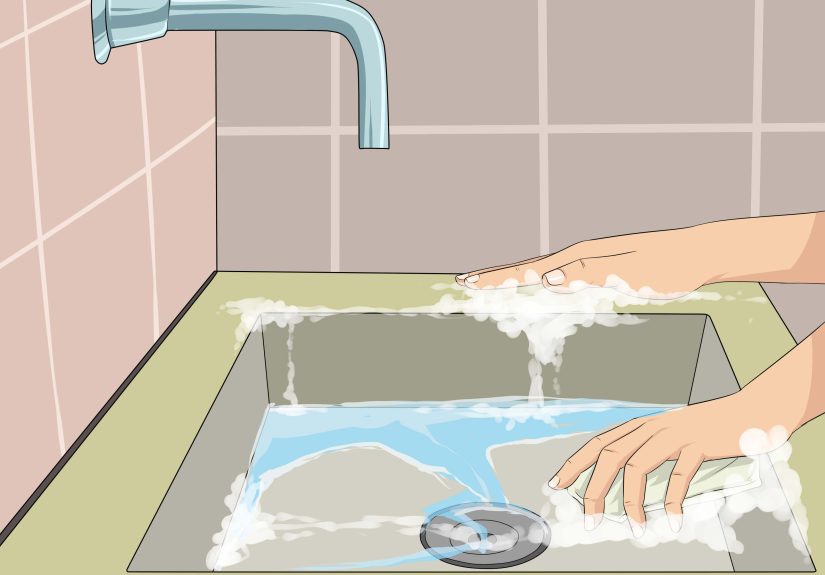
Preparation is what turns sink bathing from a chaotic splash festival into a smooth routine. Start by cleaning the sink thoroughly. If you are using a kitchen sink, remove dishes, food particles, cleaning chemicals, sponges, drain covers, and anything else that does not belong near a baby. Rinse the sink well after cleaning so no disinfectant or residue touches your baby’s skin.
Next, make the surface softer and less slippery. You can line the sink with a clean towel, a non-slip baby bath cushion, or a sink bath insert designed for infants. Do not rely on the insert to “hold” your baby while you step away. Bath supports are tools, not babysitters. Your hand is still the main safety device.
Set the water temperature before your baby goes near the sink. Aim for comfortably warm water, around 100°F. Test the water with your wrist or elbow, and stir it well so there are no hot spots. If possible, set your home water heater to 120°F or lower to reduce scald risk. The room should also be warm because babies lose body heat quickly when wet.
Supplies to Keep Within Arm’s Reach
Place everything beside you before you undress your baby. You will need two soft washcloths, a mild fragrance-free baby cleanser, a cup for rinsing, a clean towel, a fresh diaper, clean clothes, and any skin-care item recommended by your pediatrician. If your baby has cradle cap or dry skin, ask your baby’s doctor which products are best. In general, less is more. Babies do not need a bubble bath, a spa menu, or a cucumber water station.
Method 1: Give a Sponge Bath at the Sink
A sponge bath is the best sink-bathing method for newborns whose umbilical cord stump has not fallen off yet. During this stage, you do not place the baby directly into the water. Instead, you use the sink as your warm-water station while your baby rests safely on a padded, flat surface next to you, such as a changing pad on the counter or a towel-lined surface. Keep one hand on your baby at all times.
Step 1: Warm the Room and Prepare the Water
Fill the sink or a clean basin with warm water. The water should feel warm to your wrist, never hot. Lay your baby on a towel and undress them only as much as needed. Many newborns dislike feeling cold, so keep your baby loosely wrapped in a dry towel and uncover only the part you are washing.
Step 2: Start With the Face
Use a damp washcloth with plain water to clean your baby’s face. Wipe gently around the eyes, moving from the inner corner outward. Use a clean part of the cloth for each eye. Clean around the mouth, cheeks, chin, and behind the ears. Skip soap on the face unless your pediatrician has advised otherwise.
Step 3: Wash the Body From Top to Bottom
Move down the body slowly: neck folds, arms, hands, chest, belly, legs, and feet. Babies have adorable folds that somehow collect lint, milk, and mystery crumbs from another dimension. Clean gently inside the folds, then pat each area dry before moving on. Avoid soaking the umbilical cord stump. Keep it dry and exposed to air when possible.
Step 4: Clean the Diaper Area Last
Use a separate clean section of the washcloth for the diaper area. For girls, wipe from front to back. For boys, clean gently around the genitals without forcing the foreskin back if uncircumcised. After washing, pat the area dry, put on a fresh diaper, and dress your baby quickly to keep them warm.
Best For
This method is best for brand-new babies, babies with healing umbilical cords, babies recovering from circumcision, and parents who want the safest low-water approach. It is also a great confidence-builder before you try a full sink bath.
Method 2: Give a Supported Sink Bath
Once your baby’s umbilical cord stump has fallen off and the area is healed, a supported sink bath may be an option. This method means your baby is partly in shallow water while you support their head, neck, and body. The sink should be clean, lined, and stable. Use only a small amount of water. A baby does not need to float; this is bath time, not tiny scuba certification.
Step 1: Create a Safe Sink Setup
Place a clean towel, non-slip pad, or infant sink insert in the sink. Make sure the faucet is turned away or protected so your baby cannot bump their head. If the sink has a sprayer, garbage disposal, sharp drain hardware, or rough edges, choose a different bathing location. Fill the sink with just enough warm water to wash your baby while keeping their head and face safely above water.
Step 2: Lower Your Baby Slowly
Undress your baby and support the head and neck with one arm. Use your other hand to guide their bottom and legs into the sink. Keep your baby’s head, neck, and shoulders supported. Some babies love the warm water immediately. Others make a face that says, “I will be filing a formal complaint.” Stay calm and speak softly.
Step 3: Wash Gently and Efficiently
Use a soft washcloth and a small amount of mild baby cleanser. Wash the cleanest areas first and the diaper area last. Pay attention to neck folds, armpits, fingers, toes, and behind the ears. Rinse with a cup of clean warm water, keeping water away from the baby’s face. If you wash the scalp, use only a tiny amount of baby shampoo and rinse carefully.
Step 4: Lift, Wrap, and Dry
When the bath is done, lift your baby with both hands: one supporting the head and neck, the other supporting the bottom. Babies are extra slippery when wet, so move slowly. Place your baby immediately into a towel and pat dry. Do not rub hard. Dry inside folds to reduce irritation, then put on a diaper and clothes.
Best For
This method is best for babies whose umbilical area has healed and who tolerate water well. It is also helpful for parents who want a quick, controlled bath without bending over a full bathtub.
Method 3: Give a Swaddle Sink Bath
A swaddle sink bath is a gentle option for babies who cry during baths or dislike being exposed to air. The idea is simple: keep the baby loosely wrapped in a lightweight muslin blanket or thin towel while bathing one body part at a time. The wrap helps the baby feel secure and warm, which can reduce startle reflexes and bath-time drama.
Step 1: Wrap Your Baby Lightly
Use a thin, clean cloth that can get wet. Wrap your baby loosely, leaving the head uncovered. Do not wrap tightly, and do not cover the face. Support the head and neck as you place your baby into a clean, shallow, warm sink setup or keep them on a towel-lined surface for a sponge-style swaddle bath.
Step 2: Uncover One Area at a Time
Open the wrap only where you are washing. Clean one arm, rinse, pat dry, and tuck it back in. Then move to the other arm, chest, legs, and diaper area. This method is slower, but it often feels calmer. It is especially useful in the evening when you want bath time to become part of a bedtime routine instead of a tiny opera performance.
Step 3: Keep the Water Warm and the Bath Short
Because the cloth can cool as it gets wet, keep the bath brief. Add warm water to your washcloth as needed, but never run water directly over your baby while they are in the sink. Running taps can suddenly change temperature, and a baby can be burned quickly. Check the water temperature repeatedly with your wrist or elbow.
Best For
This method is best for fussy newborns, babies who startle easily, and parents who want a soothing bath routine. It is not magic, but it can feel close when your baby finally stops yelling at the washcloth.
How Often Should You Bathe a Baby in the Sink?
Most babies do not need a daily full bath. Two or three baths a week is often enough during the first year, as long as you clean the diaper area well during changes and wipe the face, neck, and hands as needed. Too many baths can dry out sensitive baby skin, especially if soap is used every time. On non-bath days, a quick wipe-down of the face, neck folds, hands, and diaper area is usually plenty.
Of course, real life has exceptions. If your baby has a diaper blowout that deserves its own weather alert, a sink bath may be the fastest solution. If milk has traveled into three neck folds and behind one ear, clean the area. The best schedule is one that keeps your baby comfortable without over-washing their skin.
Common Mistakes to Avoid
Using Too Much Water
A baby bath should be shallow. More water does not mean a better bath. It simply increases risk and makes the baby harder to control.
Leaving the Baby to Grab Something
If you forget a towel, diaper, or clean outfit, take your baby with you. A wet baby wrapped in a towel is safer than a baby left alone near water.
Making the Water Too Hot
Adult “warm” can be too hot for a baby. Always test the water and aim for warm, not hot. A bath thermometer is helpful, especially for tired parents.
Using Strong Soap or Fragrance
Baby skin is delicate. Choose mild, fragrance-free cleanser and use a small amount. Avoid adult body washes, heavily scented products, and bubble baths unless your pediatrician says they are appropriate.
Forgetting the Folds
Milk, drool, lint, and diaper cream can hide in skin folds. Clean gently and dry carefully, especially under the chin, behind the ears, in the armpits, and around the thighs.
When Not to Bathe a Baby in the Sink
A sink bath is not the right choice if the sink cannot be cleaned well, if the faucet is awkward, if the basin is too small, or if you feel unsteady. Avoid sink baths if your baby is too active for the space or can push strongly against the sides. Once babies become bigger, more mobile, or able to sit and twist, a dedicated baby tub or regular bathtub setup may be safer.
You should also pause and call your pediatrician if your baby has a spreading rash, signs of infection around the umbilical area, fever, unusual discharge, cracked or bleeding skin, or a skin condition that seems irritated after bathing. Bath time should help your baby feel clean and comfortable, not make symptoms worse.
of Real-Life Experience: What Sink Baths Feel Like for Parents
The first sink bath often feels like a test nobody studied for. You may have watched videos, read guides, and arranged supplies like a professional newborn-care stylist. Then the baby cries, the washcloth falls, the water cools, and you suddenly understand why experienced parents move with the calm speed of emergency-room nurses. That is normal. Confidence comes with repetition.
One helpful experience many parents discover is that timing matters. Bathing a baby when they are very hungry can turn a simple wash into a dramatic protest. Bathing immediately after a full feeding can lead to spit-up, hiccups, or a baby who looks personally offended by gravity. A good middle ground is when the baby is calm, slightly alert, and not urgently hungry. Evening works well for many families, but morning can be better for babies who become overstimulated at night.
Another practical lesson is that babies react to temperature changes more than parents expect. A baby may not hate baths; they may hate being cold before and after the bath. Warming the room, opening the towel before lifting the baby, and drying the head early can make a big difference. Some parents even place the clean outfit and diaper within the towel area so dressing happens quickly. No baby has ever said, “Please take your time finding my socks.”
Sink baths also teach parents the value of doing less. You do not need a mountain of products. In many cases, warm water, a soft cloth, and a tiny amount of mild cleanser are enough. Scrubbing is unnecessary. Babies are not garden furniture. Gentle wiping works better and protects the skin barrier. The same goes for shampoo. A little goes a long way, and many babies do not need shampoo at every bath.
Parents also learn that the sink setup must match the baby’s personality. A sleepy newborn may enjoy a swaddle bath. A curious older baby may try to kick, twist, and grab the faucet like it is a new toy. If your baby is becoming too wiggly for the sink, that is not a failure. It is simply time to switch to a safer bathing place. Baby care changes quickly, and the best routine is the one that grows with your child.
Finally, sink baths can become a sweet bonding ritual. Talk to your baby. Tell them what you are doing. Sing a song, even if your singing voice is more “friendly goose” than “lullaby album.” Babies respond to warmth, rhythm, and your calm presence. The bath does not need to be perfect. It needs to be safe, gentle, and consistent. Over time, your hands become steadier, your baby becomes more familiar with the routine, and bath time becomes less of a production and more of a peaceful reset.
Conclusion
Learning how to give a baby a bath in the sink is really about learning how to prepare, support, and adapt. A sponge bath is best for newborns whose umbilical cord stump is still healing. A supported sink bath can work well after the cord area has healed, as long as the sink is clean, shallow, and safe. A swaddle sink bath may help babies who dislike feeling uncovered or chilly.
No matter which method you choose, the basics stay the same: gather supplies first, use warm water, keep the bath short, support your baby’s head and neck, and never leave your baby unattended. Sink baths can be convenient and comforting, but safety always comes before convenience. With a clean setup, a steady hand, and a sense of humor, bath time can become one of the sweetest small routines of baby care.