Table of Contents >> Show >> Hide
- What Is a Clause?
- 14 Easy Ways to Identify a Clause
- 1. Look for a subject and a verb
- 2. Ask whether it expresses a complete thought
- 3. Test whether it can stand alone
- 4. Watch for dependent marker words
- 5. Check whether a relative pronoun starts it
- 6. See whether it acts like a noun, adjective, or adverb
- 7. Distinguish a clause from a phrase
- 8. Look for comma clues
- 9. Try removing the word group
- 10. Look for a full chunk that can move
- 11. Count the clauses to understand the sentence type
- 12. Watch for coordinating conjunctions joining full thoughts
- 13. Use fragments as a warning sign
- 14. Use run-ons and comma splices as another clue
- Quick Practice: Is It a Clause or Not?
- Common Mistakes People Make When Identifying Clauses
- Why Learning to Identify a Clause Actually Matters
- Final Thoughts
- Experience Section: What Identifying Clauses Feels Like in Real Life
- SEO Tags
Clauses are one of those grammar topics that sound intimidating until you realize they’re basically the Lego bricks of sentences. Once you know how to spot one, sentence structure starts making a lot more sense. Suddenly, comma splices become less mysterious, fragments stop sneaking around in trench coats, and complex sentences no longer look like they were invented just to ruin your afternoon.
If you’ve ever stared at a sentence and thought, That looks important, but what exactly is it?, this guide is for you. Below are 14 easy ways to identify a clause, plus examples, practical tips, and a real-world section at the end about how clause recognition actually shows up in school, work, editing, and everyday writing.
What Is a Clause?
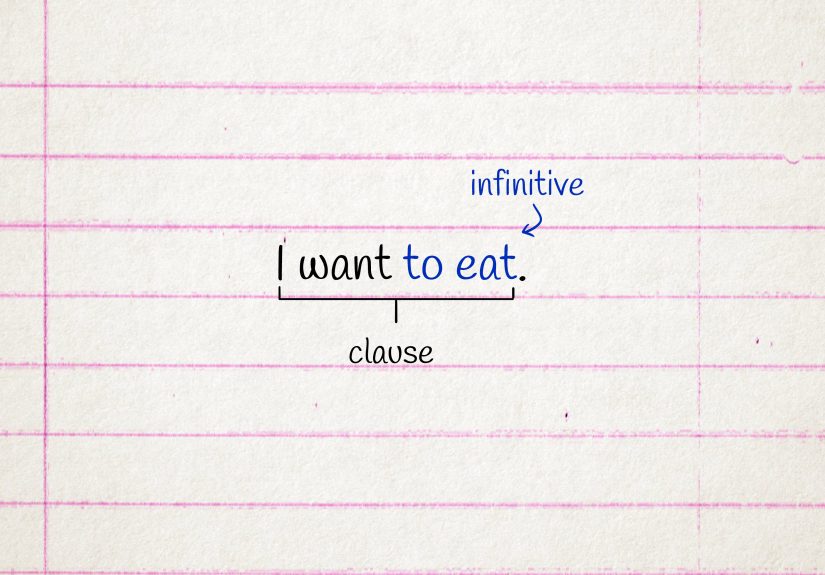
A clause is a group of words that contains a subject and a verb. Some clauses can stand alone as complete sentences. Others cannot. That difference is the key to understanding almost everything else about clauses.
Here’s the quick breakdown:
- Independent clause: can stand alone as a complete sentence.
- Dependent clause: has a subject and verb but cannot stand alone.
Example:
- Independent clause: The dog barked.
- Dependent clause: Because the dog barked
That second one feels unfinished because it is unfinished. It’s like someone handed you half a sandwich and called it lunch.
14 Easy Ways to Identify a Clause
1. Look for a subject and a verb
The fastest way to identify a clause is to ask: Does this word group have both a subject and a verb? If the answer is no, you probably have a phrase, not a clause.
Clause: She laughed
Not a clause: After the movie
In She laughed, she is the subject and laughed is the verb. That gives you clause energy right away.
2. Ask whether it expresses a complete thought
Not every clause can stand on its own. Once you find a subject and verb, ask whether the idea feels complete.
Complete: The meeting ended early.
Incomplete: Although the meeting ended early
The second example still has a subject and verb, but it leaves the reader hanging. A dependent marker such as although turns the unit into a dependent clause.
3. Test whether it can stand alone
This is the classic clause test. Read the word group by itself. Does it work as a sentence?
Works alone: I forgot my keys.
Does not work alone: When I forgot my keys
If it survives on its own, it’s an independent clause. If it collapses dramatically and asks for help, it’s dependent.
4. Watch for dependent marker words
Some words often signal that a clause is dependent. These include because, although, since, when, while, if, unless, after, before, and even though.
Examples:
- Because I was tired
- When the rain stopped
- Although she disagreed
Each example contains a subject and verb, but the marker at the beginning makes the thought incomplete. These words are excellent clause detectors.
5. Check whether a relative pronoun starts it
Relative clauses are a type of dependent clause, and they usually begin with words such as who, whom, whose, which, or that.
Examples:
- who lives next door
- that I borrowed
- which was painted blue
These clauses usually describe a noun.
Example in a sentence: The book that I borrowed is overdue.
Here, that I borrowed is a clause because it contains a subject and verb, even though the structure is tucked neatly inside the bigger sentence.
6. See whether it acts like a noun, adjective, or adverb
Dependent clauses often do a job inside the sentence. If a word group acts like a noun, adjective, or adverb and still contains a subject and verb, you’re likely looking at a clause.
Noun clause: What she said surprised everyone.
Adjective clause: The car that he bought is electric.
Adverb clause: We stayed inside because it was raining.
This is especially useful when two grammar terms look similar. A noun phrase and a noun clause may both act like nouns, but only the clause has a subject and verb inside it.
7. Distinguish a clause from a phrase
This is where many people get tripped up. A phrase is a group of words that does not contain both a subject and a verb. A clause does.
Phrase: under the table
Clause: when the cat hid under the table
If your word group is missing one of the two essentials, it’s probably a phrase. If it has both, now you can move on to deciding whether it’s independent or dependent.
8. Look for comma clues
Punctuation can help you spot clauses, especially in longer sentences. For example, an introductory dependent clause is often followed by a comma.
Example: Because the store was closed, we went home.
The comma tells you where the introductory clause ends and the main clause begins. Commas also often set off nonessential relative clauses.
Example: My laptop, which is somehow always out of battery, shut down again.
That clause adds extra information, but the sentence still makes sense without it.
9. Try removing the word group
If you remove the word group and the sentence still works, you may be dealing with a nonessential clause. If the sentence loses its core meaning, the clause is likely essential.
Sentence: My brother, who lives in Seattle, is visiting next week.
Remove who lives in Seattle, and the sentence still works: My brother is visiting next week. That means the clause is nonessential.
Now compare that with:
Sentence: Students who submit the form on time will be approved.
Remove who submit the form on time, and the meaning changes. Now all students appear to be approved. That clause is essential.
10. Look for a full chunk that can move
Dependent clauses often move around the sentence as one unit.
Example A: Because the alarm failed, we overslept.
Example B: We overslept because the alarm failed.
The clause because the alarm failed moves as a chunk. That’s a handy clue that you’re dealing with a clause rather than a random pile of words.
11. Count the clauses to understand the sentence type
One easy way to identify clauses is to count how many clause units are inside the sentence.
- Simple sentence: one independent clause
- Compound sentence: two or more independent clauses
- Complex sentence: one independent clause plus at least one dependent clause
- Compound-complex sentence: at least two independent clauses plus at least one dependent clause
Example: Because I missed the bus, I called a ride, and I arrived late anyway.
That sentence has one dependent clause and two independent clauses. Welcome to compound-complex country.
12. Watch for coordinating conjunctions joining full thoughts
Words like for, and, nor, but, or, yet, and so can join two independent clauses. If both sides of the conjunction can stand alone, you’ve found two clauses.
Example: I wanted coffee, but the café had closed.
Both I wanted coffee and the café had closed are independent clauses. The conjunction simply connects them like a grammar handshake.
13. Use fragments as a warning sign
Sentence fragments are often just dependent clauses pretending to be complete sentences.
Fragment: After the final exam.
Also a fragment: Although we studied all night.
That second one is especially sneaky because it contains a subject and verb. But it still fails the complete-thought test, so it remains a dependent clause and becomes a fragment when written alone.
14. Use run-ons and comma splices as another clue
If a sentence feels too long or awkward, you may have accidentally shoved two independent clauses together without proper punctuation.
Run-on: I finished the essay I forgot to save it.
Comma splice: I finished the essay, I forgot to save it.
Both examples contain two independent clauses. Recognizing clauses helps you fix the problem fast. You can add a period, a semicolon, or a coordinating conjunction with a comma.
Quick Practice: Is It a Clause or Not?
Example 1
While the baby slept
Yes, it’s a clause. It has a subject (baby) and a verb (slept), but it’s dependent because it starts with while.
Example 2
Across the street
No, that’s a phrase. There is no subject-verb pair.
Example 3
The lights went out
Yes, it’s an independent clause. It contains a subject, a verb, and a complete thought.
Example 4
Whoever finishes first
Yes, it’s a clause. It contains a subject and verb, but it depends on the larger sentence for completion in most contexts.
Common Mistakes People Make When Identifying Clauses
- Confusing phrases with clauses: A long phrase can look clause-like, but without both a subject and a verb, it’s still a phrase.
- Assuming every clause is a sentence: Only independent clauses can stand alone.
- Missing hidden clause boundaries: Relative clauses often sit in the middle of sentences and quietly do their job.
- Ignoring punctuation clues: Commas, especially around introductory and nonessential clauses, often point you in the right direction.
- Forgetting function: Some clauses behave like nouns, adjectives, or adverbs, which makes them easier to identify once you know what to look for.
Why Learning to Identify a Clause Actually Matters
Because grammar is not just a collection of rules invented to keep editors entertained. Identifying clauses helps you write clearer sentences, vary sentence length, avoid fragments, fix run-ons, punctuate more confidently, and understand why a sentence sounds polished or messy.
It also helps with reading comprehension. When you can spot clauses, long sentences stop feeling like verbal spaghetti. You begin to see the structure underneath, and that makes meaning easier to follow.
Final Thoughts
If you only remember one thing, let it be this: a clause has a subject and a verb. From there, everything else becomes a matter of function. Does it express a complete thought? Can it stand alone? Does it begin with a dependent marker or a relative pronoun? Is it acting like a noun, adjective, or adverb? Once you start asking those questions, clauses become much easier to spot.
And honestly, that’s the fun of grammar. It turns sentences from mysterious blobs into something you can actually decode. Which is satisfying. Slightly nerdy, yes, but satisfying.
Experience Section: What Identifying Clauses Feels Like in Real Life
Learning to identify a clause usually doesn’t happen in one glorious moment with dramatic music playing in the background. It tends to happen in tiny, practical moments. A student is revising a paper and keeps getting comments about fragments. A copywriter is trying to vary sentence length so every line doesn’t sound like it came from the same robot cousin. An editor is fixing comma problems and suddenly realizes the issue is not really commas at all. It’s clauses. Once that clicks, a lot of grammar confusion starts to clear up.
One common experience is reading a sentence that feels wrong but not knowing why. You look at something like Although the team practiced every day. It seems substantial. It has action. It has people doing things. It even sounds serious, like a sentence that pays taxes on time. But it still isn’t complete. Realizing that a dependent clause can sound impressive while still being incomplete is one of the biggest breakthroughs for writers.
Another common experience happens during editing. You start with a sentence like I opened the file, it was blank. At first glance, it looks normal enough. Then you notice there are really two independent clauses sitting awkwardly next to each other like strangers forced to share an umbrella. Once you identify both clauses, the fix becomes obvious: use a period, a semicolon, or a conjunction. What felt like a mysterious punctuation issue turns into a simple structure issue.
People also experience a kind of grammar relief when they learn the difference between a phrase and a clause. Before that, every chunk of words looks equally suspicious. After that, your brain starts sorting them more naturally. Under the couch? Phrase. Because the cat hid under the couch? Clause. It’s the sort of progress that makes you feel oddly powerful while proofreading an email.
For many writers, the most useful moment comes when working with long sentences. Instead of seeing one giant block of language, you begin to notice units. Here’s the main clause. There’s the dependent clause explaining time. Over there is a relative clause adding detail. It becomes less like untangling headphones and more like reading a map. That shift can improve both writing confidence and reading speed.
And then there’s the classroom experience, where clause lessons often start out dry and then unexpectedly become helpful. Students who once memorized terms just to survive a quiz later use those same ideas to improve essays, speeches, and even social captions. Knowing how clauses work makes your writing more flexible. You can be short and punchy. You can be layered and thoughtful. You can even be funny on purpose instead of by accident.
In everyday life, identifying clauses is really about spotting how meaning is built. Once you can do that, grammar feels less like a set of punishments and more like a toolkit. A surprisingly useful toolkit, too. Maybe not as exciting as free pizza, but definitely more reliable.