Table of Contents >> Show >> Hide
- What “Well-Drained Soil” Actually Means
- Why Drainage Matters: The Root of the Problem (Literally)
- How to Test Soil Drainage at Home (No Lab Coat Required)
- What Causes Poor Drainage?
- How to Improve Drainage in Garden Beds
- How to Improve Drainage in Containers (Where Most Problems Are Self-Inflicted)
- Matching Plants to Drainage: Work Smarter, Not Soggier
- Troubleshooting: Drainage Problems That Keep Coming Back
- A Practical “Boost Drainage” Game Plan
- Real-World Experiences: What Drainage Fixes Look Like in Actual Gardens
- Conclusion
“Well-drained soil” is one of those gardening phrases that sounds like it should come with a tiny translator.
Does it mean dry? Does it mean sandy? Does it mean you can water like you’re putting out a campfire and everything will still be fine?
Not exactly.
Well-drained soil is soil that lets excess water move through at a reasonable pacefast enough that roots can breathe,
slow enough that plants don’t get thirsty five minutes later. When drainage is off, plants usually complain in predictable ways:
yellowing leaves, stunted growth, root problems, fungus gnats partying in your pots, and that “why is this still wet?” feeling
when you touch the soil two days after watering.
In this guide, you’ll learn what “well-drained” really means, how to tell what you’re working with, and practical ways to boost
drainage in garden beds and containerswithout falling for the classic myths (yes, we’re looking at you, rocks-in-the-bottom-of-the-pot).
What “Well-Drained Soil” Actually Means
Soil drainage is about how water moves through pore spaces (the tiny gaps between soil particles). After watering or rain,
a well-drained soil releases excess water downward while still holding onto enough moisture for plants to use.
The goal is balance: roots need water and oxygen. If the soil stays saturated, roots can’t access oxygen and plant health declines.
Drainage is tied to texture and structure
- Texture = the proportion of sand, silt, and clay. Sand has larger particles (drains faster); clay has tiny particles (drains slower).
- Structure = how those particles clump into aggregates. Good structure creates channels for air and water to move.
Two soils can have the same texture but drain differently if one is compacted and the other is crumbly and well-aggregated.
Think “fresh-baked brownie” versus “parking lot.” Same ingredients? Maybe. Same vibe? Absolutely not.
Why Drainage Matters: The Root of the Problem (Literally)
Plant roots aren’t snorkels. They need oxygen in the soil’s air spaces to function normally. When soil is waterlogged,
air spaces fill with water and roots struggle. This can lead to weak root systems, increased disease pressure, and poor nutrient uptake.
Common signs your soil drains poorly
- Standing water after rain or irrigation (especially if it lingers beyond a day)
- Soil that feels sticky, slick, or forms dense clods when dry
- Plants that yellow despite “enough” watering
- Slow growth, wilted leaves in wet soil (yes, it happens), or frequent root issues
“Too well-drained” is also a thing
Super-fast drainage can mean water runs through before plants can use itcommon in very sandy soils or gritty container mixes.
In that case, the fix isn’t “make it drain slower forever,” but to improve moisture-holding capacity while keeping air flow intact.
How to Test Soil Drainage at Home (No Lab Coat Required)
You don’t need fancy equipment to get useful drainage information. A simple percolation (“perk”) test can reveal whether
water moves through your soil at a plant-friendly rate.
The simple percolation test
- Dig a hole about 12 inches deep and roughly 4–12 inches wide (a post-hole digger is perfect if you have one).
- Pre-wet the hole by filling it with water and letting it drain once. This helps mimic real conditions (soil acts differently when dry).
- Refill the hole with water and measure how much the water level drops over time (for example, per hour).
As a practical rule of thumb for many landscape and garden situations, if the water drops only a tiny amount per hour,
drainage is likely poor; if it vanishes extremely fast, you may have “very well-drained” conditions that can dry out plants quickly.
Either way, you’ve learned something valuable before spending money on new plants (or emotional energy on plant guilt).
Important: Don’t test when the soil is already overly wet. Wet soil can smear and “glaze” the sides of the hole,
making drainage look worse than it truly is.
What Causes Poor Drainage?
1) Clay-heavy soil (fine texture)
Clay has tiny particles and small pore spaces. Water moves slowly, and when clay soils are compacted, drainage can become painfully sluggish.
Clay isn’t “bad”it can be nutrient-richbut it often needs structure help.
2) Compaction (squished pores)
Repeated foot traffic, heavy equipment, and working soil when it’s too wet can compress pore spaces and reduce infiltration.
Compacted soil behaves like a clogged sponge: water pools on top and roots struggle below.
3) Hardpan or an impervious layer
Sometimes there’s a dense layer beneath the surface (from repeated tillage at the same depth or natural soil layering).
Water can’t move through easily, so it “perches” above that layer, keeping the root zone wetter than plants want.
4) Site issues: low spots and high water tables
Drainage problems aren’t always your soil’s fault. Low areas collect runoff, and some properties have naturally high water tables
that keep soil wetter longer. In those cases, raising the planting area can be the simplest path to better drainage.
How to Improve Drainage in Garden Beds
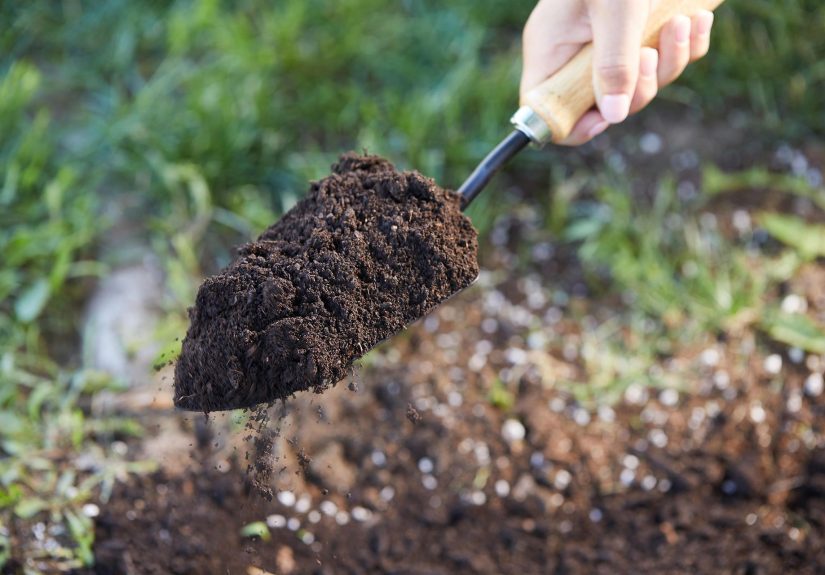
Start with the best all-around drainage booster: organic matter
Compost and other organic materials improve soil structure over time. In clay-heavy soils, organic matter encourages aggregation,
creating larger pore spaces for air and water movement. In sandy soils, it helps hold water and nutrients so plants don’t live in a constant drought drama.
Practical approach: add a layer of finished compost and mix it into the top several inches (where many feeder roots live).
Repeat seasonally rather than trying to “fix everything in one weekend.” Soil is a long gameand it’s stubborn in the most consistent way.
Skip the “add sand to clay” shortcut (it can backfire)
It’s tempting to think sand + clay = loam, but in real garden proportions, adding sand to clay can create a dense, concrete-like mix
unless you add an enormous amount of coarse sand. For most home gardens, organic matter is the smarter, more practical choice.
Reduce compaction (your soil wants personal space)
- Keep foot traffic out of bedsuse paths.
- Avoid working soil when it’s wet enough to smear.
- Use mulch to soften the impact of rainfall and reduce surface crusting.
- For lawns or heavy-traffic areas, consider aeration where appropriate.
Use raised beds or berms when drainage is truly stubborn
If your site has a high water table, an impervious subsoil layer, or persistent pooling, raising the root zone is often the most reliable fix.
Raised beds improve drainage by lifting plant roots above the saturated layer and can warm earlier in springhandy for vegetables and many ornamentals.
A simple raised bed doesn’t have to be tall or expensive. Even a modest lift can improve root conditions.
If you build a framed bed, aim for adequate depth and fill with a soil blend that’s rich in organic matter and not easily compacted.
Consider site grading and water direction
Sometimes the most effective “soil amendment” is redirecting water. If downspouts dump into beds, or if the yard slopes toward a planting area,
drainage fixes may require rerouting runoff. In severe cases, landscape drainage solutions (like French drains) may be appropriateespecially when structures are involved.
How to Improve Drainage in Containers (Where Most Problems Are Self-Inflicted)
Rule #1: Drain holes are non-negotiable
A container without a drain hole is basically a decorative soup bowl. If you love the pot, use it as a cachepot: keep the plant in a nursery pot inside
and remove it to water.
Rule #2: Use a quality potting mix (not garden soil)
Garden soil is too dense for containers and compacts over time, reducing air space. Potting mixes are designed to stay lighter and more porous.
If you need even more drainagefor succulents, cacti, Mediterranean herbs, or plants prone to root problemschoose a fast-draining mix or amend with materials that increase air space.
Rule #3: Don’t put rocks or gravel at the bottom “for drainage”
This myth survives because it feels logical. In reality, adding a rock layer reduces the amount of soil available for roots and can create a perched water situation
where water hangs above the coarse layer rather than draining freely. If you want better drainage, improve the mix and make sure the container can actually drain.
Simple ways to make a potting mix drain faster
- Add perlite or pumice to increase air space (common for houseplants and container gardens).
- Use bark fines in mixes for plants that like airy roots (often used for aroids and some tropicals).
- Choose the right pot size: oversized pots hold more wet mix than small root systems can use.
- Water with intention: thorough watering is good, but only when the mix has begun to dry appropriately for the plant.
Matching Plants to Drainage: Work Smarter, Not Soggier
One of the easiest ways to “improve drainage” is to stop fighting your site. Many plants have strong preferences, and forcing a swamp-hater into wet soil
is like booking a beach vacation for someone who hates sandnobody wins.
Plants that usually prefer well-drained soil
- Lavender, rosemary, thyme (Mediterranean herbs)
- Many succulents and cacti
- Yarrow, coneflower, salvia (often happier with airier root zones)
Plants that tolerate or enjoy more moisture (depending on type)
- Many ferns
- Some dogwoods (varies by species), and other moisture-tolerant shrubs
- Plants chosen specifically for rain gardens (selected for wet/dry cycles)
If your yard has mixed conditions, consider micro-zones: put water-loving plants in lower areas and drought-tolerant plants on slopes or raised sections.
It’s not favoritism; it’s strategy.
Troubleshooting: Drainage Problems That Keep Coming Back
If soil stays wet for days
- Double-check compaction and avoid working the soil wet.
- Add compost regularly, not once.
- Switch to raised beds or berms for sensitive plants.
- Observe after heavy rain: where does water collect and where does it come from?
If containers stay wet forever
- Confirm the pot has a drain hole and it’s not blocked.
- Use a lighter potting mix; avoid garden soil in pots.
- Downsize the pot if the plant’s root system is small.
- Adjust watering frequencymany “overwatered” plants are actually “watered too often.”
If soil dries out too fast
- Add organic matter to boost water-holding in sandy soils.
- Mulch to reduce evaporation and temperature swings.
- Water deeply and less frequently (when appropriate for the plant) to encourage deeper rooting.
A Practical “Boost Drainage” Game Plan
- Test drainage with a simple perk test so you know what you’re fixing.
- Improve structure with compost and consistent organic matter additions.
- Reduce compaction by protecting beds from traffic and avoiding wet-soil work.
- Raise the root zone (raised beds/berms) if the site is persistently wet or layered.
- Use the right mixes in containers and avoid drainage myths that do the opposite.
- Match plants to conditions where possibleyour future self will thank you.
Real-World Experiences: What Drainage Fixes Look Like in Actual Gardens
Most gardeners don’t wake up and announce, “Today I will study pore space.” Drainage lessons usually arrive the way life lessons do:
uninvited and holding a slightly wilted plant.
A common scenario goes like this: someone plants lavender because it looks like a sunny Mediterranean postcard. It blooms for a bit,
then starts looking tired. The gardener waters morebecause that’s what you do when something looks sadonly to find the plant looking even worse.
When they finally dig around the roots, the soil underneath feels cool and sticky, like it’s been saving that moisture for a special occasion.
The fix isn’t more water; it’s more air. Once the plant is moved to a raised, gritty spot (or a container with a fast-draining mix), it rebounds,
and the gardener learns a new rule: “droopy” doesn’t always mean “thirsty.”
Another frequent moment happens after a big rain. You walk outside, and the yard is fine… except for one stubborn area that looks like it’s auditioning
for a frog documentary. People often assume the entire yard has poor drainage, but the problem is usually local: a low spot, a compacted path where everyone cuts through,
or downspouts quietly dumping roof water into the same patch of ground. Once the gardener redirects runoff, stops stepping on that zone,
and adds compost over time, the “mystery puddle” becomes less mysteriousand less puddle.
Container gardeners have their own drainage arc. Many start with a gorgeous pot, a cute plant, and the belief that rocks at the bottom are basically
a drainage insurance policy. Weeks later: fungus gnats, leaves yellowing, and a pot that feels like it weighs as much as a small planet.
They empty it, discover the bottom is still wet, and feel personally betrayed by gravel. Switching to a potting mix designed for containers,
ensuring a clear drain hole, and choosing a pot size that matches the root ball usually solves the problem fast. The biggest mindset shift is realizing
that drainage is mostly about the mix and the exit route, not a layer of “just add rocks and hope.”
Vegetable beds teach drainage lessons too, especially in clay soil. Gardeners will add compost once, expect miracles, and then feel discouraged when the soil
still seems heavy the next season. The experience that changes everything is seeing gradual improvement: the second year’s soil breaks apart a little more easily;
the third year, water soaks in faster and seedlings establish quicker; by year four, earthworms show up like they’ve been invited to the party.
Drainage improvement in native soil is often a “small deposits, big interest” situation. Consistency wins.
And then there’s the “too well-drained” surprise. Some gardeners build a beautiful raised bed with a very sandy, gritty mix to avoid soggy roots.
Suddenly, they’re watering constantly, and tomatoes act like they’re on a desert survival show. The fix isn’t to undo drainage; it’s to add organic matter,
mulch deeply, and adjust watering habits. Once the bed can hold moisture and keep air space, the plants settle down and start producing like they’re supposed to.
The most useful takeaway from all these experiences is simple: drainage isn’t a single switch you flipit’s a set of small choices that add up.
Test first, change one thing at a time, and watch what happens after rain and watering. Your soil will tell you the truth, and it rarely whispers.
Conclusion
Well-drained soil is about balance: water moves through efficiently, but the root zone still holds usable moisture andmost importantlyoxygen.
If your soil drains poorly, focus on building structure with organic matter, reducing compaction, and raising the root zone when needed.
If containers are the issue, prioritize drain holes, quality potting mix, and skip the rock-layer myth.
Once you understand how your soil behaves, improving drainage becomes less of a guessing game and more of a repeatable system.