Table of Contents >> Show >> Hide
- The Lesson Beneath the Legend: Preparation Is Love in Work Clothes
- As a Parent: Kobe Reminded Me to Praise the Process, Not the Trophy
- As a Coach: The Mamba Mentality Is Not Permission to Burn Kids Out
- As a Doctor: Respect the Body Before the Body Sends an Invoice
- The Balance Kobe Teaches: Chase Greatness, But Stay Human
- Specific Examples Parents, Coaches, and Doctors Can Use
- The Real Mamba Mentality for Families and Teams
- What I Learned Personally from Kobe Bryant
- Additional Experiences: How Kobe’s Lessons Show Up in Real Life
- Conclusion: The Lesson That Lasts
- SEO Tags
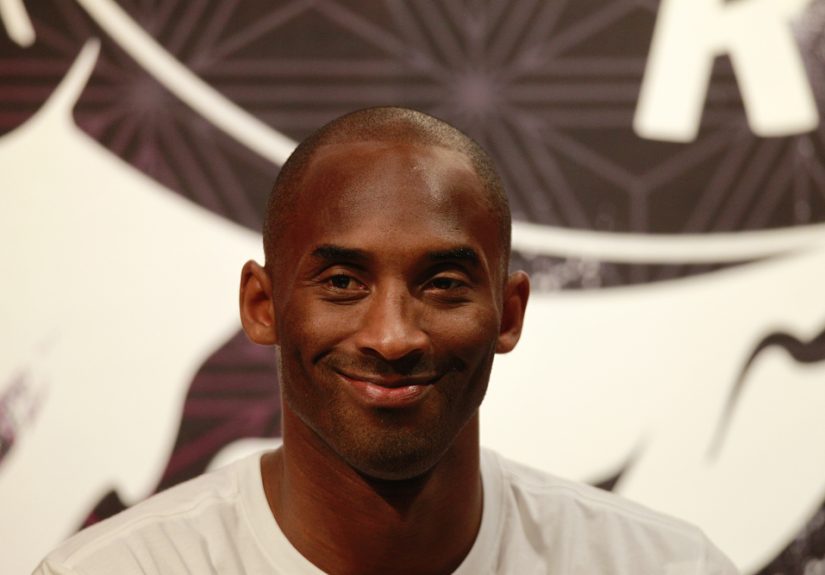
Some people remember Kobe Bryant for the fadeaway jumper. Some remember the five NBA championships, the Olympic gold medals, the 81-point game, the two retired Lakers jerseys, or the way he could stare down a defender as if he had just read the defender’s entire diary. I remember all of that too. But as a parent, coach, and doctor, I learned something even more useful from Kobe Bryant: excellence is not a mood. It is a system.
That system was often called the “Mamba Mentality,” but the phrase is sometimes misunderstood. It was not simply “work harder than everyone until your shoelaces file a complaint.” At its best, it meant curiosity, discipline, preparation, accountability, emotional resilience, and a refusal to confuse talent with arrival. Kobe’s greatness was not built only in highlight reels. It was built in quiet gyms, film rooms, boring repetitions, recovery routines, hard conversations, and the willingness to become a beginner again.
That is why Kobe’s life still speaks to parents trying to raise confident children, coaches trying to build healthy teams, and doctors trying to protect young athletes from turning childhood sports into a full-time unpaid internship with shin splints.
The Lesson Beneath the Legend: Preparation Is Love in Work Clothes
Kobe Bryant’s public image was fierce, competitive, and occasionally intimidating enough to make a basketball sweat. But underneath the intensity was a simple principle: prepare so deeply that pressure becomes familiar. He studied opponents, refined footwork, trained his body, and treated details as if they were not small at all. For a parent, that idea matters because children learn more from what adults repeatedly do than from what adults dramatically announce.
A parent who says, “Work hard,” but never shows patience with hard things teaches noise. A parent who sits beside a child during a difficult homework assignment, stays calm, and celebrates the next small improvement teaches Kobe’s real lesson: consistency has a heartbeat.
As a coach, preparation means practice should not be random chaos with whistles. It should have a purpose. A team that practices footwork, spacing, communication, and decision-making learns to trust the process when the scoreboard gets rude. As a doctor, preparation means prevention: sleep, hydration, strength, mobility, nutrition, and recovery are not bonus features. They are the operating system.
As a Parent: Kobe Reminded Me to Praise the Process, Not the Trophy
Parents love their children so much that sometimes they accidentally become motivational fog machines. We yell, clap, advise, overanalyze, and occasionally perform a complete coaching clinic from the folding chair section. Kobe’s example invites a better approach: teach children to love improvement before they love applause.
Kobe did not become Kobe by waiting for praise. He became Kobe by becoming obsessed with the craft. For parents, that means the best post-game question is not always, “Did you win?” Try asking, “What did you learn?” or “What was one play where you made a smart decision?” or “Did you encourage a teammate?” These questions tell a child that identity is bigger than the box score.
Let Children Own Their Dreams
Kobe’s identity as a “girl dad” resonated with millions because it showed a different side of a famously competitive athlete. He supported his daughters’ interests and proudly encouraged girls in sports. The parenting lesson is not that every child must chase elite athletics. It is that every child deserves an adult who sees their potential without trying to hijack the steering wheel.
When parents turn a child’s sport into a family stock portfolio, pressure rises and joy drops. A child who plays basketball, soccer, tennis, or any sport should feel that the game is a place to grow, not a courtroom where every mistake becomes evidence. Kobe’s legacy as a father reminds us that support is not the same as control. The best parent in the gym is not always the loudest one. Sometimes it is the one who brings water, listens on the ride home, and does not deliver a 47-minute TED Talk about defensive rotation before dinner.
As a Coach: The Mamba Mentality Is Not Permission to Burn Kids Out
Here is where coaches need to be careful. Many people borrow Kobe’s intensity but forget his intelligence. They copy the sweat but not the study. They demand toughness but ignore development. That is not coaching; that is volume with a clipboard.
A healthy version of the Mamba Mentality is not “practice until someone limps.” It is “practice with purpose, recover with discipline, and learn from every rep.” Youth athletes are not miniature professionals. Their bodies are growing, their brains are developing, and their relationship with sports is still forming. If we turn every fourth-grade tournament into Game 7 of the NBA Finals, we should not be shocked when kids burn out before high school.
Effort, Learning, and Mistakes
One of the best coaching frameworks is simple: reward effort, learning, and bouncing back from mistakes. This fits Kobe’s best lessons perfectly. Kobe missed shots. He had bad games. He dealt with injuries, criticism, and failure. What separated him was not a magical ability to avoid mistakes. It was his ability to study them without being swallowed by them.
For young athletes, coaches should normalize mistakes as information. A missed layup tells us something. A turnover tells us something. A defensive lapse tells us something. The message should be, “Let’s learn,” not “Let’s panic.” Panic is a terrible teacher. It has bad handwriting and no lesson plan.
Build Competitors, Not Robots
Kobe was creative. His footwork borrowed from greats before him, but he turned it into his own language. That matters in coaching. If every athlete is trained to obey instructions without reading the game, we create robots who need a remote control. Great coaching teaches athletes how to think.
Instead of only shouting, “Pass!” a coach can ask, “What did you see?” Instead of saying, “Never take that shot,” a coach can ask, “What made that shot a good or bad choice?” Questions develop basketball IQ, confidence, and ownership. Kobe’s genius was not just that he practiced moves. It was that he understood when, why, and against whom those moves worked.
As a Doctor: Respect the Body Before the Body Sends an Invoice
As a doctor, I see Kobe’s career through two lenses: awe and caution. Awe, because his discipline through injury and recovery was extraordinary. Caution, because young athletes often hear the heroic version and miss the medical reality. Pain is not always weakness leaving the body. Sometimes pain is the body sending a very formal email that says, “Please stop doing this before I escalate to management.”
Youth sports injuries are often linked to overuse, poor recovery, early specialization, and pressure to play through discomfort. Children and teens are not simply smaller adults. Growth plates, changing coordination, and developing muscles make them more vulnerable to certain injuries. A young athlete who repeatedly complains of pain needs rest and proper evaluation, not a speech about toughness.
Recovery Is Training
Kobe’s work ethic was legendary, but work ethic without recovery is just a fancy route to breakdown. Sleep is training. Rest days are training. Strength work is training. Nutrition is training. Mobility is training. Honest communication about pain is training. If a young athlete learns only how to push, but never learns how to recover, the lesson is incomplete.
Doctors, parents, and coaches should work together to protect the athlete’s long-term health. That means limiting year-round overload, encouraging age-appropriate variety, respecting rest periods, and watching for signs of burnout. A child who loses joy, dreads practice, plays injured, or feels their worth depends on performance is not becoming mentally tough. They may be becoming emotionally exhausted.
The Balance Kobe Teaches: Chase Greatness, But Stay Human
Kobe Bryant’s story is powerful because it contains tension. He was relentless, but he also evolved. He was demanding, but he became a mentor. He loved competition, but he also moved into storytelling, business, youth sports, and family life after basketball. He showed that identity can expand. That is a valuable lesson for young athletes who may think their sport is the whole planet.
A parent can say, “I love watching you compete, but I love you the same when you lose.” A coach can say, “We want to win, but we also want to become better people.” A doctor can say, “Your goals matter, and your health matters too.” Those statements do not weaken ambition. They protect it.
Specific Examples Parents, Coaches, and Doctors Can Use
For Parents
After a game, replace criticism with curiosity. Ask your child to name one thing they did well, one thing they want to improve, and one teammate they appreciated. This creates reflection without turning the car ride home into a mobile courtroom.
For Coaches
Design practices around decision-making. For example, instead of running layup lines for twenty minutes, create a small-sided game where players must read spacing, communicate, and make quick choices. Kobe’s game was built on skill plus intelligence. Young athletes need both.
For Doctors
When evaluating young athletes, ask not only where it hurts, but also how much they train, how often they rest, whether they play multiple teams in the same season, and whether they feel pressure to hide pain. The injury is often only the headline. The schedule may be the plot twist.
The Real Mamba Mentality for Families and Teams
The healthiest version of the Mamba Mentality is not about turning every child into Kobe Bryant. That would be impossible, and frankly, most families do not have enough driveway space for that many fadeaways. The real lesson is to help each child become more disciplined, courageous, curious, and resilient in their own lane.
For one child, that may mean making the varsity team. For another, it may mean learning to handle nerves. For another, it may mean returning from an injury with patience. For another, it may mean discovering that they love music, science, art, or writing more than basketball. Kobe’s deeper lesson is not “be me.” It is “respect your craft enough to grow.”
What I Learned Personally from Kobe Bryant
As a parent, Kobe taught me that love must be active. It is not enough to admire a child’s potential; we have to create a safe environment where effort, failure, and growth can live together. Children need encouragement, structure, and freedom. Too much freedom can become drift. Too much structure can become pressure. The sweet spot is where a child feels guided but not owned.
As a coach, Kobe taught me that standards matter. Young athletes usually rise toward clear expectations when those expectations are paired with trust. A coach should not lower the bar so far that nobody has to stretch. But the coach should also not raise the bar so high that athletes feel crushed under it. The job is to challenge without humiliating, correct without belittling, and compete without forgetting that sports are supposed to build life.
As a doctor, Kobe taught me to respect ambition while protecting the person inside the athlete. It is easy to tell a driven athlete to rest. It is harder to explain why rest protects the dream. Medical advice becomes more effective when it honors the athlete’s identity. Instead of saying, “Stop playing,” we can say, “Let’s build a plan that helps you come back stronger and stay in the game longer.” That small shift matters.
Additional Experiences: How Kobe’s Lessons Show Up in Real Life
In real life, the Kobe Bryant lessons appear in ordinary moments, not just dramatic ones. I see them when a child misses a free throw and looks immediately at the parent’s face. That glance says everything. The child is asking, “Am I still okay?” The parent’s response can either build security or anxiety. A calm smile, a clap, or a simple “next play” can do more than a lecture ever will. Children remember emotional weather. If the adults around them stay steady, they learn that mistakes are survivable.
I see Kobe’s influence in coaching when a team loses badly and the coach chooses not to turn the post-game huddle into a crime scene investigation. Instead, the coach says, “We were late on defense, we stopped communicating, and we rushed shots. That is fixable.” Suddenly the loss becomes a lesson instead of a label. Players leave disappointed, but not destroyed. That distinction matters. A young athlete who believes failure is feedback will keep improving. A young athlete who believes failure is identity may eventually quit to protect their confidence.
I also see these lessons in the clinic. A talented athlete comes in with knee pain, heel pain, shoulder pain, or fatigue. The parent says, “But the tournament is this weekend.” The athlete says, “I can play.” The coach says, “We need them.” Everyone is telling the truth from their own angle, but the body gets the final vote. My job is to slow the room down. We talk about symptoms, training load, sleep, nutrition, growth, stress, and long-term goals. The goal is not to scare anyone. The goal is to protect the future from the panic of the present.
Kobe’s career can inspire young athletes to work hard, but it should also inspire adults to become wiser guardians of that work. We should teach kids to train with focus, but also to speak honestly when something hurts. We should teach them to compete fiercely, but also to shake hands, respect officials, and thank the people who wash the uniforms. We should teach them that confidence is not loudness. Sometimes confidence is the quiet decision to try again tomorrow.
One of the most useful family habits is the “three-question ride home.” After a practice or game, ask: “What was fun?” “What was hard?” “What did you learn?” Then stop talking long enough for the child to answer. This is harder than it sounds. Many adults hear a child’s answer and immediately want to install an entire software update. Resist. Listen first. Advice lands better when it is invited.
Another practical habit is the “recovery calendar.” Families can mark practice days, game days, rest days, sleep goals, and school demands. This helps children see that health is part of performance. It also prevents the common youth sports trap where one team schedule looks manageable, but three overlapping commitments create a tiny professional athlete with a backpack full of algebra homework.
The final experience is emotional. Kobe’s legacy reminds me that greatness and tenderness can live in the same person. The same athlete known for ruthless competition became a symbol of proud fatherhood and mentorship. That matters because children do not need adults who are only intense. They need adults who are strong enough to be gentle, ambitious enough to teach discipline, and wise enough to know when a hug is better than a scouting report.
Conclusion: The Lesson That Lasts
What I learned from Kobe Bryant as a parent, coach, and doctor is that greatness is not one lesson. It is a triangle: discipline, love, and wisdom. Discipline pushes us to improve. Love reminds us why improvement matters. Wisdom tells us when to push, when to pause, and when to protect the person behind the performance.
Kobe Bryant’s legacy is not only for NBA players, elite athletes, or people who own more sneakers than furniture. It is for parents trying to raise resilient children, coaches trying to build character, and doctors trying to keep ambition healthy. The best tribute is not to demand that every child become a champion. The best tribute is to help every child become brave, prepared, joyful, and whole.