Table of Contents >> Show >> Hide
- Fear vs. anxiety: a quick (and useful) distinction
- Your fear is a clue, not a verdict
- A guided tour of common deep fears (and what they often point to)
- 1) Fear of failure: “If I mess up, I’ll be exposed”
- 2) Fear of rejection: “If I’m not accepted, I’m not safe”
- 3) Fear of losing control: “Uncertainty feels like danger”
- 4) Fear of being judged: “Visibility feels risky”
- 5) Fear of intimacy: “If I get close, I can get hurt”
- 6) Fear of conflict: “Anger means danger”
- 7) Fear of specific situations (phobias): “My body reacts before my brain votes”
- What’s happening in your body when fear takes the wheel
- When a fear is trying to help… but becomes a problem
- How to decode your fear without letting it take over
- A mini self-reflection checklist
- Conclusion
- Experiences in real life: what fear reveals in the wild
- Experience 1: The job interview that felt like a courtroom
- Experience 2: The unread text that became a full-length movie
- Experience 3: The plane turbulence that triggered ancient instincts
- Experience 4: The promotion you secretly didn’t want (even though you did)
- Experience 5: The argument you avoided that became a quiet resentment
If fear had a résumé, it would be wildly overqualified: crisis manager, bodyguard, amateur fortune-teller, andon particularly unhelpful daysan improv comedian who only knows one joke (“What if everything goes wrong?”).
But beneath the sweaty palms and dramatic inner monologues, your deepest fears can be surprisingly informative. They don’t just show what you want to avoid. They often point to what you value, what you’ve learned to protect, and what your brain thinks will keep you safeeven when it’s using outdated software.
This isn’t a “take this quiz and discover you’re secretly a haunted chandelier” kind of article. Think of it as a friendly flashlight into the basement of your mind: we’re not here to judge what’s down there. We’re just labeling the boxes so you stop tripping over them.
Fear vs. anxiety: a quick (and useful) distinction
People use fear and anxiety interchangeably, but they’re not identical twinsmore like cousins who borrow each other’s hoodies. In simple terms:
- Fear tends to be a present-focused response to a clear threat (real or perceived). Your brain yells, “Car!”
- Anxiety is often future-focused and diffuse. Your brain whispers, “But what if… car?” at 2:17 a.m.
Why does this matter? Because the “deepest fear” many people feel isn’t always about a specific thing (spiders, elevators, public speaking). It’s often about what that thing means: humiliation, abandonment, loss of control, failure, being unsafe, being unlovable.
Your fear is a clue, not a verdict
Here’s the most important rule: fears are not personality tests with a single correct result. The same fear can point to different underlying stories depending on your history, stress level, health, sleep, relationships, and whether you just drank coffee like it was a competitive sport.
Still, fears tend to cluster around a few core human needs: belonging, competence, autonomy, safety, and meaning. When a fear spikes, it’s often because your brain thinks one of those needs is at risk.
A guided tour of common deep fears (and what they often point to)
Below are patternsnot diagnoses, not destiny. If you see yourself in one, treat it like a starting hypothesis: “Interesting. This might be about that.”
1) Fear of failure: “If I mess up, I’ll be exposed”
On the surface, fear of failure looks like procrastination, perfectionism, or never starting. Underneath, it’s often tied to self-worth and identity.
- Possible reveal: You learned (directly or subtly) that achievement equals safety, love, or respect.
- Common hidden belief: “If I’m not impressive, I’m not secure.”
- How it can show up: Over-preparing, avoiding feedback, “busy” as a lifestyle, or quietly moving the goalposts.
A sneaky cousin of this fear is self-sabotagecreating an excuse in advance (“I could’ve done great if I’d tried…”). It’s not laziness; it’s a protective strategy: if you don’t fully commit, the outcome can’t fully define you. Unfortunately, your nervous system doesn’t cash “potential” checks at the end of the month.
2) Fear of rejection: “If I’m not accepted, I’m not safe”
Humans are wired for connection. For most of our history, being rejected by the group was not just sadit was dangerous. So fear of rejection can be your brain doing extremely old math.
- Possible reveal: Belonging is a primary value for youand your brain monitors it like a smoke detector.
- Common hidden belief: “If people see the real me, they’ll leave.”
- How it can show up: People-pleasing, over-explaining, reading texts like they’re legal documents, or replaying conversations.
Sometimes this fear focuses on one relationship; sometimes it spreads across many (work, friends, family). Either way, it’s rarely just about “liking.” It’s about security, attachment, and the sense that you won’t be alone with a big feeling and no support.
3) Fear of losing control: “Uncertainty feels like danger”
Some people fear snakes. Others fear calendar surprises. Both are valid. Fear of losing control often sits under chronic worry, rigid routines, or a deep discomfort with “we’ll see.”
- Possible reveal: You value predictability because unpredictability previously came with pain, chaos, or responsibility beyond your years.
- Common hidden belief: “If I don’t stay on top of everything, something bad will happenand it will be my fault.”
- How it can show up: Over-researching, checking, over-planning, or feeling tense when decisions are open-ended.
Control is not inherently bad. It becomes costly when your mind treats uncertainty as an emergency. Then your life starts shrinking around “safe” scenarios, and your flexibilityone of your best strengthsnever gets to practice.
4) Fear of being judged: “Visibility feels risky”
This is the fear behind “I hate public speaking,” “I can’t post anything online,” or “If I walk into that party alone, I will evaporate.” It’s not vanity. It’s threat detection aimed at social evaluation.
- Possible reveal: You care about impact and reputation, and you may have an internal “audience” that never leaves.
- Common hidden belief: “A mistake will permanently redefine me.”
- How it can show up: Avoiding opportunities, over-editing yourself, or performing a version of you that feels safer than the real one.
There’s also a modern twist: if you grew up online (or even just lived there during stressful seasons), the “audience” can feel infinite. Your nervous system doesn’t know the difference between five people in a meeting and five thousand invisible eyeballs.
5) Fear of intimacy: “If I get close, I can get hurt”
Some people want love so badlyand fear it just as much. Intimacy doesn’t only mean romance; it’s any emotional closeness where you can’t fully control the outcome.
- Possible reveal: You value connection, but you learned that vulnerability can be punished, dismissed, or used against you.
- Common hidden belief: “Needing someone is dangerous.”
- How it can show up: Pulling away when things get real, staying “independent” at all costs, or choosing unavailable people.
This fear often protects a tender hope: “Maybe it could be different.” The problem is, fear tries to guarantee safety by avoiding the very closeness you want. That’s like trying to learn to swim by never entering water. Technically safe. Emotionally… dry.
6) Fear of conflict: “Anger means danger”
If conflict feels like a cliff edge, your brain may associate disagreement with lossloss of love, stability, or safety. For some people, the default response is to freeze or appease (“fawn”) to keep the peace.
- Possible reveal: You’re highly attuned to others’ emotions and you value harmony.
- Common hidden belief: “If someone is upset, I must fix itfast.”
- How it can show up: Avoiding hard conversations, saying yes when you mean no, or feeling guilty for having needs.
The twist: avoiding conflict doesn’t eliminate itit just moves it inside your body. Your jaw clenches, your stomach protests, and your calendar fills with “totally fine” obligations.
7) Fear of specific situations (phobias): “My body reacts before my brain votes”
Some fears are intensely tied to a specific object or situation: flying, heights, needles, dogs, enclosed spaces. These can become powerful because avoidance “works” in the short term. You avoid the trigger, your anxiety drops, and your brain learns: “Avoidance = relief = good plan.”
Possible reveal: Your nervous system has learned a very strong association between a cue and danger. It’s less about logic and more about conditioningfast, emotional learning meant to keep you alive.
What’s happening in your body when fear takes the wheel
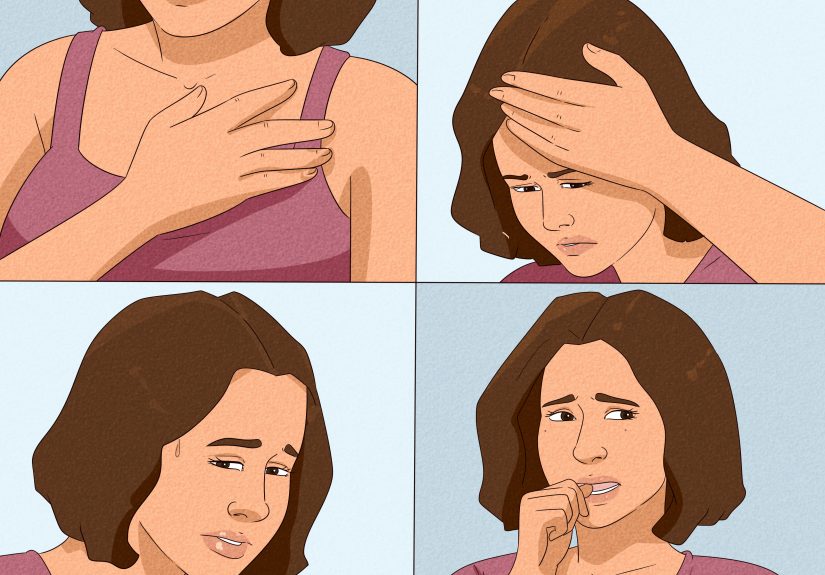
Fear is not just a thoughtit’s a full-body event. When your brain perceives a threat, a rapid alarm system kicks in. Signals move through threat-detection circuits that help trigger the stress response: your heart rate rises, breathing changes, muscles tense, and attention narrows toward survival.
You may have heard of “fight or flight,” but many people also experience freeze (shut down, go blank) or fawn (appease, smooth things over). None of these responses mean you’re weak. They’re variations of “How do I get through this?”
This is why you can logically know something is safeand still feel terrified. Logic is often running one room over while your nervous system is hosting a fire drill.
When a fear is trying to help… but becomes a problem
Fear is adaptive when it matches the situation and helps you respond. It becomes a problem when it’s intense, persistent, and leads to avoidance or life restriction: skipped opportunities, shrinking routines, strained relationships, or constant hypervigilance.
Clinically, persistent fear and worry can be part of anxiety-related conditions, and specific fears can develop into phobias. The key sign isn’t “Do you ever feel scared?” It’s “Is fear running your calendar?”
If fear is seriously impairing your lifeor causing panic, intrusive thoughts, or compulsive avoidancetalking with a qualified mental health professional can help. You don’t need to “earn” support by suffering longer.
How to decode your fear without letting it take over
You don’t have to eliminate fear to grow. You just need to change your relationship with itfrom “boss” to “advisor who sometimes exaggerates.”
Step 1: Name the fear underneath the fear
Ask: “If this goes badly, what am I afraid it will mean about me?” Examples:
- “If I fail, it means I’m incompetent.”
- “If they don’t text back, it means I’m not important.”
- “If I speak up, it means I’ll be rejected.”
Step 2: Separate probability from possibility
Your brain is great at imagining worst-case scenarios. That’s creativity, not prophecy. Try rating: How possible? vs. How likely? The goal isn’t forced positivity. It’s accurate thinking.
Step 3: Replace avoidance with “safe approach”
Avoidance teaches your brain that you survived because you avoided. Over time, the fear grows. Evidence-based therapies often use gradual, supported exposureapproaching what you fear in a structured way so your nervous system can learn: “I can handle this.”
You can use a gentle version in daily life:
- Pick the smallest step that feels challenging but doable.
- Stay long enough for anxiety to rise and then begin to fall.
- Repeat until your body stops acting like it’s the season finale of a survival show.
Step 4: Build a “values compass”
Fear asks, “What if it goes wrong?” Values ask, “What kind of person do I want to be if it’s hard?” When you act from valueskindness, curiosity, courage, honestyyou get a steadier sense of direction than fear can offer.
A mini self-reflection checklist
If you want the “What does this reveal about me?” answer, start here:
- What do I avoid when I’m afraid? (People? Feedback? Uncertainty? Vulnerability?)
- What am I trying to protect? (Belonging? Pride? Safety? Autonomy? Love?)
- When did I first learn this fear? (Early experiences often shape the alarm settings.)
- What would be possible if I weren’t organized around this fear?
- What is one small brave action I could take this week?
Conclusion
Your deepest fears aren’t proof that something is wrong with you. They’re evidence that your mind is tryingsometimes clumsilyto keep you safe, valued, and connected. When you learn what your fear is protecting, you gain a choice: keep living inside its rules, or thank it for the warning and move forward anyway.
The goal isn’t to become fearless. The goal is to become less ruled by fearand more guided by the life you actually want. And yes, you can bring fear along for the ride. Just don’t let it drive.
Experiences in real life: what fear reveals in the wild
Sometimes the clearest way to understand fear is to watch it show up in everyday momentsquietly, repeatedly, and with the confidence of someone who has never once been audited. The examples below are composite experiences pulled from common patterns (not anyone’s private story), but they’ll probably feel familiar.
Experience 1: The job interview that felt like a courtroom
You walk into an interview and suddenly your brain is convinced you’re on trial for “Crimes Against Competence.” Your mouth goes dry. Your memory deletes itself like a phone with 1% battery. Later, you replay the whole thing and decide you should never speak again.
What that fear often reveals isn’t “I’m bad at interviews.” It’s “I’m afraid my value is conditional.” When self-worth is tied to performance, any evaluation feels like a referendum on your identity. Underneath the fear is a desire for stability: “I want to know I’m okay even if I’m not perfect.”
Experience 2: The unread text that became a full-length movie
You send a message. No reply. Ten minutes pass. Your brain opens a new tab titled: “They Hate Me: A Documentary.” You start scanning for clues: punctuation, timing, last seen, the vibe of the universe. Eventually, you decide you should apologize for existing.
This fear often reveals a deep need for connection and reassurance. It can also highlight how your nervous system interprets ambiguity as abandonment. The text isn’t the real threat; the threat is the meaning you attach to silence. When you notice that pattern, you can practice separating “no reply yet” from “I’m unsafe.”
Experience 3: The plane turbulence that triggered ancient instincts
Turbulence hits and your body reacts like you’re falling off a cliff. Rationally, you know turbulence is common. Emotionally, your legs are preparing to outrun gravity. You grip the armrest, promise the universe you’ll become a better person, and briefly consider making peace with your enemies.
This fear often reveals how physical sensations can hijack logic. It’s not about being “dramatic”; it’s about your threat system associating bodily cues (shaking, dropping, strange sounds) with danger. With gradual exposure, coping skills, or support, many people learn that anxiety can spikeand still passwithout needing avoidance to rescue them.
Experience 4: The promotion you secretly didn’t want (even though you did)
You get a new opportunity and feel… dread. Not because you hate it, but because you might fail publicly. You start listing reasons you’re “not ready,” while also resenting yourself for not being excited.
Often, this fear reveals the double bind of growth: success can raise visibility and expectations. If your brain equates “more responsibility” with “more danger,” it will try to protect you by shrinking your world. The deeper message might be: “I want to expand, but I need internal permission to learn imperfectly.”
Experience 5: The argument you avoided that became a quiet resentment
Someone crosses a boundary. You say, “No worries!” even though it’s definitely worries. You keep the peace outwardly, but inside, your frustration grows into a small, well-organized museum exhibit.
Fear of conflict often reveals a powerful sensitivity to relational rupture. Many people learned early that disagreement led to withdrawal, punishment, or chaosso peace became a survival strategy. The growth edge is learning that healthy conflict can be structured, respectful, and even relationship-strengthening. Boundaries aren’t aggression; they’re clarity.
These experiences have one theme: fear is rarely random. It’s a messenger carrying a value, a wound, or an old rule for staying safe. When you listen for the messagewithout blindly obeying ityou start turning fear into information instead of limitation.