Table of Contents >> Show >> Hide
- What “Vibration Therapy” Means (And Why It’s Confusing)
- Why Vibration Might Help Bone (In Theory)
- What the Research Says About Vibration Therapy and Bone Density
- Does Vibration Therapy Help Prevent Fractures?
- Where Vibration Therapy May Shine: Balance, Strength, and Fall Risk
- Can Vibration Therapy Hurt Osteoporosis?
- Who Should Be Extra Cautious (Or Avoid It Unless a Clinician Clears It)
- If You Want to Try Vibration Therapy, How to Do It Smarter
- Common Myths (Because the Internet Loves a Shortcut)
- So…Does It Help or Hurt?
- Real-World Experiences With Vibration Therapy for Osteoporosis (About )
- Conclusion
If you’ve ever stood near a rumbling washing machine and thought, “Wow, my skeleton feels motivated,”
welcome to the modern question: can vibration therapy help osteoporosisor does it just shake your bones’
confidence?
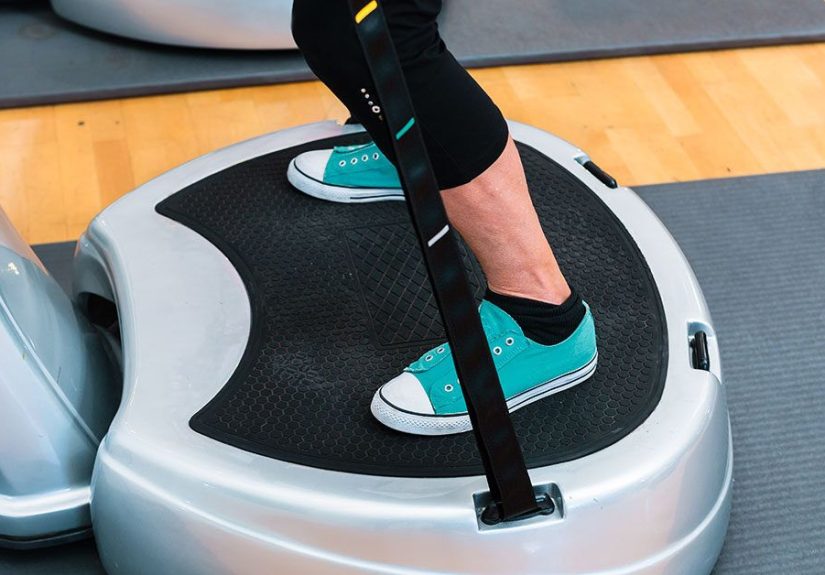
Vibration therapy (most commonly whole-body vibration, or WBV) usually means standing, sitting, or
doing light exercises on a platform that vibrates at a set frequency and intensity. You’ll see these called
vibration plates or vibration platforms in gyms, physical therapy settings, andbecause the
internet never sleepsliving rooms next to resistance bands and abandoned yoga mats.
Osteoporosis is a serious condition marked by low bone strength and higher fracture risk, so it’s smart to ask:
is WBV a legit bone-building tool, a fall-prevention helper, or an expensive way to feel like a human maraca?
Let’s break down what real research suggests, where the hype outpaces the evidence, and how to think about safety.
What “Vibration Therapy” Means (And Why It’s Confusing)
People use “vibration therapy” to describe a few different things, and mixing them up is where a lot of confusion
starts:
-
Whole-body vibration (WBV) platforms: You stand (or sometimes sit) on a vibrating platform. Some are
vertical, some are side-alternating, and they vary wildly in intensity and settings. -
Targeted/wearable vibration devices: Instead of vibrating your whole body through your feet, these aim
vibration at specific areas (like hips/lower spine). -
Massage guns and local vibration: These are mostly for soft tissue comfort and recoverynot bone density
treatment.
Most osteoporosis conversations revolve around WBV platforms and, more recently, targeted wearable vibration devices
that have entered the medical-device space for low bone density in specific populations. The details matter because
bone responds differently to different mechanical signals, and “vibrating” isn’t automatically the same as
“loading bone safely.”
Why Vibration Might Help Bone (In Theory)
Bone is living tissue. It constantly remodelsold bone is resorbed and new bone is formed. Mechanical loading
(think: walking, resistance training, hoppingif appropriate) can encourage bone to maintain or build strength.
That’s why clinicians often recommend weight-bearing exercise and strength training for
bone health.
Vibration therapy aims to provide a mechanical stimulus without high-impact movement. The proposed mechanisms include:
- Micro-loading signals: Small, repeated mechanical signals may influence bone remodeling pathways.
- Muscle activation: Vibration can trigger reflex muscle contractions, potentially improving strength.
- Balance and neuromuscular effects: Better balance and leg strength can reduce falls, which reduces fractures.
That last point is especially important: even if vibration doesn’t dramatically increase bone mineral density (BMD),
improving fall risk can still be meaningfulbecause many fractures happen due to falls, not because
someone gently looked at a staircase the wrong way.
What the Research Says About Vibration Therapy and Bone Density
1) Results are mixedand heavily depend on the protocol
Studies on whole-body vibration for osteoporosis and osteopenia have produced inconsistent results. Some trials and
systematic reviews suggest small improvements in BMDespecially in postmenopausal womenwhile other well-known
trials show no meaningful difference compared with controls.
One reason: protocols vary dramatically. Frequency (Hz), amplitude, acceleration (often expressed relative to “g”),
session length, weekly dose, posture during use, whether participants exercised on the plate, and baseline health
status all influence outcomes. In other words, “WBV” is less like a single treatment and more like a whole genre
of treatments, ranging from “gentle hum” to “airport runway.”
2) A major 12-month trial found no BMD benefit in postmenopausal women
A frequently cited year-long randomized trial in postmenopausal women reported that certain low-magnitude WBV
protocols did not alter bone density or bone structure compared with controls when participants also
received calcium and vitamin D. This finding helped cool early excitement that WBV platforms were a shortcut to
stronger bones.
Practical takeaway: if someone is selling vibration plates as a guaranteed way to “reverse osteoporosis,” that’s a
red flag. Research has not supported sweeping promises, and the best evidence points to modest effects at best,
not miracle transformations.
3) Meta-analyses suggest possible small benefits, but not a slam dunk
More recent systematic reviews and meta-analyses have reported that WBV may improve BMD slightly in certain groups
(often postmenopausal women), with some suggestions that higher-frequency, low-magnitude, and higher cumulative dose
protocols could be more favorable. But the overall effect sizes are typically small and the studies are
heterogeneousmeaning it’s hard to declare one “optimal vibration prescription.”
Translation: vibration therapy might help a little for some people, but it’s not consistently better than standard
exercise approaches, and it’s not reliable enough to be the main plan for osteoporosis treatment.
4) Wearable targeted vibration devices are a newer twist
In the last couple of years, a targeted wearable vibration device has received U.S. FDA De Novo clearance for a
specific indication: reducing the decline in certain measures of bone strength and volumetric bone density (as
assessed by CT) in postmenopausal women with osteopenia (not osteoporosis) under prescription use.
That’s notable for two reasons:
- It’s not the same as a gym vibration plate marketed for “toning” or “fat loss.”
- The indication focuses on slowing decline in a defined population, not curing osteoporosis or replacing medications.
Also important: scientific debate continues. In published commentary around targeted vibration research, some
experts have raised concerns about clinical significance and interpretation of outcomes. That doesn’t mean the
technology is uselessit means this is an evolving area where cautious optimism beats bold certainty.
Does Vibration Therapy Help Prevent Fractures?
Here’s the tricky part: BMD is not the same as fracture risk. Bone strength involves structure,
geometry, microarchitecture, and qualitynot just density.
Many vibration studies measure BMD (often via DEXA scan) and fall-risk factors, but fewer directly track fractures
long-term. When fracture outcomes are rare (as they often are in short studies), it’s hard to prove a fracture
prevention effect.
So the honest answer is:
We don’t have strong evidence that WBV alone prevents fractures the way proven osteoporosis therapies can.
However, if WBV improves balance, leg strength, and mobility, it could plausibly reduce fallsone important path
to fewer fractures.
Where Vibration Therapy May Shine: Balance, Strength, and Fall Risk
Some research suggests WBV can improve physical function in older adultsthings like muscle performance, balance,
and mobility. Systematic reviews looking at WBV exercise in older populations often note potential benefits for
fall-risk factors, though protocols differ and results aren’t uniform.
If you’re dealing with osteoporosis, that functional angle matters because:
- Stronger legs can help with gait and stability.
- Better balance can reduce stumbles and near-falls.
- Improved confidence can reduce fear-driven inactivity (which can worsen weakness over time).
Think of it this way: even if vibration therapy doesn’t build bone like a construction crew, it might still act
like better lighting and handrailsreducing the chance of a catastrophic fall.
Can Vibration Therapy Hurt Osteoporosis?
Potentially, yesdepending on the person and the device. “Vibration” is not automatically gentle. In workplace
health research, long-term whole-body vibration exposure (like heavy machinery operation) is associated with
musculoskeletal issues, and analyses of readily accessible WBV devices have raised concerns that some platforms can
exceed certain safety guidelines for vibration exposure.
For someone with osteoporosisespecially with prior fractures or spinal issuestoo much vibration, poor posture, or
an unstable stance could increase risk. The biggest “hurt” risks are usually:
- Falls during use: Stepping on/off or standing unsteadily on a vibrating surface is a real hazard.
- Excess spinal load: High intensity or poor technique may aggravate back pain or spinal conditions.
- Joint irritation: Knees, hips, or ankles may not appreciate aggressive vibration settings.
- Using the wrong tool for the job: “Fitness” vibration plates marketed for extreme workouts are not the same as low-magnitude therapeutic protocols.
Bottom line: vibration therapy can be a tool, but with osteoporosis, tools need instruction manualspreferably
written by clinicians, not influencers.
Who Should Be Extra Cautious (Or Avoid It Unless a Clinician Clears It)
This isn’t a complete medical list, but people with osteoporosis should be especially cautious if they have:
- Recent fractures (especially spine, hip, pelvis)
- Significant back pain, known spinal instability, or severe degenerative spine disease
- Balance problems or high fall risk
- Joint replacements or painful arthritis that flares with vibration
- Neurologic conditions affecting sensation or stability
If you’re considering a prescription targeted vibration device, it’s essential to follow the
prescribing clinician’s instructions and use it exactly as directedbecause that’s the protocol actually studied.
If You Want to Try Vibration Therapy, How to Do It Smarter
If your clinician says vibration therapy is reasonable as a complement (not a replacement) to your osteoporosis
plan, these practical steps can lower risk and raise the odds you’ll get something useful out of it:
Choose safety over “intensity”
- Start with low settings. More vibration is not automatically “more bone.”
- Use a stable platform with a sturdy handrail or hold a stable support.
- Wear supportive shoes if recommended for stability (unless your protocol requires otherwise).
Use posture that protects your spine
- Keep knees slightly bent (locked knees can transmit vibration more directly up the skeleton).
- Keep your core engaged and spine neutralno slouching like you’re waiting for a bus.
Think “bonus,” not “replacement”
Evidence-backed osteoporosis care usually includes a mix of:
- Appropriate medication when indicated
- Resistance training and weight-bearing activity tailored to your fracture risk
- Protein and overall nutrition that supports muscle and bone
- Vitamin D and calcium guidance (individualized, not one-size-fits-all)
- Fall-prevention strategies (vision checks, home hazard reduction, balance work)
Vibration therapy, at best, tends to fit as an add-on for function and possibly modest bone supportnot the main
character of the osteoporosis story.
Common Myths (Because the Internet Loves a Shortcut)
Myth: “Vibration plates rebuild bone fast.”
Reality: Some research suggests small improvements in certain settings, but results are mixed, and a major long-term
trial found no BMD benefit in a postmenopausal group. If a claim sounds like “instant bone upgrades,” it’s probably
marketing, not medicine.
Myth: “If it’s FDA-cleared, it treats osteoporosis.”
Reality: FDA clearance/authorization is specific to the device and its indication. A targeted wearable vibration
device has a cleared indication for osteopenia in postmenopausal women and focuses on reducing decline in
certain CT-based measuresnot broadly “treating osteoporosis” across all patients and severities.
Myth: “Vibration is safer than exercise.”
Reality: It can be lower impact than jumping, sure. But standing on a vibrating surface can increase fall risk if
you’re unsteady, and higher-intensity devices can stress joints or the spine.
So…Does It Help or Hurt?
Help: Vibration therapy may improve strength, balance, and mobility for some people, which can support
fall prevention. Some studies and meta-analyses suggest a small BMD benefit in certain groups and protocols,
especially postmenopausal women.
Hurt: It can be risky if intensity is too high, technique is poor, or the person is at high risk of
falls or has fragile vertebrae. Some consumer WBV devices may exceed conservative vibration exposure guidelines,
and “fitness” vibration plates are not automatically appropriate for osteoporosis.
Best framing: Vibration therapy is not a miracle cure and shouldn’t replace proven osteoporosis
treatments. But used carefullypreferably with clinician guidanceit may be a reasonable complementary tool,
especially if your goal is better function and lower fall risk.
Real-World Experiences With Vibration Therapy for Osteoporosis (About )
When people try vibration therapy for low bone density, the first “experience” is usually surprisenot at the
vibration, but at how specific it feels. Many expect a soothing spa buzz and instead get something closer
to “my calves are receiving an urgent memo.” The sensation can range from mildly tingly to intensely activating,
depending on the device and settings. That’s why experienced clinicians often encourage starting low and treating
the first week like a “get acquainted” phase rather than a boot camp.
A common positive report is that sessions feel time-efficient. People who struggle with traditional
exercisebecause of pain, fatigue, fear of falling, or simply not wanting to add another appointment to lifeoften
like that vibration sessions are short and structured. Some users say they feel “more awake” in their legs after a
session, similar to how a brisk walk can make your lower body feel more responsive. That can be motivating,
especially for older adults trying to rebuild confidence in movement.
On the flip side, a very common experience is uncertainty about whether it’s working. Bone density
changes slowly. People may hope to “feel” stronger bones the way you feel stronger muscles after lifting weights,
but bones don’t send progress selfies. This can lead to frustration: “I’m doing the vibrating thingwhere’s my new
skeleton?” The most satisfied users tend to be the ones who treat vibration therapy as a helper for balance,
posture, and strength, while still following a broader bone-health plan (strength training, nutrition, and medical
therapy when appropriate).
Some people report that vibration platforms feel better with guidance. For example, learning to keep
knees softly bent, maintaining a neutral spine, and using a stable support can make sessions feel safer and more
comfortable. Without that coaching, it’s easy to stand stiffly or shift weight oddly, which can cause knee or back
irritationleading to the “this hurts, so it must be building bone” myth. (Nope. Pain is not a bone-building KPI.)
Another real-world theme is adherence. People are more likely to stick with vibration therapy when
it’s simple, scheduled, and paired with a routinelike using the platform after brushing teeth or before morning
coffee. When it’s treated like a complicated workout with too many settings, it tends to become furniture. One
reason prescription targeted vibration devices have drawn attention is that they’re designed around a specific,
studied protocol and are used under clinician direction, which can improve consistency.
Finally, many users say the biggest “win” isn’t dramatic DEXA changeit’s feeling steadier. If
vibration therapy helps someone feel more stable on stairs, more confident walking outdoors, or less fearful of
losing balance, that functional improvement can be meaningful. The best experiences usually come from a realistic
goal: not “vibration will cure my osteoporosis,” but “vibration might help me move better and support my overall
fracture-prevention plan.”
Conclusion
Vibration therapy for osteoporosis sits in the “interesting but not magical” category. Research suggests possible
modest bone and functional benefits in certain protocols and populations, but results are mixed and safety depends
on the device, intensity, and the person using it. If you want to try it, treat vibration therapy like a
supporting actorone that can help with balance and strengthwhile your main osteoporosis plan stays rooted
in proven strategies and individualized medical guidance.