Table of Contents >> Show >> Hide
- From Celtic Bonfires to Neighborhood Doorbells
- Guising, Souling, and the First Trick-or-Treaters
- How Halloween Costumes Became Big Business
- The Psychology Behind Dressing Up
- Why Kids Love Halloween Costumes
- Why Adults Are (Secretly) Even More Obsessed
- From Scary to Silly: How Costume Themes Have Changed
- The Deeper Meaning: Control, Community, and Catharsis
- How to Choose a Halloween Costume You’ll Actually Love
- Real-Life Halloween Costume Experiences and Lessons
If you’ve ever found yourself standing in a crowded Halloween store wondering why you’re debating between “vampire,” “astronaut,” and “giant taco,” you’re not alone. Dressing up is such a normal part of Halloween that we rarely stop to ask why we do it. Is it just for the candy and Instagram photos, or is there something deeper going on when we zip up that costume?
The truth is, Halloween costumes have a surprisingly rich history. They grew out of ancient fears, religious rituals, immigration waves, Hollywood blockbusters, and our very human love of pretending to be someone (or something) else for a night. Let’s pull back the mask and see what’s really behind this spooky, sparkly tradition.
From Celtic Bonfires to Neighborhood Doorbells
Long before plastic pumpkins and polyester capes, there was Samhain, a Celtic festival celebrated over 2,000 years ago in what is now Ireland, the UK, and parts of France. Samhain marked the end of the harvest and the beginning of the dark half of the year. People believed the boundary between the living and the dead grew thin, allowing spirits to wander the earth. To protect themselves, they lit bonfires and wore disguises so wandering spirits wouldn’t recognize or harm them.
When Christianity spread through Europe, the church introduced All Saints’ Day on November 1 and All Souls’ Day on November 2. The evening before became All Hallows’ Eveeventually shortened to “Halloween.” Many older customs didn’t disappear; they blended into the Christian calendar. People still dressed up, but now costumes could represent saints, angels, demons, and the dead, all swirling together in one powerful, slightly spooky celebration.
Guising, Souling, and the First Trick-or-Treaters
By the Middle Ages, the practice of going door to door in costume was well established in parts of Europe. Children and sometimes adults would “guising”visiting homes in disguise to perform songs or recite verses in exchange for food, coins, or special “soul cakes.” In some areas, the visitors promised to pray for the souls of the dead in return for these treats.
These customs traveled with Irish and Scottish immigrants to North America, where they blended with local traditions. By the late 19th and early 20th centuries, newspapers were already describing Halloween parades, pranks, and costume parties. As trick-or-treating became a kinder, more kid-focused alternative to rowdy mischief, costumes moved firmly into the center of the holiday.
How Halloween Costumes Became Big Business
For a long time, costumes were homemade. Families repurposed old clothes, sheets, and makeup to create ghosts, witches, and skeletons. But in the early 20th century, as printing and manufacturing technology improved, companies began mass-producing costumes. By the 1930s, brands like Ben Cooper were selling boxed costumes based on monsters, cartoon characters, and radio or movie stars.
After World War II, television poured pop culture into American living rooms. Suddenly, kids could dress as their favorite superheroes, TV cowboys, or sci-fi aliens. Halloween became less about warding off spirits and more about becoming your favorite character for one magical night.
Today, Halloween is a financial powerhouse. Americans spend billions every year on costumes, candy, and decorations, with adult costumes and even pet costumes taking a growing slice of the pie. And just like everything else, costumes have been shaped by social media trends, viral memes, and whatever blockbuster movie or hit series is dominating the year.
The Psychology Behind Dressing Up
Okay, ancient spirits and retail trends asidewhat’s going on inside our heads when we put on a Halloween costume?
Psychologists talk about something called “enclothed cognition,” the idea that what we wear doesn’t just signal who we are; it actually influences how we think, feel, and behave. Slip into a lab coat and you may feel more focused. Put on athletic wear and you might feel more energetic. A Halloween costume works the same way: for a few hours, the outfit gives you permission to act a little braver, sillier, or more dramatic than you would on a normal Tuesday night.
Costumes also let us explore different identities in a low-stakes way. Kids experiment with what it feels like to be a firefighter, a princess, or a dragon. Adults test-drive personas they’d never wear to work: a villain, a movie icon, or a pun-based costume that basically exists just for the photo ops.
And then there’s the social element. Halloween is one big shared improv game. When everyone is dressed up, it becomes easier to talk to strangers, make jokes, and feel like part of the same quirky communitywhether you’re on a quiet cul-de-sac or at a packed Halloween party.
Why Kids Love Halloween Costumes
For kids, wearing a Halloween costume might be the purest form of play. They’re not just putting on clothes; they’re stepping into a story. That story might be saving the world, casting spells, taming dragons, or simply scoring as much candy as a plastic bucket can handle.
Costumes give kids a dose of independence. Choosing their own outfit is a big deal: it’s a way to say, “This is who I amor who I want to beright now.” Whether they pick a classic ghost or the latest animated character, the choice itself helps them explore their personality and preferences.
There’s also a comfort factor. Kids know Halloween is make-believe. Dressing up as something scary in a safe environmentsurrounded by friends, parents, and overflowing candy bowlscan actually make fears feel smaller and more manageable.
Why Adults Are (Secretly) Even More Obsessed
Once upon a time, Halloween was mostly for children, but the script has definitely flipped. Adult costume parties, haunted bar crawls, and elaborate office contests are now major parts of the season.
Part of the appeal is pure nostalgia: it’s a socially acceptable excuse to play again. Adults get to craft elaborate costumes, share inside jokes with friends, and lean into drama or comedy for a night. It’s like theater, but with candy bowls instead of ticket lines.
There’s also a creative challenge. Want a costume that really stands out? You have to brainstorm, plan, thrift, glue, sew, and sometimes hot-glue-gun your fingers (purely in the name of art, of course). Many people now DIY their costumes to save money, create something original, or respond to social media pressure to come up with clever, one-of-a-kind looks.
From Scary to Silly: How Costume Themes Have Changed
Originally, Halloween costumes leaned heavily into the creepy side: ghosts, witches, devils, skeletons, and other reminders of death and the supernatural. Over time, the costume menu expanded dramatically.
- Classic horror: Vampires, zombies, mummies, and monsters still stalk the streets every October.
- Pop culture icons: Superheroes, movie stars, video game characters, and streaming-series favorites are everywhere.
- Funny and punny: Costumes based on puns or memesthink “cereal killer” or “when life gives you lemons”are a modern favorite.
- Group and family themes: Entire families show up as characters from the same movie or concept, from “The Incredibles” to a full fruit bowl.
- Pet costumes: Because nothing says “Happy Halloween” like a dachshund dressed as a hot dog.
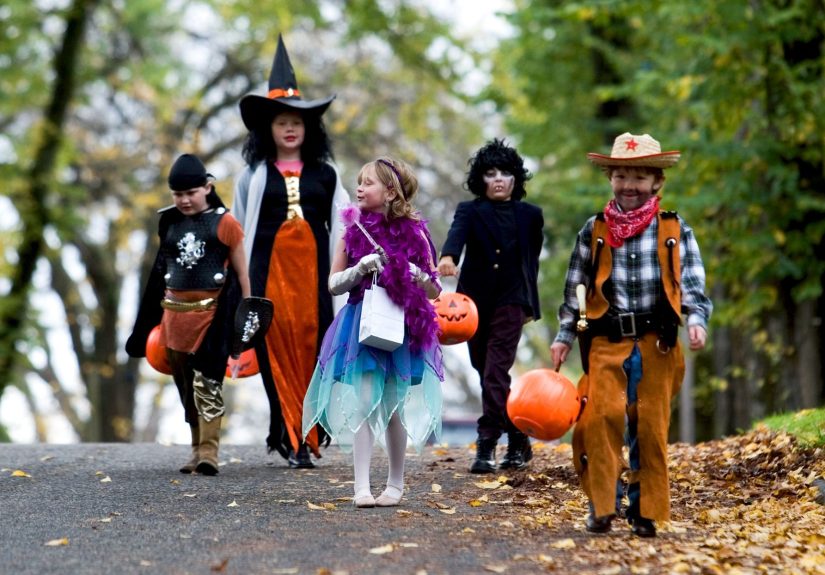
In a single neighborhood, you might see a terrifying movie monster walking right next to a toddler in a fluffy cupcake costume. That contrast is part of the charm: Halloween lets spooky and silly coexist on the same sidewalk.
The Deeper Meaning: Control, Community, and Catharsis
Under all the glitter and fake blood, Halloween costumes help us work through serious themes in a playful way. Facing fears of death and the unknown? Turn them into something you can literally zip up and step out of at the end of the night. Feeling stressed and over-scheduled? For a few hours, you get to be a pirate captain or a movie hero instead of “person with 97 unread emails.”
On a community level, costumes create instant connection. Neighbors who barely nod at each other in July will happily gush over a clever costume in October. Kids learn to greet strangers politely, say “thank you,” and share sidewalk space. Adults get an easy conversation starter: “Wait, are you supposed to be…?”
In a world that can feel heavy and serious, Halloween gives us a structured, socially approved way to be weird together. The costumes are the ticket in.
How to Choose a Halloween Costume You’ll Actually Love
With all this history and emotion behind Halloween costumes, no pressure or anythingbut choosing one can feel like a big decision. Here are a few tips to make it fun instead of stressful:
1. Start with how you want to feel
Do you want to feel powerful, mysterious, hilarious, or cute? Pick an emotion first, then choose a character or concept that matches. A superhero, a vampire, a giant bananathey all deliver totally different vibes.
2. Think about comfort (future you will be grateful)
Will you be walking long distances, dancing at a party, or crouching down to talk to little trick-or-treaters? Choose shoes and layers that won’t have you plotting your escape after 20 minutes.
3. Play to your strengths
If you’re crafty, a DIY costume can be a fun creative project. If you’re busy, a simple store-bought base with a few clever accessories can still look amazing. There’s no “correct” way to do Halloweenonly the way that works for you.
4. Respect your audience
Some neighborhoods skew family-friendly, while others go all-in on gore and adult humor. When in doubt, err on the side of inclusive, non-offensive costumes so everyone can enjoy the night.
Real-Life Halloween Costume Experiences and Lessons
Beyond history, psychology, and spending statistics, the best explanation for why we wear costumes on Halloween is simple: the experience is fun, memorable, and deeply human. To see how that plays out, it helps to look at the small, everyday stories that unfold on October 31.
The shy kid who becomes a superhero
Imagine a child who’s normally quiet at school. On Halloween, they show up in a superhero costumecape, mask, the works. Something shifts. They stand taller, speak louder, and volunteer to lead the trick-or-treating group. The costume doesn’t magically change their personality, but it gives them temporary permission to lean into a more confident version of themselves. After the holiday, some of that confidence often sticks.
Parents see this every year: kids use costumes to test-drive bravery, leadership, or silliness. For them, Halloween is less about “looking cute for photos” and more about figuring out who they might become.
The DIY parent with glitter on everything
Then there’s the parent who swears they’ll just buy a costume this yearand somehow ends up knee-deep in fabric scraps, cardboard, and craft-store receipts. Maybe it’s because their child has requested an oddly specific costume (“a glow-in-the-dark space unicorn, but make it scary”). Maybe it’s because social media is full of jaw-dropping DIY ideas that make anything less feel lazy.
The process can be chaotic. Hot glue burns happen. Seams pop at the last minute. But when the kid beams at their one-of-a-kind costume, the late nights suddenly feel worthwhile. For many families, those messy, glitter-covered evenings become some of the most cherished Halloween memories.
The friend group with a running gag
Adults build their own traditions, too. Maybe a group of friends chooses a theme every yearclassic monsters one year, ’80s movies the next, puns the year after that. Over time, the costumes become a shared story: “Remember when your vampire cape kept getting caught in the door?” “Remember when we tried to walk three blocks in cardboard robot suits?”
These traditions turn Halloween from a one-off holiday into a thread that runs through years of friendship. The costumes are fun in the moment, but they also become shorthand for entire chapters of life.
The neighbor who makes everyone feel welcome
Every town has that one house that goes all outtasteful decorations, great candy, and homeowners in full costume greeting every trick-or-treater like an honored guest. Those neighbors often become unofficial Halloween ambassadors. Kids talk about them all year. Parents plan their route so they don’t miss that stop.
Wearing a costume as an adult in this context isn’t about personal attention. It’s about hospitality. It says, “We’re in this with you. Tonight, our whole street is part of the story.” That shared participation turns an ordinary block into a temporary community festival.
The moment the mask comes off
At the end of the night, everyone eventually peels off the mask, wig, or face paint. Shoes get kicked off. Candy is sorted into extremely serious categories. Costumes are folded away or doomed to the back of the closet. That quiet, slightly sticky moment is part of the magic, too.
We remember the feeling of becoming someone else for a few hours, of seeing our friends and neighbors transformed, of walking under porch lights with plastic buckets and fog machines humming in the distance. The ritual of changing clothes becomes a ritual of resetting: we slip out of the costume, but we keep the laughter, courage, and connection it helped us create.
And that’s the heart of it. We wear costumes on Halloween not just because we’re afraid of ancient spirits or because retailers say so, but because pretending together is one of the simplest, most joyful things humans can do. Costumes give us a way to celebrate mystery, creativity, and communityall in one night, powered by imagination and way too much candy.