Table of Contents >> Show >> Hide
- The One Dryer Mistake, Explained
- Why This Mistake Matters More Than People Think
- How to Tell This Mistake Is Already Happening in Your Home
- What You Should Do Instead
- Common Dryer Myths That Lead to This Mistake
- Best Habits for a Safer, Smarter Laundry Routine
- When to Call a Professional
- The Bottom Line
- Extra Experiences: What This Dryer Mistake Looks Like in Real Life
- SEO Tags
Dryers are funny little machines. They sit there looking innocent, quietly tumbling your jeans and towels into warm, fluffy submission, while most of us assume they need approximately zero attention. You load the clothes, press a button, walk away, and return expecting fabric perfection. What could possibly go wrong?
Quite a bit, actually.
If there is one dryer mistake you really need to avoid, it is this: treating lint cleanup like a small chore instead of an essential part of dryer maintenance. In other words, ignoring lint buildup in the lint screen, the lint trap housing, and especially the dryer vent. It sounds minor. It is not minor. It is the kind of “I’ll do it later” habit that can make your dryer slower, hotter, less efficient, harder on clothes, and far more hazardous than it needs to be.
The good news is that this mistake is easy to fix once you know what to watch for. The even better news is that preventing it does not require a toolbox the size of a pickup truck or a weekend sacrificed to the gods of home maintenance. It mostly takes consistency, a little common sense, and the willingness to respect the fuzzy gray villain known as lint.
The One Dryer Mistake, Explained
Most people think dryer maintenance begins and ends with peeling lint off the screen once in a while. That is better than nothing, but it is not the whole story. The real mistake is assuming the lint screen catches everything and that the dryer can handle the rest on its own.
It cannot.
Every time you dry a load of clothes, tiny fibers break loose. Some land on the screen. Some drift into the lint trap slot. Some travel through the vent duct. Over time, that buildup narrows airflow. Once airflow drops, the dryer has to work harder and hotter to do the same job. That is when laundry day stops being mildly annoying and starts becoming expensive, inefficient, and potentially unsafe.
Think of your dryer like a runner trying to sprint while breathing through a straw. Yes, technically it may still move. No, it will not be happy about it.
Why This Mistake Matters More Than People Think
1. It Restricts Airflow
A dryer works by moving hot air through wet clothes and then sending moisture out through the vent system. When lint collects in the screen, trap housing, or exhaust duct, that airflow gets choked off. Clothes stay damp longer, cycles drag on, and the appliance cannot perform the way it was designed to.
This is often why a dryer suddenly seems “old” even when it is not. People assume the machine is wearing out, when in reality it may just be struggling to breathe.
2. It Can Raise Fire Risk
Lint is light, dry, and highly flammable. That is not exactly the personality profile you want near a heat-producing appliance. When lint builds up inside the dryer system, heat can accumulate where it should not. That is one reason safety experts and manufacturers repeat the same advice again and again: keep the lint screen clean, keep the vent clear, and do not ignore longer drying times.
This is the part where the humble laundry chore suddenly becomes a home-safety issue. Not glamorous, but definitely important.
3. It Makes Your Dryer Less Efficient
A clogged system forces the dryer to run longer to remove the same amount of moisture. That means more energy use, more wear on parts, and more time spent waiting for your favorite sweatshirt to stop feeling like a damp apology.
And when your dryer runs hotter and longer than necessary, your clothes can pay the price too. Fabrics may fade faster, elastic can weaken, and delicate items may come out looking like they have been through an emotional event.
4. It Can Shorten the Life of the Appliance
Appliances last longer when they are not constantly overworking. A dryer with poor airflow is under extra strain every single cycle. Motors, heating components, sensors, and safety switches all have to deal with conditions that are less than ideal. Eventually, that can turn a neglected lint problem into a repair bill.
How to Tell This Mistake Is Already Happening in Your Home
Dryers are not great conversationalists, but they do leave clues. If you notice any of the signs below, lint buildup may be the reason:
- Clothes take much longer than usual to dry
- Towels come out warm but still damp in the middle
- The dryer feels unusually hot on the outside
- The laundry room gets hotter than the rest of the house
- You notice a musty or slightly burned smell
- There is more lint than usual on clothing after a cycle
- The exterior vent flap does not open properly when the dryer runs
- You keep pressing “start” for a second or third cycle just to finish one load
That last one is especially sneaky because people often blame the load size, the weather, or the dryer’s mood. But repeated long dry times are one of the clearest warning signs that airflow needs attention.
What You Should Do Instead
Clean the lint screen every load
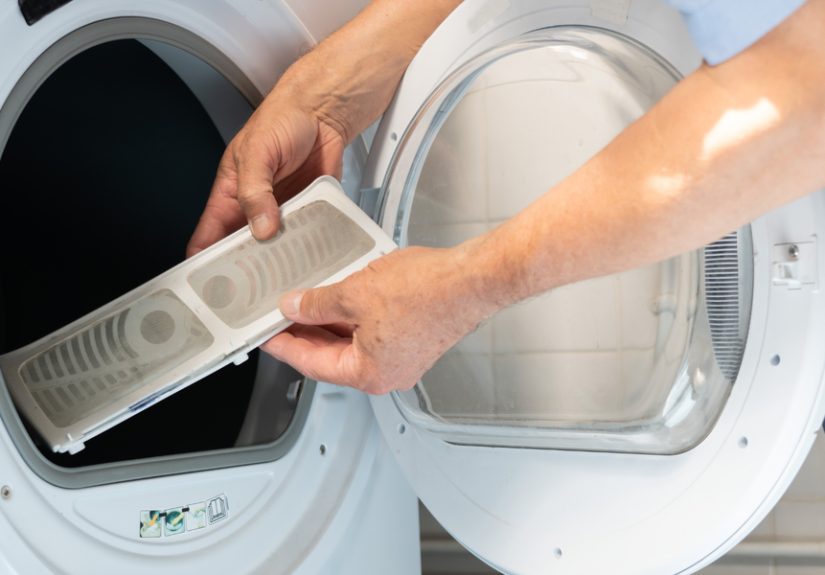
This is the non-negotiable habit. Make it automatic. Open the dryer, remove the screen, pull off the lint, and put the screen back before or after each cycle. If you wait until the lint looks dramatic, you have already waited too long.
And no, staring at the lint screen and thinking “that seems fine” does not count as maintenance.
Clean inside the lint trap housing regularly
The screen is not the only place lint collects. The slot where the screen sits can also gather fuzz over time. Use a vacuum attachment or a brush designed for narrow spaces to remove what the screen does not catch. This is a smart monthly habit for most households, especially if you do a lot of laundry.
Inspect and clean the dryer vent
This is the step many people skip, and it is exactly why the “one dryer mistake” becomes such a common problem. The vent line behind the dryer and the duct leading outdoors need periodic cleaning too. If your dryer vent is long, bends a lot, or exits in an awkward location, buildup can happen faster than you think.
For many homes, a thorough vent cleaning at least once a year is a good baseline. If you have pets, a big family, or you run loads constantly, you may need to check it more often.
Do not overload the dryer
Even with a clean vent, airflow matters inside the drum too. Stuffing the dryer with giant loads may feel efficient in the moment, but it often backfires. Clothes need room to tumble so warm air can circulate. If the drum is packed too tightly, moisture stays trapped and drying time increases.
Translation: the “save time by cramming everything in” strategy often saves no time at all.
Wash the lint screen occasionally
Here is a detail many people miss: the lint screen itself can develop an invisible film from dryer sheets, fabric softener residue, or detergent carryover. When that happens, airflow may suffer even if the screen looks clean. Washing the screen periodically with warm water, a little dish soap, and a soft brush can help restore proper performance. Just make sure it is fully dry before putting it back.
Check the exterior vent opening
The outside vent hood should open when the dryer is running. If it is stuck, blocked by lint, or crowded by debris, airflow can back up into the system. Birds, leaves, dust, and general outdoor nonsense are not invited here.
Common Dryer Myths That Lead to This Mistake
“I clean the screen, so I’m done.”
Not quite. Cleaning the screen is essential, but it is only one piece of the system. Lint still makes its way into the vent and surrounding areas.
“If the dryer heats up, it must be working.”
Heat alone is not the goal. Controlled airflow plus heat is the goal. A dryer that gets very hot but dries poorly is not doing a great job; it is waving a red flag.
“Longer dry times are normal in winter.”
Sometimes loads vary, sure. But a noticeable and repeated increase in drying time is usually worth checking. The dryer should not need three rounds just because the calendar changed.
“I’ll know if there’s a serious problem.”
Not always. Lint buildup often starts as a quiet efficiency problem before it becomes a bigger maintenance or safety issue. By the time you smell something odd or feel excessive heat, the system may already be overdue for cleaning.
Best Habits for a Safer, Smarter Laundry Routine
- Empty the lint screen every load
- Vacuum the lint trap housing regularly
- Inspect the vent line and outside flap often
- Schedule a thorough vent cleaning at least yearly
- Keep the area around the dryer free of dust and clutter
- Avoid running the dryer when you are not home or while you are asleep
- Do not overload the drum
- Clean moisture sensors and the lint screen if residue builds up
These habits are simple, but together they make a big difference. They help the machine dry better, lower wear on fabrics, and reduce the chance that your dryer turns into the most passive-aggressive appliance in the house.
When to Call a Professional
DIY maintenance is great, but not every dryer setup is easy to access. Call a professional if:
- Your vent run is long or has multiple turns
- The dryer is still slow after you clean the screen and visible vent areas
- You smell burning
- The unit shuts off unexpectedly or overheats
- You have a gas dryer and want a full safety inspection
- You are not comfortable pulling the dryer away from the wall
There is no shame in outsourcing a task that involves heat, airflow, tight spaces, and the possibility of accidentally inventing a new curse word.
The Bottom Line
If you remember only one thing from this article, let it be this: the one dryer mistake you need to avoid is ignoring lint beyond the obvious surface layer. The lint screen matters, yes. But the real win comes from treating the whole airflow system with respect.
A clean dryer is not just about fluffy towels. It is about performance, energy use, clothing care, appliance longevity, and household safety. It is one of those tiny maintenance habits that feels boring until you realize it solves five problems at once.
So the next time laundry day rolls around, give your dryer a little attention before it starts drama. Clean the screen. Check the vent. Let the machine breathe. Your clothes, your energy bill, and your future self will all be grateful.
Extra Experiences: What This Dryer Mistake Looks Like in Real Life
Most people do not discover this dryer mistake through a thrilling passion for appliance care. They discover it the old-fashioned way: by wondering why a normal load of towels suddenly takes forever. Maybe it starts with jeans that are still damp at the waistband. Maybe it starts when the dryer feels hotter than usual, or when the laundry room turns into a sauna with bad lighting. The experience is almost always the same. First comes confusion. Then denial. Then someone says, “Huh, maybe the vent needs cleaning,” as if they have just cracked a federal case.
One of the most common experiences is the slow creep problem. Nothing seems dramatically wrong at first. The dryer still works. Clothes still dry eventually. But over a few weeks or months, one cycle becomes two. Heavy fabrics stop drying evenly. The dryer gets louder, hotter, or more temperamental. People blame the detergent, the weather, the washing machine spin cycle, or the fact that bath towels are apparently made from emotional baggage. Meanwhile, the real issue is lint quietly building where nobody is looking.
Another classic experience happens in busy family homes. Laundry piles up, schedules get chaotic, and dryer maintenance starts feeling optional. The lint screen gets cleaned when someone remembers. The vent gets ignored because it is behind the machine and therefore spiritually located in another zip code. Then one day a parent notices the kids’ school uniforms are still damp after a full cycle, or the dryer shuts off early, or the room smells warm in a way that does not feel comforting. That is usually the moment when a simple cleaning job suddenly becomes a very urgent priority.
Pet owners know this story especially well. If you share your home with dogs or cats, you are not just drying clothes. You are drying clothes, towels, blankets, and approximately twelve pounds of mystery fluff. Pet hair combines with lint in ways that feel almost architectural. It can collect faster, cling harder, and create extra mess in the screen and vent system. People often think, “My dryer is just bad with pet hair,” when the real lesson is that high-lint households need even more consistent upkeep.
There is also the experience of the “but I cleaned the lint screen” crowd. This is the most relatable group of all, because they are not careless. They are doing the obvious thing. They just did not realize the screen was only step one. These are the people who pull off the lint like responsible adults and still end up shocked when a vent cleaning pulls out enough compacted fuzz to knit a winter scarf for a medium-size bear.
Then there is the oddly satisfying aftermath. Once the dryer is properly cleaned, the improvement is often immediate. Loads finish faster. Clothes feel more evenly dried. The machine sounds less strained. The room stays cooler. Suddenly, an appliance that seemed moody and unreliable goes back to acting normal, which is really all anyone wants from a dryer. No speeches. No drama. Just dry laundry.
That is why this mistake matters so much in real life. It hides inside ordinary routines. It is easy to miss, easy to postpone, and surprisingly easy to fix once you stop underestimating it. The experience most people remember is not the cleaning itself. It is the moment they realize how much better the dryer works when it can finally breathe again.