Table of Contents >> Show >> Hide
- The Story Behind the $2M “Abandoned” House
- Here’s How It Looks Now: The Before-and-After That Fueled the Debate
- Why Abandoned Homes Spark Big Feelings (Even in the U.S.)
- Squatting, “Squatter’s Rights,” and the Myth of Instant Ownership
- If You Love Abandoned-House Makeovers, Here’s the Legal Way to Do It
- So…Was It a Makeover Miracle or a Property Rights Mess?
- Real-World Experiences From Abandoned-House Renovations (Extra )
The internet loves a good makeover story: peeling paint, waist-high weeds, and thenbamfresh flowers, a tidy porch, and that “how is this the same place?” glow-up.
This one came with an extra ingredient that makes comment sections foam like a shaken soda: squatting.
The viral headline version sounds like an edgy HGTV pilot: a couple finds an abandoned $2 million house, moves in, renovates it, and reveals a stunning before-and-after.
The real-life version is messier (because it’s real life), involving disputed permission, an elderly owner, neighbors arguing over fairness, and the awkward truth that
renovating a property doesn’t automatically make it yours.
Let’s unpack what happened, what “it looks like now” actually means, and what this story teaches anyone obsessed with abandoned-house transformationswithout pretending
trespassing is a DIY hack.
The Story Behind the $2M “Abandoned” House
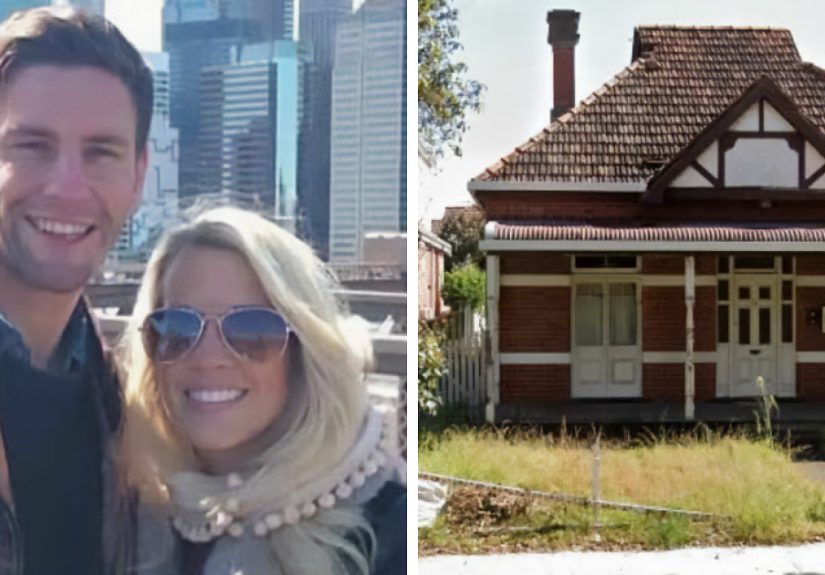
According to public reporting, the house at the center of the drama was a historic home in Shenton Park, a well-heeled suburb of Perth, Australia. The property had reportedly
been unoccupied for years after storm damage, and its condition visibly deterioratedthink neglected yard, tired exterior, and the general vibe of a place time forgot.
Then came the couple: a schoolteacher and his wife, a musician. They told locals (and later media) that they were renting the house from the elderly owner.
The owner’s family disputed that claim, saying no lease existed and that the owner had never authorized anyone to live there.
That disagreement is the heart of why this story exploded. If the couple truly had permission, it’s a weird landlord-tenant conflict. If they didn’t, it’s a straightforward
case of occupying someone else’s propertyno matter how much elbow grease got poured into the place.
Why this didn’t stay a “local dispute”
Because it hit several hot buttons at once:
empty homes during a housing squeeze, resentment about wealth and entitlement, sympathy for an older owner, and the morally confusing idea that someone can
do “good work” while still doing something they may not have the right to do.
Here’s How It Looks Now: The Before-and-After That Fueled the Debate
The makeover claim wasn’t just “we painted a wall.” People pointed to street-view style images showing a clear shift from decline to “somebody cares about this place again.”
In the “before” era, the property looked neglectedovergrowth and visible wear. In the later images, the home presented as maintained: the yard looked managed, the exterior
appeared cleaner, and the whole scene read as lived-in and stabilized.
In renovation terms, that kind of transformation typically involves a mix of unglamorous basics and a few high-impact changes:
- Site clean-up: removing overgrowth, trash, fallen branches, and anything attracting pests.
- Exterior triage: patching obvious damage, cleaning surfaces, repainting or refreshing finishes.
- Safety fixes: addressing broken windows/doors, water intrusion, and electrical hazardsespecially if a home sat empty.
- “Curb appeal” improvements: fencing, landscaping, and visible maintenance that makes a house look cared for.
Here’s the twist: a house can look dramatically better from the street while still having major issues behind the walls. A tidy lawn doesn’t guarantee the wiring is safe.
Fresh paint doesn’t prove the roof is sound. And a cute fence definitely doesn’t replace a valid lease.
Why Abandoned Homes Spark Big Feelings (Even in the U.S.)
In the U.S., vacant and abandoned properties are a real, documented problemoften linked to neighborhood decline, safety concerns, and financial strain on local governments.
At the same time, it’s also true that many people struggle to find stable, affordable housing. So when a long-empty house suddenly looks “alive” again, the public reaction
can split right down the middle.
One side sees waste: “How can a livable home sit empty?” The other side sees a boundary: “How can someone decide that empty means available?”
Both reactions come from real pressuresbut they don’t cancel each other out.
Squatting, “Squatter’s Rights,” and the Myth of Instant Ownership
Online discussions often mash together three separate ideas:
trespassing (being somewhere you’re not allowed), tenant protections (rules about removing occupants), and adverse possession
(a legal doctrine that can, in limited circumstances and after a long time, change ownership).
Adverse possession is not a weekend project
In U.S. law, adverse possession typically requires that possession be open and notorious (not hidden), actual, exclusive, continuous for
a statutory period, and hostile (meaning without the owner’s permission). It’s not “I changed the locks, therefore I own it.” It’s a long, fact-heavy legal process
that varies by state, and it often ends up in court.
Also important: if someone has the owner’s permissionlike a valid leasethen the “hostile” requirement usually fails. Permission and adverse possession don’t play nicely
together. That’s part of why disputed “we rented it” claims can become a legal knot.
Tenant-style protections can complicate removaleven when ownership is clear
Some U.S. jurisdictions treat someone as a tenant after certain conditions are met (like length of occupancy), which can push an owner into formal eviction procedures rather
than instant removal. That can create highly publicized disputes where owners feel stuck in paperwork while unauthorized occupants claim protections.
None of that is a moral endorsement of squatting. It’s just the reality that housing law often prioritizes due processsometimes frustratingly so.
If You Love Abandoned-House Makeovers, Here’s the Legal Way to Do It
If what you really love is the transformationthe rescue of a neglected propertythere are legitimate paths that don’t involve gambling your future on a lawsuit.
Think of these as the “renovation story” routes that don’t require a courtroom cameo.
1) Buy distressed property the boring way (aka: the way that holds up in court)
Foreclosures, tax sales (where allowed), estate sales, and fixer-uppers listed “as-is” can be challengingbut they come with a paper trail, which is renovation’s best friend.
When your ownership is clean, your renovation budget can focus on drywall instead of legal fees.
2) Work with local programs that address vacancy
Many areas use strategies like land banks, redevelopment authorities, or targeted rehabilitation programs to move vacant properties back into productive use. The goal is
similar to the “squat-and-fix” fantasybring life backbut with rules, inspections, and accountability.
3) Renovate safely: old houses come with old-house hazards
Older properties can hide expensive surprises. Common U.S. concerns include lead paint (especially pre-1978 homes), asbestos in certain building materials, mold from water
intrusion, and outdated electrical systems. A renovation that ignores hazards isn’t heroicit’s just a slower way to create an emergency.
If your dream is a stunning “after” photo, the smartest first step is often the least Instagrammable one:
inspection, permits, and a plan that respects building codes and basic health and safety.
So…Was It a Makeover Miracle or a Property Rights Mess?
Honestly? It can be both. The house appears to have improved in visible condition, and that’s emotionally satisfyingnobody loves watching a home rot.
But property ownership isn’t a vibes-based system. A renovation doesn’t create a right to occupy, and “we made it nicer” isn’t a replacement for consent.
If there’s a takeaway worth keeping, it’s this: vacancy is a community problem, but taking someone else’s home isn’t the solution.
The best rescue stories are the ones where the transformation is real and the paperwork matches the paint.
Real-World Experiences From Abandoned-House Renovations (Extra )
People who take on abandoned or long-neglected homeslegallytend to describe the experience as equal parts adventure, endurance sport, and “why does every screw hate me?”
Even when you’re doing everything by the book, the house will still test your patience like it’s training for the Olympics.
One of the most common experiences is the surprise multiplier. You budget for a roof patch and discover the gutters were basically a decorative suggestion.
You plan to refinish floors and realize the subfloor is auditioning for a trampoline. You think you’re buying a “cosmetic fixer” and learn that water has been freelancing
behind the walls for years. This is why seasoned renovators talk about contingency funds the way hikers talk about water: if you don’t bring enough, you will regret it.
Then there’s the emotional whiplash. Day one feels like a movie montage: keys in hand, big dreams, maybe a celebratory pizza on a bare floor.
Day ten is you staring at an open wall cavity, whispering, “Who wired this, a raccoon?” But somewhere around week six (or month six), small wins start stacking:
a functioning light switch, a door that closes properly, a room that doesn’t smell like mystery moisture.
Another repeated theme is how much the neighbors matter. In many communities, a vacant house becomes a symbolsometimes of neglect, sometimes of danger,
sometimes of heartbreak. When an abandoned property finally gets attention, neighbors often feel relief, curiosity, and a protective instinct all at once.
Renovators who introduce themselves, communicate timelines, and keep the site tidy tend to earn goodwill fast. Renovators who treat the block like a backdrop for a personal
adventure… don’t. The best “before-and-after” stories include relationship repair, not just drywall repair.
Renovators also talk about the moment the house stops feeling like a project and starts feeling like a home. It’s rarely the day you finish the kitchen.
It’s usually something small: the first quiet morning when the heat works, the first rainstorm that doesn’t leak, the first time you realize you’re no longer bracing for
the next catastrophe. That’s when people say, “Okay. We saved it.”
And yes, there’s a universal experience: the “looks good now” illusion. The exterior might be magazine-ready while the inside is still a long-term saga.
A fresh fence and a neat yard can happen quickly; safe electrical work and moisture control take time. The most successful renovators learn to celebrate visible progress
without letting it fool them into skipping the boring-but-critical steps. In other words: enjoy the glow-upbut keep paying attention to what you can’t see.