Table of Contents >> Show >> Hide
- A Design Gallery With a Point of View
- Why San Francisco Was the Right City
- Inside the San Francisco Gallery Experience
- A Curated Mix of Local, National, and International Talent
- The 2018 Expansion: More Than Extra Square Footage
- How The Future Perfect Reflects the New Luxury
- San Francisco’s Larger Design Context
- What Visitors Should Notice
- Why the Opening Still Matters
- Experience Notes: Visiting The Future Perfect in San Francisco
- Conclusion
San Francisco has never been shy about design. This is a city where Victorian facades flirt with glass towers, where fog turns ordinary streets into moody film sets, and where a single chair can start a debate about craftsmanship, technology, taste, and whether anyone has room for a dining table anymore. So when The Future Perfect opened its San Francisco gallery in Pacific Heights, it did more than add another stylish address to the city’s design map. It gave collectors, designers, architects, and curious wanderers a new way to experience contemporary design: not as a showroom full of silent objects, but as a lived-in conversation.
Located at 3085 Sacramento Street, The Future Perfect San Francisco sits in one of the city’s most design-conscious neighborhoods. Pacific Heights and nearby Presidio Heights are known for independent boutiques, elegant homes, refined interiors, and the kind of window displays that make a person suddenly reconsider every lamp they have ever owned. The gallery first opened in 2013 and later expanded in 2018, growing from a more compact design destination into a layered, residential-style gallery that encourages discovery room by room.
That evolution matters. The Future Perfect is not simply selling furniture, lighting, ceramics, or collectible objects. It is selling the rare feeling that design can still surprise us. In an era when many people first meet interiors through a phone screen, The Future Perfect’s San Francisco gallery argues for the power of walking through a real space, seeing materials in person, and discovering how a sculptural lamp, a hand-built vessel, or a quietly confident chair can change the entire mood of a room.
A Design Gallery With a Point of View
The Future Perfect was founded by David Alhadeff in 2003 and has grown into one of the most influential contemporary design galleries in the United States. Its identity has always sat somewhere between gallery, showroom, incubator, and beautifully edited home. That blend is the secret sauce. A traditional furniture store may show you what to buy. A gallery may show you what to admire. The Future Perfect tries to do both while whispering, “Yes, this ceramic stool is art, but you may also sit near it and feel cooler by association.”
The San Francisco location continues this philosophy with a collection that includes limited-edition design, one-of-a-kind works, lighting, furniture, ceramics, textiles, and decorative objects by established and emerging makers. Instead of arranging pieces like inventory in a warehouse, the gallery places them in an environment that feels domestic, layered, and slightly theatrical. That approach helps visitors imagine the work not as isolated objects, but as part of real interiors with personality.
Why San Francisco Was the Right City
San Francisco is an ideal match for The Future Perfect because the city has long understood the tension between tradition and reinvention. Its architecture tells that story clearly: Edwardian homes, midcentury residences, industrial lofts, tech offices, art spaces, and restored historic buildings all exist in a compact urban landscape. The city’s interiors often have to be clever, personal, and flexible because square footage is precious and expectations are high. In San Francisco, a room cannot merely look good. It must work hard, age well, and survive dinner guests who want to talk about both sourdough and venture capital.
The Future Perfect’s gallery fits into that culture by highlighting objects that are thoughtful rather than disposable. Many pieces in its orbit are made by designers and artists who care deeply about material, process, and form. The result is a refreshing counterpoint to fast furniture. Instead of encouraging shoppers to replace everything every season, the gallery celebrates works that can become long-term companions in a home.
Inside the San Francisco Gallery Experience
The most important thing to understand about The Future Perfect San Francisco is that it does not feel like a conventional retail space. The gallery’s expansion introduced interconnected rooms, a more residential tone, and a sense of movement that rewards curiosity. Visitors can drift from one area to another, discovering how lighting changes texture, how ceramics can soften a modern room, or how an unexpected material can make a familiar form feel new again.
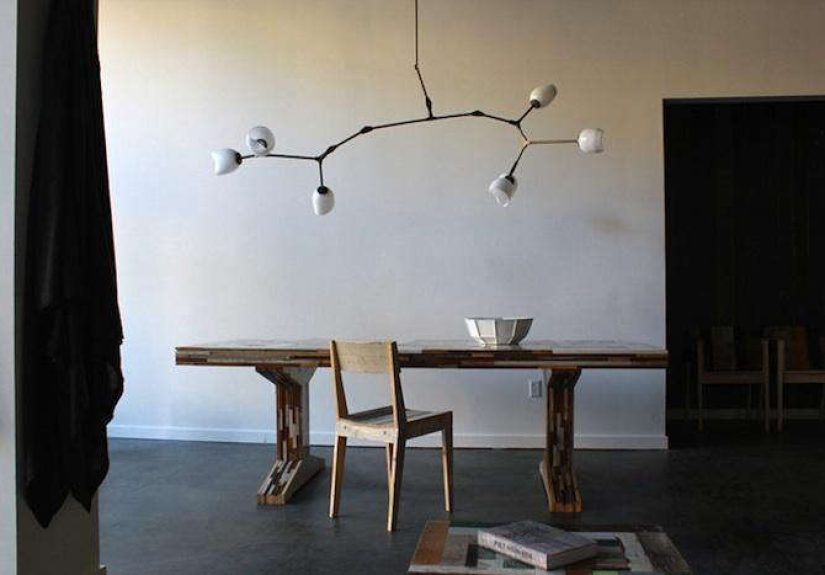
This is design as exploration. A cabinet is not just a cabinet; it may reveal a maker’s obsession with joinery, veneer, proportion, or humor. A pendant light is not just a source of illumination; it becomes a suspended sculpture. A chair is not merely seating; it can be a manifesto with legs. Some pieces are refined and quiet. Others appear ready to start a small but tasteful revolution in the corner.
The Power of the Residential Gallery
One of The Future Perfect’s strongest ideas is that collectible design often makes more sense when it is shown in a home-like environment. This idea also appears in the brand’s Casa Perfect concept, where residences become immersive galleries. In San Francisco, the apartment-like atmosphere allows visitors to imagine how ambitious pieces might live outside the white cube. That matters because many collectible works are functional, or at least semi-functional. They need context. A sculptural table, for example, becomes more understandable when surrounded by seating, artwork, light, and architectural detail.
The residential model also makes the experience more relaxed. Instead of feeling like you must whisper around expensive objects, you can look, linger, and think. This does not mean the gallery is casual in quality. The curation is rigorous. But the mood is warmer than a museum and more imaginative than a typical showroom.
A Curated Mix of Local, National, and International Talent
The Future Perfect has built its reputation on championing both established names and emerging voices. Over the years, its program has been associated with influential designers such as Lindsey Adelman, Jason Miller, Piet Hein Eek, Michael Anastassiades, Christian Woo, Chris Wolston, and many others. The San Francisco gallery has also connected with the Bay Area’s own creative ecosystem, including designers and studios that understand Northern California’s blend of craft, experimentation, and material intelligence.
That mix is essential to the gallery’s appeal. A visitor might encounter a refined lighting piece, a hand-formed ceramic vessel, a richly textured textile, and a piece of furniture that looks as if it has been imported from the future by someone with excellent manners. The selection avoids the flat sameness that can happen when design becomes too trend-driven. Instead, it values personality, technique, and the pleasure of objects that feel touched by human hands.
The 2018 Expansion: More Than Extra Square Footage
The 2018 expansion of The Future Perfect’s San Francisco gallery was significant because it showed how much the brand values experience over mere scale. The enlarged space, known as The Complex, grew into a nearly 5,500-square-foot environment with multiple levels and indoor-outdoor moments. Rather than simply adding more floor space, the expansion created a richer journey through rooms, vignettes, and carefully composed settings.
This is where The Future Perfect separates itself from the “look but do not feel” school of design presentation. The gallery’s rooms create a rhythm. Some areas feel intimate, others more open. Certain pieces demand attention immediately, while others reward slow looking. It is the design equivalent of a great dinner party: the most interesting conversations are not always happening at the center of the room.
How The Future Perfect Reflects the New Luxury
Luxury has changed. For many design lovers, it is no longer only about recognizable labels, polished finishes, or objects that announce their price from across the room. The new luxury is about originality, craft, story, and emotional connection. A collectible chair may matter because of who made it, how it was made, what material it uses, or how it changes over time. A ceramic bowl may be valuable because no other bowl is exactly like it. A light fixture may feel luxurious because it transforms the atmosphere of a room every evening.
The Future Perfect San Francisco speaks directly to this shift. Its objects often feel personal, not mass-produced. They invite questions: Who designed this? What inspired it? Why does this texture feel so good? Could I live with this? Would my dog respect it? The last question is important, even if galleries rarely include it on official wall labels.
San Francisco’s Larger Design Context
The gallery also benefits from San Francisco’s broader design culture. The city is home to the San Francisco Design Center, a major hub for design commerce and community, and hosts FOG Design+Art, an important annual fair that brings together contemporary art, design, galleries, collectors, and cultural institutions. These platforms help position San Francisco as more than a technology capital. It is also a serious design city with a strong appetite for experimentation.
The Future Perfect’s presence adds to that ecosystem by offering a destination where collectible design can be experienced throughout the year, not only during fairs or special events. For interior designers, it functions as a resource for distinctive pieces. For collectors, it offers access to rare and limited works. For casual visitors, it provides inspiration and possibly a sudden realization that their coffee table has been underperforming emotionally.
What Visitors Should Notice
Anyone visiting The Future Perfect San Francisco should slow down. This is not a place to skim. Notice the relationship between materials: wood against ceramic, metal near textile, glass beside stone, color against shadow. Pay attention to scale. Some pieces look modest in photographs but become powerful in person. Others reveal their charm through detail, such as a joint, glaze, curve, or surface imperfection that proves a human being was involved.
Lighting deserves special attention. Contemporary lighting is one of the gallery’s strongest categories, and in a city famous for soft fog-filtered daylight, artificial light takes on extra importance. A great fixture can warm a room, define a corner, or make dinner feel like a scene from a very tasteful independent film.
Why the Opening Still Matters
Although The Future Perfect opened in San Francisco in 2013, its arrival continues to feel relevant because it anticipated many ideas now shaping design retail. Today, more brands are trying to create immersive environments rather than static showrooms. More shoppers want meaning behind what they buy. More collectors are interested in functional art and collectible design. The Future Perfect was early to this conversation, and the San Francisco gallery remains a strong example of how physical retail can stay compelling in a digital world.
That may be the most important lesson. The future of design is not only online, and it is not only about convenience. Sometimes the future is a room you can walk through, a surface you can examine closely, and a chair that makes you wonder whether your living room has been quietly asking for more ambition.
Experience Notes: Visiting The Future Perfect in San Francisco
A visit to The Future Perfect San Francisco feels different from walking into a standard furniture store. The first impression is not “Where is the sofa section?” but “Whose fascinating home have I entered, and why is every object better dressed than I am?” The gallery’s residential atmosphere lowers the pressure and raises the curiosity. Instead of moving through rows of products, visitors move through scenes. A table may sit near a sculptural vessel; a light may hover above a chair; a cabinet may stand quietly until its details pull you closer.
The best way to experience the gallery is to treat it like a slow conversation. Begin with the larger pieces because they establish the mood of each space. Look at how sofas, chairs, tables, and case goods shape movement through the room. Then shift attention to smaller objects: bowls, lamps, ceramics, mirrors, and accessories. These pieces often carry the emotional charge of the room. A single handmade vessel can soften a severe interior. A strange lamp can make a formal setting feel playful. A textured textile can bring warmth to a space that might otherwise feel too polished.
For homeowners, the gallery offers practical inspiration even when the pieces themselves are collectible. You may not leave with a limited-edition cabinet under your arm, which would be physically awkward and socially alarming, but you can leave with sharper instincts. You may notice that a room feels more interesting when it mixes eras. You may realize that a handmade object can keep a modern interior from feeling sterile. You may understand that lighting should be chosen for atmosphere, not just brightness. These lessons apply to apartments, townhouses, studios, and even the brave little corner of a room currently pretending to be a home office.
For interior designers and architects, The Future Perfect functions as a source of distinctive punctuation. Many projects need one or two memorable objects that prevent a room from looking overly coordinated. A sculptural chair, expressive pendant, or unusual ceramic piece can become the detail that gives a project its voice. The gallery’s value lies in helping professionals source pieces that feel considered rather than predictable.
For collectors, the experience is more focused. The gallery provides access to artists and designers whose works carry cultural and material significance. Collectible design sits in a fascinating middle ground between art and function. A work can be useful, beautiful, rare, and conceptually rich at the same time. That is why visiting in person matters. Scale, finish, balance, and presence are difficult to judge from images alone. In the gallery, visitors can sense whether a piece has the quiet authority required to live in a room for years.
Finally, for design lovers simply exploring San Francisco, The Future Perfect is a reminder that great interiors are not built by algorithm. They are built through attention, risk, patience, and the occasional willingness to fall in love with a lamp that looks like it has a secret. The gallery rewards people who enjoy discovery. It asks visitors to look closely, trust their reactions, and remember that the best homes are not assembled overnight. They are collected, edited, lived in, and occasionally rearranged at midnight because the chair “just feels better over there.”
Conclusion
The Future Perfect’s opening in San Francisco marked an important moment for the city’s design scene. By bringing its collectible, craft-driven, and residential-style gallery model to Pacific Heights, the brand created a destination that feels both sophisticated and approachable. Its San Francisco gallery is not just a place to shop for contemporary design. It is a place to understand how objects shape atmosphere, how craftsmanship creates emotional value, and how a room can become more interesting when it contains pieces with real character.
In a city defined by invention, history, fog, architecture, and restless creativity, The Future Perfect feels right at home. It gives San Francisco a design space that respects the past, celebrates the handmade, and keeps asking what the future of living might look like. The answer, thankfully, is not beige, disposable, or boring.
Note: This HTML body is written for web publishing in standard American English, with no source-code references, no citation placeholders, and no unnecessary publishing artifacts.