Table of Contents >> Show >> Hide
- Why The Comedy Store Mattered So Much in the 1970s
- Why Comics Finally Said, “Enough”
- The Picket Line on Sunset Boulevard
- The Core Argument: Workshop or Workplace?
- Why the Strike Got So Bitter
- How the Strike Ended
- The Aftermath Was Not a Victory Lap
- Why the 1979 Comedy Store Strike Still Matters
- Experiences From the Picket Line: What the Strike Felt Like
- Conclusion
In show business, people love to say performers should be grateful just to be in the room. In 1979, a group of stand-up comics standing outside The Comedy Store on Sunset Boulevard had a different opinion: gratitude does not pay rent, buy gas, or cover a late-night diner bill after bombing in front of tourists from Ohio.
The Comedy Store strike of 1979 was not just a quirky Hollywood scuffle with funnier signs. It was a turning point in stand-up comedy history. For weeks, comedians who had helped make the club famous walked the picket line, arguing that “exposure” was not compensation and that a club charging customers for comedy should probably, at some point, pay the people telling the jokes. That idea now sounds obvious. In 1979, it was a battle.
The strike became one of the defining labor disputes in entertainment, partly because it looked so strange from the outside. Comics are supposed to crack wise, not chant slogans. Yet behind the absurdity was a serious question about creative labor, power, and who gets paid when a cultural scene turns into a business. The Comedy Store had helped create modern stand-up as we know it. The strike forced the industry to admit that comics were not just colorful furniture placed near a microphone.
Why The Comedy Store Mattered So Much in the 1970s
To understand why the 1979 showdown mattered, you have to understand what The Comedy Store represented in the 1970s. It was more than a club. It was a launchpad, a proving ground, a nerve center, and occasionally a stress factory with a brick wall. Located on the Sunset Strip, the club became the place where young comedians sharpened material and hoped to be spotted by managers, agents, producers, and talent scouts.
That mattered even more after late-night television became a bigger gateway to fame. A hot set in Los Angeles could put a comic within striking distance of a Tonight Show booking, and a Tonight Show booking could change a life. That pipeline gave The Comedy Store enormous influence. If you were an aspiring comedian in that era, stage time there was not a hobby. It was oxygen.
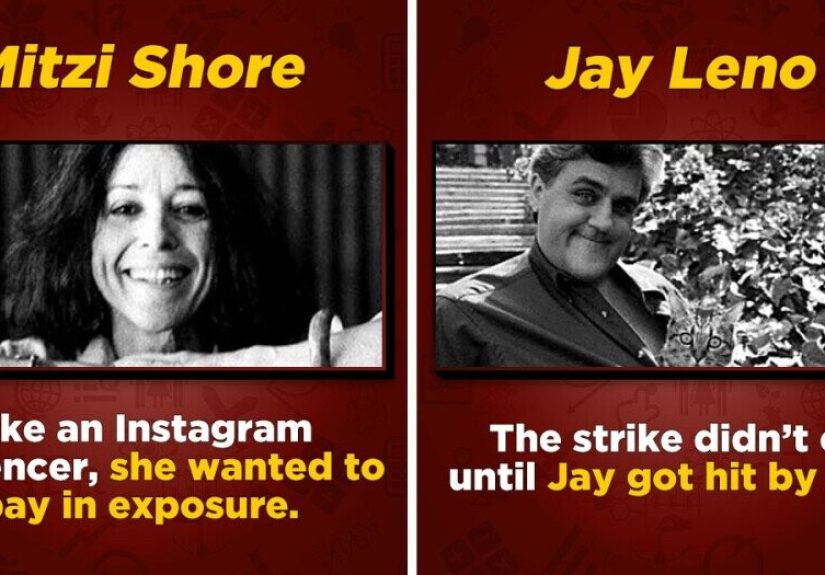
Mitzi Shore, the club’s owner and guiding force, saw the club as a workshop and a showcase. She had undeniably built a home for comics and helped nurture major talent. Many comedians felt she had given them a place to grow when few others would. But by the late 1970s, what had once felt like an artists’ colony increasingly looked like a thriving business. Cover charges were being collected. Drinks were being sold. The crowds were real. The buzz was real. The money was real. The missing ingredient, according to the comics, was the part where they got paid.
Why Comics Finally Said, “Enough”
For years, comedians tolerated the no-pay system because the club offered something valuable: visibility. If you crushed at The Comedy Store, you might get an agent. You might get a road gig. You might get a TV spot. The industry’s favorite magic word was “exposure,” which is wonderful if you are a photograph and less helpful if you are a human adult with utility bills.
By early 1979, patience was thinning. One major flash point involved the Main Room, which had become more overtly professional and more commercially important. Once some comics in that room began receiving compensation, others performing in the club’s other rooms asked the obvious question: if one room is professional enough to justify pay, why not the rest? Suddenly the workshop argument looked less like a philosophy and more like a loophole.
Comedians organized under the banner Comedians for Compensation, a name that was both practical and surprisingly restrained. No jazz hands, no smoke machine, just a clear demand. Leaders and visible supporters included Jay Leno, Tom Dreesen, George Miller, and David Letterman. Their point was simple: the club charged customers to watch comedy, so the comedians should not be the only workers treated like they were volunteering for a telethon.
The Picket Line on Sunset Boulevard
When talks broke down in late March 1979, the comics walked out. What followed was one of the strangest public spectacles in entertainment: stand-ups on strike outside a comedy club, carrying signs with slogans like “No Money, No Funny” and “The Yuk Stops Here.” The vibe was part labor protest, part improv exercise, part simmering family argument that had escaped the kitchen and wandered onto Sunset Boulevard.
And yes, it was funny sometimes. Jay Leno, never one to let a pun die peacefully, reportedly shouted from the line that he was not going back into that hole until they “Shore it up.” Comics chanted. They joked. They tried to keep spirits up because that is what comedians do when life gets bleak: they turn misery into material and hope somebody laughs before the electricity gets shut off.
But beneath the jokes, the stakes were serious. Many of the comics on that line were broke, ambitious, and precariously close to having to quit the business. Some already had television appearances and still struggled financially. Others were trying to hang on long enough for a first big break. Walking out meant risking favor with the most important comedy club in Los Angeles. Not walking out meant accepting that their labor had no direct cash value at the very place profiting from it.
The picket line drew attention quickly. The image was too irresistible for the press to ignore: comedians treating a nightclub like a factory gate. Johnny Carson even joked about the strike on The Tonight Show. In one memorable symbol of solidarity, David Letterman reportedly finished guest-hosting The Tonight Show and then headed straight to the picket line. That image alone says a lot. A comic could be on national television one minute and back on the sidewalk defending the line the next.
The Core Argument: Workshop or Workplace?
This was the heart of the conflict. Mitzi Shore argued that The Comedy Store was a workshop, a place where comics developed material, learned how to work a room, and got discovered by the industry. In that view, the value exchanged was opportunity. The club gave comedians a stage and an audience. The comedians gave the club acts in progress. The whole arrangement, she believed, was a springboard, not a salaried job.
The comics saw it differently. A workshop is one thing. A packed room with a cover charge, a two-drink minimum, and a lineup built around strong performers is another. At some point, the “college of comedy” argument began sounding suspiciously like “please enjoy this educational experience while we sell cocktails.” The strikers insisted the workshop label had become a convenient way to avoid paying the talent that customers actually came to see.
That disagreement also exposed a legal gray area. Comedians were not standard employees. They were treated more like independent contractors, which made the labor action unusual and messy. This was not a neat union fight with a familiar script. It was a hybrid battle involving art, ego, commerce, loyalty, and the terrifying reality that in comedy, the boss might also be your gatekeeper, career-maker, and emotional weather system.
Why the Strike Got So Bitter
One reason the strike still fascinates people is that it was never just about money. It was about identity and betrayal. The Comedy Store was not a faceless corporation. It was a scene, a tribe, a place where comics spent long nights chasing laughs and approval. Many felt Mitzi Shore had championed them. Many also felt that her emotional investment in comics came with an expectation of loyalty. Once the strike began, the conflict turned deeply personal.
Some comedians crossed the picket line. Some stayed loyal to Mitzi. Others supported the cause but kept their distance. Those choices created grudges that lingered for years. In a regular workplace, crossing a picket line can fracture coworkers. In a comedy scene, where careers depend on relationships, timing, and access, those fractures can become canyons.
Outside circumstances made the conflict even stranger. The rival Improv was temporarily dealing with fire damage around the time of the strike, which meant more of the pressure landed on The Comedy Store. The dispute also expanded beyond a simple club feud once entertainment labor groups began respecting the picket line. At that point, the issue looked less like a local spat and more like a test case for the value of stand-up labor.
How the Strike Ended
The strike stretched across spring, lasting roughly seven weeks. At times, the club went dark. Negotiations dragged on. Tempers frayed. Careers hovered in suspense. Eventually, an agreement was reached in early June 1979. The result was not a revolutionary payday, but it was historic: comedians would be paid for performing in the club’s rooms, with some exceptions for the least experienced slots.
In practical terms, the settlement recognized what the comics had been arguing all along: their performances had economic value inside the club itself, not just somewhere else later. The deal also reflected the peculiar structure of comedy work, allowing performers to be treated as independent contractors while still receiving compensation per set.
It was a modest solution on paper, but a massive cultural shift in practice. Once a major club in Los Angeles paid comics, the rest of the industry could no longer act as if paying performers was a wild, experimental concept from another galaxy. Other clubs began following suit, and the strike helped reshape the economics of stand-up as comedy boomed in the 1980s.
The Aftermath Was Not a Victory Lap
If this were a tidy movie, the settlement would have triggered hugs, applause, and a freeze-frame over a killer punchline. Real life, naturally, was less cooperative. The aftermath was full of resentment. Some strike leaders never returned to The Comedy Store in the same way. Others felt frozen out or quietly punished. Arguments over bookings and loyalty continued long after the signs came down.
The darkest postscript involved comedian Steve Lubetkin, who became distraught in the weeks after the strike and died by suicide after expressing deep anguish over his treatment and future. His death cast a tragic shadow over the whole story. It remains one of the most painful reminders that comedy history is not just colorful anecdotes and legendary sets. It is also a history of insecurity, instability, and emotional risk.
That tragedy complicates any temptation to turn the strike into a cute industry legend. Yes, there were great signs and sharp lines. Yes, there is something inherently memorable about comics marching in protest outside a room built for laughs. But the emotional cost was real, and the divisions were lasting.
Why the 1979 Comedy Store Strike Still Matters
The strike matters because it forced stand-up comedy to grow up. It challenged the longstanding idea that young performers should be thrilled to work for free as long as somebody influential might be watching. That logic has never fully disappeared, of course. Creative industries still adore the phrase “great exposure,” usually when they are hoping to keep payroll as theoretical as a UFO.
What the Comedy Store strike proved is that visibility and compensation are not mutually exclusive. A club can be a showcase and still pay artists. A stage can be developmental and still recognize labor. That lesson echoes far beyond stand-up. Anyone who has ever been offered “experience” instead of money can hear the modern version of this argument instantly.
The strike also helped define the image of stand-ups as workers, not just eccentrics with microphones. That matters because stand-up has always lived in a weird borderland between art and hustle. Comics write their own material, test it live, revise it in public, and endure failure face-first. The 1979 strike insisted that this strange, unstable craft was still work. Hard work. Paid work.
Experiences From the Picket Line: What the Strike Felt Like
One reason the 1979 Comedy Store strike still feels vivid is that the reported experiences from the sidewalk sound like a perfect stand-up contradiction: hilarious in form, nerve-racking in substance. On the surface, you had comedians carrying punny signs, riffing at police officers, and turning chants into bits. Underneath, you had performers wondering whether they were blowing up their one real shot at a career.
Imagine the daily rhythm. You wake up already anxious because your entire profession runs on uncertainty. Then, instead of going inside to do your set, you stand outside the building that helped define your ambitions. Tourists pass by. Industry people pass by. Fellow comics pass by, and every face becomes a test. Are they with you? Are they crossing? Are they pretending not to see you? The sidewalk becomes a loyalty detector.
Accounts from the period suggest the line was powered by equal parts conviction and comic instinct. The strikers were making a moral argument, but they were still comedians, so even the protest had timing, punch, and rhythm. A sign was not just a sign; it was an opening line. A chant was not just solidarity; it was a setup with a better beat. They were trying to keep the mood alive because the alternative was staring too long at the scary part: no bookings, no money, and no guarantee the club would ever welcome them back.
There was also the emotional weirdness of fighting people who had once felt like family. That may be the most distinctive feature of the Comedy Store strike. This was not workers versus a distant executive tower. It was comics versus a scene they loved, a room they needed, and a club owner many of them felt had once believed in them. That made every negotiation feel bruised with personal history. Every compromise came wrapped in hurt pride.
Then there was the split within the comedy community itself. Some walked the line. Some crossed it. Some supported the cause quietly. In comedy, where your social circle, professional network, and emotional support system often overlap, those choices cut extra deep. You were not just disagreeing about tactics. You were learning who could be counted on when the laughs stopped.
The most revealing experience may have been the simplest one: comics discovering that the thing they had been told to treat as a privilege was also labor. Once they stood outside together, the old mythology looked smaller. The club was still magical, but magic was not the whole story. Somebody sold the drinks. Somebody collected the cover. Somebody booked the room. And the people onstage, for the first time in a public, collective way, insisted that their part of the machine was not free.
That is why the strike still resonates. It was not just about one spring on Sunset Boulevard. It was about the moment comedians stopped acting like lucky guests in the building they helped fill and started acting like workers whose talent had measurable value. The signs were funny. The lesson was serious. And for stand-up comedy, that lesson changed everything.
Conclusion
The Comedy Store strike of 1979 endures because it captured stand-up comedy at a crossroads. The club had become a temple of opportunity, but opportunity alone was no longer enough for the performers turning that stage into an institution. What began as a dispute over a few dollars per set became a defining argument about labor, loyalty, and the business of being funny.
The image of comedians on a picket line remains unforgettable because it is so wonderfully odd and so completely logical at the same time. Of course comics would make the protest funny. Of course the fight underneath would be deadly serious. They were not asking for luxury. They were asking for recognition that laughter, in a room charging admission, is not generated by the furniture.
In the end, the 1979 strike changed more than one club’s payroll. It changed the expectations of an industry. It helped establish that comics were not just hopeful dreamers paying dues forever. They were performers, workers, and the reason the room was full in the first place. On that point, the picket line was right.