Table of Contents >> Show >> Hide
- What Is an Alexanderson Transmitter, Exactly?
- Why the Alexanderson Alternator Mattered So Much
- How the Machine Actually Works Without Requiring an Engineering PhD
- The American Chapter: GE, the Navy, and RCA
- Why Very-Low Frequency Radio Was Such a Big Deal
- Why the Alexanderson Transmitter Faded from Mainstream Use
- Why It Rides Again
- The Real Legacy of the Alexanderson Transmitter
- Experience: What It Feels Like When the Old Giant Wakes Up
Some inventions arrive with a bang. The Alexanderson transmitter arrived with a hum, a whir, a blur of steel, and the kind of engineering confidence that says, “Sure, let’s build a machine the size of a room and spin it fast enough to throw radio waves across an ocean.” Oddly enough, it worked. Better than that, it helped push wireless communication out of its awkward adolescence and into serious long-distance service.
If the name sounds like something from a steampunk fever dream, that is part of the charm. But the Alexanderson transmitter was not fantasy hardware. It was one of the great practical breakthroughs of early radio: a way to generate continuous high-frequency power before vacuum tubes took over the job. In plain English, it helped make transoceanic radio more dependable, more precise, and a lot less sparkly in the wrong way.
Today, the Alexanderson transmitter survives as both machine and myth. It belongs to an era when radio stations looked like industrial kingdoms, antenna systems stretched across landscapes, and “wireless” still felt like a magic trick wearing work boots. Yet this old giant is not merely a museum relic. Thanks to the preserved SAQ station at Grimeton in Sweden, very-low-frequency radio still gets a living, breathing encore. That is why the Alexanderson transmitter still matters: it is not just old radio history. It is old radio history that still clears its throat and speaks.
What Is an Alexanderson Transmitter, Exactly?
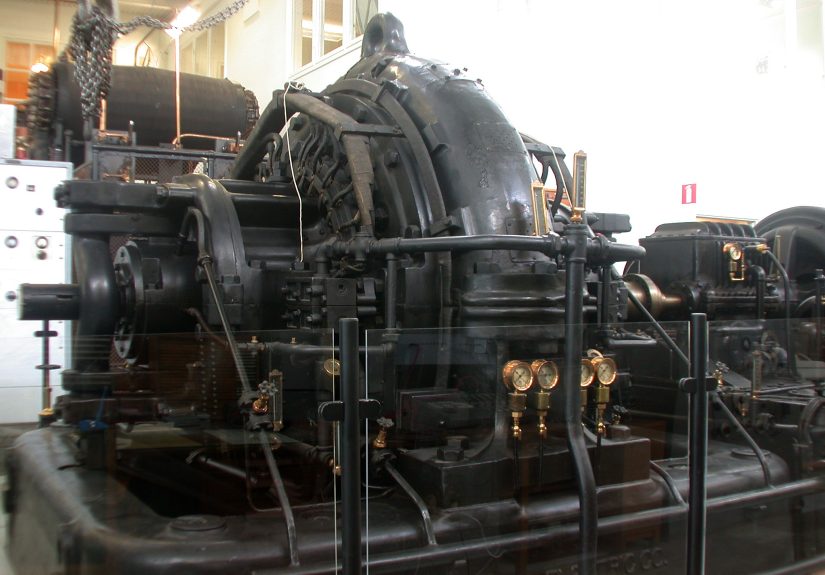
Strictly speaking, the heart of the system is the Alexanderson alternator, a high-frequency electromechanical generator designed by Ernst F. W. Alexanderson while he was working for General Electric. Instead of using modern electronic oscillators, the machine produced radio-frequency current by rotating a carefully engineered steel rotor at extremely high speed. That current then fed a tuned transmission system and a massive antenna array.
So yes, the Alexanderson transmitter was basically a radio station powered by precision spinning metal. No tiny chip. No compact transistor. Just industrial-age elegance and enough mechanical discipline to make your average garage motor cry in embarrassment.
The technology emerged in the early 1900s, when radio engineers were desperate for something better than spark transmitters. Spark systems were powerful, but they were messy. They sprayed energy across a broad chunk of spectrum and were far from ideal for refined communication. The Alexanderson design helped deliver the smoother continuous-wave radio signals that long-distance operators wanted.
Why the Alexanderson Alternator Mattered So Much
It helped move radio beyond sparks and chaos
Early radio was effective in the same way a marching band in your kitchen is effective: hard to ignore, but not exactly subtle. Spark transmitters could do the job, yet they were bandwidth-hungry and not especially graceful. Engineers needed a cleaner source of radio-frequency energy, especially for long-haul communication.
The Alexanderson alternator answered that need. It became a high-power source for reliable wireless traffic and was a major step toward practical transoceanic radiotelegraphy. Before electronics became king, this machine gave radio a level of control and stability that felt revolutionary.
It turned wireless into strategic infrastructure
This was not just about clever engineering. It was about geopolitics, naval communication, commerce, and national control of information. During and after World War I, Alexanderson systems supported dependable long-distance traffic. In the United States, the technology was important enough to factor into the story that led to the formation of RCA. In other words, this was not a cute side project for hobbyists with solder burns. It was big-league communications infrastructure.
Once you understand that point, the machine stops looking like an eccentric antique and starts looking like what it really was: one of the foundations of global wireless communication during a transitional moment in technological history.
How the Machine Actually Works Without Requiring an Engineering PhD
The core idea behind the Alexanderson alternator is surprisingly elegant. The machine varies magnetic flux in the air gap of an electromagnet, which induces a high-frequency voltage. The stationary electromagnet contains two windings: one biases the magnet, and the other picks up the radio-frequency energy. The rotor, meanwhile, is a laminated steel disk with cutout “windows” near its edge. Those windows are filled with high-reluctance material, helping shape the magnetic behavior while also reducing wind drag.
In one sense, the machine behaves like an absurdly serious answer to the question, “What if we built a radio frequency generator the way we build heavy electrical equipment?” The rotor has no windings of its own. It just spins, and spins hard. Typical rotor speeds were on the order of 10,000 to 20,000 revolutions per minute, often reached through a step-up gearbox. At those speeds, precision mattered enormously. Frequency depended on rotational speed, so stable transmission required very tight mechanical and control tolerances.
And that is where the beauty of the design shows. The Alexanderson transmitter was not only powerful. It was disciplined. It needed accurate speed control, careful tuning, and a transmission system that matched the generated power efficiently. This was radio as choreography: magnetics, motion, and timing all locked together so the signal could leave Earth and skim the world.
The American Chapter: GE, the Navy, and RCA
Although the last famous operating example lives in Sweden, the Alexanderson story has deep American roots. Ernst Alexanderson worked at General Electric in Schenectady, New York, and his high-frequency alternator gave the United States an enormous boost in early radio capability. The machine was used in large transmitting installations and became part of the technological muscle behind transoceanic service.
Its influence stretched beyond engineering and into corporate history. After World War I, the Alexanderson alternator was considered so strategically valuable that efforts to control its use helped shape the events that led to the creation of the Radio Corporation of America. That may sound like a subplot, but it is actually central to why this machine matters. The Alexanderson transmitter was not just transmitting code. It was transmitting leverage.
American sites also carried the hardware legacy. The Library of Congress record for the Bolinas-Marconi transmitter site in California explicitly notes that the building originally contained Alexanderson alternators. Other U.S. installations, including major East Coast and West Coast facilities, were part of the broader network that made long-range wireless communication practical before newer electronic transmitters took over.
Why Very-Low Frequency Radio Was Such a Big Deal
To understand why the Alexanderson transmitter still inspires awe, you have to appreciate the odd magic of VLF radio and neighboring low-frequency bands. Very-low-frequency signals can travel extraordinary distances because they propagate efficiently in the Earth-ionosphere waveguide. In the 10 kHz region especially, radio waves show low attenuation and excellent phase stability. That is a fancy way of saying the planet itself becomes part of the transmission path.
For early operators, that was pure gold. Long and very-long wavelengths seemed wonderfully reliable compared with many other options of the day. They were useful for international communication, and later they proved valuable in military contexts as well. During World War II, Alexanderson alternators that had seemed outdated suddenly became useful again because their long-wave signals were easier for submarines to copy than shortwave signals. That is a remarkable second act for technology that many people would have been ready to retire.
It also explains why the surviving SAQ station transmits on 17.2 kHz. That frequency sits deep in the low-frequency world, where receiving the signal feels less like tuning a normal broadcast and more like eavesdropping on the bones of the Earth.
Why the Alexanderson Transmitter Faded from Mainstream Use
As glorious as the machine was, it was also huge, demanding, and expensive. The alternator had to be precision-machined, mechanically stable, and carefully controlled. It was brilliant, but not exactly convenient. Once vacuum-tube transmitters matured, they offered smaller size, greater flexibility, easier scaling, and fewer reasons to build a radio station around a heroic spinning machine.
By the start of the 1930s, vacuum tubes had become the dominant method for generating radio-frequency power. That did not erase the achievement of the Alexanderson alternator; it simply moved the technology into a different category. It became a landmark rather than the future.
And yet, that shift may be part of why it fascinates us now. The Alexanderson transmitter represents the road not taken, or at least not taken for long: a world in which radio power came from magnificent mechanical precision rather than compact electronics.
Why It Rides Again
Grimeton keeps the old giant alive
The most famous surviving Alexanderson transmitter is at SAQ Grimeton in Sweden, a site built in the 1920s for early wireless transatlantic communication. UNESCO recognizes Grimeton Radio Station as an exceptionally well-preserved monument to this era, complete with six towering steel antenna supports and the original pre-electronic transmitter equipment. The station is maintained in operating condition and remains the only surviving major transmitting station based on this pre-electronic approach.
That alone would make it special. But Grimeton goes further: it still operates the old equipment on special occasions. Recent years have included anniversary programming, holiday transmissions, and ceremonial message broadcasts. During the 2025 anniversary year, the site marked a century of communication, and official event pages even advertised startup and transmission of a message via the hundred-year-old longwave transmitter. That is not nostalgia in a display case. That is history warming up, stretching its legs, and going back on the air.
Radio listeners still chase it
One of the best signs that the Alexanderson transmitter still lives in the imagination is that listeners around the world keep trying to hear it. ARRL reports over the years have described Christmas and Alexanderson Day transmissions on 17.2 kHz that drew hundreds of listener reports, including some from North America. For radio enthusiasts, hearing SAQ is not the same as hearing a regular station. It is more like catching a message from a civilization that chose giant alternators over silicon and somehow still refuses to be quiet.
That ongoing ritual gives the title of this article its punch. Very-low frequency radio rides again because people still care enough to maintain, operate, receive, and celebrate it. In a world of disposable gadgets and software updates that expire before your coffee cools, the Alexanderson transmitter is almost offensively durable.
The Real Legacy of the Alexanderson Transmitter
The legacy of the Alexanderson transmitter is bigger than one machine. It represents a moment when radio, industry, and national ambition were all moving in the same direction. It helped prove that long-distance wireless communication could be dependable. It influenced the development of American radio institutions. It pushed engineers to solve problems in speed control, antenna design, high-frequency generation, and system-scale communication.
It also reminds us that the history of radio was never only about invisible waves. It was always about physical systems: towers, generators, coastlines, operators, patents, wars, and institutions. The Alexanderson alternator makes that reality impossible to ignore. It is not a tiny black box hiding complexity. It is complexity standing in full daylight.
And maybe that is why modern audiences love it. The machine makes radio feel tangible again. You can point to it. You can hear it spin up. You can imagine the rotor turning, the signal forming, the message leaving the station and heading out over sea and sky. For a technology that often feels invisible, that is deeply satisfying.
Experience: What It Feels Like When the Old Giant Wakes Up
Reading about the Alexanderson transmitter is one thing. Experiencing the idea of it is something else entirely.
Imagine the setup. Maybe it is early morning. Maybe it is winter. Maybe you are not even at the station itself, but sitting at home with a quiet receiver setup, a loop or improvised antenna, and the kind of patience that modern streaming culture has tried very hard to erase from the human nervous system. You are listening for SAQ Grimeton on 17.2 kHz, which is far enough from everyday radio life that it feels like entering a side door into physics.
Nothing happens quickly in this kind of listening. That is part of the point. There is no app notification, no thumbnail, no autoplay trailer yelling at you to stay engaged. There is just expectation, background noise, and the knowledge that if the transmission arrives, it will not be coming from a sleek rack of modern electronics pretending to be magical. It will be coming from a machine design born when radio still smelled like oil, varnish, steel, and ambition.
Then you think about the transmitter hall itself. The experience there must land differently. You are not just looking at equipment. You are standing inside an argument for how seriously people once took communication. The scale changes you. Massive hardware has that effect. It makes modern devices feel ghostly by comparison. A smartphone is astonishing, of course, but it hides its labor. The Alexanderson transmitter does the opposite. It shows you every ounce of effort.
And when the alternator starts, the emotional effect is not merely technical. It is theatrical. A century-old longwave transmitter comes to life, not because it has to, but because people cared enough to preserve both the machinery and the knowledge required to operate it. That is rare. Preservation often stops at “please do not touch.” Grimeton preservation says, more or less, “actually, let us tune it up and put it back on the air.”
For listeners, the received signal can be faint, stubborn, and easy to romanticize. Good. Some things deserve romance. To copy Morse from a surviving Alexanderson alternator is to hear engineering time travel. The message may be simple, but the medium is outrageous in the best possible way. A precision mechanical system conceived before modern electronics still reaches outward through the Earth-ionosphere waveguide and gets noticed by people with enough curiosity to listen.
That experience also sharpens your sense of continuity. Radio is often described in generations: spark, continuous wave, tubes, transistors, digital, software-defined everything. The Alexanderson transmitter sits near the beginning of that chain, but hearing it live collapses the timeline. Suddenly the distance between 1924 and now does not feel abstract. It feels audible.
Even if you never hear SAQ yourself, the idea of the event has power. Somewhere, people gather around a machine that should by all rights have become a silent exhibit long ago. Somewhere else, listeners in other countries try to catch its signal. A few succeed. Some do not. But all of them participate in the same quiet miracle: proving that old technology can still be active technology, and that history can sometimes do better than sit still. It can transmit.
That is the real experience attached to the Alexanderson transmitter. It is not just admiration for antique hardware. It is the thrilling realization that radio history is not over there in a textbook. Every so often, on a very low frequency, it is still on the air.