Table of Contents >> Show >> Hide
- Why a Stray Cat Might “Choose” You (Yes, There’s Logic Behind the Drama)
- Stray, Lost, or Feral: How to Tell What Kind of Cat You Just Met
- What to Do in the Moment: The Park Rescue Playbook
- Step 1: Check the situation for danger
- Step 2: Approach like you’re trying to befriend a tiny, skeptical celebrity
- Step 3: Use food strategically (not as a bribe, as a safety tool)
- Step 4: Contain safely: carrier is best, box is second-best, hoodie is last resort
- Step 5: Look for ID, then check for a microchip
- Step 6: Document without turning it into a full influencer rollout
- The Ethical Part: Making Sure You’re Not Accidentally Stealing Someone’s Cat
- Bringing Him Home: The First 72 Hours Matter Most
- Bonding Without Overwhelming Him: How to Earn Trust Fast
- Introducing Him to Other Pets: Slow Is Fast
- If You Can’t Keep Him: You Can Still Be the Hero of This Story
- Frequently Asked Questions
- Conclusion: When a Park Kitty Picks You, You Can Pick BackResponsibly
- Extra: Real-World Experiences People Share After a Park Kitty “Chooses” Them (About )
It starts the way a lot of life-changing stories start: you’re walking through a park minding your own business,
thinking about snacks or finals or how the squirrels look suspiciously organized… and then a tiny cat appears like a
furry plot twist.
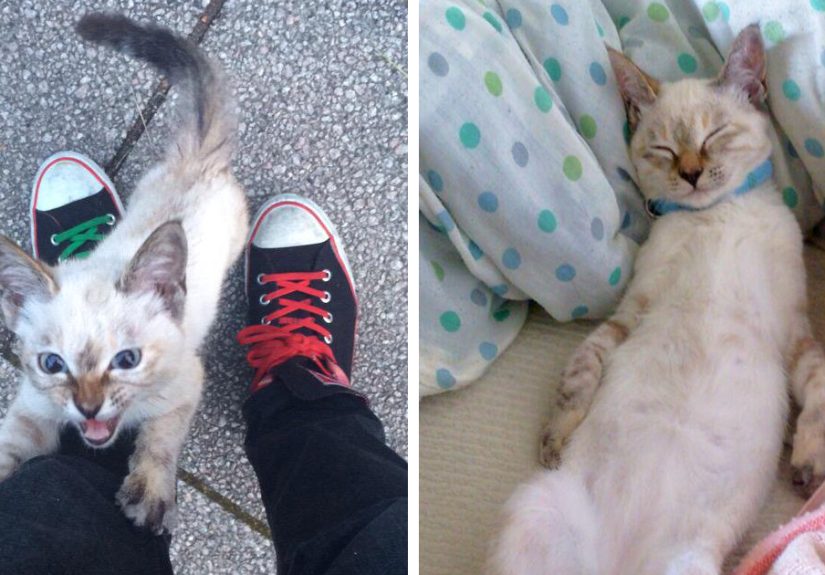
This kitty isn’t doing the usual “I’m mysterious, admire me from across the lawn” routine. Nope. He’s doing the
direct approach: trotting right up, weaving around your ankles like he’s lacing up a friendship bracelet, and
meowing with the confidence of someone who already filled out the paperwork. Before you can say “Is this a
hallucination?” he’s pressed against your leg, purring like a tiny engine, and giving you the look that translates
roughly to: Congratulations. You are now mine.
That’s the moment people call “the cat distribution system” at workfunny, sure, but there’s real behavior behind
it. Stray cats, lost cats, and even friendly community cats can absolutely “choose” a person in a way that feels
emotional and intentional. The key is knowing what that moment meansand what you should do nextso the story ends
with safety, kindness, and (ideally) a happy home.
Why a Stray Cat Might “Choose” You (Yes, There’s Logic Behind the Drama)
When a cat approaches a human in a public place, it usually isn’t random. Cats don’t spend calories on bad ideas
unless they’re orange (love you, orange cats). Here are the most common reasons a park kitty decides you’re the
chosen one:
1) You look safe (and quiet people are basically cat magnets)
Cats read body language fast. If you move slowly, crouch instead of looming, avoid direct staring, and speak softly,
you’re signaling, “I’m not a threat.” Friendly strays often test humans the way they test new furniture: gently at
first, then with full commitment.
2) You smell interesting (translation: food, other pets, or “home”)
If you have a pet at home, you carry scents that can feel familiar. If you had lunch recently, you may smell like
“potential snack provider.” Even lotion or laundry detergent can be oddly intriguing to a curious cat.
3) He’s socialized and needs helpfast
A cat that rubs, purrs, kneads, follows, or flops dramatically at your feet is often socialized to people. That can
mean he’s a lost pet, a formerly owned cat now homeless, or a friendly stray who’s learned humans are the best path
to warmth, meals, and safety.
4) He’s asking for something specific
Cats can be surprisingly clear when they want assistance: persistent following, repeated meows, leading you toward a
spot (sometimes toward kittens), or clinging behavior like “please don’t leave.” In a park, that can also mean he’s
stressed by dogs, traffic, weather, or other cats.
Stray, Lost, or Feral: How to Tell What Kind of Cat You Just Met
Before you scoop up your new best friend and sprint to a happily-ever-after montage, pause for a quick reality
check. Not every outdoor cat is homeless, and not every cat who approaches is truly “stray.” These clues help you
decide what you’re dealing with.
Signs the cat may be lost (and someone is looking)
- Very friendly with people, seeks attention, jumps into laps, or tries to enter cars.
- Clean coat and decent body condition, not skinny or scruffy.
- Collar (even if no tag) or a collar mark around the neck.
- Appears confusedcalling out, pacing, or staying near trails/benches like he’s waiting.
Signs the cat may be a friendly stray
- Approaches slowly but warms up quickly once you’re calm and patient.
- Looks a bit roughdusty coat, mild mats, hunger belly, or minor wounds.
- Hungry behavior (scarfing food, crying for more) but still wants affection.
Signs the cat may be feral (or a fearful community cat)
- Avoids people and won’t come close, even with food.
- Freezes, crouches, or bolts if you move toward him.
- No meowing at people (feral cats often don’t “talk” to humans much).
- May have an ear-tip (a small, straight-edged notch on one ear), which often indicates
a community cat who has been spayed/neutered through a TNR program.
A friendly cat in a park is frequently either lost or a former pet. Either way, you can helpwithout accidentally
“adopting” someone else’s cat. (Because imagine posting your missing cat flyers while your cat is out there
living his best second-life as a park celebrity.)
What to Do in the Moment: The Park Rescue Playbook
If the kitty is following you and “won’t let go,” you have two jobs: keep everyone safe and gather the right
information. Here’s a practical, humane plan.
Step 1: Check the situation for danger
- Is the cat near a road, off-leash dogs, or a busy bike path?
- Is it very hot, very cold, raining, or late at night?
- Does the cat look injured, limping, or lethargic?
If immediate danger is present, moving the cat to safety becomes more urgentwhile still handling carefully.
Step 2: Approach like you’re trying to befriend a tiny, skeptical celebrity
- Crouch sideways, blink slowly, and let the cat come to you.
- Offer the back of your hand for a sniff.
- Avoid sudden grabbing. Even friendly cats can panic outdoors.
Step 3: Use food strategically (not as a bribe, as a safety tool)
If you have a treat, a small bit of plain cooked chicken, or even a tuna pouch, you can lure the cat closer to a
safer spot. Don’t feed huge amounts right awayespecially if the cat looks starvingbecause gulping can cause tummy
trouble.
Step 4: Contain safely: carrier is best, box is second-best, hoodie is last resort
The safest way to transport a cat is a secure carrier. If you don’t have one, ask a nearby park staff member or
call a local rescue to see if someone can bring a carrier or humane trap. If the cat is calm, you can wrap him in a
towel or jacket to prevent scratchesbut only if you can do it without escalating fear.
Step 5: Look for ID, then check for a microchip
A collar and tag are obvious wins, but many cats lose collars or never had one. The most reliable next step is to
take the cat to a veterinarian or animal shelter to be scanned for a microchip. If a chip number is found, shelters
and clinics can use registry lookup tools to identify which database holds the owner information.
Step 6: Document without turning it into a full influencer rollout
Take a few clear photos from multiple angles (face, body, any unique markings). Note the exact location, time, and
any details (limping, ear-tip, collar mark). This helps with “found pet” postings and reunification.
The Ethical Part: Making Sure You’re Not Accidentally Stealing Someone’s Cat
Even if the cat looks convinced you’re his human, it’s still important to do a quick good-faith search for an
existing ownerespecially if the cat is friendly, in good condition, or clearly used to people.
Do a short “found pet” checklist
- Microchip scan at a vet clinic or shelter.
- Report as found to local shelters/rescues (many keep lost/found logs).
- Post a found notice (avoid sharing every unique marking publicly; ask claimants to describe them).
- Wait a reasonable hold period if your local area has one, while keeping the cat safe indoors.
If no owner turns up, congratulations: the park kitty may genuinely be homelessand your kindness just changed the
course of his little life.
Bringing Him Home: The First 72 Hours Matter Most
The biggest mistake well-meaning people make is going straight from “park meet-cute” to “full-house tour.” A new
catespecially a strayneeds a calm, controlled landing.
Create a “safe room” setup
Choose a small, quiet room (bedroom, office, bathroom) and set it up before you let the cat out of the carrier:
- Litter box (far from food/water)
- Fresh water and a small meal
- Soft bedding and a hiding spot (box, covered bed, blanket fort)
- Scratching option (cardboard scratcher is perfect)
- Toys for gentle play
This isn’t a “cat jail.” It’s a decompression suite. A safe room reduces stress, prevents escape attempts, and helps
you monitor eating, drinking, litter box use, and behavior.
Plan a vet visit as soon as you can
A veterinary exam helps check for parasites, treat fleas, assess hydration and weight, and discuss vaccines and
testing (commonly for FeLV/FIV in newly acquired cats). If the cat scratched or bit anyone, wash the wound well and
seek medical advicescratches can get infected and animal bites should always be taken seriously.
Quarantine if you have other pets
Keep the new cat separate from resident pets at first. This protects everyone from contagious parasites and
respiratory infections and gives you time to confirm overall health.
Bonding Without Overwhelming Him: How to Earn Trust Fast
A cat who “won’t let you go” in the park may still feel nervous indoors. Outdoors, he chose you; indoors, he’s
learning your world. Here’s how to make that transition smooth.
Use routine like it’s a love language
Feed at consistent times, keep lights low, and visit the safe room calmly. Cats relax when the day feels
predictable.
Let affection be the cat’s idea
Sit on the floor, scroll your phone, and let him approach. Offer gentle cheek rubs if he leans in. If he backs
away, respect it. The goal is trust, not speed-running cuddles.
Play is the shortcut to friendship
Wand toys and gentle chase games help a cat burn stress and build positive associations with you. Ten minutes of
play can do more than an hour of “pspspspsps” chanting.
Introducing Him to Other Pets: Slow Is Fast
If you have other cats, the safest method is gradual introduction:
- Scent swap: exchange bedding or use a clean sock to gently rub cheeks and swap scents.
- Door feeding: feed on opposite sides of a closed door to build positive associations.
- Visual access: use a baby gate or cracked door once both seem calm.
- Short supervised meetings: increase time slowly, end sessions before anyone gets cranky.
Expect a little hissing. It’s basically feline for “Hello, I have boundaries.” What you don’t want is prolonged
stalking, cornering, or aggressive chasing.
If You Can’t Keep Him: You Can Still Be the Hero of This Story
Not everyone can adoptand that’s okay. The kindest outcome is still possible if you focus on safe next steps:
- Contact local rescues and ask about foster support or intake.
- Ask a shelter about “found cat” procedures and hold periods.
- Consider TNR resources if the cat is unsocialized and truly a community cat.
- Network responsibly: share a found notice, then screen adopters carefully if rehoming privately.
Even a short-term safe room, a microchip scan, and a rescue contact can be the difference between a rough outdoor
life and a warm home.
Frequently Asked Questions
“He followed me for blocksdoes that mean he’s definitely homeless?”
Not always. Some lost cats are incredibly social and will attach to the first safe person they find. That’s why a
microchip scan and “found cat” report are important even if the cat seems ready to move in.
“What if he looks healthy? Should I leave him?”
A healthy-looking cat could still be lost. If he’s in a safe area and not in distress, you can take photos and
notify local shelters/rescues while monitoring. If he’s in danger (traffic, dogs, weather), bringing him to safety
is appropriate.
“What if he scratched me while I tried to help?”
Wash the wound thoroughly and keep an eye on it. If it’s deep, swelling, or painfulor if it was a biteseek
medical guidance. Outdoor animals can carry bacteria, and bites can become serious quickly.
Conclusion: When a Park Kitty Picks You, You Can Pick BackResponsibly
Being chosen by a stray cat feels magical because it isjust with fur, logistics, and a minor side quest called
“responsible pet ownership.” If a kitty latches onto you in the park and refuses to let you go, the best response is
calm action: get him safe, check for a microchip, give him a quiet landing at home (or with a shelter/rescue), and
follow health and introduction steps that protect everyone.
And if, after all that, the microchip scan is blank, no owner appears, and the kitty is still looking at you like
you’re the best decision he’s ever made? Well… welcome to your new life as “the human who got adopted in a park.”
It’s a great title. Put it on a mug.
Extra: Real-World Experiences People Share After a Park Kitty “Chooses” Them (About )
People who’ve been adopted by an outdoor cat often describe the moment with the same mixture of comedy and awe:
“He walked right up like he had an appointment.” That’s a common themethese cats don’t always behave like timid
strays. Instead, they behave like tiny, determined negotiators who have decided your lap is legally binding.
One of the most repeated experiences is what rescuers call the Velcro Phase. A newly rescued,
formerly outdoor cat may follow you everywhere for the first weekbathroom includedbecause you represent safety.
This isn’t “clingy for no reason”; it’s a stress response plus attachment. Many people say the Velcro Phase fades
once the cat realizes food appears daily and you’re not going to vanish behind a tree like a cartoon character.
Until then, expect a shadow with whiskers.
Another common experience: the “I’m starving” performance… followed by the “I’m full and I
regret everything” nap. People often discover that a hungry stray will inhale food like it’s a competitive
sport. That’s why experienced fosters feed smaller portions more often at first, and why slow, steady meals can help
prevent vomiting or stomach upset. Many adopters learn this the messy wayusually at 2:00 a.m., on a carpet they
used to like.
There’s also the surprisingly emotional moment of the First Deep Sleep. Lots of people report that
the first time their rescued cat truly relaxescurled up, paws loose, breathing slowit hits them: this animal
finally feels safe. Some cats sleep under beds for days, then slowly graduate to sleeping in the open, then on the
couch, then (eventually) on your chest like a fuzzy paperweight. The progression is normal and often looks like
“two steps forward, one step under the dresser.”
Park-adoption stories also come with plot twists. The most dramatic is the Microchip Surprise:
a cat who looks scruffy but scans as someone’s beloved pet. People describe feeling tornhappy the cat has a family,
sad because they bonded instantly. When reunifications happen, many find it comforting to know they were part of the
cat’s safety net rather than the end destination. It’s like returning a lost walletexcept the wallet purrs and has
opinions about your furniture.
And then there’s the sweetest experience of all: the “home habits” reveal. A cat who seemed like a
street survivor suddenly demonstrates indoor skillsusing the litter box immediately, understanding doors, hopping
onto beds, or asking for chin scratches like he’s done it his whole life. Those moments often suggest he was once
someone’s pet, or at least deeply socialized. For many adopters, that’s when the story stops feeling like a rescue
mission and starts feeling like a relationship: mutual trust, daily routines, and a tiny roommate who thinks your
keyboard is an excellent place to sit.
If you’re in the middle of this experience right now, here’s the heart of it: take it step by step. The park moment
is only the opening scene. The real story is what you do nextkindly, safely, and with the patience it takes to
turn a “stray kitty who wouldn’t let go” into a healthy cat who finally can.