Table of Contents >> Show >> Hide
- What Is the U.S. Space Force?
- What Is Star Trek Really About?
- Why People Compare Space Force and Star Trek
- Space Force vs. Star Trek: Key Differences
- Where Space Force and Star Trek Actually Overlap
- The Cultural Battle: Serious Mission, Funny Name
- Star Trek’s Optimism vs. Space Force’s Realism
- Specific Examples That Show the Contrast
- Why the Comparison Still Matters
- Experience Section: Living With the Space Force vs. Star Trek Debate
- Conclusion
Put the words Space Force and Star Trek in the same sentence and the internet immediately reaches for a photon torpedo full of jokes. One is a real U.S. military branch. The other is a legendary science-fiction universe filled with starships, warp drives, Vulcans, captains who speak in dramatic pauses, and uniforms that somehow make standing on a carpeted spaceship look heroic.
Yet the comparison is not just a meme with a badge. The debate around Space Force vs. Star Trek reveals something deeper about how Americans imagine space: as a battlefield, a frontier, a laboratory, a diplomatic stage, and occasionally a place where someone should really check whether the red-shirted crew member has a will. The real Space Force protects satellites and space-based systems. Star Trek imagines a future where humanity explores the galaxy with curiosity, cooperation, and a suspiciously clean bridge.
So, are they similar? In spirit, sometimes. In function, not even close. Space Force is about national security in orbit. Star Trek is about storytelling, ethics, exploration, and asking, “What if the meeting could have been an episode?” Let’s compare the real Guardians with fictional Starfleet and see where the stars alignand where they dramatically split at warp speed.
What Is the U.S. Space Force?
The U.S. Space Force is the sixth branch of the United States Armed Forces, established in 2019 to organize, train, and equip service members for operations connected to space. Its members are called Guardians, a name with roots in the earlier motto “Guardians of the High Frontier.” That title sounds cinematic, but the daily work is less “alien handshake” and more “protect the systems that let modern life function without everyone getting lost on the way to the grocery store.”
The Space Force’s mission is focused on securing U.S. interests in, from, and to space. In plain English, that means protecting space-based capabilities, monitoring threats, supporting military operations, and making sure crucial satellite services remain dependable. GPS, weather data, missile warning, communications, surveillance, and space-domain awareness are all part of the real-world space infrastructure that affects national defense and daily life.
Space Force Is Not About Space Marines on Mars
Despite what science fiction has trained our brains to expect, the Space Force does not currently operate like a fleet of star cruisers patrolling nebulae. Its battlefield is mostly orbital, digital, and electromagnetic. A Space Force operation may involve tracking objects in orbit, securing satellite communications, supporting launches, protecting networks, or helping commanders understand what is happening above Earth.
That may sound less glamorous than phasers and transporter rooms, but it is incredibly important. Modern banking, aviation, military coordination, weather forecasting, disaster response, navigation apps, and global communications depend heavily on space systems. If those systems are disrupted, the result is not a dramatic theme song. It is confusion, vulnerability, and a lot of people suddenly discovering they never learned how to read a paper map.
What Is Star Trek Really About?
Star Trek began as a television series in the 1960s and grew into one of the most influential science-fiction franchises in American culture. At its heart, Star Trek follows Starfleet officers as they explore strange new worlds, seek out new life, and wrestle with moral questions that are often more complicated than the alien makeup budget might suggest.
Star Trek is not simply “spaceships go zoom.” Its lasting power comes from its optimistic vision of humanity. The franchise imagines a future where Earth has moved beyond many of its internal divisions and joined a larger galactic community. That does not mean everything is perfect; Star Trek is famous for ethical dilemmas, political tensions, scientific mysteries, and captains making impossible choices while staring intensely at the viewscreen.
Starfleet: Exploration First, Defense When Necessary
Starfleet is fictional, but it is built like a hybrid of navy, research institution, diplomatic corps, and emergency response team. Its ships explore, negotiate, study, rescue, and occasionally fight. Starfleet officers are scientists, engineers, doctors, pilots, linguists, and commanders. They carry weapons, yes, but the best Star Trek stories usually ask whether using them is wise.
That is one of the biggest differences between Space Force and Star Trek. The Space Force exists within a national defense structure. Starfleet exists inside a fictional interstellar federation that presents exploration and diplomacy as central values. Space Force protects existing space assets. Starfleet discovers new civilizations and then tries very hard not to violate the Prime Directive before lunch.
Why People Compare Space Force and Star Trek
The comparison exploded because of visuals, language, and timing. Space Force arrived in the public imagination with a futuristic name, a Delta-style symbol, new ranks and uniforms, and a mission involving space. To the average viewer, that sounded like Star Trek had escaped the television and started filing government paperwork.
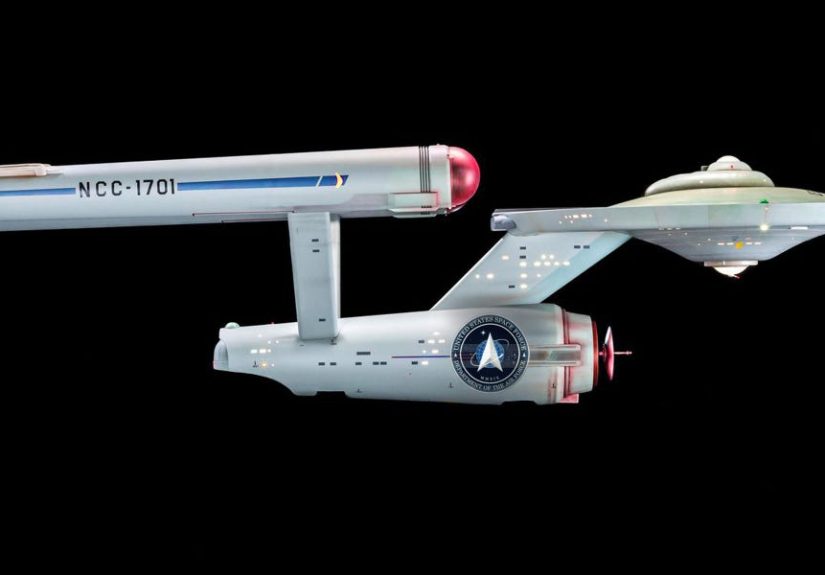
The Space Force seal and logo drew especially strong online comparisons to Starfleet imagery. The Delta shape looked familiar to fans, and social media did what social media does best: it turned a design discussion into a comedy festival with Wi-Fi. However, the Space Force Delta is not simply a Star Trek copy. The Delta symbol has deep roots in U.S. military space history and appeared in Air Force space-related emblems before Star Trek became a household name.
The Delta Symbol: Meme Fuel With Real History
The Delta shape is the visual bridge between Space Force and Star Trek. In Space Force symbolism, the Delta represents heritage, change, innovation, space vehicles, and defense of the space domain. The Polaris star represents guidance and vigilance. Dark blue and white evoke outer space. In short, the design is doing a lot of official work while also accidentally giving every Star Trek fan a reason to raise one eyebrow.
Star Trek’s Starfleet insignia also uses a sleek, arrowhead-like shape, which is why the comparison feels natural. But visual similarity does not mean identical meaning. In Star Trek, the insignia is tied to exploration, service, and identity within a fictional future. In Space Force, the Delta is tied to national defense, military heritage, and real space operations.
Space Force vs. Star Trek: Key Differences
| Category | U.S. Space Force | Star Trek / Starfleet |
|---|---|---|
| Reality | A real U.S. military branch | A fictional space organization |
| Main Purpose | National security and space operations | Exploration, diplomacy, science, and defense |
| People | Guardians | Starfleet officers and crew |
| Technology | Satellites, sensors, networks, launch support | Warp drives, transporters, replicators, starships |
| Setting | Earth orbit and space-related defense systems | Deep space and multiple fictional civilizations |
The biggest difference is mission scope. Space Force is not exploring planets or making first contact. It is protecting the infrastructure that supports national defense and modern civilization. Starfleet, on the other hand, is designed as a storytelling engine for the biggest questions humans can ask: Who are we? What do we owe others? What happens when technology outruns wisdom? And why does every mysterious space cloud seem personally offended by the Enterprise?
Where Space Force and Star Trek Actually Overlap
Despite the differences, the overlap is real enough to be interesting. Both Space Force and Star Trek treat space as strategically important. Both rely on advanced technology. Both involve trained professionals working under pressure. Both use symbols, uniforms, ranks, and mission language to create identity and culture. Both also show that space is not empty; it is full of risk, opportunity, and consequences.
Star Trek has inspired scientists, engineers, astronauts, writers, and everyday fans for decades. NASA has openly recognized the franchise’s cultural influence, including its role in inspiring people to pursue science and space careers. Nichelle Nichols, who played Uhura, famously helped NASA encourage more women and minority applicants to join the astronaut program. That is not just fandom trivia. That is pop culture leaving fingerprints on real history.
Science Fiction Shapes Real Expectations
Science fiction gives the public a vocabulary for future technology before the technology exists. Communicators in Star Trek resembled the dream of pocket communication long before smartphones became normal. Replicators anticipated our fascination with 3D printing and instant customization. The ship’s computer made voice interaction feel natural decades before people started asking digital assistants to set timers for pasta.
Space Force benefits and suffers from this imagination gap. On one hand, people already understand that space matters because fiction made space feel exciting. On the other hand, fiction can distort expectations. The public may expect starships, dramatic battles, and shiny corridors, while the real work involves orbital mechanics, cybersecurity, signal resilience, acquisition timelines, and lots of screens. Basically, less “boldly go” and more “boldly update the software without breaking national security.”
The Cultural Battle: Serious Mission, Funny Name
When Space Force launched, many people treated it like a punchline. The name sounded too close to science fiction, and the timing of its public rollout made it easy for comedians, fans, and commentators to pounce. The Netflix comedy Space Force only added to the perception that the real branch was somehow half-military, half-sitcom.
But the jokes do not erase the seriousness of the mission. Space is increasingly crowded and contested. Satellites can be jammed, dazzled, hacked, tracked, or threatened. Countries depend on space systems for military and civilian life. A branch focused on space security may sound futuristic, but the need is very present. The irony is delicious: the more people joked that Space Force sounded fictional, the more the real world kept proving why it exists.
Star Trek’s Optimism vs. Space Force’s Realism
Star Trek is optimistic by design. It imagines humanity growing wiser, building alliances, and exploring the unknown with curiosity rather than conquest. It is not naïve; the franchise includes war, prejudice, failure, corruption, and fear. But its central promise is that people can become better.
Space Force is more realistic and more limited. It does not promise a utopian future. It responds to current strategic needs. Its mission reflects a world where space is essential but vulnerable. Where Star Trek asks, “What kind of civilization should we become?” Space Force asks, “How do we protect the systems our civilization already depends on?”
The Best Future Needs Both Mindsets
The funny thing is that society needs both perspectives. We need the practical seriousness of Space Force because satellites do not defend themselves. We also need the imagination of Star Trek because technology without vision becomes a very expensive toolbox with no moral compass. One protects the present. The other stretches the future.
Star Trek reminds us that space should not only be treated as a domain of competition. It can also be a place of discovery, cooperation, and humility. Space Force reminds us that before humanity can build a peaceful spacefaring future, it must deal with the messy reality of today’s security challenges. The dream and the duty are not enemies. They are two sides of the same cosmic coin.
Specific Examples That Show the Contrast
Example 1: GPS vs. Warp Drive
GPS is one of the clearest examples of real space power. It supports navigation, timing, finance, agriculture, logistics, emergency services, and military operations. Space Force helps protect systems like this because disruption would affect life on Earth immediately. Warp drive, meanwhile, is fictional technology that lets Star Trek ships cross impossible distances for storytelling purposes. GPS gets you to the pizza place. Warp drive gets you to Vulcan. Both are useful, but only one helps when you miss an exit.
Example 2: Guardians vs. Starfleet Officers
Guardians are real service members trained for space-related military missions. Starfleet officers are fictional characters trained for exploration, science, diplomacy, and dramatic season finales. Guardians operate within U.S. law, military command structures, and national defense strategy. Starfleet officers operate within scripts, canon debates, and the dangerous possibility of being assigned to an away mission.
Example 3: Space Domain Awareness vs. Strange New Worlds
Space domain awareness means understanding what is happening in orbit: where objects are, how they move, whether they pose risks, and whether unusual behavior might signal a threat. Star Trek’s “strange new worlds” are about exploration and discovery. One tracks objects around Earth; the other tracks moral dilemmas around Alpha Centauri. Both require intelligence, but only one usually includes a philosophical speech before the credits roll.
Why the Comparison Still Matters
The Space Force vs. Star Trek comparison matters because public imagination affects public understanding. If people only see Space Force as a joke, they may miss why space security is important. If they only see space as a military domain, they may lose the wonder that made space exploration meaningful in the first place.
The healthiest view is balanced. Space Force is not Starfleet, and it should not pretend to be. But it can still learn from the cultural power of Star Trek: clear values, inspiring language, diverse talent, technical excellence, and a sense that space is bigger than any single institution. Star Trek, meanwhile, becomes more interesting when viewed beside real space policy. It shows how far imagination can run ahead of realityand how reality sometimes jogs awkwardly after it wearing government-issued shoes.
Experience Section: Living With the Space Force vs. Star Trek Debate
Talking about Space Force vs. Star Trek feels a little like attending a family reunion where one cousin is a disciplined military analyst and the other is wearing Spock ears near the potato salad. At first, the conversation sounds silly. Then, after a few minutes, everyone realizes the silly comparison opens the door to serious questions about technology, security, culture, and the future.
One common experience is seeing how quickly people react to symbols. Show someone the Space Force Delta and many will immediately say, “That looks like Star Trek.” They may not know the history of military space emblems, but they know the emotional shape of science fiction. That reaction proves how deeply Star Trek has embedded itself in American visual culture. A simple symbol can trigger decades of television memories, convention panels, model starships, and arguments about who the best captain is. For the record, choosing one best captain is how friendships become court cases.
Another experience is realizing that real space work is quieter than fiction but no less fascinating. Star Trek gives us bridge crews making bold decisions in seconds. Real space operations involve planning, monitoring, engineering, and coordination that may look boring from the outside. But beneath that calm surface is a high-stakes environment where small errors can have large consequences. A satellite is not just a metal box floating above Earth. It may support timing signals, communications, intelligence, weather data, or navigation. Suddenly, the quiet room full of screens becomes more dramatic than it first appears.
The comparison also changes how people think about careers. Star Trek made generations imagine themselves as explorers, engineers, doctors, linguists, scientists, and commanders. Space Force shows that modern space careers are not limited to astronauts. Cybersecurity specialists, orbital analysts, acquisition experts, engineers, intelligence professionals, and communications teams all contribute to space missions. You do not need a warp core to work in space. Sometimes you need math, patience, teamwork, and the ability to explain a complex system without making everyone in the room quietly panic.
Finally, the Space Force and Star Trek conversation is useful because it blends humor with curiosity. The jokes make the topic approachable. The facts make it important. A teenager who laughs at the logo comparison today might become an engineer tomorrow. A casual fan might learn that satellites are part of daily life. A policy reader might remember that public trust depends not only on capability but also on storytelling. In that sense, Space Force and Star Trek are not rivals. They are two different ways Americans process the same enormous idea: space is no longer distant background scenery. It is part of our culture, our security, our technology, and our imagination.
Conclusion
Space Force is not Star Trek, and Star Trek is not a Pentagon planning document with better lighting. One is a real military branch responsible for protecting U.S. interests in space. The other is a fictional universe that has inspired people to imagine a wiser, more adventurous future. The comparison survives because both touch the same nerve: humanity’s relationship with the final frontier.
The best answer to Space Force vs. Star Trek is not “which one wins?” It is “what can each teach us?” Space Force teaches that space is already essential to life on Earth. Star Trek teaches that the future should be guided by curiosity, ethics, diversity, and courage. Put them together and you get a useful reminder: protecting space matters, but so does dreaming about what we might become when we finally grow into it.