Table of Contents >> Show >> Hide
- Why Antiques Roadshow Is Basically a Meme Factory in a Blazer
- The “Caption Upgrade”: What Fake Antiques Roadshow Appraisals Actually Are
- Why These Captions Often Feel Funnier Than the Real Ones
- Caption-Style Examples (Original Jokes Inspired by the Trend)
- The Real Roadshow Lesson Under the Jokes
- How to Make Your Own Funny “Antiques Roadshow” Captions Without Being a Jerk
- Extra: A 500-Word “Experience” Section You Can Add to the End (Because This Trend Is a Whole Mood)
- Conclusion: The Internet Didn’t Ruin RoadshowIt Basically Wrote It a Love Letter
If you’ve ever watched Antiques Roadshow, you know the emotional whiplash is half the fun. One minute, someone is
proudly presenting a “family heirloom” that’s been passed down through three generations. The next minute, an expert
gently explains it’s a mass-produced souvenir from 1978, and the camera captures the exact moment a dream quietly
exits the building.
And then there’s the other kind of whiplash: the jaw-drop appraisal. The “Oh wow!” The hand-to-chest. The sudden,
panicked mental inventory of everything you’ve ever tossed into a donation bin. Antiques Roadshow is part history
lesson, part treasure hunt, and part reality TVexcept nobody flips a table, because PBS energy is more like,
“Let’s keep our voices low and our insurance policies current.”
Which is exactly why it’s so ripe for internet mischief. The show’s calm, authoritative tone and tidy on-screen
labels (item name + value range) are practically begging to be… reinterpreted. Enter the viral trend: people
screenshotting real Roadshow items and adding hilarious fake captionsoften funnier than the original,
because they turn the show’s polite seriousness into a straight-faced comedy stage.
Why Antiques Roadshow Is Basically a Meme Factory in a Blazer
The format is simple and endlessly watchable: guests bring antiques and collectibles to a taping, experts provide
appraisals, and the show stitches together the best stories and biggest surprises. In the real-world taping
environment, there are massive lines, lots of quick evaluations, and only a small fraction of items make it to TV.
That’s why the on-air segments feel like the “best of” a much larger day-long treasure parade.
The key ingredient for meme potential is the show’s contrast: wildly emotional guests + calmly precise experts.
The appraiser’s voice says, “This is a circa-1840 American folk art trade sign,” while the guest’s face says,
“I found this behind a toaster in my uncle’s garage.” That contrast creates a comedy vacuum. The internet, being the
internet, immediately rushes in to fill it.
The secret sauce: serious presentation, chaotic possibilities
Roadshow’s on-screen labels are designed for clarity. But the label format is also a perfect comedy template:
a formal object description paired with an authoritative value range. Swap the description, keep the tone,
and suddenly you’ve got a joke that lands before your brain even finishes reading.
The “Caption Upgrade”: What Fake Antiques Roadshow Appraisals Actually Are
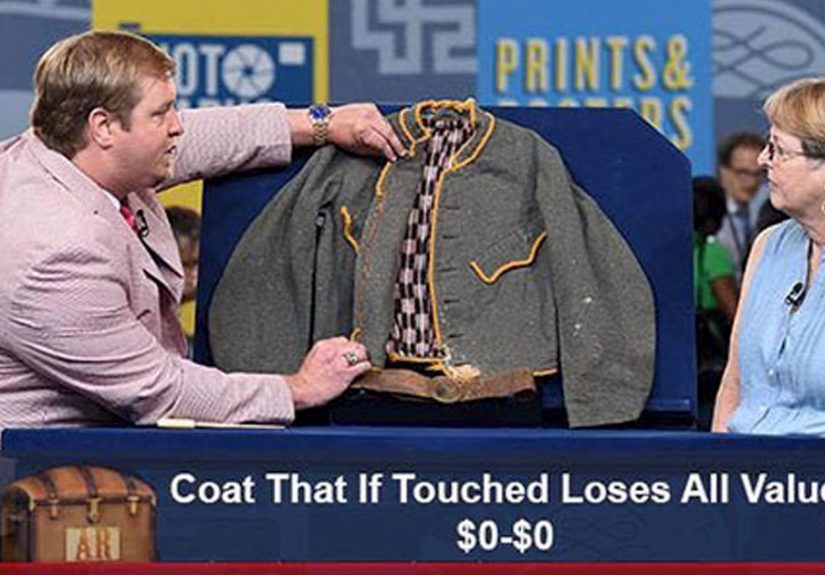
The most famous version of this trend comes from comedian and writer Keaton Patti, who popularized “fake appraisals”
by photoshopping funny alternate names and prices onto screenshots from the show. The humor works because it keeps
the visual language of Antiques Roadshow intactexpert, guest, treasured object, and that official-looking text
while the caption says something that definitely did not come from an auction house.
In other words: it’s parody built on a familiar interface. Like putting a goofy bumper sticker on a Rolls-Royce.
The Rolls-Royce still looks expensive. The bumper sticker makes it unforgettable.
Why These Captions Often Feel Funnier Than the Real Ones
1) The comedy of “authority” saying nonsense
A joke hits harder when it’s delivered with confidence. Roadshow experts are calm, knowledgeable, and serious
so a fake caption that looks “official” feels like the show itself is endorsing the absurdity.
It’s the same reason a whisper can feel louder than a shout: the delivery makes the twist pop.
2) The show’s emotional stakes make parody richer
Real Roadshow moments have real vulnerabilitypeople bring items tied to family, memory, identity, and history.
The captions don’t have to be mean to be funny; they just redirect that intense energy toward something silly.
A porcelain figurine stops being “early 20th-century decorative arts” and becomes “Tiny Ceramic Witness to My Bad Choices.”
3) It’s a perfect “benign violation”
The vibe of the show is polite and respectful. The captions “violate” that vibejust a littlewithout doing damage.
The result is a safe, silly jolt. You’re laughing at the mismatch, not at a person’s pain.
Caption-Style Examples (Original Jokes Inspired by the Trend)
Note: The examples below are original, made in the spirit of the “fake appraisal caption” format.
They’re not official PBS captions, and they’re not meant to mock real guests. Think of them as a friendly,
affectionate roast of an internet tradition.
Ceramics, Figurines, and Things That Definitely Watch You Sleep
Item: A delicate porcelain statue of a lady holding a tiny dog.
Fake caption: “Victorian ‘I Told You So’ Statue (Still Telling You So)” $900–$1,200
Why it works: The object already looks judgmental. The caption just gives it the confidence it deserves.
Item: A pair of ceramic birds, frozen in what can only be described as “mid-gossip.”
Fake caption: “Two Birds Discussing Your Business (1880)” $2,000–$3,000
Why it works: Anthropomorphizing animals is a time-honored tradition; pairing it with a date makes it feel “museum official.”
Furniture With Big “I Wasn’t Built for Your Laundry Pile” Energy
Item: An ornate wooden chair with carvings and velvet upholstery.
Fake caption: “Chair for Sitting Perfectly Still and Regretting Everything” $4,500–$6,000
Why it works: Fancy chairs always look like they come with rules. This one comes with emotional consequences.
Item: A small desk with secret compartments.
Fake caption: “Desk That Hides Snacks From Your Own Conscience” $1,500–$2,200
Why it works: “Secret compartments” is already half a joke. The caption just finishes the sentence.
Jewelry: Tiny Objects, Huge Drama
Item: A sparkling ring presented in a box like it’s about to propose to the camera crew.
Fake caption: “Ring That Says ‘We Need to Talk’ in Three Carats” $8,000–$12,000
Why it works: Jewelry is emotionally loud. The caption makes it emotionally louder.
Item: A brooch shaped like a flower, suspiciously perfect.
Fake caption: “Brooch That Turns Any Outfit Into an ‘Event’” $700–$1,000
Why it works: A brooch is basically a party guest pinned to your shirt.
Paintings: The High-Art Version of “What Am I Looking At?”
Item: A moody landscape with dramatic clouds and a lonely tree.
Fake caption: “Sad Tree Having a Serious Weather Moment (c. 1870)” $12,000–$18,000
Why it works: Art history can be intense. Making the tree “sad” is a gentle, relatable twist.
Item: A portrait of a stern-looking man in formal clothing.
Fake caption: “Local Man Who Invented Judgment” $5,000–$7,500
Why it works: Portraits often look like they’re disappointed in your phone battery habits.
Odd Tools and Mystery Objects (a Roadshow specialty)
Item: A metal device with hinges, knobs, and a truly unnecessary amount of confidence.
Fake caption: “Extremely Specific Tool for Doing One Thing Perfectly and Everything Else Badly” $400–$600
Why it works: Many antiques are “single-purpose chaos,” and the caption honors that truth.
Item: A carved wooden object whose purpose is unclear, but it feels important.
Fake caption: “Ceremonial ‘Don’t Ask Me What This Does’ Stick” $1,000–$1,500
Why it works: The joke isn’t the object; it’s our universal confusion in front of it.
The Real Roadshow Lesson Under the Jokes
The funniest captions work because the real show is already fascinating. Even when an item isn’t worth much,
it can still carry historycraftsmanship, regional style, family lore, and the weird little details that make
the past feel human. That’s why Roadshow has stayed popular: it turns “stuff” into stories.
It also quietly teaches appraisal literacy. Value depends on condition, rarity, provenance, authenticity, and
what collectors want right now. Market taste shifts. Even geography can matterwhere you sell something may affect
what it brings. If Roadshow has a catchphrase, it’s basically: “It depends.” And that’s not a dodge; it’s reality.
That context makes the caption trend feel like affectionate fandom rather than random snark. The parody works
because people recognize the original structure: expert + object + price range + seriousness. It’s a tribute
disguised as a prank.
How to Make Your Own Funny “Antiques Roadshow” Captions Without Being a Jerk
Keep it playful, not personal
Aim the joke at the object or the format, not at a guest’s appearance or emotions. The best captions feel
like they’re teasing the seriousness of appraisal culture, not humiliating a real person.
Use the “formal title + unexpected truth” formula
- Formal title: “Circa-1920 Hand-Blown Glass Vase”
- Unexpected truth: “(Holds Exactly One Flower and Your Entire Ego)”
Let the value range be part of the punchline
The price range can intensify the joke. A ridiculous description paired with a very modest value is funny.
A ridiculous description paired with a shockingly high value is also funny. Choose your chaos.
Extra: A 500-Word “Experience” Section You Can Add to the End (Because This Trend Is a Whole Mood)
A Roadshow Caption Night: Turning a Calm PBS Show Into a Comedy Game (Respectfully)
If you want to understand why fake Antiques Roadshow captions are so addictive, try a little experiment the next
time you’re watching an episode: pretend you’re the one writing the on-screen text. Not mean textplayful text.
The goal isn’t to dunk on anyone. It’s to play with the contrast between the show’s gentle seriousness and the
fact that, sometimes, the items look like they were designed by a genius who also enjoys confusing strangers.
Here’s how it tends to go. The episode starts calmly. Someone brings in a small box, and the appraiser’s eyes
light up like they’ve just spotted a rare bird in the wild. You’re still in “historical documentary” mode.
Then the camera cuts to a mysterious metal gadgetthree levers, a crank, and the unmistakable aura of “this was
invented before people agreed on what a screwdriver should look like.” You pause. You squint. You realize you
have a choice: you can wait for the expert explanation like a responsible citizen, or you can whisper,
“That’s the Victorian Anxiety Machine,” and giggle like you’ve just discovered comedy in a cupboard.
If you’re watching with friends or family, the game gets even better. Give everyone one rule: captions must keep
the Roadshow tone. No modern slang explosions. No harshness. Think “museum label with a secret sense of humor.”
Suddenly, you’re all competing to write the most politely absurd description. Someone sees a stern portrait and
says, “Founder of Side-Eye.” Someone else sees an ornate spoon and declares, “Soup Spoon for Extremely Important
Soup.” The room starts to sound like a very respectful improv troupe.
The funniest part is what happens after the joke: the real appraisal arrives, and it’s often stranger than your
caption. The expert reveals the object is connected to a specific region, a particular craft tradition, or a
historical moment you’ve never considered. The show does what it always doesturns “random item” into “time capsule.”
And then you realize the captions aren’t pulling you away from the show; they’re pulling you deeper into it.
You’re looking closer. You’re noticing design details. You’re paying attention to how people describe materials
and condition. You’re learning while laughing.
That’s the sweet spot: humor as a gateway, not a distraction. Fake captions work because Antiques Roadshow already
gives us something rarequiet suspense. The internet just adds a wink. And once you’ve watched an appraisal with
your brain in “caption mode,” it becomes very hard to unsee the comedy potential in every dignified object that
looks like it has opinions.
Conclusion: The Internet Didn’t Ruin RoadshowIt Basically Wrote It a Love Letter
The “hilarious captions” trend isn’t just random clowning. It’s a specific kind of fandom: people love the show’s
calm vibe, its surprise endings, and its strangely comforting belief that history lives in ordinary homes.
The fake captions keep that structure, then poke it gently until it giggles.
So yessometimes the internet captions feel “better than the original,” because they turn a formal label into a joke
without breaking the spell. But the original still wins where it matters: it makes you look at an object and wonder,
“Where did this come from?” And in a world overflowing with disposable stuff, that curiosity is worth more than any
price range on the screen.